.webp)


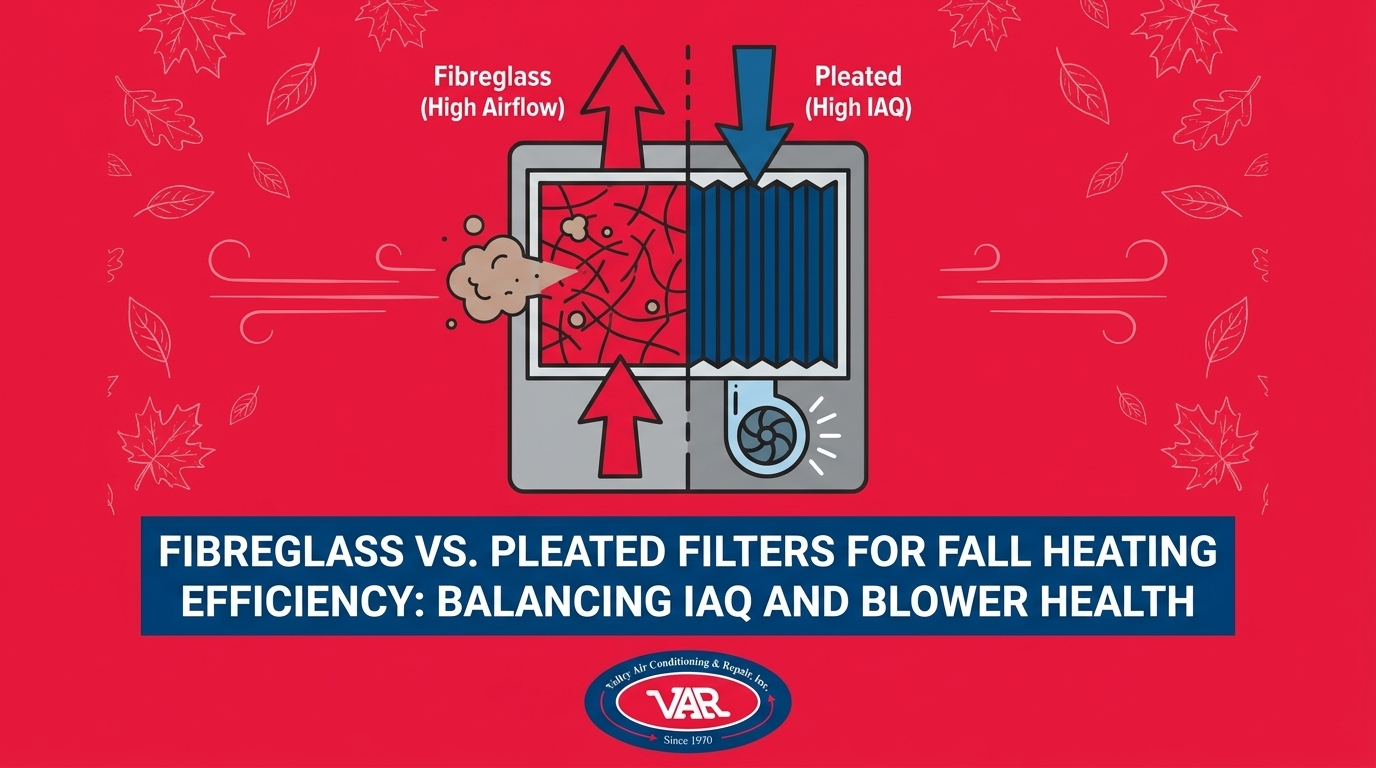
Fibreglass vs. Pleated Filters for Fall Heating Efficiency
Buying the most expensive air filter isn't always an upgrade. High-MERV pleated filters can actually suffocate your furnace blower, reducing efficiency and risking premature failure.
Why your ac compressor fails and what to do is one of the most urgent questions a homeowner can face — especially on a scorching summer day in Modesto or anywhere across California's Central Valley. The compressor is the engine of your entire cooling system. When it goes, your home stops cooling, your energy bills can spike, and you're left with a decision that could cost you significantly if you get it wrong.
Here's a quick overview of the most common causes and what to do about them:
| Cause | What to Do |
|---|---|
| Dirty or blocked condenser coils | Turn off the unit; call a technician to clean coils |
| Low or leaking refrigerant | Do not run the AC; schedule a professional inspection |
| Electrical failure or power surge | Check the breaker; call an HVAC pro if it keeps tripping |
| Lack of lubrication | Requires professional service |
| Normal wear and tear (10+ years) | Evaluate repair vs. full system replacement |
The good news? Most compressor failures don't happen without warning. There are almost always early signs — unusual noises, weak airflow, warm air from the vents — that give you a window to act before things get worse. Catching them early can be the difference between a manageable repair and a full system replacement.
Read on for everything you need to know about why compressors fail, how to spot the warning signs, and what your smartest next step is.
To understand why a failure is such a big deal, it helps to think of the compressor as the "heart" of your air conditioner. Just as your heart pumps blood to keep your body functioning, the compressor pumps refrigerant through the entire system. Without this circulation, the cooling process simply cannot happen.
The compressor’s job is to take low-pressure, cool refrigerant gas from your indoor evaporator coil and "compress" it into a high-pressure, high-temperature vapor. This intense pressure allows the heat gathered from inside your home to be released through the outdoor condenser coils. If the compressor stops, the refrigerant stops moving, and your AC becomes nothing more than a very expensive, very quiet outdoor decoration.
Because the compressor is responsible for creating the pressure that drives the entire heat transfer cycle, it works harder than almost any other part of the system. In cities like Fresno or Madera, where temperatures regularly soar into the triple digits, the compressor is under immense strain for months at a time. Understanding this role is the first step in AC Repair Fresno CA, as it helps homeowners realize that a struggling compressor is a system-wide emergency.
When we talk about why your ac compressor fails and what to do, we have to look at the environment it operates in. In the Central Valley, dust, pollen, and extreme heat are the primary enemies of HVAC longevity. Most compressors are designed to last between 10 to 15 years, but neglect can cut that lifespan in half.
When a compressor is forced to work harder than it was designed to—whether due to dirty coils or a lack of maintenance—it begins to overheat. Overheating is the leading cause of mechanical wear and eventual seizure. Think of it like a car engine: if you never change the oil or clean the radiator, the engine will eventually "throw a rod." The compressor is no different. You can learn more about the specific mechanical triggers in our guide on Whats Causing Your Ac Compressor To Fail.
There are several specific culprits that lead to a dead compressor. Identifying these early can help you decide whether a simple fix or a major overhaul is necessary:
Your AC usually tries to tell you it’s sick before it dies completely. Keep an ear (and a nose) out for these symptoms:
If you notice any of these, it's time to call for Hvac Service Fresno Ca before the damage becomes permanent.
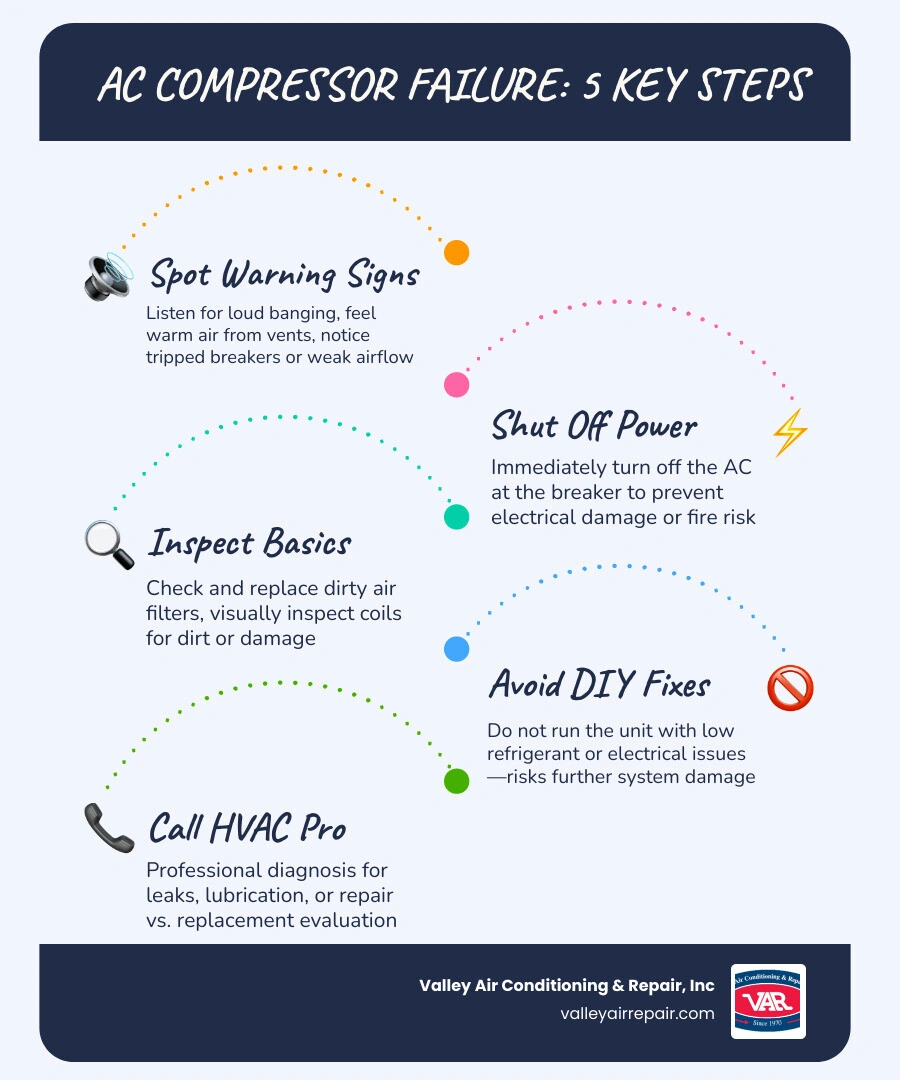
If you suspect your compressor is failing, the very first thing you should do is turn the system off at the thermostat. Continuing to run a failing compressor can cause "acid burnout," which contaminates the entire refrigerant line and can ruin the indoor coils as well.
Once the system is off, perform a few quick checks:
After these steps, the smartest move is to contact a professional for Ac Repair Clovis Ca. Attempting to DIY a compressor repair is dangerous due to the high-voltage electricity and the specialized equipment needed to handle refrigerant safely.
When a compressor fails, you are at a crossroads. Do you replace just the part, or is it time for a new unit? This is a "financial triage" moment for homeowners.
| Factor | Repair (Replace Compressor Only) | Full System Replacement |
|---|---|---|
| Warranty | Best if the unit is < 10 years and under warranty. | Best if the warranty has expired. |
| System Age | Good for units 1-8 years old. | Recommended for units 12-15+ years old. |
| Refrigerant | Viable for R-410A systems. | Mandatory for old R-22 (obsolete) systems. |
| Efficiency | Keeps your current SEER rating. | Can improve efficiency by 20-30%. |
| Reliability | Risks "throwing good money after bad." | Provides a fresh 10-year warranty. |
A key consideration in May 2026 is the phase-out of older refrigerants. If your system still uses R-22, parts are becoming nearly impossible to find and incredibly expensive to service. In most cases, if a compressor fails on an R-22 unit, a full system upgrade is the only logical choice.
Furthermore, we often suggest the "50% Rule": if the cost of the repair is more than half the cost of a new system, and the unit is over 10 years old, replacement is almost always the better long-term investment. You can explore all our services to see which path fits your home's needs.
Absolutely not. Running an AC with a failing compressor is a recipe for disaster. It can lead to acid burnout, which sends corrosive material through your entire HVAC system. In extreme cases, a struggling compressor can cause an electrical fire or a total system "meltdown" where every single component needs to be replaced. If it's making noise or not cooling, shut it down.
In a perfect world, a compressor should last 10 to 15 years. However, here in the Central Valley, the "heat tax" is real. The extreme temperatures in Fresno, Clovis, and Madera mean our systems work harder than those in milder climates. Without annual maintenance, a compressor might only last 7 or 8 years. Regular cleaning and electrical checks can prevent 80-90% of premature failures.
Not necessarily. If your unit is only 3 or 4 years old, it is likely still under a manufacturer's parts warranty. In that case, replacing just the compressor makes sense. However, if the unit is 12 years old and out of warranty, the labor costs to swap the compressor are often so high that you're better off putting that money toward a modern, high-efficiency unit that comes with a brand-new 10-year warranty.
At Valley Air Conditioning & Repair, Inc., we’ve been serving "the Valley" since 1970. We know that a broken AC is more than just an inconvenience—it’s a threat to your family's comfort and your peace of mind. Our customer-first philosophy means we won't just try to sell you the most expensive option. We’ll give you an honest assessment of why your ac compressor fails and what to do next, whether that’s a surgical repair or a full system upgrade.
Whether you are in Fresno, Modesto, Clovis, or any of our surrounding communities like Sanger or Kerman, we are here to help you navigate the heat. Don't spend another minute sweating in a warm house.
Contact Us today to schedule a diagnostic visit, or visit our Air Conditioning page to learn more about how we can keep your home cool all summer long.

As a business with many AC units, it is essential to have a responsive AC company. Valley Air Conditioning understands our needs. They are always responsive and our AC is up and running very quickly.
I had them do an AC check on the home I was buying, they were honest and quick. I hired them to do the summer and Fall maintenance for $149. Happy with this company!
100% recommend. I called, same day they came out and gave me estimate. Conley was honest and didn't try to recommend/sell us anything we didn't need. When I called him with questions before making a decision, he happily answered and was not annoyed by me contacting him. Conley and VAR
This is a group of good people. Very professional and knowledgeable. They take the time to listen and find the best solution that fits best for any situation. There's no way you can go wrong in choosing VAR.
We have used Valley Air for over fifteen years. The last two years ,Matt came to our house to service twice a year. Always on time, so polite and so professional. This is a very honest company and you can always depend on them and trust them. The office always treats everyone cheerfully and always want to do what you need done very fast YOU CAN COUNT ON THIS Company