


Why the Master Bedroom is Freezing: A Guide to Return Air Vent Clearance
Why a freezing master bedroom usually means suffocated airflow. See how 10 inches of return air vent clearance can solve uneven heating before calling a pro.
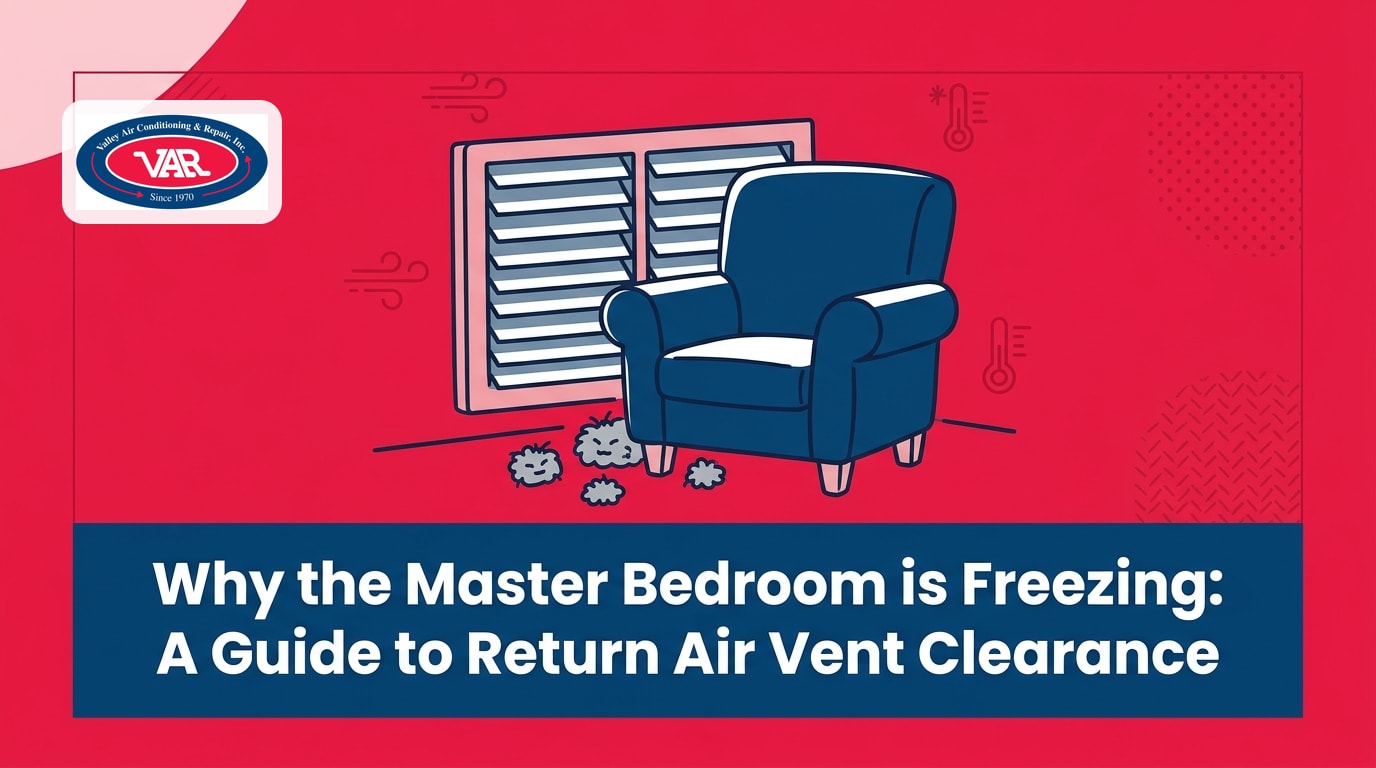
Your furnace is running nonstop, but the house still feels uneven, making proper return air vent clearance the very first thing you should check before assuming the worst. That strange frustration of a freezing master bedroom while the living room feels perfectly warm is a classic headache for homeowners. As we head into November early winter heating, turning on the furnace for the first time often reveals hidden airflow problems that went completely unnoticed during the milder fall months. With Fresno's chilly late fall nights dropping quickly into the 40s, a heating system that cannot distribute warm air evenly becomes obvious the moment the sun goes down.
If you are struggling to keep your home comfortable, exploring professional heating services can help, but the solution might actually be sitting right in front of you. Heating systems must "breathe" freely to do their jobs. They pull in cold air, heat it up, and push it back out. When interior decorating choices—especially heavy bedroom furniture like solid wood dressers, low-profile beds, or thick area rugs—inadvertently suffocate the system, the warm air simply cannot reach every room. Checking your room layout and ensuring your vents have room to operate is a critical first step before you ever pick up the phone to report an equipment failure.
Before you schedule residential heating preparation, it helps to understand exactly how the air moves through your walls and floors. Your HVAC system operates on a closed-loop pressure system. This means that for every cubic foot of warm air the furnace pushes into a room, it must pull an equal amount of cold air back in to be heated. This delicate balance relies entirely on two distinct types of vents working together in harmony.
Supply vents are the registers that push warm, conditioned air out into your living spaces. You can usually feel the breeze if you hold your hand over them. Return vents, on the other hand, are the grilles that pull the cold air out of the room and send it back to the furnace. Because they are pulling air in, they often act like a gentle vacuum. If you restrict this return airflow, you immediately increase the static pressure inside your ductwork.
Increased static pressure is the enemy of a healthy heating system. When the furnace cannot pull enough air, the blower motor has to work twice as hard to try and overcome the resistance. This strain not only reduces your overall heating efficiency but also dramatically shortens the lifespan of the motor itself.
Your furnace relies on a steady, uninterrupted volume of incoming air to operate safely and effectively. Think of the blower motor like a person trying to breathe through a drinking straw. If you pinch the straw, breathing becomes incredibly difficult, and eventually, you run out of breath.
When you starve the heating system by blocking the intake grilles, the warm air simply cannot build up enough momentum to reach the distant rooms in your house. The master suite is often located far away from the central blower, meaning it is usually the first room to suffer when the system is struggling to breathe.
• Return Vents — Primary Function: Pulls cold air back to the furnace — What Happens When Blocked: System suffocates, blower motor overheats, distant rooms stay cold.
• Supply Vents — Primary Function: Pushes warm air into the room — What Happens When Blocked: Pressure builds in specific duct branches, causing whistling and uneven heating.
• Blower Motor — Primary Function: Circulates the air through the loop — What Happens When Blocked: Strains against high static pressure, leading to premature mechanical failure.
If you want to keep your system running smoothly and your bedrooms warm, there is a specific measurement you need to follow. HVAC systems require 10 to 12 inches of minimum clearance in front of all return air vents. This is the exact amount of space the system needs to pull a sufficient volume of air without creating a dangerous vacuum effect against your furniture or walls.
1. Measure from the grille outward: Take a tape measure and ensure there is at least 10 to 12 inches of completely empty space directly in front of the vent face.
2. Check the sides and top: The air needs a clear path to travel into the grille. Do not build a "tunnel" of boxes or furniture around the vent, even if the front is technically clear.
3. Apply to all vent types: This rule applies whether you have baseboard returns, large wall-mounted grilles, or flat floor grilles. The physics of the airflow remains exactly the same.
4. Give it extra room if possible: While 10 to 12 inches of minimum clearance is the absolute baseline, exceeding this distance is always better for optimal system performance. If you can leave two feet of space, your furnace will thank you.
When you maintain this exact spacing, the air can circulate in a wide, natural arc, feeding the furnace exactly what it needs to keep your home comfortable during the chilliest nights of the year.

The master bedroom is uniquely vulnerable to airflow problems, and the reasons usually come down to interior design and home architecture. Master suites typically contain the largest, heaviest pieces of furniture in the entire house. Massive king-sized bed frames, wide horizontal dressers, and heavy wooden nightstands take up a significant amount of wall space.
A typical pattern we see is that homeowners do a lot of summer furniture rearranging. A dresser gets slid against a different wall to make room for a new rug, or the bed is centered over a floor grille. Because the heating system sits idle for months, these inadvertently blocked vents go completely unnoticed. It is not until November early winter heating kicks in that the consequences of that room makeover become painfully clear.
Furthermore, the master suite is frequently located at the very end of the ductwork run. Because the air has to travel the furthest distance from the central blower, this room is already the most susceptible to pressure drops. Any minor restriction at the return vent will have an outsized impact on the temperature in that specific room.
The good news is that uncovering a blocked vent is a zero-cost fix. Simply sliding a heavy dresser a foot away from the wall can immediately improve your comfort, making it much easier when balancing temperatures across different rooms.
It is incredibly common to panic when you hear the furnace running continuously but the house remains stubbornly cold. The immediate assumption is that a major mechanical component has failed, leading to stress about potential repair bills. However, modern furnaces are designed with built-in safety mechanisms that react strongly to poor airflow.
Your furnace is equipped with a safety limit switch. This sensor monitors the internal temperature of the heat exchanger. If the return vents are blocked and the system cannot pull in enough cold air to absorb the heat, the internal temperature spikes rapidly. To prevent a fire or permanent damage, the safety limit switch will trip and shut down the burners, even while the blower fan keeps running to cool the unit down. This creates the illusion that the furnace is broken because it is blowing unheated air.
Valley Air Conditioning & Repair champions honest, practical solutions—we want homeowners to check their clearances before paying for an unnecessary diagnostic visit. Verifying that you have 10 to 12 inches of minimum clearance is the very first troubleshooting step every homeowner should take before dialing a technician. There is immense peace of mind in realizing that a perceived mechanical failure can be resolved with a simple layout adjustment.
• Whistling noises: A high-pitched whistling sound near the return grille usually means the system is desperately trying to suck air through a tiny gap left by a piece of furniture.
• Short-cycling: If the furnace turns on, runs for two minutes, and shuts off rapidly, the limit switch is likely tripping due to overheating from a lack of airflow.
• Weak supply airflow: Noticeably weak or barely-there airflow coming from the supply registers in your bedroom indicates the system simply does not have enough intake air to push back out.
• Hot exterior panels: If the metal cabinet of your furnace feels unusually hot to the touch, it is struggling to move the heat out of the unit and into your ductwork.
You do not have to sacrifice the aesthetics of your master bedroom to keep your HVAC system happy. With a few strategic adjustments, you can arrange your furniture to maintain a beautiful layout without suffocating your furnace. Here are the best ways to ensure you maintain 10 to 12 inches of minimum clearance while keeping your bedroom looking great.
• Position beds carefully: Never push a solid-frame bed directly against a wall return. If the bed must go on that wall, pull it forward by at least a foot, or switch to a frame with an open headboard.
• Watch out for floor returns: Thick, plush area rugs are notorious for covering floor grilles. Ensure the edge of the rug stops well before the vent. Additionally, avoid placing low-clearance couches or reading chairs directly over a floor return.
• Use elevated furniture: If placing a piece of furniture near a vent is absolutely unavoidable due to the size of the room, choose pieces with tall legs. A dresser that sits six inches off the ground allows air to flow underneath it much better than a solid-base dresser that sits flush on the carpet.
• Check your window treatments: Long, heavy curtains and drapes can act like a wall. When the blower activates, the vacuum effect can suck loose drapes right against the grille, sealing it shut. Hem your curtains so they fall just above the vent, or use tie-backs during the winter months.
• Keep laundry baskets away: A full hamper of clothes placed in front of a hallway or bedroom return is a very common, temporary blockage that severely restricts system breathing.
Sometimes, you can pull every piece of furniture away from the walls, verify your clearances perfectly, and still find yourself shivering in the master suite. If you have done the physical layout checks and the room is still freezing during November early winter heating, a deeper issue exists within the system.
The most common hidden culprit is a heavily clogged air filter. The filter usually sits right before the blower motor, filtering the air that comes from the return vents. If that filter is packed with dust and pet hair, it acts exactly like a blocked vent, driving up static pressure and suffocating the furnace.
Beyond filters, leaky ductwork in the attic or crawlspace can lose a massive amount of warm air before it ever reaches your bedroom. Imbalanced dampers inside the duct lines can also inadvertently force all the heat into the living room while starving the back half of the house.
This is where looking at the entire house as an ecosystem becomes important. A holistic approach to system health ensures that everything from the duct integrity to the filtration is working together. If you are struggling with persistent cold spots, exploring indoor air quality solutions and ductwork assessments can help uncover the hidden blockages that furniture rearranging cannot fix. We believe in a whole-home comfort perspective, looking beyond just the mechanical equipment to how the entire house functions together.
An unblocked system is an efficient, warm, and reliable system. The simple physics of airflow dictate that what goes out must come in, and starving your furnace of return air is a guaranteed way to create cold spots and drive up your energy usage. Before the deepest seasonal chills arrive, take five minutes to do a quick walk-through of your home. Check every room to ensure all return vents are completely unobstructed.
If you have verified your clearances and changed your air filter, but you are still dealing with a freezing master bedroom during November early winter heating, it is time for a professional airflow assessment. Persistent uneven temperatures often point to ductwork issues or blower motor strain that needs expert attention. Encourage proactive care for your system by scheduling routine HVAC maintenance, ensuring your home stays consistently comfortable and your furnace remains reliable throughout the colder months.
How much space should be in front of a return air vent?
You should maintain a minimum of 10 to 12 inches of clear space in front of any return air vent. This specific distance ensures the HVAC system can pull in enough air to operate efficiently without overworking the blower motor. Exceeding this minimum clearance is always recommended if your room layout allows it.
Can you put furniture in front of a return vent?
You should never place solid-base furniture directly in front of or over a return vent. If you must place a piece of furniture near a vent due to space constraints, use elevated furniture with tall legs to allow air to pass underneath, and still keep it several inches away from the wall.
What happens if a return air vent is blocked?
When a return vent is blocked, the HVAC system becomes starved for air, which increases static pressure inside the ductwork. This causes the blower motor to strain, reduces the amount of warm air reaching distant rooms, and can eventually cause the furnace to overheat and shut down prematurely.
How do I know if my return vent is working properly?
You can test a return vent by holding a tissue or a piece of lightweight paper just in front of the grille while the system is running. If the vent is working properly, the vacuum effect should gently pull the paper toward the metal slats. If there is no pull, the duct may be disconnected or severely blocked.
Can a blocked return vent cause my furnace to overheat?
Yes, a severely blocked return vent can absolutely cause a furnace to overheat. Without a steady supply of cold incoming air to absorb the heat from the heat exchanger, the internal temperature of the furnace will spike, eventually triggering the safety limit switch to shut the system down.
Does closing doors affect return air ventilation?
Closing interior doors can heavily disrupt return air ventilation if the closed room does not have its own dedicated return vent. When the door is shut, the supply vents pump air into the room, but the air cannot escape back to the central hallway return, creating a pressurized room that is difficult to heat evenly.

As a business with many AC units, it is essential to have a responsive AC company. Valley Air Conditioning understands our needs. They are always responsive and our AC is up and running very quickly.
I had them do an AC check on the home I was buying, they were honest and quick. I hired them to do the summer and Fall maintenance for $149. Happy with this company!
100% recommend. I called, same day they came out and gave me estimate. Conley was honest and didn't try to recommend/sell us anything we didn't need. When I called him with questions before making a decision, he happily answered and was not annoyed by me contacting him. Conley and VAR
This is a group of good people. Very professional and knowledgeable. They take the time to listen and find the best solution that fits best for any situation. There's no way you can go wrong in choosing VAR.
We have used Valley Air for over fifteen years. The last two years ,Matt came to our house to service twice a year. Always on time, so polite and so professional. This is a very honest company and you can always depend on them and trust them. The office always treats everyone cheerfully and always want to do what you need done very fast YOU CAN COUNT ON THIS Company


