.webp)


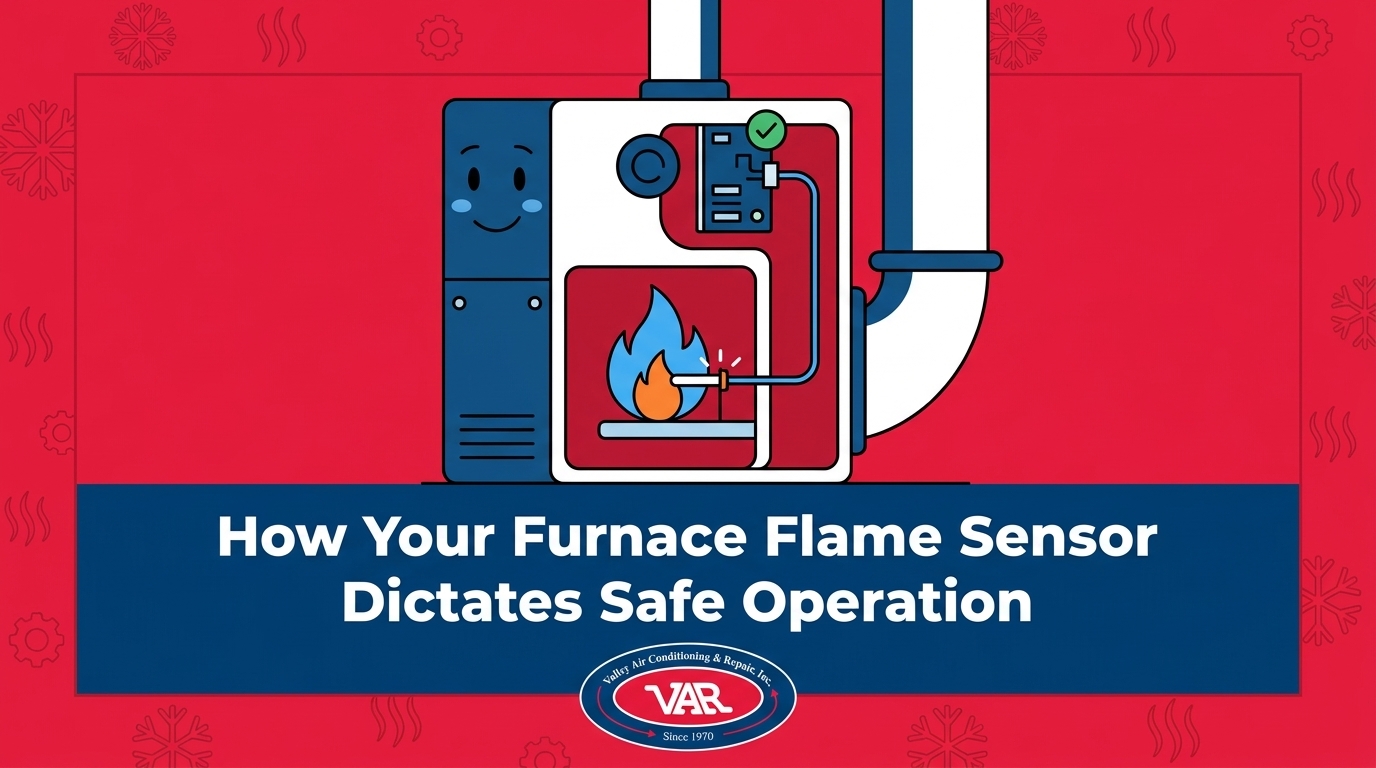
How Your Furnace Flame Sensor Dictates Safe Operation
If your heating system fires up only to shut down seconds later, a dirty flame sensor is likely to blame. See why this tiny rod triggers a strict safety lockout.
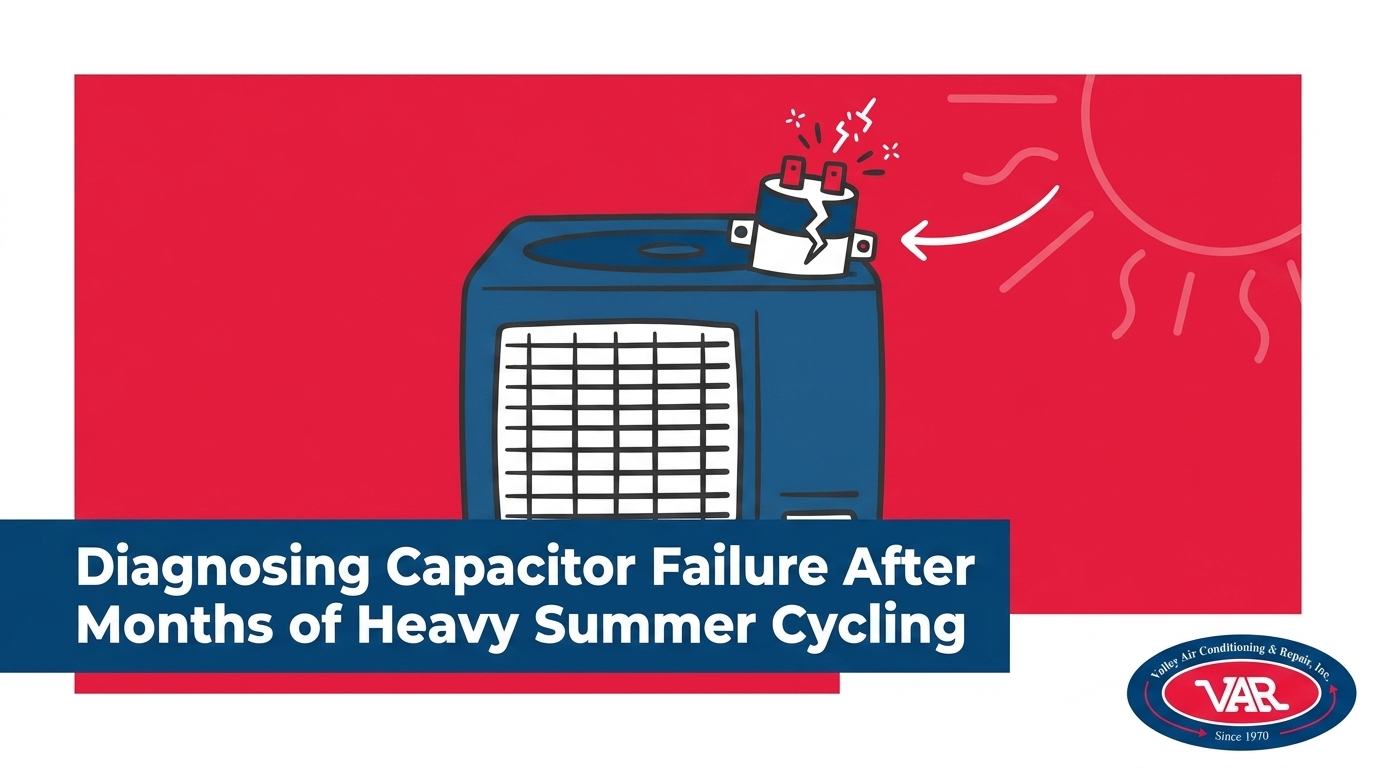
By the time August late-summer cooling demands arrive, diagnosing capacitor failure after months of heavy summer cycling becomes a top priority for homeowners noticing their system starting to struggle. Here at Valley Air Conditioning & Repair, Inc., our team routinely fields calls from Fresno residents whose air conditioners have been running relentlessly since May, battling high temperatures day in and day out. This continuous operation creates significant cumulative wear on the internal components of your outdoor condensing unit. When a system begins to hesitate, stutter, or make unusual noises late in the season, it is rarely a random breakdown. Instead, it is a predictable sign of mechanical fatigue setting in after hundreds of hours of operation.
If you are experiencing these early warning signs, you can learn more about how extreme heat impacts air conditioning systems and why proactive care is essential.
In our experience, one of the most common failure points after months of relentless cycling is the dual-run capacitor. This small, cylindrical component sits inside your outdoor unit and acts as the electrical heart of the system. Throughout the summer, it endures massive electrical loads and extreme temperature fluctuations. By late summer, the internal materials within the capacitor often begin to break down. Recognizing this degradation is a critical decision point for homeowners. Addressing early symptoms proactively allows you to replace a single, affordable component. Waiting for a complete system breakdown, however, often leads to much more extensive and costly damage to the surrounding motors.
To understand why this component fails, you first need to understand its demanding job. The dual-run capacitor is responsible for providing a massive jolt of energy to start both the compressor and the condenser fan motor. When your thermostat calls for cooling, these heavy-duty motors require three to five times their normal running amperage just to overcome mechanical inertia and start spinning. The capacitor acts like a powerful, short-term battery, storing electrical energy and releasing it instantly to get those motors moving. Once the motors are running, the capacitor continues to provide a steady, lower-level electrical current to keep them spinning smoothly.
The job of a capacitor is difficult enough on a mild spring day, but extreme environmental heat changes the equation entirely. When outside temperatures soar, the ambient heat compounds with the electrical heat generated by the system itself. As the capacitor rapidly discharges and recharges to keep up with cooling demands, it generates its own internal thermal energy. During periods of 100+ degree extreme heat, the component is pushed to its absolute thermal limits.
ASHRAE (American Society of Heating, Refrigerating and Air-Conditioning Engineers) guidelines specifically address motor and capacitor operating temperatures, noting that excessive heat drastically reduces the lifespan of electrical components. When the ambient air surrounding the outdoor unit is already scorching, the capacitor cannot shed its internal heat fast enough. This trapped thermal energy slowly bakes the component from the inside out, setting the stage for late-summer failure.
Beyond the ambient temperature, the frequency of operation plays a massive role in component degradation. In our Fresno service area, the intense late-summer climate forces air conditioning units into incredibly high duty cycles. During severe heat waves, a system might run almost continuously, or worse, engage in rapid short-cycling. Short-cycling occurs when the system turns on and off frequently without completing a full cooling cycle. Every single time the system starts, the capacitor must deliver that massive jolt of starting amperage. Constant electrical cycling gives the component zero time to cool down between starts.
Inside the metal casing of the capacitor is a specialized dielectric fluid (or oil) that insulates the internal metal foils and helps dissipate heat. Our technicians frequently see the results of this thermal stress firsthand. Just last August, our team responded to a service call during a stretch where temperatures exceeded 100 degrees for 30 consecutive days; the relentless heat and non-stop cycling ultimately necessitated a completely new AC unit for the homeowner because the internal components had degraded beyond repair.
When a capacitor is subjected to relentless short-cycling and extreme heat, this dielectric fluid begins to break down at a molecular level. As the fluid degrades, it loses its insulating properties and begins to boil, creating gas. This gas buildup causes the physical casing of the capacitor to bulge or swell, a classic visual sign of failure. More importantly, the degraded fluid means the capacitor loses its charge capacity. It can no longer store or deliver the necessary voltage to start the compressor and fan motors, leaving the system paralyzed.
Because capacitor failure is a progressive issue rather than an instant break, the system usually gives you several warning signs before it stops working entirely. Our team at Valley Air Conditioning & Repair, Inc. has extensive local field experience identifying these specific heat-stressed symptoms early, helping Fresno homeowners catch the problem before it cascades into major motor damage. Knowing what to look and listen for during August late-summer cooling can save your system.
• Hard starts and stuttering: If your air conditioner sounds like it is struggling to turn on, stutters, or dims the lights in your house when it kicks on, the capacitor is likely failing to deliver the necessary starting voltage.
• Distinct humming or buzzing: A loud humming noise coming from the outdoor condensing unit usually means the electrical current is reaching the motors, but the capacitor cannot provide the jolt needed to make them spin.
• Warm air from vents: If the indoor blower fan is running but the outdoor compressor fails to start due to a weak capacitor, your system will blow uncooled, warm air through the vents.
• Unexpected system shutdowns: As a failing capacitor forces the system to pull more electrical current, it can cause the equipment to overheat and shut down via internal thermal overloads.
• Tripped circuit breakers: A capacitor that has completely shorted out will cause a sudden spike in amperage, which often trips the dedicated circuit breaker at your electrical panel to prevent a fire.

A failing capacitor does not just stop your air conditioner from working; it actively damages the other components in the outdoor unit. The dual-run capacitor is physically and electrically connected to both the compressor (which pumps the refrigerant) and the condenser fan motor (which exhausts the heat). When the capacitor loses its ability to deliver a strong starting jolt, those motors do not just give up—they try to start anyway.
Running an AC with a weak capacitor forces the compressor and fan motors to pull significantly higher electrical amps directly from your home's power supply in a desperate attempt to overcome mechanical inertia. This condition is known as drawing "locked rotor amps." This excess amperage creates massive amounts of electrical friction, leading to severe overheating in the compressor windings. If you have ever dealt with an AC condenser fan motor not spinning, a degraded capacitor is very often the root cause.
• Healthy Capacitor — Amperage Draw: Normal running amps — Motor Temperature: Within safe thermal limits — Risk of Permanent Damage: Low
• Weak/Degraded Capacitor — Amperage Draw: Spikes during startup attempts — Motor Temperature: Elevated, causing thermal stress — Risk of Permanent Damage: Moderate to High
• Failed/Dead Capacitor — Amperage Draw: Locked rotor amps (extreme spike) — Motor Temperature: Severe overheating of windings — Risk of Permanent Damage: Imminent compressor burnout
The mechanical relationship between these parts means that a failure in the capacitor creates a destructive chain reaction. The urgency of replacing this small electrical component cannot be overstated. Catching a weak capacitor before it completely fails is the best way to prevent catastrophic compressor burnout, which is one of the most extensive and labor-intensive repairs in the HVAC industry.
When an air conditioner starts humming or struggling during 100+ degree extreme heat, it is tempting to look up quick fixes online. However, dealing with high-voltage HVAC components is incredibly dangerous. Capacitors are designed to store massive amounts of electrical energy, and they retain that high-voltage charge even after the power to the unit has been completely shut off at the breaker. Touching the wrong terminals can result in a severe, life-threatening electrical shock.
Furthermore, visual inspections are rarely enough to accurately diagnose the system. While a severely damaged capacitor might bulge or leak fluid, many capacitors fail internally while looking perfectly normal on the outside. Exact microfarad readings are required to know if the component is performing within its rated specifications. A professional technician uses a specialized multimeter to safely discharge the capacitor and measure its exact output.
More importantly, a professional diagnostic verifies if the compressor or fan motor has already sustained damage from the chain reaction. Our team recently helped a local family who experienced an AC failure during extreme summer heat; a fast, professional response from our technicians diagnosed the electrical failure safely and had the system cooling again before the house reached 110 degrees. Highlighting this proactive diagnostic approach ensures that larger components are saved by catching electrical failures safely and accurately. If you suspect an electrical issue, relying on professional HVAC services is the only way to ensure the system is tested and repaired safely.
AC capacitors fail most frequently in the summer because continuous electrical demand and high ambient temperatures degrade their internal fluids. The component acts as a short-term battery that must rapidly charge and discharge to start the motors. Over months of heavy operation, this cumulative wear peaks, causing the internal dielectric fluid to break down and lose its ability to hold an electrical charge.
A bad AC capacitor typically produces a distinct humming or buzzing sound coming from the outdoor unit. This noise occurs because electrical current is reaching the motors, but the capacitor cannot provide the necessary starting jolt to make them spin. You may also hear clicking noises followed by silence as the motor struggles to start and then shuts down on thermal overload.
Yes, a bad capacitor can easily ruin your AC compressor by forcing it to draw excessive amperage to start. Without the capacitor's energy jolt, the compressor struggles against mechanical inertia, causing severe overheating in its internal electrical windings. Over time, this overheating leads to permanent thermal damage and catastrophic compressor failure.
No, continuing to run your AC with a bad capacitor risks catastrophic motor failure and severe system damage. Even if the system occasionally manages to start, it is operating under extreme electrical stress. The air conditioning system should be shut off at the thermostat immediately upon noticing symptoms like humming or hard starts.
The symptoms of a bad capacitor and a bad compressor often overlap, including humming noises, hard starts, and a failure to cool the home. Because the symptoms are nearly identical to the untrained eye, only a professional with a multimeter can definitively test the microfarad output. A technician must safely measure the electrical readings to distinguish whether the capacitor has failed or the compressor itself is damaged.
Late-summer capacitor degradation is a predictable result of heavy mechanical stress, extreme ambient temperatures, and thousands of startup cycles. By the time August arrives, the internal components of your condensing unit have endured significant wear and tear. Recognizing the early warning signs—such as stuttering startups, distinct humming noises, and warm air from the vents—is the key to protecting the most expensive parts of your system.
Catching these symptoms early and relying on professional diagnostics ensures that a simple component replacement does not turn into a catastrophic compressor failure. If your system is humming or struggling to keep up with the 100+ degree extreme heat, do not wait for it to shut down completely. When you call Valley Air Conditioning & Repair, Inc., our team provides a clear explanation of the problem and a swift, professional replacement to restore your comfort safely. To safeguard your equipment against end-of-season breakdowns, explore preventative AC maintenance options that keep your cooling system running efficiently year after year.

As a business with many AC units, it is essential to have a responsive AC company. Valley Air Conditioning understands our needs. They are always responsive and our AC is up and running very quickly.
I had them do an AC check on the home I was buying, they were honest and quick. I hired them to do the summer and Fall maintenance for $149. Happy with this company!
100% recommend. I called, same day they came out and gave me estimate. Conley was honest and didn't try to recommend/sell us anything we didn't need. When I called him with questions before making a decision, he happily answered and was not annoyed by me contacting him. Conley and VAR
This is a group of good people. Very professional and knowledgeable. They take the time to listen and find the best solution that fits best for any situation. There's no way you can go wrong in choosing VAR.
We have used Valley Air for over fifteen years. The last two years ,Matt came to our house to service twice a year. Always on time, so polite and so professional. This is a very honest company and you can always depend on them and trust them. The office always treats everyone cheerfully and always want to do what you need done very fast YOU CAN COUNT ON THIS Company