Behind the Scenes of a Late Fall Furnace Inspection Checklist Before Winter Freezes Hit
See what a professional late fall furnace inspection checklist covers. Decide with confidence before winter freezes hit. Schedule service today.
November is here, and the familiar pre-winter chill is finally settling over the region. While your heating equipment has likely been sitting completely idle since early spring, the upcoming weather is about to demand that it performs flawlessly for months on end. At Valley Air Conditioning & Repair, Inc., we know that walking you through our professional late fall furnace inspection checklist is the best way to help you understand exactly what your system needs before that first freezing night arrives. You want to know your home is safe, your equipment is ready, and you will not be left shivering when the temperature suddenly drops.
If you are looking to secure reliable heating services, scheduling your residential pre-season heating preparation with our team is the most effective step you can take right now.
Furnaces do not simply rest during the summer; they sit in a state of vulnerability. Moving from months of total inactivity into sudden, demanding usage places an enormous amount of stress on mechanical and electrical components. Based on our years of experience serving homeowners across Fresno and the Central Valley, we consistently see how the extreme shift from 100-degree summer afternoons to near-freezing winter nights uniquely stresses dormant equipment. Metal parts expand and contract, dust settles deeply into sensitive sensors, and moisture creeps into places it does not belong.
Most homeowners do not realize that a dormant heating system is highly susceptible to ignition failures and hidden safety risks if it is not properly evaluated before startup. Turning the thermostat to "heat" and hoping for the best is a gamble. By understanding what specific components require professional validation, you can prioritize proactive safety over reactive, stressful repairs.
To understand why a detailed inspection is necessary, you have to look at the physical toll the off-season takes on your equipment. The transition into the November pre-winter and Tule fog onset is not just a change in the weather; it is a dramatic shift in the operating environment of your HVAC system.
Metals naturally expand when exposed to extreme heat and contract as temperatures drop. Over the course of a long, blistering summer, the metal components inside your furnace—especially the heat exchanger and burner assemblies—undergo subtle but continuous physical shifts. When the cold weather finally arrives and the furnace fires up, the sudden blast of intense heat causes rapid expansion. Over years of these cycles, the metal can become fatigued. A simple test run will not reveal microscopic stress fractures caused by these temperature swings; it requires a trained eye to spot the early warning signs of metal fatigue.
While your furnace sat quietly for six or more months, the air inside your home kept moving. Dust, pet dander, lint, and airborne particles continuously circulated through your ductwork. Much of this debris settles directly onto the internal components of your furnace. When dust coats the burners, blower motor, and ignition sensors, it acts as an insulator and a physical barrier. This buildup forces the system to work harder, run hotter, and frequently leads to sudden shutdowns when the sensors fail to read the flame correctly—an issue our service crews respond to constantly during the first few weeks of November.
High moisture levels during seasonal transitions can severely impact unprotected electrical components. Condensation can form inside the cabinet, leading to light corrosion on wiring terminals and circuit boards. This environmental stress dictates that your system needs much more than a quick visual glance. A targeted, professional evaluation cleans away the summer debris, tightens connections loosened by thermal contraction, and ensures the electrical system is free from moisture-induced faults before you rely on it daily.
If there is one component that dictates the safety of your entire heating system, it is the heat exchanger. This critical metal chamber has a very specific, vital job: it safely transfers the heat from the burning gas into the air that circulates through your home, while keeping the toxic combustion gases completely separate.
Because the heat exchanger is subjected to the direct flame of the burners, it experiences the most extreme temperature fluctuations of any part in your system. As discussed earlier, the constant thermal stress of expanding and contracting can eventually cause the metal to warp, crack, or rust through.
The Hidden Danger of Microscopic Cracks
A compromised heat exchanger is a severe safety hazard. Even a hairline fracture that is invisible to the naked eye can expand when the furnace heats up. When this happens, deadly carbon monoxide (CO) and other exhaust gases can leak directly into your home's breathing air instead of being vented safely out the flue. Because carbon monoxide is odorless, colorless, and tasteless, a cracked heat exchanger is one of the most dangerous issues a home can face during the winter months.
Identifying these microscopic fissures requires specialized professional tools. During Valley Air Conditioning & Repair's thorough, professional walk-through process, our technicians do not just glance at the metal. We utilize specialized inspection cameras, combustion analyzers, and rigorous testing protocols to verify the absolute integrity of the chamber. This level of detail is a non-negotiable part of how we keep homes in Fresno and the Central Valley safe throughout the heating season.
When a furnace fails on the very first cold night of the year, the culprit we find most often is right at the ignition source. The flame sensor and the burner assembly are highly sensitive components that dictate whether your system will actually produce heat or simply lock you out in the cold.
The flame sensor is a critical safety device designed to detect whether a fire is actually burning when the gas valve opens. If the sensor does not detect a flame within a few seconds, it immediately shuts off the gas to prevent unburned fuel from flooding your home. However, this sensor is incredibly sensitive to contamination.
During the November pre-winter transition, the damp, dense Tule fog moisture can combine with accumulated summer dust to form a microscopic layer of grime on the flame sensor. This nearly invisible coating is enough to block the electrical current, tricking the furnace into thinking there is no flame, resulting in an immediate system shutdown.
Our professional checklist ensures these components are meticulously serviced to prevent unexpected breakdowns:
• Flame Sensor Cleaning: Technicians carefully remove the sensor and use specialized abrasive materials to gently polish away the layer of oxidation, dust, and moisture without damaging the sensitive metal rod.
• Burner Assembly Inspection: The burners are inspected for rust, spider webs, and debris that can alter the flow of gas.
• Burner Vacuuming and Brushing: Professionals safely clean the burner ports to ensure the gas flows evenly, producing a clean, blue, and efficient burn rather than a dangerous yellow flame.
• Ignition Sequence Testing: The system is cycled multiple times to verify that the igniter glows properly, the gas valve opens smoothly, and the flame sensor registers the fire instantly.
Connecting this checklist item directly to your comfort means you will not be the homeowner waking up to a freezing house because a speck of dust tripped a safety switch.
Modern furnaces are equipped with a complex network of safety switches designed to shut the system down if anything operates outside of safe parameters. A comprehensive inspection involves physically validating that these safety lockouts are working exactly as intended.
Primary Safety Switches Tested:
• The High-Limit Switch: This switch monitors the internal temperature of the furnace. If the system overheats (usually due to a clogged filter or a failing blower motor), the limit switch shuts off the burners to prevent a fire or a cracked heat exchanger.
• The Flame Rollout Switch: If the exhaust flue is blocked or the heat exchanger is cracked, flames can literally "roll out" backwards toward the front of the furnace. This switch detects the misplaced heat and cuts the gas supply immediately.
• The Draft Safeguard Switch: This ensures that the inducer motor is properly venting hazardous exhaust gases out of the home before the main burners are even allowed to ignite.
Our professional technicians test these lockouts by simulating fault conditions to ensure they trigger correctly. If a switch is stuck closed, it will not protect your home when a real emergency occurs.
Beyond the switches, our professional process includes a thorough inspection of internal wiring and electrical connections. The vibrations from the blower motor, combined with thermal contraction from the changing weather, can easily loosen wire nuts and terminal connections. Securing these connections prevents electrical shorts, reduces the risk of blown fuses, and vastly improves the overall reliability of your system.
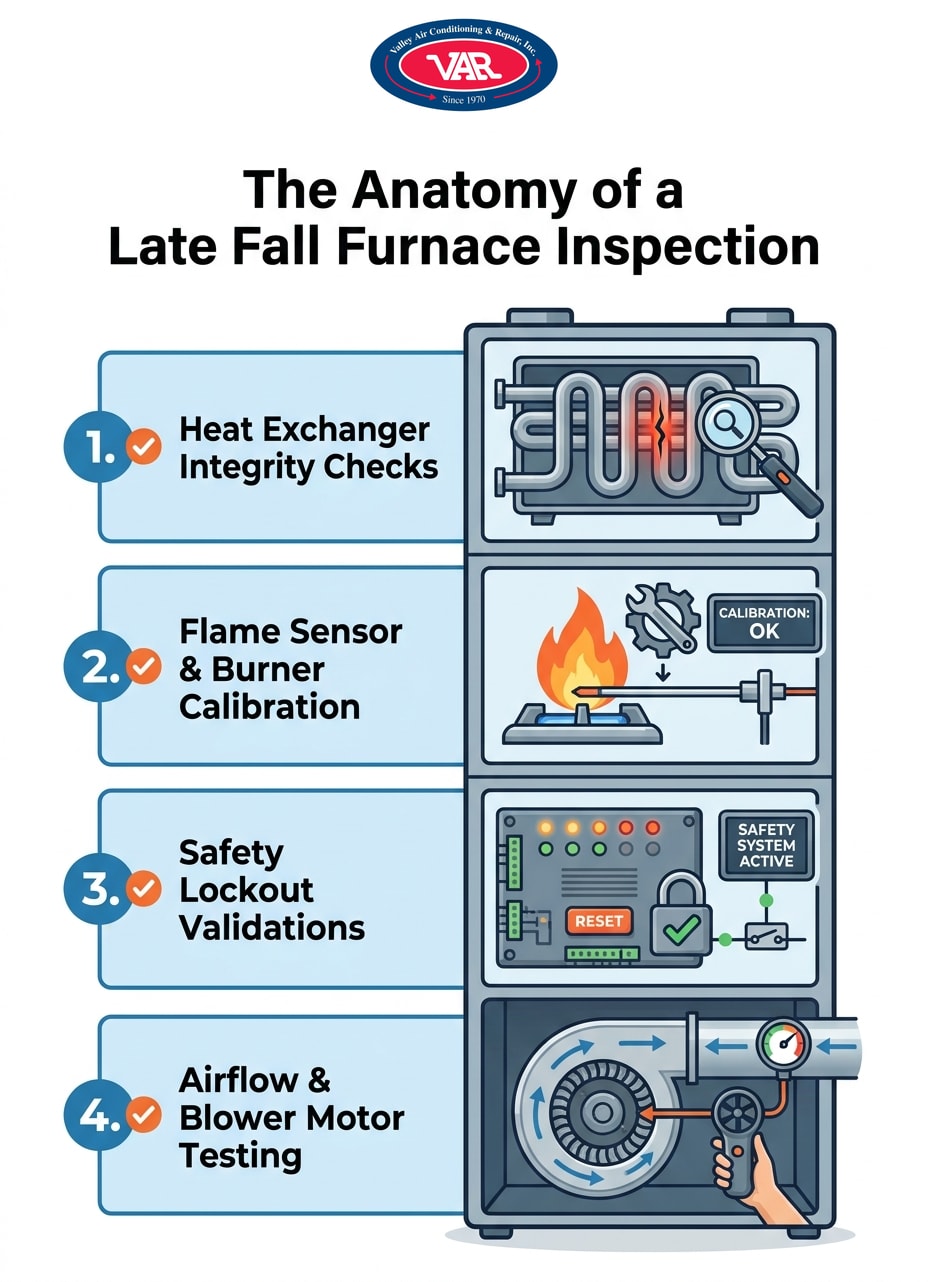
Even if your furnace generates heat perfectly, that heat is useless if it cannot be efficiently delivered to the rooms in your home. Evaluating system airflow is a major pillar of pre-season preparation, directly connecting your furnace's performance to the overall comfort and air quality of your living space.
When airflow is restricted, the furnace is forced to overwork. The heat builds up inside the cabinet instead of moving into your ductwork, which often causes the high-limit switch to trip and shut the system down prematurely. This short-cycling drastically reduces the energy efficiency of the unit and increases the wear and tear on critical components, shortening the lifespan of your equipment.
Airflow issues typically stem from the blower motor assembly or severe filter blockages. Over the summer, dust settles heavily into the blower wheel blades, changing their aerodynamics and making the motor work harder to push the same amount of air. If the system uses a fan belt, it may have stretched, cracked, or dried out over the summer months.
During the walk-through, our technicians check the amp draw on the blower motor to ensure it is not straining, inspect the fan belt (if applicable), and clean the internal cabinet. This thorough cleaning prevents the sudden circulation of accumulated summer dust, pet dander, and allergens throughout your home when the heat first kicks on.
Furthermore, our team can provide guidance on selecting the right filtration for your specific system. While thick, highly-rated pleated filters are great for trapping particles, they can also severely restrict airflow if your blower motor is not designed to handle the resistance. Balancing your system's airflow with your indoor air quality goals is a crucial step we recommend for preparing for a comfortable winter across Fresno and the Central Valley.
As you prepare your home for the November pre-winter transition and the onset of Tule fog, it is essential to clearly delineate safe homeowner preparation tasks from the highly technical requirements of a professional walk-through. Heating systems involve combustible gas, high-voltage electricity, and toxic exhaust fumes. Crossing the line from basic maintenance into DIY repairs is incredibly dangerous.
• Replacing or washing the return air filter every 30-90 days. — Professional Walk-Through Requirements (Licensed Only): Testing the heat exchanger for microscopic cracks and carbon monoxide leaks.
• Ensuring all supply and return vents are open and unblocked by furniture or rugs. — Professional Walk-Through Requirements (Licensed Only): Calibrating the gas valve pressure and cleaning the internal burner assembly.
• Clearing away boxes, debris, and flammable materials from the area immediately surrounding the furnace. — Professional Walk-Through Requirements (Licensed Only): Testing electrical safety lockouts, limit switches, and flame rollout sensors by simulating fault conditions.
• Testing the thermostat to ensure it powers on and communicates with the system. — Professional Walk-Through Requirements (Licensed Only): Removing and polishing the flame sensor to ensure proper ignition sequencing.
We issue a strict warning against attempting to clean internal burners, test gas valves, or inspect heat exchangers without a proper license. These tasks require specialized training and diagnostic tools. If you encounter issues while performing your basic homeowner checks, exploring guides on troubleshooting your first fall furnace startup can help you identify when it is time to call in the experts. Our professional checklist is not just a service; it is a necessary partnership for safe, reliable winter heating.
The value of a detailed, professional checklist lies in its ability to prevent unexpected breakdowns and severe safety hazards before they happen. By addressing thermal fatigue, cleaning sensitive ignition sensors, validating safety lockouts, and thoroughly checking the heat exchanger, you remove the guesswork from your winter preparations.
Remember that the window before overnight temperatures drop significantly is narrow. Once the November pre-winter chill fully takes hold and the Tule fog rolls in, heating systems across the region will be pushed to their limits. Now is the time to be proactive.
Ensure your peace of mind and the safety of your home by scheduling a professional walk-through with Valley Air Conditioning & Repair today. Take the time to secure your residential pre-season heating preparation so your family can enjoy a warm, comfortable, and worry-free winter season.
What is included in a professional furnace inspection?
A professional inspection involves a comprehensive safety and performance evaluation of your entire heating system. Our technicians will inspect the heat exchanger for cracks, clean and calibrate the flame sensor, test all safety lockouts, and verify the electrical connections. We also check the burner assembly, measure the blower motor's amp draw, and ensure the system is venting exhaust gases safely out of the home.
Why do furnaces frequently fail on the first cold night of the year?
Furnaces often fail on the first cold night because they have been sitting dormant for months, allowing dust and moisture to accumulate on sensitive components. A microscopic layer of dust on the flame sensor is a leading cause of immediate ignition failure. Additionally, mechanical parts that have not moved in half a year may seize or struggle when suddenly asked to perform under heavy demand.
Can I inspect my own furnace before turning it on?
You can and should perform basic homeowner preparation, but you cannot perform a full inspection safely. Homeowners should change the air filter, ensure all vents are unblocked, and clear debris away from the furnace cabinet. However, testing gas valves, cleaning internal burners, and checking the heat exchanger for carbon monoxide risks require a licensed professional with specialized tools.
How often should a residential furnace be inspected?
A residential furnace should be inspected by a licensed professional at least once a year, ideally in the late fall before the heavy winter weather arrives. Annual inspections are recommended by the U.S. Department of Energy to maintain energy efficiency and prevent dangerous safety hazards. Consistent annual checks also help preserve your equipment's manufacturer warranty.
What happens if you don't service your furnace before winter?
Skipping pre-winter service leaves your system highly vulnerable to unexpected breakdowns and safety risks. Dust buildup can cause the system to overheat and short-cycle, drastically increasing your energy bills and wearing out parts prematurely. Most importantly, failing to check the heat exchanger leaves your home at risk for undetected carbon monoxide leaks.
How does extreme summer heat affect my dormant furnace?
Extreme summer heat causes the metal components inside your dormant furnace to expand and contract continuously over the off-season. This thermal stress can weaken the heat exchanger and loosen electrical connections. Additionally, the stagnant summer air allows thick layers of dust and pet dander to settle deep into the system's moving parts and sensors.

As a business with many AC units, it is essential to have a responsive AC company. Valley Air Conditioning understands our needs. They are always responsive and our AC is up and running very quickly.
I had them do an AC check on the home I was buying, they were honest and quick. I hired them to do the summer and Fall maintenance for $149. Happy with this company!
100% recommend. I called, same day they came out and gave me estimate. Conley was honest and didn't try to recommend/sell us anything we didn't need. When I called him with questions before making a decision, he happily answered and was not annoyed by me contacting him. Conley and VAR
This is a group of good people. Very professional and knowledgeable. They take the time to listen and find the best solution that fits best for any situation. There's no way you can go wrong in choosing VAR.
We have used Valley Air for over fifteen years. The last two years ,Matt came to our house to service twice a year. Always on time, so polite and so professional. This is a very honest company and you can always depend on them and trust them. The office always treats everyone cheerfully and always want to do what you need done very fast YOU CAN COUNT ON THIS Company