.webp)


AC Repair in Fresno, CA: Troubleshooting Your Fall HVAC Transition
Why we take fall furnace smells seriously. Get clear answers with these home maintenance tips and troubleshooting for a safe heating startup.
You flip the thermostat to "heat" for the first time this season, and within minutes, a sharp burning smell fills your hallway. It is a stressful situation that our technicians at Valley Air Conditioning & Repair see in homes all over the Fresno area during the mid-fall October heating startup. If you are looking for reliable home maintenance tips and troubleshooting, the very first step is understanding that the transition from heavy summer cooling to winter heating often exposes hidden strain inside your equipment. You are immediately faced with a critical decision: do you let the system run to see if the smell fades, or do you shut it down right away to prevent a fire?
The short answer is that while initial odors are common, they should never be ignored. The sudden shift in seasonal operation forces idle mechanical components to wake up and perform under pressure. Understanding what physically happens inside your furnace during this transition is the key to protecting your home. For comprehensive support and expert guidance through every season, exploring professional HVAC services ensures your equipment operates safely and efficiently all year long.
To understand why your heating system struggles in the fall, you have to look at what it endured over the summer. We know from years of servicing Central Valley homes that Fresno's extreme 100+ degree summers demand relentless performance from your cooling equipment. While your outdoor condenser works overtime, your indoor blower motor pushes massive volumes of chilled air through your ductwork for months on end. During this entire period, the heating components inside your furnace—specifically the gas burners and the heat exchanger—sit completely idle.
As the indoor blower circulates air to cool your home, microscopic particles bypass your air filter. Pet dander, lint, and household dust continuously settle on the cold metal surfaces of the dormant heat exchanger. Because the heating cycle never activates during the summer, this debris accumulates into a fine, dense layer. Furthermore, the intense demand of peak cooling season often leaves air filters heavily clogged by the time October arrives. When you finally switch the thermostat to heat, the system operates as a unified whole. The restricted airflow and heavy dust buildup left over from summer directly impact your furnace's ability to ignite and breathe properly.
This interconnected relationship means that neglecting summer wear and tear sets the stage for fall heating failures. If your system was struggling to keep up in August, those underlying airflow issues will immediately trigger safety sensors in November. Addressing these lingering issues often requires professional air conditioning repair and seasonal maintenance to clear the slate before the cold weather sets in.
When your furnace ignites for the first time in months, the flames rapidly heat the metal heat exchanger to high temperatures. The layer of dust and dander that settled over the summer instantly incinerates. This physical reaction produces a distinct, toasted odor that circulates through your air vents. While alarming, this specific process is entirely normal.
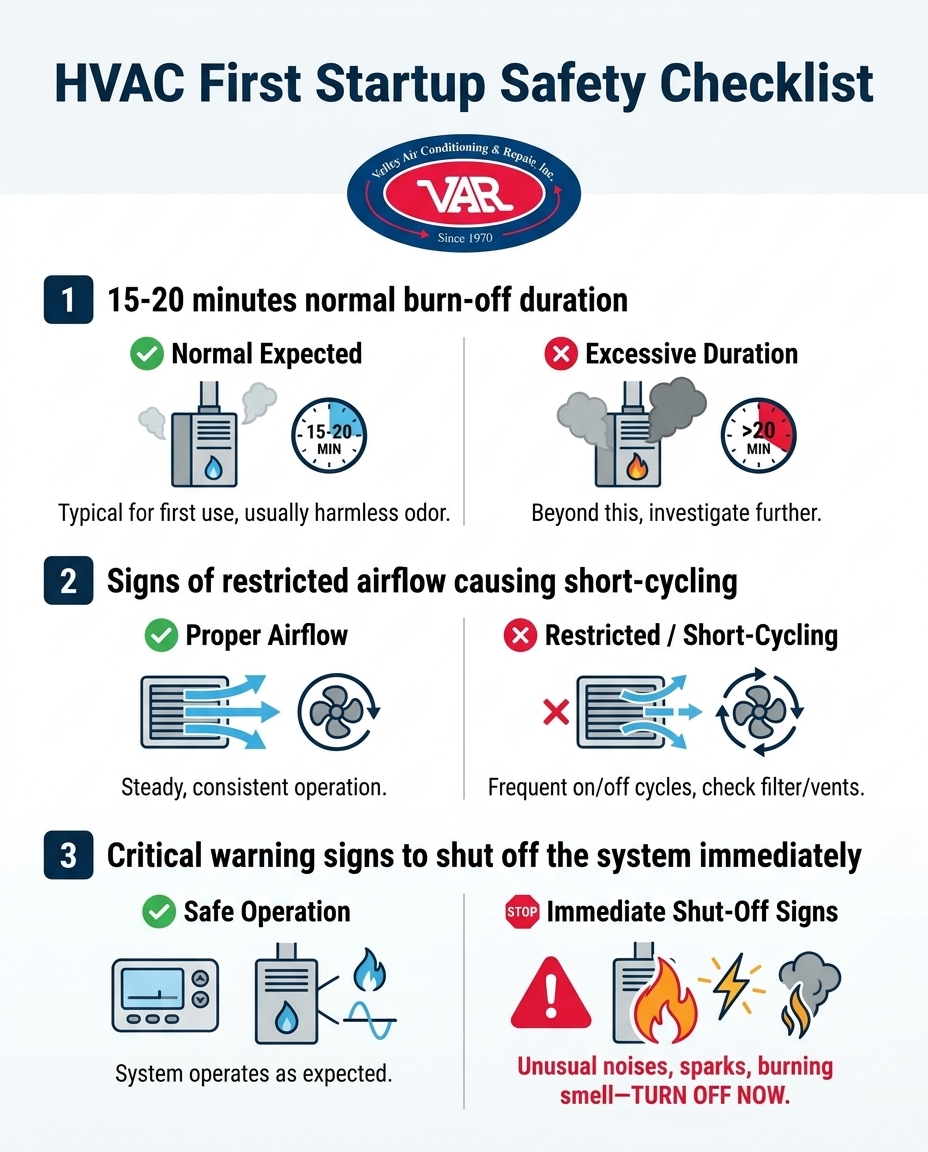
The standard guideline for this process is the 15-20 minutes (typical duration for harmless dust burn-off) rule. If the smell is simply settling dust incinerating, it will peak quickly and begin to dissipate within this timeframe. The odor of burning dust is generally described as a dry, slightly metallic, or dusty smell. It should never smell like toxic chemicals, melting plastic, or electrical ozone.
To help you differentiate between harmless seasonal burn-off and a serious mechanical hazard, consider these distinctions:
• Duration — Harmless Dust Burn-Off: Fades entirely within 15 to 20 minutes. — Dangerous Mechanical Failure: Persists or grows stronger after 30 minutes.
• Odor Type — Harmless Dust Burn-Off: Smells like toasted dust or a hot iron. — Dangerous Mechanical Failure: Smells like melting plastic, ozone, or rotten eggs.
• System Behavior — Harmless Dust Burn-Off: Runs smoothly and heats the home evenly. — Dangerous Mechanical Failure: Shuts down abruptly, makes grinding noises, or trips breakers.
• Visual Signs — Harmless Dust Burn-Off: No visible smoke or soot anywhere. — Dangerous Mechanical Failure: Visible smoke, soot around vents, or yellow burner flames.
According to safety guidelines from organizations like the U.S. Department of Energy, homeowners should always prioritize safety over comfort. If the odor falls into the dangerous category, do not wait for the 15-20 minute window to close. Shut the system off immediately. For a deeper dive into diagnosing unusual system behaviors, reviewing a comprehensive AC troubleshooting guide can provide additional clarity on what sounds and smells are considered normal.
When you are ready to test your heating system for the first time, do not turn it on and leave the house. You need to actively monitor the initial cycle.
• Ventilate the space: Open a few windows to allow the harmless dust odors to escape the house quickly.
• Stay near the thermostat: Remain within earshot of the system so you can hear if it struggles to ignite or shuts down abruptly.
• Watch the clock: Note the exact time the system turns on so you can accurately track the 15-20 minute burn-off window.
• Be ready to abort: If the smell becomes acrid, stings your eyes, or sets off smoke detectors, switch the thermostat to "off" immediately.
One of the most frustrating experiences during a mid-fall October heating startup is a system that turns on, blows warm air for two minutes, and then abruptly shuts down before the house gets warm. This behavior is called short-cycling, and it is a protective mechanism built into your furnace's control board. When the system short-cycles, it is actively preventing a catastrophic failure.
In our daily field experience, the most common culprit for short-cycling during the first fall startup is a dirty flame sensor. The flame sensor is a delicate metal rod positioned inside the burner assembly. Its only job is to detect whether a flame is actually present when the gas valve opens. Over the summer, this rod can become coated in carbon, dust, and oxidation. When the furnace tries to start, the dirty sensor fails to register the flame. To prevent raw gas from flooding your home, the control board immediately shuts the system down. Because this component is highly sensitive, cleaning it requires specialized professional tools and techniques.
Another primary cause of short-cycling is restricted airflow. If you enter the fall season with an air filter that is completely clogged from summer cooling, the furnace cannot pull enough cold air across the heat exchanger. Without that steady flow of air to absorb the heat, the internal temperature of the furnace spikes rapidly. A safety device called the high-limit switch detects this dangerous overheating and cuts the power to the burners. The blower will continue to run to cool the metal down, but the heating cycle is aborted. Resolving these internal sensor and airflow issues requires a professional diagnosis to ensure the safety switches are operating correctly.
While dust burn-off is harmless, there are definitive warning signs that indicate your heating system is structurally compromised. If you experience continuous electrical smells, notice black soot accumulating around your supply registers, or hear loud booming noises when the burners ignite, your system requires immediate professional intervention. These symptoms go far beyond basic maintenance and point to serious mechanical hazards.
The dangers of a cracked heat exchanger: The heat exchanger is the metal barrier that separates the toxic combustion gases from the clean air blowing into your home. If the metal has cracked due to age, overheating, or stress, carbon monoxide can leak directly into your living space. Carbon monoxide is colorless, odorless, and highly dangerous. Because a cracked heat exchanger cannot be repaired and must be replaced, any suspicion of this issue warrants an immediate shutdown of the equipment.
Valuing trusted local expertise that understands Central Valley climate demands means you get a rapid response when emergencies strike. Whether it is a critical heating failure in November or a cooling crisis in July—like when one local homeowner experienced a sudden weekend malfunction and our Valley Air Conditioning & Repair technician responded on short notice to find a working solution—fast, professional intervention keeps your home safe. Opening the furnace cabinet to inspect heat exchangers, test limit switches, or clean flame sensors must always be handled by licensed professionals who carry the right diagnostic tools and understand local safety codes.
In the Central Valley, the transition to heating season also means properly decommissioning your cooling equipment. Many homes in the area utilize evaporative coolers, commonly known as swamp coolers, which require specific winterization steps before the first freezing temperatures arrive.
Evaporative coolers rely on a continuous water supply to operate. If you leave the water lines connected and the reservoir full as the weather turns cold, the first overnight freeze will cause the water to expand. This expansion easily cracks the internal water lines, destroys the pump, and can lead to significant water damage on your roof or side yard. A proper seasonal shutdown involves draining the pan, disconnecting the water supply, removing and drying the cooling pads, and installing a heavy-duty cover to block winter drafts from entering the house.
Standard air conditioning condensers also need attention during the seasonal shift. While they do not contain water, they are susceptible to falling autumn leaves and debris. Clearing the perimeter of the outdoor unit prevents organic matter from trapping moisture against the metal casing, which can cause corrosion over the winter months. For homes utilizing complex dual-system setups, relying on professional evaporative cooler services ensures that the cooling equipment is safely winterized and the heating equipment is properly staged for the months ahead.
The most effective way to avoid the stress of alarming smells and sudden short-cycling is to transition from reactive troubleshooting to proactive care. A thorough pre-season inspection prepares your entire HVAC system for the heavy lifting of winter. Instead of waiting for a safety switch to trip on the coldest night of the year, a professional tune-up addresses the root causes of system strain before the equipment is pushed to its limits.
During a comprehensive fall maintenance visit, our technicians perform vital tasks that homeowners cannot safely do themselves. This includes testing the microamp draw of the flame sensor, calibrating the thermostat, inspecting the heat exchanger for hairline cracks, checking the gas pressure, and verifying that the high-limit safety switches are fully operational. This level of detail ensures that when you finally turn the heat on, it operates cleanly, safely, and without interruption.
Routine care prevents massive disruptions. An honest inspection catches minor wear before it turns into a total system failure. For instance, during a brutal 30-day stretch of 100-degree weather, one customer's aging unit failed completely, requiring a full replacement with a new, phone-controllable system and flexible financing. While our installation team handled that major project smoothly, proactive pre-season maintenance is designed to prevent those kinds of sudden, stressful breakdowns. Securing a routine AC maintenance plan provides the peace of mind that your seasonal transitions will be handled seamlessly by professionals who know your equipment inside and out.
Harmless dust burn-off typically dissipates within 15 to 20 minutes of continuous operation. When you turn on your heater for the first time in the fall, the settled dust on the heat exchanger incinerates rapidly. If the smell persists beyond 30 minutes, you should shut the system down and contact a professional.
Short-cycling occurs when a safety mechanism forces the furnace to shut down prematurely. The most common causes during the first fall startup are a dirty flame sensor that cannot detect ignition, or a severely clogged air filter that causes the heat exchanger to overheat. Both situations require professional diagnosis to restore safe operation.
You should worry if the burning smell resembles melting plastic, electrical ozone, or rotten eggs. While a dry, dusty smell is normal for the first 20 minutes of operation, acrid chemical odors indicate melting wires or failing motors. If you detect these dangerous smells, turn the thermostat off immediately.
It depends entirely on the type of smell and how long it lasts. The brief smell of burning dust during the first autumn startup is not dangerous and is a normal physical reaction. However, persistent electrical or plastic smells are highly dangerous and indicate a severe mechanical or electrical failure.
Yes, a dirty air filter severely restricts the amount of cold air flowing over the furnace's heat exchanger. Without enough airflow to absorb the heat, the internal temperature spikes rapidly. The furnace's high-limit safety switch will trip and shut the burners off to prevent a fire, resulting in short-cycling.
A flame sensor should be inspected and cleaned by a licensed professional once a year, typically during your annual fall heating tune-up. Because the sensor sits directly in the burner flame, it naturally builds up a layer of carbon and oxidation that must be carefully removed with specialized tools to ensure reliable ignition.
Navigating the transition from summer cooling to winter heating does not have to be a stressful experience. While a brief period of dust burn-off is a normal part of the season, persistent odors, strange noises, and immediate short-cycling are clear signals that your system needs professional attention. Peace of mind during the fall transition is absolutely worth a professional assessment.
If you are experiencing ongoing burning smells or a system that refuses to stay running, do not ignore the warning signs. Reach out to our local Valley Air Conditioning & Repair team for expert diagnosis and reliable repairs. A clear technical explanation of what is normal versus what is dangerous—along with definitive criteria for when to shut down your equipment—ensures your home remains a safe, comfortable environment all winter long.

As a business with many AC units, it is essential to have a responsive AC company. Valley Air Conditioning understands our needs. They are always responsive and our AC is up and running very quickly.
I had them do an AC check on the home I was buying, they were honest and quick. I hired them to do the summer and Fall maintenance for $149. Happy with this company!
100% recommend. I called, same day they came out and gave me estimate. Conley was honest and didn't try to recommend/sell us anything we didn't need. When I called him with questions before making a decision, he happily answered and was not annoyed by me contacting him. Conley and VAR
This is a group of good people. Very professional and knowledgeable. They take the time to listen and find the best solution that fits best for any situation. There's no way you can go wrong in choosing VAR.
We have used Valley Air for over fifteen years. The last two years ,Matt came to our house to service twice a year. Always on time, so polite and so professional. This is a very honest company and you can always depend on them and trust them. The office always treats everyone cheerfully and always want to do what you need done very fast YOU CAN COUNT ON THIS Company