The Impact of Clogged Condensate Drains on Fall Indoor Humidity
The Impact of Clogged Condensate Drains on Fall Indoor Humidity
Why Your Home Feels Unusually Muggy This September
If you are experiencing the impact of clogged condensate drains on fall indoor humidity, you already know that even though the peak summer heat has broken, your house still feels sticky, damp, and uncomfortable. It is a frustrating scenario: you are running your cooling system to stay comfortable, but instead of delivering crisp, refreshing air, the vents seem to push out heavy, muggy air. Many homeowners assume this sudden shift is just a normal weather transition. They blame the changing seasons, assuming the outdoor air is simply more humid as we move away from the dry heat of mid-summer.
In reality, this lingering indoor mugginess in early fall Fresno homes is rarely just a weather issue. After years of diagnosing HVAC systems throughout the Central Valley, our team at Valley Air Conditioning & Repair, Inc. has found that it is almost always a mechanical issue hiding inside your cooling equipment. Specifically, lingering summer algae in the AC condensate drain is trapping moisture indoors. As the intense summer heat gives way to milder September temperatures, we frequently see cooling systems behave differently. They do not run as long or as hard as they did in July, which exposes hidden drainage problems that have been quietly building up for months.
The quick fix: Addressing this sticky air is a matter of proactive seasonal care rather than an emergency repair. When you want to improve your indoor air quality, understanding how your equipment handles moisture is the first step. By recognizing that high indoor humidity during the September early fall transition is a solvable drainage issue, you can take the right steps to restore your home's comfort before the colder weather sets in.
The Hidden Workhorse: How Your AC Handles Summer Moisture
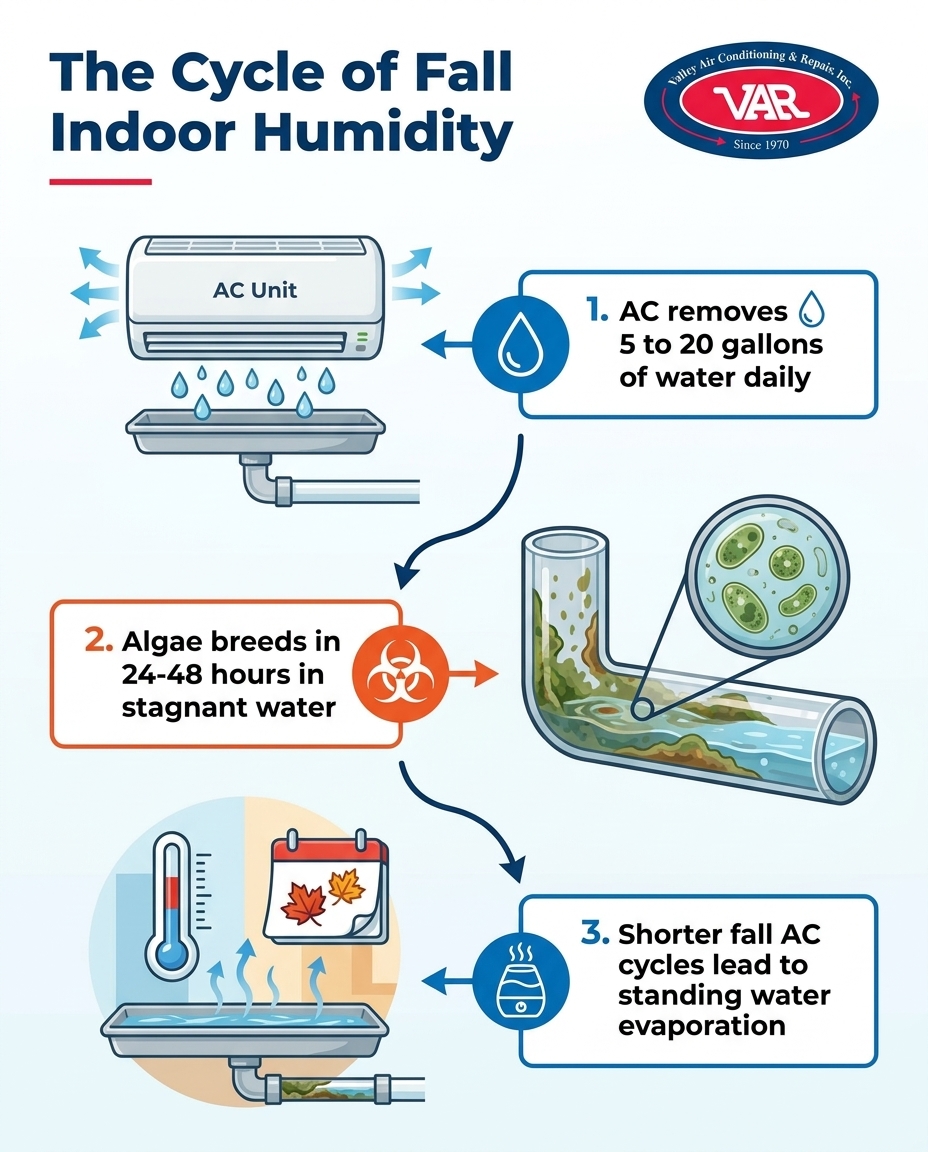
To understand why your home feels like a swamp in September, you first need to understand what your cooling system was doing all summer long. When our technicians inspect residential ACs, we always remind homeowners that their system does much more than just pump cold air into their living spaces. It is actually a massive dehumidifier. In fact, a typical residential AC removes 5 to 20 gallons of moisture per day during peak cooling months. That is a staggering amount of water—roughly the equivalent of emptying a large bathtub every single week, just pulled straight out of your indoor air.
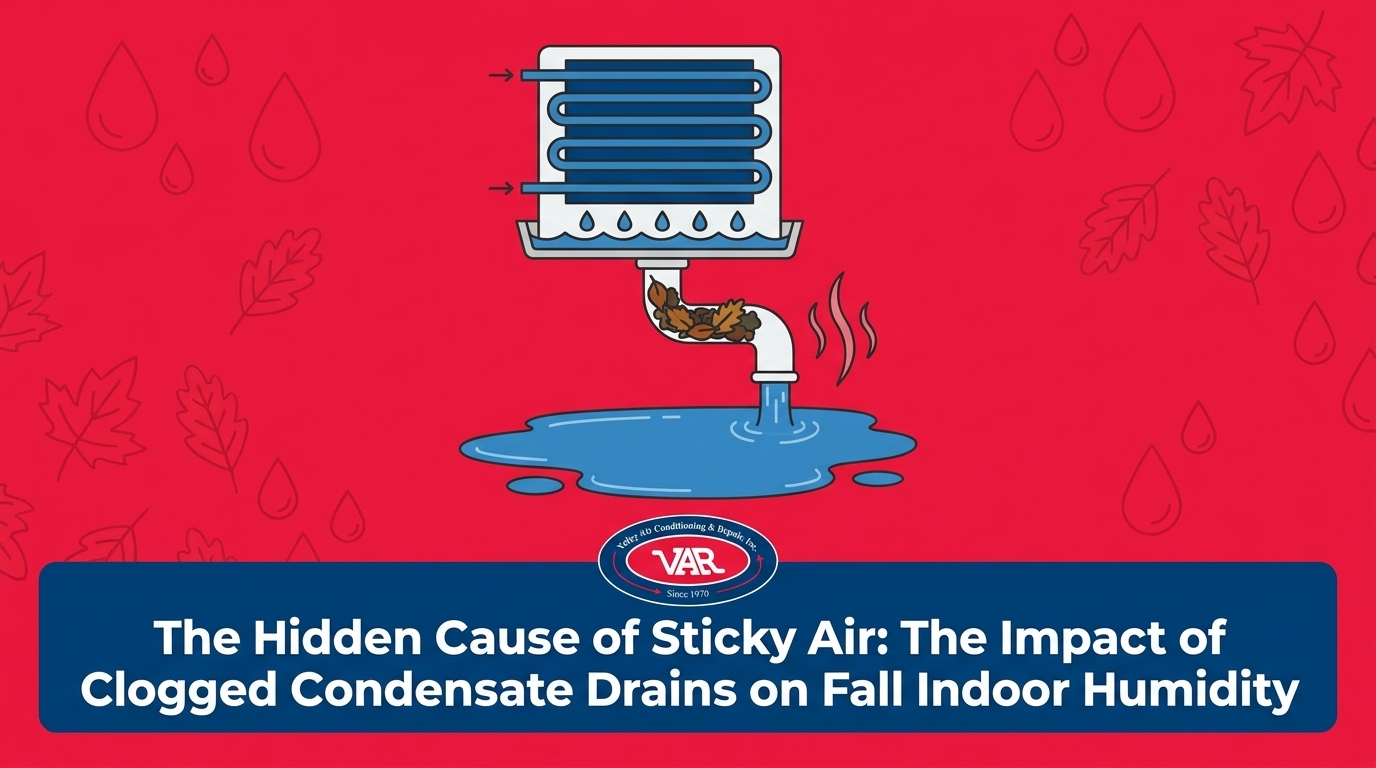
This moisture removal happens at the evaporator coil. When warm, humid indoor air blows over this freezing-cold copper coil, the moisture in the air condenses into water droplets, much like water beads forming on the outside of a cold glass of iced tea on a hot day. These droplets drip down into a collection tray called the drain pan. From there, the water travels out of your home through a white PVC pipe known as the condensate line. Your system's ability to dehumidify your home is directly tied to its ability to drain this water efficiently. If you need robust air conditioning services, ensuring this drainage pathway remains clear is a top priority.
The Volume of Condensation During Peak Heat
During the peak of a Central Valley summer, your system runs almost continuously. This constant operation is actually good for the drain line in one specific way: it constantly flushes the system. A steady stream of condensation flows through the pan and down the pipe, keeping the water moving rapidly. The drain pan acts as a temporary holding zone, catching the rapid drips before funneling them outside.
• Evaporator Coil — Function in Dehumidification: Extracts heat and forces airborne moisture to condense. — State of Moisture: Airborne vapor turns to liquid droplets.
• Drain Pan — Function in Dehumidification: Catches the dripping water beneath the coil. — State of Moisture: Temporary pooling liquid.
• Condensate Line — Function in Dehumidification: Channels the collected water safely outside the home. — State of Moisture: Flowing liquid exiting the system.
As long as this volume of water keeps moving rapidly, your indoor humidity stays low, and your home feels crisp and comfortable. But when the steady flow slows down, the environment inside that dark, damp drain pan begins to change drastically.
The Algae Threat: What Grows in Your Drain Pan Over Summer
The Problem: While your cooling system does a fantastic job of removing moisture, it also creates the perfect environment for biological growth. The drain pan is dark, damp, and constantly exposed to the air circulating through your home. Stagnant water in a drain pan can begin breeding algae and mold within 24 to 48 hours.
The Cause: Based on what our crews clean out of local units every autumn, Fresno's extended, intense cooling season maximizes condensate production. Month after month, gallons of water flow through that pan. But water is not the only thing moving through your system. Even with a good air filter, microscopic particles of dust, pet dander, pollen, and other airborne particulates make their way into the ductwork and settle into the drain pan. When this organic debris mixes with the biological growth (algae and mold) in the standing water, it forms a thick, jelly-like sludge that our technicians encounter on a daily basis.
The Solution: Preventing this buildup requires removing the conditions that allow algae to thrive. Because this sludge forms slowly over the course of the summer, it often goes completely unnoticed while the AC is running constantly. The sheer volume of water pushing through the pipe during July and August can often force its way past partial blockages. But as the season changes, this hidden sludge becomes a major liability.
How Sludge Forms in the Condensate Line
The formation of this sludge is not an overnight event; it is a gradual accumulation that slowly restricts the diameter of your condensate line. Here is exactly how a clean pipe turns into a clogged mess over the summer:
1. Initial Spores: Airborne mold and algae spores naturally circulate through the home and settle into the damp drain pan.
2. Rapid Multiplication: Given the dark, warm, and wet environment, these spores begin multiplying rapidly within just two days of water pooling.
3. Debris Integration: Dust and dander bypass the air filter and land in the sticky algae, creating a dense, biological mat.
4. Pipe Restriction: This sludge washes into the PVC condensate line, clinging to the walls and slowly shrinking the inner diameter of the pipe, turning a fast-flowing drain into a slow, sluggish trickle.
There is a massive difference between a slow, partial restriction and a complete blockage. A complete blockage will cause water to back up and spill over, usually tripping a safety switch. But a partial restriction simply slows the drainage down, leaving a permanent pool of stagnant water sitting in the drain pan directly under your airflow.
The Early Fall Trap: Reduced Cooling Cycles and Evaporating Condensate
This brings us to the core reason your home feels so muggy during the September early fall transition. As temperatures finally begin to drop in Fresno, your cooling system does not need to work nearly as hard to reach the temperature set on your thermostat. Instead of running for 45 minutes at a time, your system might only run for 10 or 15 minutes before shutting off.
These shorter cycles are the trap. Shorter cycles mean the system does not run long enough to overcome the standing water in a partially clogged drain pan. During the peak of summer, the constant flow of new water eventually pushed the old water down the sluggish pipe. But in early fall, the system shuts off before enough water accumulates to create that pushing force. The result? A drain pan that stays constantly full of stagnant, algae-filled water.
Why Shorter AC Cycles Lead to Sticky Air
When your system shuts off, the blower fan often continues to run for a few moments to push the remaining cool air into your home. Even when the fan stops, the air inside your ductwork is still connected to your living spaces. This creates the "evaporation effect." The trapped, stagnant water sitting in the partially clogged drain pan begins to evaporate back into your ductwork and out of your vents.
• Peak Summer (July/August) — AC Run Time: Long, continuous cycles. — Drain Pan Status: Constantly flushed with high water volume. — Indoor Comfort Result: Crisp, dry, comfortable air.
• Early Fall (September) — AC Run Time: Short, intermittent cycles. — Drain Pan Status: Stagnant water trapped by partial algae clogs. — Indoor Comfort Result: Heavy, sticky, humid air.
Your system is losing its natural dehumidification power precisely when trapped moisture is at its highest. It is essentially acting like a whole-home humidifier, pumping the moisture it just extracted right back into your living room. This mechanical failure is exactly why you feel that sudden, unexplained spike in indoor humidity, even when the weather outside is mild.
The Cycle of Fall Indoor Humidity
Spotting the Warning Signs of a Clogged Condensate Line
When our team gets called out to Fresno homes for sudden fall humidity issues, we always tell homeowners there are several clear warning signs to look for. Identifying these symptoms early can help you resolve the drainage issue before it turns into a damaging leak that ruins your ceiling or floors. If you are ever unsure about what your system is doing, referencing an AC troubleshooting guide can help you understand the symptoms, but we find that a clogged drain line has a few very specific hallmarks.
Look for these primary symptoms:
• Musty odors coming from vents: If the air blowing out of your registers smells like dirty socks or a damp basement, you are smelling the biological growth thriving in your drain pan.
• Unexplained indoor mugginess: As discussed, if the temperature is comfortable but your skin feels clammy and the air feels heavy, trapped moisture is evaporating back into your home.
• Unexpected system shutdowns: Most modern systems have a safety float switch installed in the drain line. If the water backs up too high, this switch trips and shuts the entire system down to prevent a flood. If your thermostat is blank or the system refuses to turn on, a clogged drain is a highly likely culprit.
• Visible water pooling: If you can see the indoor unit (often located in a closet, garage, or attic) and notice water pooling around the base, the drain pan has already overflowed.
Partial Clogs vs. Complete Blockages
It is important to distinguish between a partial clog and a complete blockage. A partial clog elevates your indoor humidity and causes musty smells, creating invisible discomfort. A complete blockage causes visible water damage and sudden system shutdowns. Both are serious, but a partial clog often tricks homeowners into thinking their system is just getting old or struggling with the weather.
A critical warning: Never attempt to clear a clogged condensate line using DIY methods like pouring harsh chemicals (like undiluted bleach) down the pipe or blasting it with high-pressure air. Harsh chemicals can easily eat through the thin metal of your evaporator coil or degrade the PVC pipe joints, leading to massive refrigerant or water leaks. High-pressure air can blow the PVC joints apart entirely inside your walls. Clearing the line safely requires professional tools and expertise to ensure the sludge is removed without damaging the delicate components of your HVAC system.
Professional Drain Clearing: Preparing Your System for the Off-Season
Transitioning your home safely into the colder months requires addressing the wear and tear of summer. Professional drain clearing is a standard part of proactive fall maintenance, designed to remove the sludge, restore proper drainage, and protect your equipment. When you invest in residential pre-season preparation, a licensed technician takes specific, safe steps to clean the system.
As a local team, Valley Air Conditioning & Repair, Inc. brings deep, first-hand expertise in Central Valley seasonal transitions, focusing heavily on proactive maintenance to prevent summer wear from causing fall discomfort. Our technicians understand exactly how Fresno's intense heat impacts your equipment because we work on these systems every single day, and we know exactly what it takes to prepare them for the months ahead.
What a professional drain clearing includes:
• Safe Extraction: Technicians use specialized, heavy-duty vacuums designed specifically for HVAC systems to pull the sludge out of the line safely, without pressurizing the delicate PVC joints.
• Pan Cleaning: The technician will physically clean the evaporator coil drain pan, removing the biological mat of algae and dust that feeds the clogs.
• Algaecide Treatment: Safe, EPA-registered algaecide tablets or treatments are placed in the pan to prevent new growth from forming during the milder fall months.
• Float Switch Testing: The safety float switch is tested to ensure it will properly shut the system down if a backup ever occurs in the future.
One local Fresno CA homeowner initially reached out to us for a standard AC check when purchasing a new home in the spring. After receiving an honest, thorough evaluation of their equipment, they immediately scheduled their fall maintenance with us to ensure their system was ready for the changing seasons. That kind of proactive care is exactly what keeps a system running efficiently year after year. Resolving these drainage issues now restores proper indoor humidity levels and ensures your system is clean and safe before it transitions entirely to heating.
Frequently Asked Questions About Fall Humidity and AC Drains
Can a clogged AC drain cause high humidity?
Yes, a clogged AC drain is a primary cause of high indoor humidity. When the condensate line is restricted, water pools in the drain pan instead of flowing outside. As air blows over this stagnant water, the moisture evaporates and is pushed right back into your living spaces, making the home feel heavy and damp.
Why does my house feel muggy in early fall?
Your house feels muggy in early fall because your cooling system runs in shorter cycles as the weather cools down. These short cycles are not long enough to push accumulated water through a partially clogged drain line. The trapped water then evaporates into your ductwork, spiking your indoor humidity even when outdoor temperatures are mild.
What happens if your AC drain pipe is clogged?
If your AC drain pipe is completely clogged, the water will back up into the drain pan until it triggers a safety float switch, shutting your entire system down. If the switch fails or is missing, the water will overflow the pan, causing significant water damage to your ceilings, floors, or walls depending on where the indoor unit is located.
Does a clogged condensate line affect cooling?
A clogged condensate line severely impacts your system's ability to cool your home comfortably. While the system may still produce cold air, its inability to remove humidity means the air will feel clammy and uncomfortable. Furthermore, if the clog triggers the float switch, the system will stop cooling entirely until the line is cleared.
How do I know if my condensate drain is clogged?
You can tell your condensate drain is clogged if you notice musty, dirty-sock odors coming from your vents, suddenly high indoor humidity, or visible water pooling near your indoor unit. Another major indicator is if your thermostat goes blank or your system abruptly shuts down, which usually means the safety switch has been activated by backed-up water.
Can algae in an AC drain pan spread to the rest of the house?
While the algae itself usually stays confined to the wet environment of the drain pan and pipe, the odors and excess moisture it creates certainly spread throughout the house. The increased humidity caused by the blockage can also encourage mold and mildew growth in other areas of your home, making it critical to address the biological buildup quickly.
Restore Your Home's Comfort Before Winter Arrives
Dealing with a muggy, uncomfortable home during the September early fall transition is incredibly frustrating, but it is not something you have to live with. Sticky indoor air in the fall is a solvable mechanical issue, not a permanent weather problem. By clearing out the lingering summer algae and restoring proper drainage, you can immediately improve your home's comfort and protect your equipment from water damage.
Do not let a hidden drain clog ruin your indoor air quality as the seasons change. Now is the perfect time to explore a preventative maintenance plan to have your system professionally cleaned, inspected, and prepared for the winter months ahead. A clean system is a comfortable system, ensuring you and your family can breathe easy all year long.
As a business with many AC units, it is essential to have a responsive AC company. Valley Air Conditioning understands our needs. They are always responsive and our AC is up and running very quickly.
Brenda F.
I had them do an AC check on the home I was buying, they were honest and quick. I hired them to do the summer and Fall maintenance for $149. Happy with this company!
Gayle B.
100% recommend. I called, same day they came out and gave me estimate. Conley was honest and didn't try to recommend/sell us anything we didn't need. When I called him with questions before making a decision, he happily answered and was not annoyed by me contacting him. Conley and VAR
Erma C.
This is a group of good people. Very professional and knowledgeable. They take the time to listen and find the best solution that fits best for any situation. There's no way you can go wrong in choosing VAR.
Gabriel A.
We have used Valley Air for over fifteen years. The last two years ,Matt came to our house to service twice a year. Always on time, so polite and so professional. This is a very honest company and you can always depend on them and trust them. The office always treats everyone cheerfully and always want to do what you need done very fast YOU CAN COUNT ON THIS Company


.webp)