.webp)


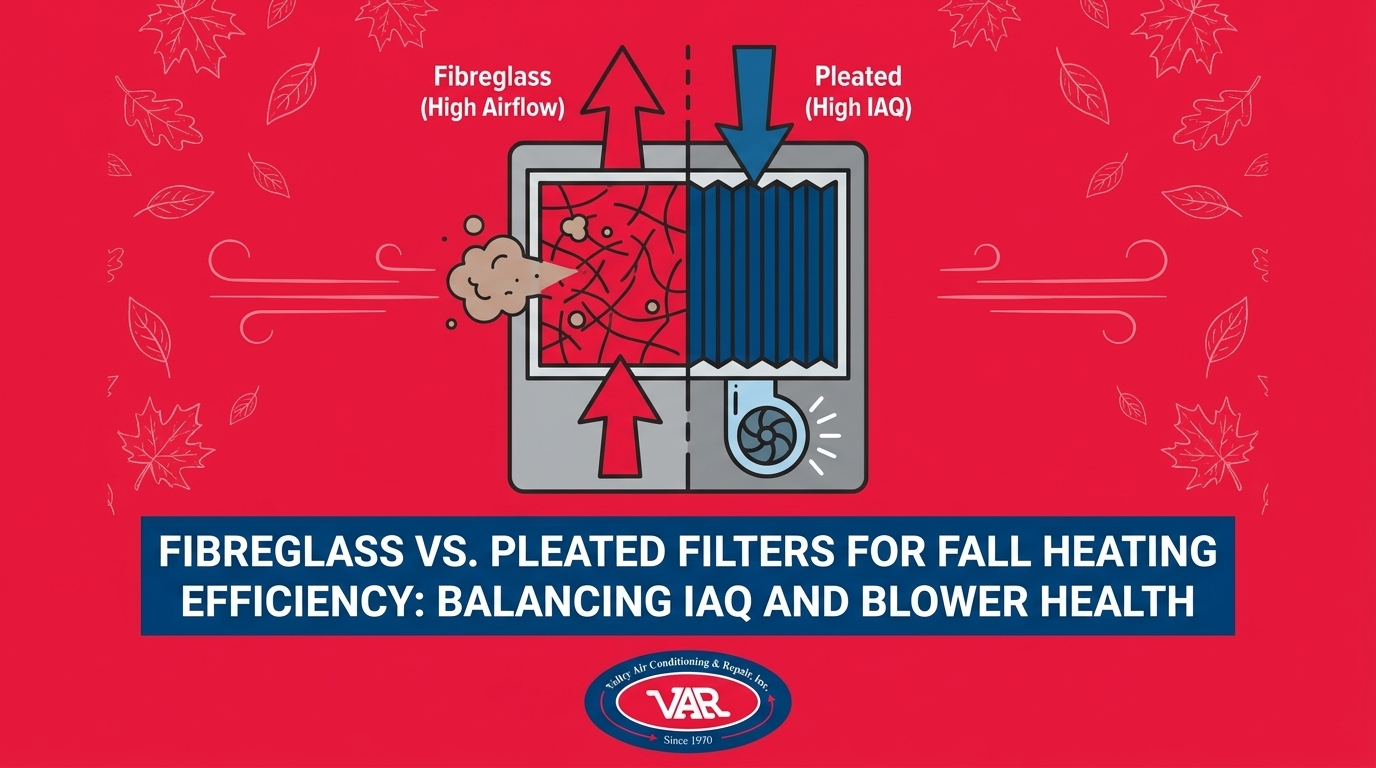
Fibreglass vs. Pleated Filters for Fall Heating Efficiency
Buying the most expensive air filter isn't always an upgrade. High-MERV pleated filters can actually suffocate your furnace blower, reducing efficiency and risking premature failure.

Ice forming on your ac unit causes and what to do is something every homeowner in Modesto and the Central Valley should understand — because spotting frost on your system on a hot summer day is not a sign it's working harder. It's a warning sign that something is wrong.
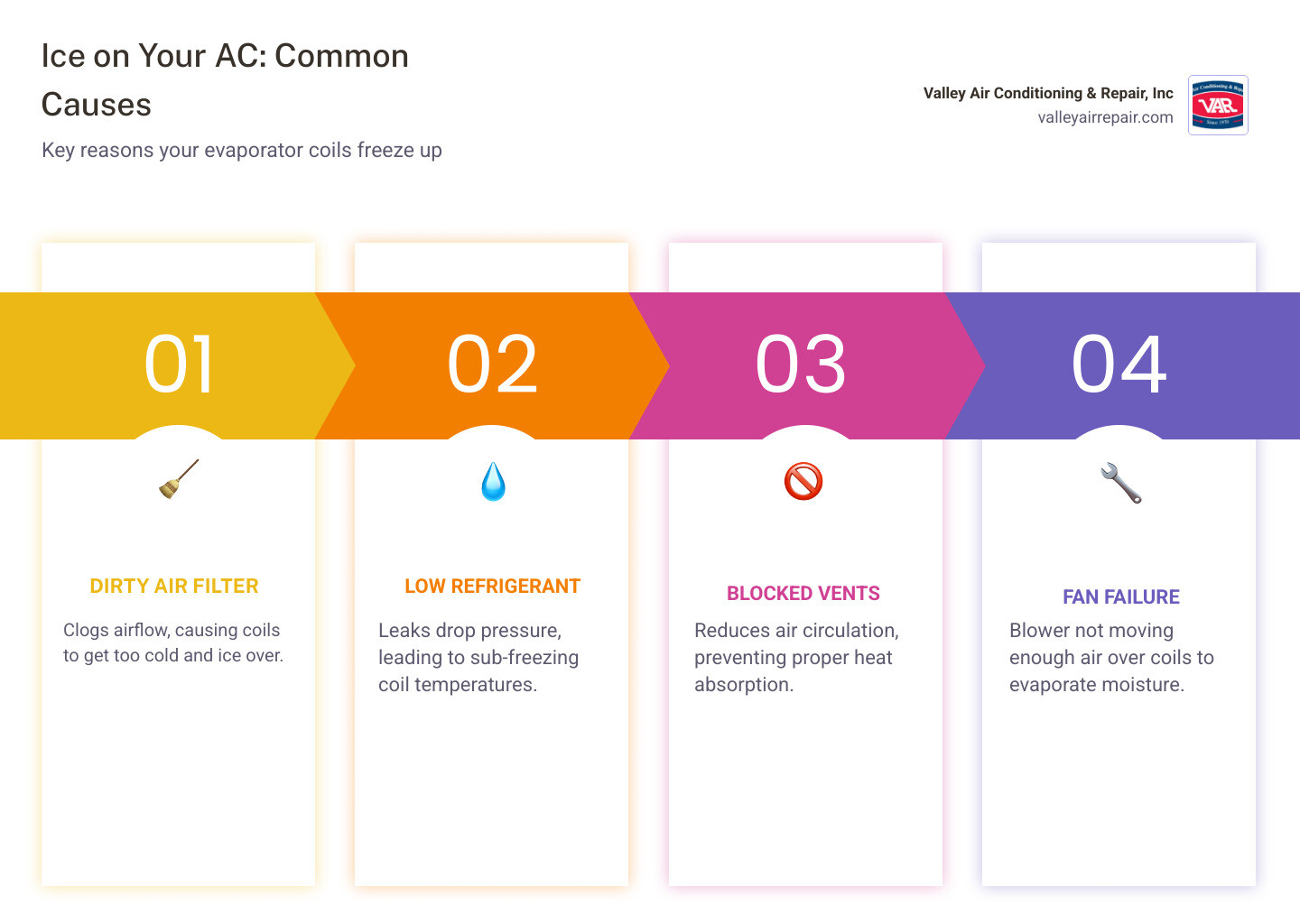
Here's a quick breakdown of the most common causes and what to do right away:
Common Causes of Ice on Your AC Unit:
What to Do Immediately:
Some homeowners assume a frozen unit just means the system is "cooling extra well." In reality, ice on your evaporator coil or refrigerant lines means the heat exchange process has broken down — and continuing to run it can destroy the compressor, which is one of the most expensive parts of your entire system.
The good news is that some causes are simple DIY fixes. Others — like refrigerant leaks — require a certified technician. Knowing the difference can save you from a much bigger repair bill down the road.
When it is May 2026 and the Central Valley heat is already climbing, discovering a block of ice where your air conditioner should be is a major disruption. To understand why this happens, we have to look at how your AC works. Essentially, your system doesn't "create" cold; it removes heat. It uses a cooling cycle where refrigerant absorbs heat from your indoor air at the evaporator coil.
When this process is disrupted, the refrigerant gets too cold—often dropping well below the 32°F freezing point. This causes the moisture in your home’s air to flash-freeze onto the coils. If you notice this happening, your first move must be an immediate shutdown. For residents in our service area, you can find more info about fixing a frozen AC evaporator coil in Clovis to help navigate these early steps.
Airflow is the lifeblood of your HVAC system. Without a steady stream of warm indoor air passing over the evaporator coils, the refrigerant inside has no "work" to do. It stays too cold, and the condensation that naturally forms on the coils turns into ice. This ice then acts as an insulator, making it even harder for the system to absorb heat, creating a "snowball effect" of ice buildup.
Common airflow obstructions we see in homes from Fresno to Madera include:
Maintaining clear pathways for air is the most effective way to prevent these issues. For a deeper dive into keeping your system running smoothly, check out our complete guide to AC service in Fresno, CA or explore our full range of air conditioning services.
The humble air filter is the primary culprit in the majority of frozen AC cases we encounter. We recommend a 30-90 day replacement rule, though in the dusty environments of the Central Valley, checking it every 30 days is even better.
When a filter is caked in dust, it creates high static pressure and restricts the volume of air reaching the coils. Dust also acts as an insulator on the coils themselves. If the air can't reach the refrigerant, the refrigerant temperature plummets, and ice begins to form. Keeping your filters clean is a fundamental part of our ultimate guide to AC repair in Fresno.
Sometimes the issue isn't the filter, but what's happening in the rooms of your home. We often find homeowners closing registers in unused guest rooms to "save energy." However, your system is designed for a specific balance of pressure. Closing more than 20% of your vents can restrict airflow enough to cause the coils to freeze.
Similarly, if the blower motor—the fan responsible for pushing air through your home—is failing or has a broken belt, the air sits still. This lack of movement leads to an immediate temperature drop at the coil and, eventually, a solid block of ice.
It sounds counterintuitive: how can less cooling fluid lead to more ice? It all comes down to the relationship between pressure and temperature. Your AC is a closed-loop system; it should never "run out" of refrigerant. If levels are low, there is a leak.
When refrigerant levels drop, the pressure inside the evaporator coil also drops. According to the laws of physics, as pressure decreases, the temperature of the refrigerant also decreases. This causes the coil to become much colder than it was designed to be, flash-freezing the humidity in the air.
Common signs of refrigerant issues include:
If you suspect a leak, you need professional AC repair in Fresno, CA. Refrigerant is a hazardous chemical that requires specialized tools and certification to handle safely.
Low refrigerant isn't just a performance issue; it’s a mechanical crisis. A system with a leak cannot maintain the proper temperature-pressure cycle. This can lead to liquid refrigerant "slugging" back into the compressor. Since compressors are designed to compress gas, not liquid, this can cause total mechanical failure. Professional leak detection and repair are the only ways to solve this permanently—simply "topping off" the system is like trying to fill a bucket with a hole in the bottom.
Your thermostat acts as the "brain" of the system. If it loses calibration or has a sensor error, it might tell your AC to run long after the home has reached the desired temperature. We recommend a 68-degree threshold; setting your thermostat lower than this, especially on humid days, significantly increases the risk of a freeze-up. Sometimes, the fix is as simple as a battery replacement, but other times, the internal wiring or the thermostat itself may need to be replaced to prevent overnight freezing.
Prevention is always more comfortable (and often more affordable) than an emergency repair. In places like Fresno, Clovis, and Modesto, our systems work incredibly hard.
DIY Maintenance vs. Professional Inspections
| Task | Who Should Do It? | Frequency |
|---|---|---|
| Change Air Filters | Homeowner | Every 30-90 Days |
| Clear Debris Around Outdoor Unit | Homeowner | Monthly |
| Check Thermostat Batteries | Homeowner | Annually |
| Clean Evaporator & Condenser Coils | Professional | Annually |
| Check Refrigerant Levels & Leaks | Professional | Annually |
| Clear Condensate Drain Lines | Professional | Annually |
One critical rule to remember is the 60-degree rule: avoid running your AC when outdoor temperatures are below 60°F. The system is not designed to operate in those conditions, and the coils will almost certainly freeze. If you notice water pooling near your unit as it thaws, it could be a sign of other issues. You can learn more about why your AC might be leaking water in Fresno or how we go about managing a clogged AC drain line.
In the Modesto area, air quality and high pollen counts can clog filters faster than the manufacturer suggests. We recommend monthly checks during the peak of summer. Regular maintenance ensures your system doesn't have to work overtime, which improves energy efficiency and extends the lifespan of your unit. A clean system is a reliable system.
If you do find ice, patience is your best tool. Never use a knife, ice pick, or any sharp object to chip away the ice. The evaporator coils are made of thin copper or aluminum and are incredibly easy to puncture.
Instead:
Once the unit is dry, you can check the filter and vents. If the ice returns shortly after you turn the cooling back on, it’s time to call in our HVAC services for a professional diagnosis.
Thawing typically takes 1 to 4 hours if you run the fan-only mode, which forces warm indoor air over the ice. However, if the ice has built up into a solid block (sometimes called an "ice cube"), it can take up to 24 hours to melt completely. Do not try to restart the cooling cycle until all visible ice is gone and the coils are dry.
Yes, it is very risky. Running a frozen AC can cause "slugging," which is when liquid refrigerant travels back to the compressor. Compressors are designed to handle vapor, and liquid can cause permanent mechanical failure. It also forces the unit to run much longer, spiking your energy bills and putting unnecessary strain on the motor.
Absolutely. Operating your AC when outdoor temperatures are below 60°F significantly increases the risk of the coils dropping below freezing and icing over. If you need cooling during a "shoulder season" (like a warm day followed by a very cold night), be mindful of the outdoor temperature before leaving the AC on.
At Valley Air Conditioning & Repair, Inc., we have been serving the Central Valley since 1970 with a customer-first philosophy. Whether you are in Modesto, Fresno, Clovis, or any of our surrounding communities like Sanger or Kerman, we understand the unique demands our climate puts on your HVAC system.
Ice forming on your AC is a serious cry for help from your equipment. By following the steps above—turning off the unit, thawing it safely, and checking your filters—you can often resolve minor issues yourself. However, if the problem persists or you suspect a refrigerant leak, don't risk damaging your expensive compressor. Trust our decades of local experience and honorable intentions to get your home back to a comfortable temperature. Schedule your professional air conditioning service today and let us keep your system running ice-free all summer long.

As a business with many AC units, it is essential to have a responsive AC company. Valley Air Conditioning understands our needs. They are always responsive and our AC is up and running very quickly.
I had them do an AC check on the home I was buying, they were honest and quick. I hired them to do the summer and Fall maintenance for $149. Happy with this company!
100% recommend. I called, same day they came out and gave me estimate. Conley was honest and didn't try to recommend/sell us anything we didn't need. When I called him with questions before making a decision, he happily answered and was not annoyed by me contacting him. Conley and VAR
This is a group of good people. Very professional and knowledgeable. They take the time to listen and find the best solution that fits best for any situation. There's no way you can go wrong in choosing VAR.
We have used Valley Air for over fifteen years. The last two years ,Matt came to our house to service twice a year. Always on time, so polite and so professional. This is a very honest company and you can always depend on them and trust them. The office always treats everyone cheerfully and always want to do what you need done very fast YOU CAN COUNT ON THIS Company