.webp)


AC Repair in Fresno, CA: Troubleshooting the Fall HVAC Transition After a Brutal Summer
Why we emphasize safe fall heating startups. Use these home maintenance tips and troubleshooting steps to decide with confidence when to call a pro.
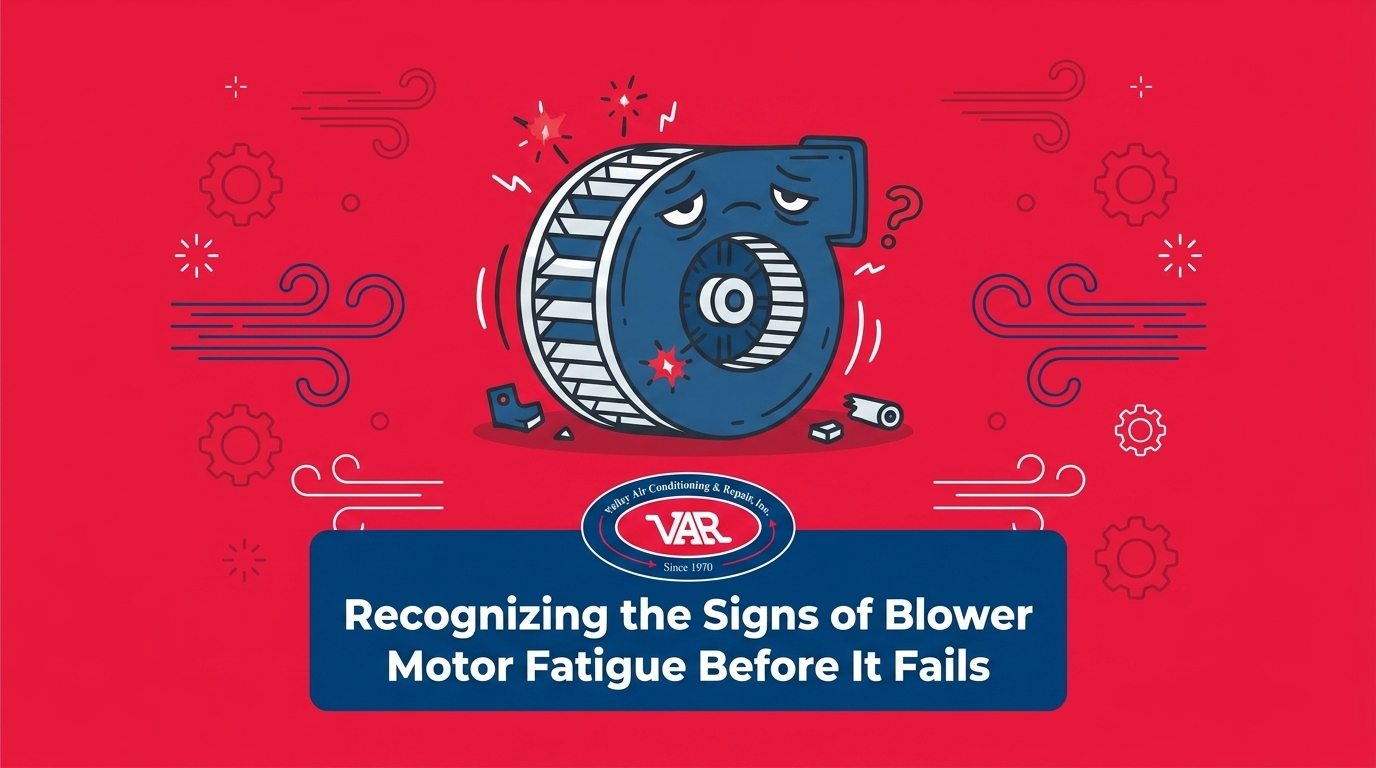
August is closing in, and recognizing the signs of blower motor fatigue before it fails is the single most important step you can take to avoid a miserable end to the cooling season. Here in Fresno, our team at Valley Air Conditioning & Repair sees it every year: by late summer, your air conditioner has been working overtime to combat the relentless heat. You might start noticing subtle auditory cues—a new hum, a faint squeal—or progressively weaker airflow coming from your vents. These are not just normal end-of-season quirks that you can safely ignore. They are concrete mechanical warnings that your blower motor is exhausted, overworked, and nearing the end of its operational life.
Deciding whether to brush off these subtle changes or call for professional help is a critical turning point. Waiting too long often results in a total system breakdown right when you need cooling the most. Before we explore the specific mechanical symptoms of August late-summer cooling wear that our technicians frequently encounter, remember that keeping your air conditioning systems healthy starts with proactive care. Investing in residential pre-season preparation is always your best defense against these late-summer emergencies.
Your blower motor is the powerhouse of your indoor air handler. It is designed to handle heavy loads, but the mechanical reality of relentless summer operation takes a severe toll. Unlike a sudden power surge or a random part defect, blower motor fatigue is a cumulative issue. It happens slowly, hour by hour, as the system works to keep your home comfortable.
Here is what happens inside the equipment: blower motors rely on factory lubricants packed inside sealed motor bearings to spin smoothly. Under normal conditions, the motor runs, cools down, and rests. However, Fresno's extended streaks of 100+ degree days eliminate the normal cool-down periods required for blower motors to shed heat. Based on the service calls we field every August, this continuous cycling literally bakes the lubricants inside the bearings. Over thousands of hours of operation, that grease breaks down, loses its viscosity, and eventually dries up completely.
The dangers of continuous operation:
• Friction buildup: Without proper lubrication, metal grinds against metal, generating even more internal heat.
• Electrical strain: The motor has to pull more electricity to force the dry bearings to spin, stressing the internal wiring.
• Insulation degradation: The protective coating on the motor's copper windings melts away under constant thermal stress.
A breakdown during extreme heat is a severe comfort and safety issue. We recently had a local homeowner reach out to us during a brutal 110-degree summer stretch when their system completely stopped working. Because the breakdown happened during peak extreme temperatures, the house heated up rapidly. Fortunately, one of our technicians arrived quickly, diagnosed the overworked components, and had the home cooling down again within an hour and a half. This highlights exactly why catching fatigue early is so important.
Because blower motor fatigue is a progressive issue, your ears are often your best diagnostic tool. The motor will usually tell you it is struggling long before it actually quits. These noises often start subtly in the background and grow louder as the August late-summer cooling wear worsens. Knowing what to listen for can save you from a major headache.
Squealing and screeching: This is the classic sound of worn-out bearings that have lost their lubrication. It often sounds like a high-pitched whine that starts the moment the fan kicks on. If you hear this, the mechanical friction is already severe.
Humming or buzzing: A low, vibrating hum usually points to electrical issues. This often indicates a failing capacitor or a motor that is receiving power but physically struggling to start spinning. If the motor hums but the fan does not turn, you need to know what to do when your AC fan stops working immediately to prevent further electrical damage.
Grinding noises: This is a severe, late-stage warning. A grinding or crunching sound means internal components are actively rubbing together, or the motor mounts have broken. This requires an immediate shutdown of the system at the thermostat.
It can be tough to distinguish between the normal rush of air and the mechanical strain of a struggling motor. As a general rule, you should only hear the smooth sound of air moving through the ductwork and a quiet, steady hum from the equipment.
• Smooth, rushing air — What It Usually Means: Normal operation and healthy airflow. — Urgency Level: None (Normal)
• Faint, intermittent clicking — What It Usually Means: Normal relay switches engaging or ductwork expanding. — Urgency Level: Low (Monitor)
• Persistent squealing — What It Usually Means: Dry motor bearings suffering from high friction. — Urgency Level: Moderate (Call for service)
• Loud buzzing or humming — What It Usually Means: Electrical strain or a failing run capacitor. — Urgency Level: High (Turn off system)
• Harsh grinding — What It Usually Means: Catastrophic internal friction or broken mounts. — Urgency Level: Immediate (Turn off system)
If a new, unfamiliar noise persists for more than a single cooling cycle, it warrants a professional inspection. Ignoring a screech or a hum will not make it go away; it simply guarantees the repair will be more extensive later.
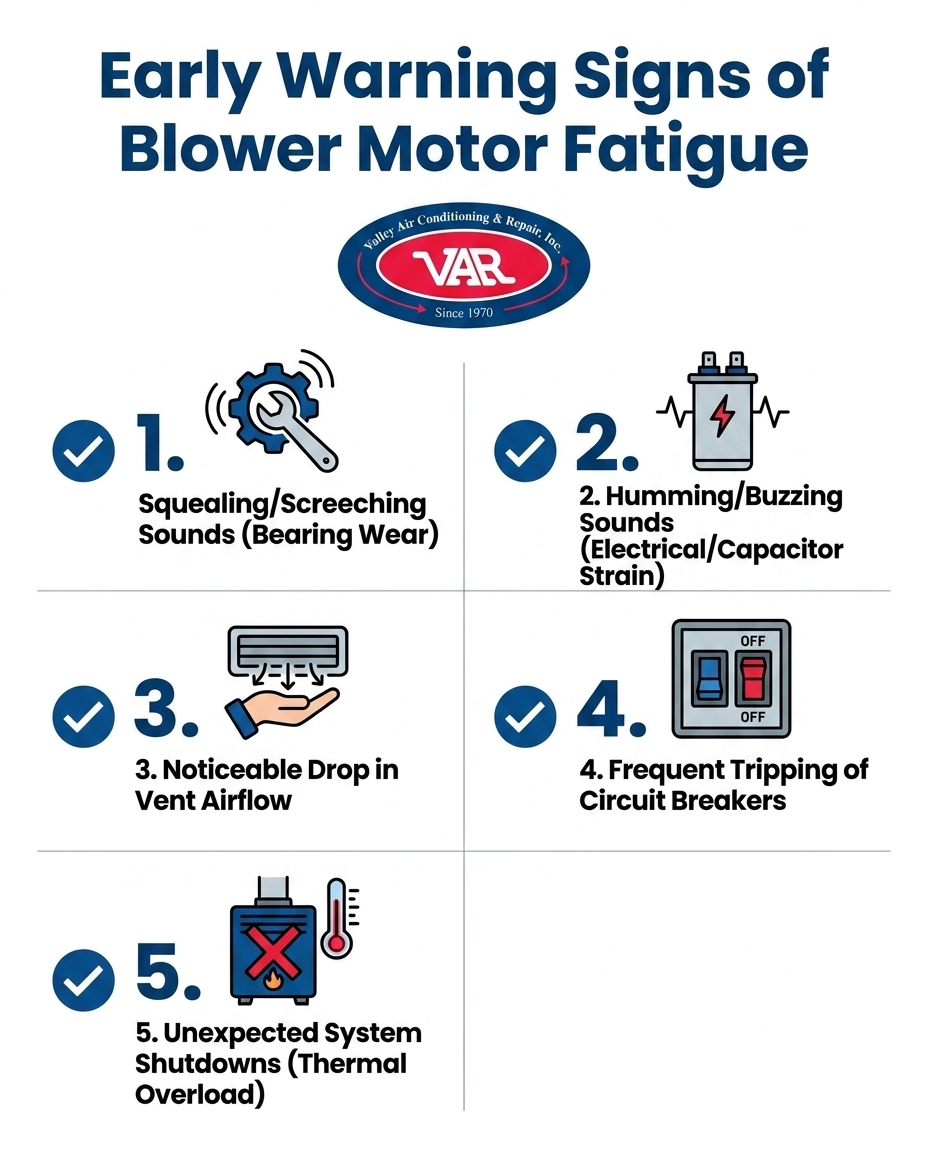
Sometimes, the signs of fatigue are physical rather than auditory. You might hold your hand up to a register and realize the air just isn't pushing out with the same force it did in June. This physical sensation of reduced airflow is directly connected to the mechanical fatigue of the blower motor.
To understand why this happens, you have to look at how the fan operates. The blower motor is responsible for spinning a cylindrical fan blade known as a "squirrel cage." This cage scoops up conditioned air and forces it through your ductwork. When a motor is fatigued from 100+ degree ambient temperatures causing continuous cycling, it simply cannot spin the squirrel cage fast enough to maintain proper static pressure. The air loses its momentum before it ever reaches the furthest rooms in your house.
What to check before panicking:
1. Check your air filter: A severely clogged filter acts like a brick wall, choking off airflow and mimicking a bad motor.
2. Check your vents: Ensure all return and supply registers are fully open and unblocked by furniture.
3. Check for ice: Look at the indoor unit to see if the coils are frozen solid, which blocks air from passing through.
If your filter is perfectly clean, your vents are open, and the airflow is still incredibly weak, the motor is likely the culprit. A drop in airflow often precedes a complete thermal overload trip by several days. We always warn our customers against ignoring this symptom: weak airflow forces the entire system to run longer to meet the thermostat setting, accelerating the exact wear and tear that is killing the motor in the first place.
If the squealing noises and weak airflow are ignored, the blower motor will eventually reach a breaking point known as thermal overload. In non-technical terms, thermal overload means the motor gets dangerously hot, and an internal safety switch shuts it off automatically to prevent a fire or catastrophic electrical damage.
When this happens, you might notice a frustrating pattern. The system will run for a short period, shut down unexpectedly before the house is cool, and then refuse to turn back on. A few hours later, once the internal components have physically cooled down, the safety switch resets, and the system attempts to run again. This short-cycling behavior is a massive red flag that the motor is experiencing extreme mechanical resistance.
The circuit breaker connection:
As the motor fights against dry bearings and internal friction, it requires more and more electricity to keep spinning. This causes a massive spike in amperage draw. When the motor pulls more amps than the circuit is designed to handle, it trips the breaker in your electrical panel. If you find yourself repeatedly resetting the AC breaker, stop immediately. The breaker is doing its job by preventing an electrical fire.
This fatigue does not just ruin your summer comfort. The exact same blower motor is responsible for distributing heated air throughout the winter. A failing blower motor in the Fresno / Central Valley area will severely impact your heating performance the moment the weather turns cold, leaving you with a broken system on the first freezing night of the year.
The blower motor is the beating heart of your entire air distribution system. When the heart struggles, every other component in the body suffers. Highlighting the urgency of addressing motor fatigue is not about causing panic; it is about preventing secondary, cascading damage to the rest of your HVAC equipment.
Our team at Valley Air Conditioning & Repair has extensive local experience diagnosing Central Valley HVAC systems before catastrophic failure occurs. We see firsthand during these late-summer back-to-school months how early detection saves homeowners from massive emergency repair bills. When a blower motor slows down due to August cooling wear, the volume of air moving over the indoor evaporator coil drops drastically. Without enough warm air blowing over it, the refrigerant inside the coil gets too cold. Condensation freezes on the metal fins, turning the entire indoor unit into a block of ice.
The domino effect of a frozen coil:
• Liquid slugging: Ice prevents the refrigerant from turning into a gas. Liquid refrigerant then travels back outside to the compressor.
• Compressor failure: Compressors are designed to pump gas, not liquid. Slugging liquid refrigerant can destroy the compressor valves instantly.
• System replacement: Replacing a stressed blower motor early is far more cost-effective than replacing a blown outdoor compressor.
Reiterating the stakes is simple: waiting for a total breakdown guarantees an uncomfortable wait for emergency repairs during peak demand periods. When temperatures are soaring, our service schedules fill up fast. Proactive replacement puts you in control of the timeline.
When dealing with high-voltage electrical components and spinning mechanical parts, strict reliance on licensed professionals is mandatory. We strongly advise against DIY diagnostic steps. Testing high-voltage capacitors, accessing the squirrel cage safely, and checking motor bearings require specialized tools and extensive training.
When our professional technicians approach a struggling blower motor, we do it with precision. We do not just guess; we measure. During a diagnostic visit, our team will check the exact amp draw of the motor under load to see how hard it is working. We will test the microfarad reading of the run capacitor to ensure it is delivering the right electrical boost. We will also physically check the bearing friction to determine if the motor can be saved or if it requires replacement.
Routine, proactive care can keep even older units running optimally and catch fatigue before it leads to a breakdown. For example, ongoing preventive maintenance is exactly what helped one of our local customers keep their 13-year-old HVAC unit running efficiently year after year. By having a professional clean the components and check the electrical draws regularly, they avoided surprise failures.
Framing professional intervention as an investment is the right mindset. Enrolling in a routine maintenance plan gives you peace of mind, knowing that a trained eye is monitoring your equipment for these exact signs of fatigue long before you ever hear a squeal or feel a drop in airflow.
Subtle noises, squealing vents, and weak airflow in late summer are not random flukes—they are final warnings. The 100+ degree ambient temperatures causing continuous cycling have pushed your equipment to its mechanical limits. Ignoring these symptoms only accelerates the wear and tear, risking a complete system shutdown when you need relief the most.
Recognizing the signs of blower motor fatigue before it fails gives you the upper hand. By acting on these early warnings, you ensure your home remains comfortable, safe, and energy-efficient. Do not wait for the motor to burn out entirely. Schedule a professional diagnostic evaluation with our team today to secure your comfort and catch the fatigue before the next major heatwave strikes.
What does a failing blower motor sound like?
A failing blower motor typically produces loud, unusual noises that change in pitch as the system runs. You may hear high-pitched squealing or screeching from worn-out bearings, a low humming from electrical strain, or a harsh grinding sound if internal parts are rubbing together. If these sounds persist, the motor requires professional attention.
How do I know if my AC blower motor is going bad?
The most common indicators are strange noises, noticeably weak airflow from your vents, and a system that frequently trips the circuit breaker. You might also notice the AC shutting down prematurely before the house reaches the target temperature. These symptoms point to a motor that is struggling to overcome internal friction.
Will the AC still blow cold air if the blower motor is bad?
If the blower motor fails completely, the AC will not blow any air into the home, even though the outdoor unit might still be running. If the motor is simply failing but still spinning weakly, you may feel a very faint trickle of cold air. However, running the system in this state will quickly cause the indoor coils to freeze over.
Why is my AC airflow suddenly weak in late summer?
Weak airflow in late summer is often the result of cumulative mechanical fatigue on the blower motor after months of continuous operation. The motor bearings lose their lubrication, making it harder for the fan to spin at full speed. It can also be caused by a severely clogged air filter that hasn't been changed all season.
Is a humming AC a sign of a bad capacitor or a bad motor?
A humming sound can indicate either a failing run capacitor or a seized blower motor. The capacitor provides the initial electrical jolt to start the motor; if it fails, the motor will hum but won't spin. A licensed technician must test the electrical load to determine which component has failed.
How long can a blower motor run after it starts squealing?
There is no exact timeline, but a squealing motor is actively damaging itself and could fail within days or even hours. The squeal indicates that the factory lubrication is gone and metal is grinding on metal. Continuing to run the system will eventually lead to thermal overload and a complete shutdown.

As a business with many AC units, it is essential to have a responsive AC company. Valley Air Conditioning understands our needs. They are always responsive and our AC is up and running very quickly.
I had them do an AC check on the home I was buying, they were honest and quick. I hired them to do the summer and Fall maintenance for $149. Happy with this company!
100% recommend. I called, same day they came out and gave me estimate. Conley was honest and didn't try to recommend/sell us anything we didn't need. When I called him with questions before making a decision, he happily answered and was not annoyed by me contacting him. Conley and VAR
This is a group of good people. Very professional and knowledgeable. They take the time to listen and find the best solution that fits best for any situation. There's no way you can go wrong in choosing VAR.
We have used Valley Air for over fifteen years. The last two years ,Matt came to our house to service twice a year. Always on time, so polite and so professional. This is a very honest company and you can always depend on them and trust them. The office always treats everyone cheerfully and always want to do what you need done very fast YOU CAN COUNT ON THIS Company