


.webp)


Why Is My AC Blowing Warm Air? Fall HVAC Troubleshooting & Startup Smells
Smelling burning dust this fall? Get clear answers with our home maintenance tips and troubleshooting to know when to call a pro for your heating system.
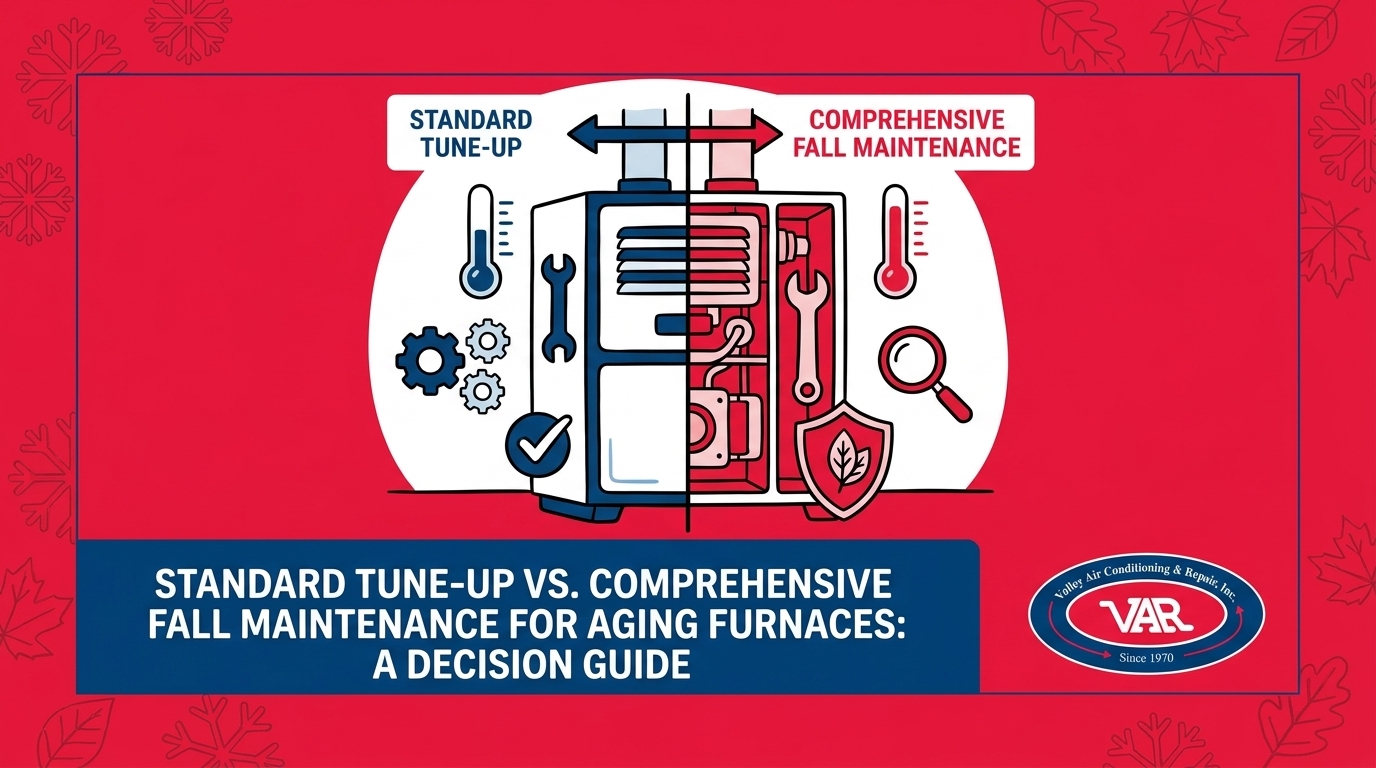
A common misconception among homeowners is that a quick filter swap and a ten-minute visual inspection are all any heating system needs to prepare for the colder months. If you are weighing a Standard Tune-Up vs. Comprehensive Fall Maintenance for Aging Furnaces, the reality is that a one-size-fits-all approach leaves older units vulnerable to sudden breakdowns. The concrete problem many face is deciding whether a 10-plus-year-old furnace requires a basic safety check or a deep diagnostic cleaning before winter arrives. Making the wrong choice can lead to reduced efficiency, unexpected failures, or even safety hazards.
During the critical September pre-heating transition, scheduling proper residential pre-season preparation is vital before sudden cold snaps hit and local technician schedules fill up. A superficial dusting might be perfectly adequate for a system installed just a few years ago, but an older system has endured a decade of thermal stress, vibration, and wear. To ensure your home is ready for the changing weather, exploring professional heating services and scheduling your residential pre-season preparation now can save you from a mid-winter emergency.
The average lifespan of a well-maintained gas furnace is typically 15 to 20 years. However, the second half of that lifespan introduces entirely new mechanical challenges that a basic service call simply cannot address. What works flawlessly for a 3-year-old system is entirely insufficient for a 13-year-old system that has weathered countless heating cycles.
The underlying cause: Every time your furnace kicks on, the heat exchanger rapidly heats up and expands. When the cycle ends, the metal cools and contracts. Over a decade of operation in the Fresno / Central Valley area, this continuous expansion and contraction leads to thermal fatigue. The metal becomes brittle, making older heat exchangers highly susceptible to micro-cracks. These cracks are microscopic at first, but they present a severe safety risk by potentially allowing combustion gases to mix with your home's breathing air. A quick visual glance with a flashlight will almost never catch these hairline fractures.
The compounding issue: Beyond the heat exchanger, the moving parts of your furnace degrade over time. Blower motors lose their factory lubrication, bearings begin to wear down, and electrical connections can loosen due to years of minor vibrations. When a blower motor struggles to turn, it draws more electrical current, running hotter and closer to failure. Capacitors lose their ability to hold a charge, and wiring insulation can become brittle. These components require more than just a surface-level dusting; they need precise multimeter testing to determine if they are operating within safe manufacturer specifications.
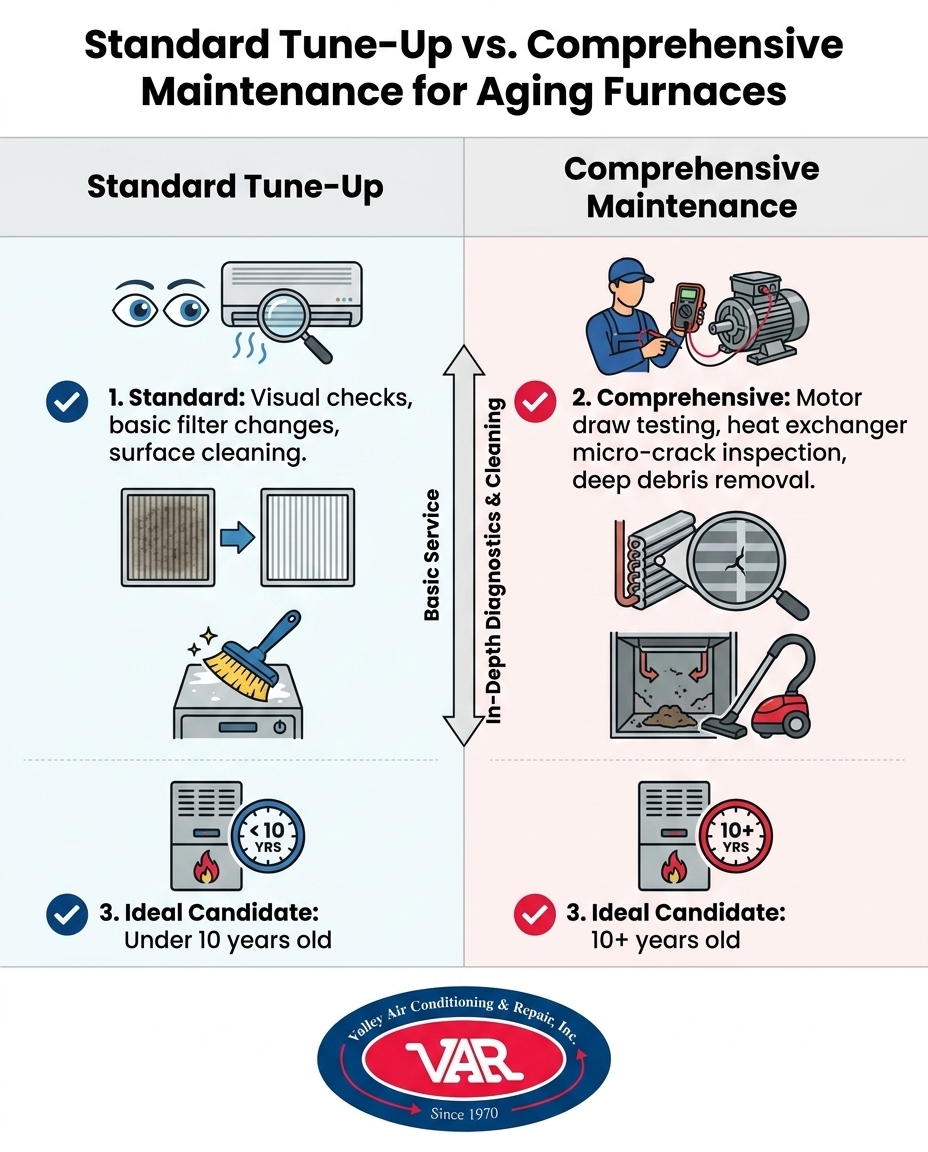
To understand the right choice for your home, you first need to define the baseline tier of service. A standard tune-up acts as a fundamental safety and efficiency check. It is designed for reliable, annual upkeep rather than deep troubleshooting or complex mechanical diagnostics.
During a standard tune-up, technicians focus on the immediate operational needs of the system. This checklist typically includes:
• Filter replacements: Swapping out the air filter to ensure proper airflow and prevent the blower motor from overworking.
• Thermostat calibration: Checking the thermostat settings to confirm the furnace responds correctly to temperature adjustments.
• Burner cleaning: Lightly cleaning the burners to ensure an even, efficient flame.
• Flame sensor wiping: Removing light soot from the flame sensor so the system does not prematurely shut down during a heating cycle.
• Basic safety checks: Verifying that the exhaust flue is clear and the system cycles on and off safely.
This service tier is generally perfectly sufficient for newer systems (typically under 5 to 7 years old) that have not yet experienced significant mechanical wear. For example, during a routine annual service call for a newer home, the primary goal is often just securing reliable, respectful, and affordable attention to fulfill baseline tune-up needs. When a system is young and running smoothly, a standard checklist during the September pre-heating transition meets those needs without unnecessary intervention.
As systems age, the maintenance strategy must shift from simple upkeep to proactive preservation. Comprehensive fall maintenance focuses heavily on technical diagnostics and protective measures specifically tailored for older units. This higher-tier service is about verifying safety, catching failing parts early, and extending the unit's operational life.
When technicians perform deep diagnostics, they follow a rigorous, step-by-step technical protocol:
1. Motor Draw Testing: Technicians use specialized meters to measure the exact amperage the blower motor and inducer motor are pulling. If an aging motor is drawing too much power, it indicates internal wear and impending failure, allowing you to address it before it seizes on a freezing night.
2. Deep Heat Exchanger Inspections: Using advanced tools like combustion analyzers or specialized inspection cameras, technicians look deep into the heat exchanger cells to identify the microscopic signs of thermal fatigue and micro-cracks that a standard visual check misses.
3. Comprehensive Cleaning: Over long periods of inactivity, dust, pet dander, and debris bake onto internal components. Deep cleaning removes this accumulated grime from the blower wheel, burner assembly, and internal cabinet, restoring lost efficiency and preventing burning odors.
4. Static Pressure Testing: Measuring the airflow resistance within the ductwork to ensure the aging blower motor isn't fighting against hidden blockages, which drastically reduces the system's lifespan.
A typical pattern we see in the Fresno / Central Valley region involves older systems requiring this exact level of ongoing preventive attention. In one instance, a 13-year-old unit received this deep diagnostic care, including a thorough clean-out of the heat exchanger, which ultimately kept the aging equipment running efficiently without requiring premature replacement.
At Valley Air Conditioning & Repair, the focus of comprehensive HVAC care is providing an honest assessment. Deep diagnostics establish a factual, data-driven baseline of your unit's health. The goal is to protect your home and prevent unexpected mid-winter breakdowns, providing peace of mind without resorting to unnecessary upsells.
Choosing the right tier of service becomes much easier when you can directly contrast the depth of care provided. While both services aim to prepare your system for the September pre-heating transition, their methods and target audiences differ significantly. The table below breaks down exactly how these two approaches compare.
• Inspection Depth — Standard Tune-Up (Basic Safety): Visual checks of accessible components and basic operational cycles. — Comprehensive Maintenance (Deep Diagnostics): Technical diagnostic testing, including motor amp draws and static pressure.
• Cleaning Intensity — Standard Tune-Up (Basic Safety): Surface wipes of flame sensors and light dusting of the burner area. — Comprehensive Maintenance (Deep Diagnostics): Deep component cleaning, debris removal, and blower wheel restoration.
• Safety Checks — Standard Tune-Up (Basic Safety): Basic carbon monoxide ambient check and flue pipe visual inspection. — Comprehensive Maintenance (Deep Diagnostics): Micro-crack thermal inspection via camera and precise combustion analysis.
• Ideal Candidate — Standard Tune-Up (Basic Safety): Newer units (under 5–7 years old) with no history of major repairs. — Comprehensive Maintenance (Deep Diagnostics): Aging units (10+ years old) requiring life-extension and reliability verification.
The local climate plays a massive role in how your heating system ages. Fresno's transition from 100-plus-degree summers to chilly autumn nights requires heating systems to switch from months of absolute dormancy to immediate, high-demand reliability. This extreme shift shocks older, idle heating systems that have been sitting in sweltering attics or garages all summer long.
The problem: During the peak of summer, ambient temperatures in a Central Valley attic can soar well above the outside temperature. Your furnace sits in this extreme heat for months. This environment accelerates the degradation of rubber and synthetic components. Drive belts (in older models) can develop dry rot, becoming brittle and prone to snapping the moment the system kicks on in the fall. Electrical wire casing can stiffen, and factory lubricants inside blower motors can dry out or separate.
The cause: While the furnace sits idle, it acts as a magnet for household dust, pet dander, and airborne particulates. This debris settles thickly over the heat exchanger, burners, and blower wheel. When the first cold snap hits and the furnace ignites, this blanket of dust instantly scorches. This is exactly why your furnace smells like burning dust when first tested.
The fix: Turning on an uncleaned, aging furnace forces it to push through this accumulated grime, which not only causes alarming odors but drastically reduces airflow and efficiency. Addressing these specific environmental stressors through deep cleaning before the first cold snap demands immediate heating reliability ensures your home stays safe, odor-free, and comfortable.
Synthesizing the technical differences into a practical decision doesn't have to be complicated. By evaluating the current condition, age, and recent performance history of your system during the September pre-heating transition, you can confidently select the right tier of care. Use this condition-based checklist to guide your decision:
• If your system is under 10 years old and ran perfectly last winter: Choose a standard tune-up. A basic safety check, filter change, and surface cleaning will keep your relatively young system on track.
• If your system is over 10 years old, makes unusual noises, or has a history of repairs: Choose comprehensive maintenance. Grinding, squealing, or rattling sounds indicate mechanical wear that requires motor draw testing and deep diagnostics to prevent sudden failure.
• If you noticed strange odors or poor airflow at the end of last season: Opt for deep diagnostics. Poor airflow often points to an aging blower motor or heavy debris buildup on the blower wheel, which a standard wipe-down will not resolve.
• If your energy bills spiked inexplicably last winter: Choose comprehensive maintenance. A sudden drop in efficiency in an older unit often means the system is working twice as hard to produce the same amount of heat, requiring technical adjustments and deep cleaning.
For homeowners with aging equipment, enrolling in a routine maintenance plan offers tremendous value. A structured plan ensures that your older system is consistently monitored year-over-year, keeping a historical record of motor draws and heat exchanger health so you are never caught off guard.
Deciding between a Standard Tune-Up vs. Comprehensive Fall Maintenance for Aging Furnaces ultimately comes down to understanding what your specific equipment needs to operate safely. The right maintenance tier does more than just check a box; it actively protects your home, ensures efficient operation, and safely extends the life of your heating equipment.
Because the Fresno / Central Valley weather can shift quickly, taking action during the early fall window is critical before local schedules fill up with winter emergencies. You deserve a clear, condition-based evaluation of your system without the pressure of an unnecessary sales pitch. Reach out to a local expert today to get an honest, transparent assessment of your older heating system, and enjoy the peace of mind that comes with knowing your home is truly ready for winter.
A standard tune-up focuses on basic upkeep, while comprehensive maintenance involves deep technical diagnostics. Standard service typically includes changing filters, checking thermostat settings, and performing a quick visual safety inspection, making it ideal for newer systems. Comprehensive maintenance goes much further by testing electrical motor draws, performing deep component cleaning, and using specialized tools to inspect for microscopic wear, which is essential for older units.
Yes, heating systems over a decade old require a different level of care due to accumulated mechanical wear and thermal fatigue. After ten years of expanding and contracting, heat exchangers are at a much higher risk for developing dangerous micro-cracks. Specialized maintenance focuses on identifying these exact age-related vulnerabilities before they turn into safety hazards or cause total system failure.
A comprehensive tune-up includes advanced diagnostic testing that goes beyond a simple visual check. Technicians will measure the electrical amperage of the blower and inducer motors, test static pressure in the ductwork, and perform a deep cleaning of baked-on debris inside the cabinet. It also includes rigorous safety checks, such as using combustion analyzers or inspection cameras to verify the absolute integrity of the heat exchanger.
Absolutely, proper maintenance is arguably more important for an aging system than a brand-new one. Routine deep diagnostics can identify a minor failing component before it causes a catastrophic breakdown that ruins the entire system. By keeping the internal components clean and verifying that motors are running within safe parameters, you can safely extend the operational life of the unit and delay the need for a full replacement.
An older heating system should be serviced professionally at least once every year, ideally in the early fall before the heavy heating season begins. Because older components degrade faster and are more susceptible to the stress of extreme temperature shifts, skipping even a single year of maintenance can lead to a drastic drop in efficiency. Annual comprehensive checks ensure the system remains safe to operate inside your home.
While no maintenance can completely stop the natural aging process of metal, comprehensive care significantly reduces the conditions that accelerate cracking. By ensuring proper airflow, cleaning the burners for an even flame, and verifying that the system isn't overheating, deep maintenance minimizes the extreme thermal stress placed on the heat exchanger. Furthermore, advanced diagnostic inspections catch early signs of fatigue long before a crack becomes a dangerous carbon monoxide leak.

As a business with many AC units, it is essential to have a responsive AC company. Valley Air Conditioning understands our needs. They are always responsive and our AC is up and running very quickly.
I had them do an AC check on the home I was buying, they were honest and quick. I hired them to do the summer and Fall maintenance for $149. Happy with this company!
100% recommend. I called, same day they came out and gave me estimate. Conley was honest and didn't try to recommend/sell us anything we didn't need. When I called him with questions before making a decision, he happily answered and was not annoyed by me contacting him. Conley and VAR
This is a group of good people. Very professional and knowledgeable. They take the time to listen and find the best solution that fits best for any situation. There's no way you can go wrong in choosing VAR.
We have used Valley Air for over fifteen years. The last two years ,Matt came to our house to service twice a year. Always on time, so polite and so professional. This is a very honest company and you can always depend on them and trust them. The office always treats everyone cheerfully and always want to do what you need done very fast YOU CAN COUNT ON THIS Company


