.webp)


AC Repair in Fresno, CA: Troubleshooting Summer Wear and Fall Heating Startup
Smelling burning dust on that first chilly night? Decide with confidence using our home maintenance tips and troubleshooting steps for safe fall HVAC startups.
When searching for reliable home maintenance tips and troubleshooting strategies, few moments create more immediate anxiety than turning on your heater for the first time and smelling burning dust. At Valley Air Conditioning & Repair, we field dozens of calls every October from panicked Fresno homeowners who adjust the thermostat, hear the blower motor kick on, and suddenly notice a harsh, acrid odor filling the hallway. After relying on your cooling system to survive intense 105-degree summer days, the jarring transition to needing warmth on crisp fall nights often catches homeowners off guard. That initial smell immediately triggers a crucial decision point: is this a harmless seasonal quirk, or a critical safety hazard that requires emergency attention?
For a mid-fall October heating startup, a brief burning smell is incredibly common, but that does not make it any less unsettling. Your heating system has been sitting completely dormant for months. While the air conditioning was running non-stop, the heating components were quietly collecting debris. If you need comprehensive HVAC services or fast air conditioning repair to address lingering summer damage before winter sets in, professional help is just a call away. The key to navigating this seasonal shift is understanding exactly what is happening inside your ductwork and knowing precisely when to shut the system down.
Every furnace contains a critical component called a heat exchanger. This metal chamber gets incredibly hot, warming the air that is then blown into your living spaces. Over the long summer, this component acts like a shelf for airborne particles. When the burners ignite for the very first time in months, all that accumulated debris is instantly incinerated. The result is a distinct odor that travels rapidly through your vents. While this process is normal, knowing how to distinguish it from an electrical failure or a cracked heat exchanger is vital for your family's safety.
The severity of that initial burning smell is heavily influenced by where you live. In Fresno and the greater Central Valley, our technicians see firsthand how our unique climate conditions make the fall furnace startup significantly more pronounced than in other parts of the country. Extreme summer heat forces cooling systems to work overtime, pulling massive volumes of air through the return vents while the heating components sit idle in the dark.
Our region is known for dry, dusty summers and a heavy agricultural presence. During the harvest season, the local air becomes saturated with particulate matter, specifically PM2.5 and PM10. These microscopic particles of soil, pollen, and agricultural dust are easily drawn into your home's HVAC system. Even with a high-quality air filter in place, a fraction of this ultra-fine Central Valley dust inevitably makes its way into the furnace cabinet.
Because the air conditioner's blower fan shares the same cabinet as your heating equipment, months of constant summer airflow continuously deposit this fine agricultural dust directly onto the cold, idle heat exchanger. By the time October arrives, that metal surface is coated in a surprisingly thick layer of regional particulate matter. When the flames finally ignite to combat the autumn chill, the volume of dust being burned off all at once is substantial. This is why local homeowners experience a much stronger, more noticeable odor compared to residents in wetter, less agricultural climates.
At Valley Air Conditioning & Repair, our safety-first philosophy is built on decades of local experience diagnosing Central Valley climate-induced HVAC issues. A pattern we see often is homeowners confusing a normal, brief dust burn-off with a dangerous mechanical failure. We want our customers to feel empowered to recognize the difference. Establishing a clear diagnostic framework for your mid-fall October heating startup can save you from unnecessary panic while protecting your home from genuine risks.
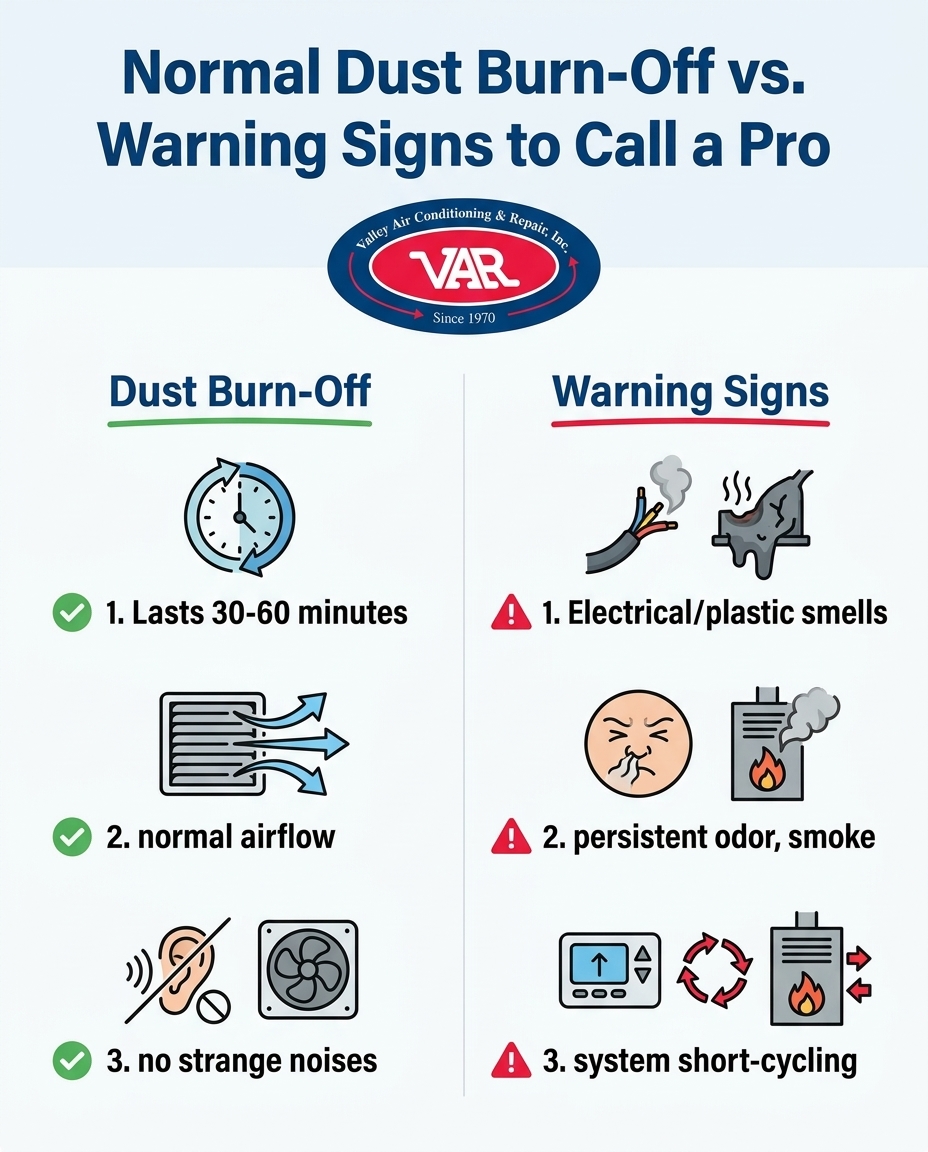
Normal dust burn-off follows a very predictable pattern. If your system is simply clearing away summer debris, you will notice specific, temporary symptoms that resolve themselves without intervention.
• Rapid dissipation: The burning dust smell should peak within the first ten minutes and fade completely within 30 to 60 minutes of the first heating cycle.
• Normal sounds: The blower motor should hum smoothly, and you should hear the gentle whoosh of air—no unusual grinding, screeching, or loud banging noises.
• Consistent airflow: The air coming from your vents should feel strong, steady, and increasingly warm as the cycle continues.
Conversely, certain odors and behaviors indicate that a component is melting, short-circuiting, or failing to vent combustion gases properly. If you encounter any of these red flags, shut the thermostat off immediately.
• Electrical odors: A smell resembling ozone, melting plastic, or burning wire insulation is never normal and indicates an active electrical hazard.
• Visible smoke: If you see actual smoke coming from the vents or rising from the furnace cabinet itself, cut the power at the breaker immediately.
• Erratic cycling: If the system repeatedly turns on for a few minutes and then abruptly shuts off (short-cycling), a safety sensor is likely being triggered by an internal failure.
• Odor resembling dusty, dry earth fading after 45 minutes — Likely Cause: Normal accumulation of Central Valley agricultural dust burning off — Required Action: Monitor the system; no action required if the smell clears.
• Harsh chemical smell or melting plastic odor — Likely Cause: Failing capacitor, melting wire casing, or foreign object in duct — Required Action: Turn off system immediately and schedule a professional inspection.
• Loud screeching or grinding alongside a burning smell — Likely Cause: Failing blower motor bearings or seized fan belt — Required Action: Power down the unit to prevent total motor burnout; call for repair.
• System runs for 3 minutes, shuts off, and restarts repeatedly — Likely Cause: Overheating heat exchanger tripping the high-limit safety switch — Required Action: Check air filter; if clean, request professional diagnostic.
Our service team frequently sees the lingering toll of extreme summer heatwaves where temperatures reach 110 degrees, pushing cooling equipment to its absolute limit. In fact, we recently helped a local homeowner whose system suffered intense wear over the summer, requiring a rapid tune-up to ensure their heating components were safe to operate for an elderly family member. That kind of intense summer strain leaves lingering wear and tear on your shared HVAC components. Before switching over to heating, there are safe, practical steps you can take to ensure the system is ready.
When transitioning your system for the colder months, the goal is to optimize airflow and verify basic settings without crossing into dangerous DIY territory. Attempting to clean internal combustion components or rewire control boards without a license can lead to gas leaks, electrical fires, or severe injury. However, our team recommends the following steps, which are completely safe for homeowners to perform:
1. Replace heavily clogged air filters: After a long Fresno summer, your filter is likely packed with dust, pet dander, and pollen. A blocked filter suffocates the furnace, causing the heat exchanger to rapidly overheat and trigger emergency shutdown sensors. Always start the heating season with a fresh, high-quality filter.
2. Verify thermostat calibration: Ensure the thermostat is actually set to "Heat" and that the fan is set to "Auto" rather than "On." If you have a programmable model, double-check that your scheduled temperature shifts still align with your current daily routine.
3. Unblock all vents and registers: Walk through every room and ensure that rugs, furniture, or heavy curtains have not been moved over the supply or return vents during the summer. Restricted airflow forces the blower motor to work harder, increasing energy consumption and the risk of mechanical failure.
4. Check the outdoor exhaust pipes: If you have a high-efficiency furnace, inspect the PVC exhaust pipes on the exterior of your home. Ensure they are free of leaves, cobwebs, or debris that might block the safe venting of combustion gases.
If you have completed these basic checks and the system still struggles to ignite, produces strange noises, or emits concerning odors, it is time to step back. For more detailed guidance on identifying persistent cooling or airflow issues left over from summer, review our comprehensive AC troubleshooting guide. Never open the sealed furnace cabinet or attempt to bypass safety switches yourself.
As HVAC systems age, the toll of extreme Central Valley temperature swings becomes increasingly apparent. The transition from intense summer cooling to mid-fall October heating startup is the most vulnerable time for aging equipment. Parts that expanded and contracted through months of heatwaves are now being asked to perform an entirely different function. Professional maintenance is the most effective way to evaluate this summer wear and tear before it results in a mid-winter breakdown.
Routine professional care is the most effective way to keep older systems running like new. For example, our technicians recently performed a thorough heat exchanger cleaning during a routine preventive maintenance visit, which helped a client's 13-year-old system continue operating safely and efficiently despite its age. A licensed technician approaches a pre-winter inspection with a rigorous checklist designed to catch microscopic failures before they escalate.
During a professional inspection, the technician evaluates the integrity of the heat exchanger, looking for hairline cracks that could allow dangerous carbon monoxide to enter your breathing air. They also test the ignitor, clean the flame sensor, and measure the electrical draw of the blower motor. Removing the heavy layer of summer dust from the internal burners ensures a clean, efficient burn, which not only eliminates the frightening startup smells but also maximizes the unit's energy efficiency. Enrolling in a preventative maintenance plan ensures these critical safety checks happen automatically every year, extending the lifespan of your investment and keeping your family safe.
Sometimes, troubleshooting and routine inspections reveal that a system has simply reached the end of its safe operational life. Recognizing when an aging furnace or heat pump can no longer handle the extreme regional temperature swings of the Central Valley is a critical part of homeownership. If you are constantly paying for minor repairs, experiencing uneven heating, or noticing a steady increase in your monthly energy bills, the equipment is likely losing its efficiency.
Weighing the long-term benefits of upgrading to a more efficient system involves looking beyond the initial installation. Modern, high-efficiency heating systems utilize advanced variable-speed motors and multi-stage gas valves that provide vastly superior comfort while consuming significantly less energy. They also operate much more quietly and effectively filter out the heavy agricultural dust that plagues our region.
When planning for a system replacement, we highly recommend exploring available energy rebates and federal tax credits for qualifying high-efficiency installations. These programs frequently reward homeowners who upgrade to environmentally friendly heat pumps or high-AFUE furnaces. Because upgrading your home's comfort system is a significant investment, exploring flexible financing options can help make a sudden replacement manageable, allowing you to prioritize safety and efficiency without compromising your household budget.
The peace of mind that comes from knowing your heating system is safe, clean, and reliable is invaluable. When you turn on your thermostat for that mid-fall October heating startup, you should feel a comforting wave of warmth, not a wave of anxiety over strange odors or strange noises. Addressing the wear and tear of summer now prevents those minor lingering issues from turning into major emergencies when the cold weather truly sets in.
We urge homeowners to act proactively before overnight temperatures drop significantly. Waiting until the first freezing night to discover your furnace is failing means joining a long line of emergency service calls. Take control of your home's comfort today by scheduling a thorough inspection or necessary repair with a licensed local expert, ensuring your family stays warm and safe all season long.
Why does my heater smell like burning dust?
Your heater smells like burning dust because the heat exchanger collects particulate matter while sitting idle during the summer. When you turn the furnace on for the first time in the fall, the burners ignite and instantly incinerate this accumulated debris. This creates a temporary, distinct odor that travels through your ductwork into your living spaces.
When should I worry about my furnace smell?
You should worry about your furnace smell if it resembles melting plastic, burning electrical wires, or ozone. Additionally, if the standard dusty smell persists for several hours without fading, or if you see visible smoke near the unit or vents, it indicates a serious problem. In these scenarios, shut the system down immediately and contact a professional.
How long should a furnace smell when first turned on?
A normal dust burn-off smell should peak within the first ten minutes and completely dissipate within 30 to 60 minutes of the initial heating cycle. Once the accumulated summer dust has been incinerated off the heat exchanger, the air should smell clean and warm. If the odor lasts beyond the first cycle, it requires investigation.
Is it safe to run my AC or heater if I smell burning plastic?
No, it is absolutely not safe to run your HVAC system if you smell burning plastic. This specific odor strongly suggests an active electrical failure, such as melting wire insulation, a failing capacitor, or an overheating blower motor. Cut the power to the unit at your circuit breaker immediately to prevent an electrical fire.
How often should I schedule HVAC maintenance in Fresno?
Our team recommends scheduling professional HVAC maintenance twice a year in Fresno due to the extreme climate demands. Schedule one tune-up in the spring to prepare the air conditioner for intense summer heat, and a second inspection in the fall to ensure the furnace is clean and safe for winter operation. Regular maintenance is essential for managing heavy local agricultural dust.

As a business with many AC units, it is essential to have a responsive AC company. Valley Air Conditioning understands our needs. They are always responsive and our AC is up and running very quickly.
I had them do an AC check on the home I was buying, they were honest and quick. I hired them to do the summer and Fall maintenance for $149. Happy with this company!
100% recommend. I called, same day they came out and gave me estimate. Conley was honest and didn't try to recommend/sell us anything we didn't need. When I called him with questions before making a decision, he happily answered and was not annoyed by me contacting him. Conley and VAR
This is a group of good people. Very professional and knowledgeable. They take the time to listen and find the best solution that fits best for any situation. There's no way you can go wrong in choosing VAR.
We have used Valley Air for over fifteen years. The last two years ,Matt came to our house to service twice a year. Always on time, so polite and so professional. This is a very honest company and you can always depend on them and trust them. The office always treats everyone cheerfully and always want to do what you need done very fast YOU CAN COUNT ON THIS Company