


.webp)


Why Is My AC Blowing Warm Air? Fall HVAC Troubleshooting & Startup Smells
Smelling burning dust this fall? Get clear answers with our home maintenance tips and troubleshooting to know when to call a pro for your heating system.
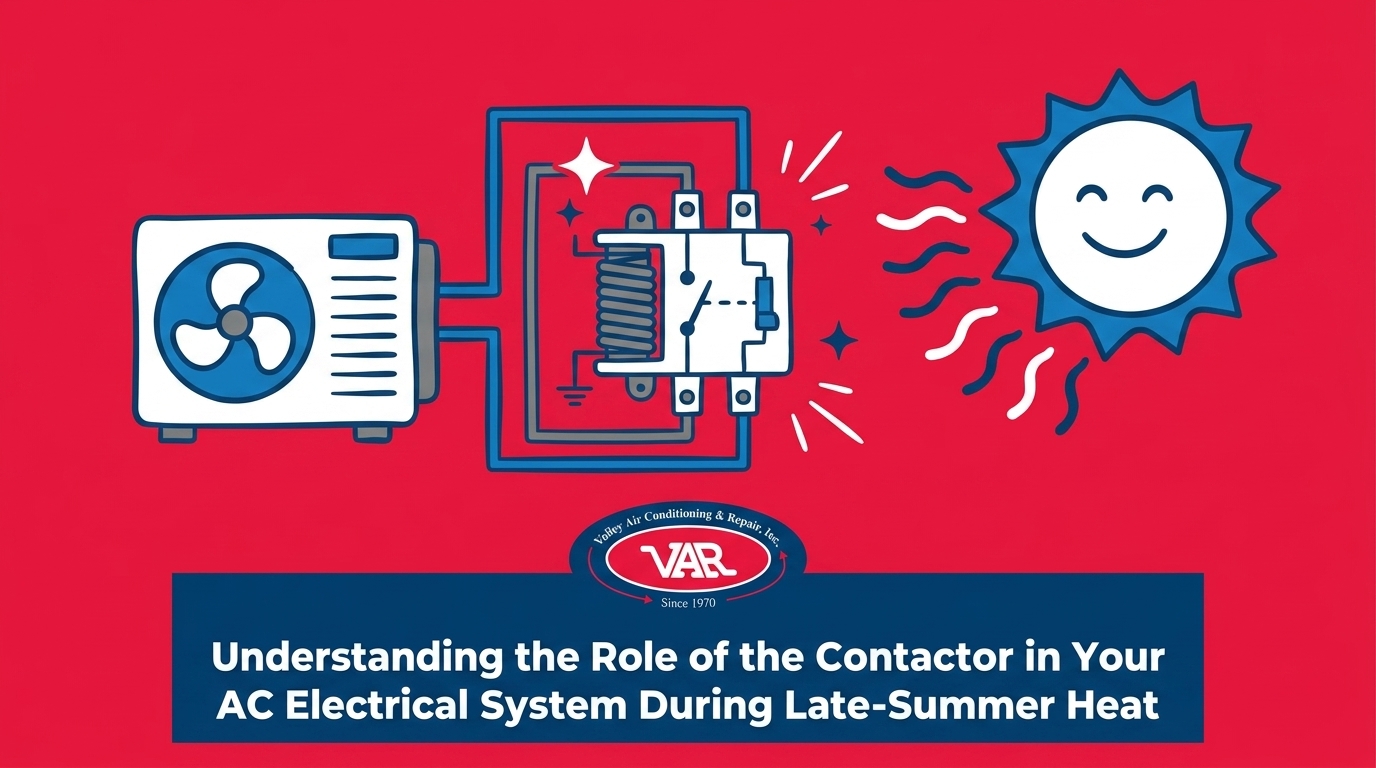
You step inside your home on a sweltering August afternoon, expecting a blast of cold air, but instead, you hear only the faint sound of the indoor blower fan. The air coming from the vents is room temperature, and when you walk outside to check the heavy metal cabinet in your yard, it is completely silent. Understanding the Role of the Contactor in Your AC Electrical System is often the last thing on a homeowner's mind until this exact moment happens. When a technician arrives to diagnose the sudden breakdown and tells you that you have a "fried contactor," it can feel like a foreign language. However, this is one of the most common reasons an air conditioning system completely stops producing cold air during the late-summer cooling season.
The frustration of a sudden breakdown is completely valid, especially after your equipment has run flawlessly for months. But this specific electrical failure rarely happens out of nowhere. It is usually the final result of thousands of operational cycles, intense heat, and cumulative mechanical wear. By breaking down exactly what this component does, why it fails after months of heavy usage, and how high-voltage electricity interacts with extreme weather, you can take the mystery out of your technician's diagnosis. More importantly, understanding this vital piece of equipment reveals why proactive, seasonal care is the best defense against a completely silent compressor when you need it most.
To understand why this part is so prone to wearing out, you first have to understand its critical job. An AC contactor is a heavy-duty electrical switch designed to handle high voltage. Your home cooling equipment operates on two entirely different electrical circuits: a low-voltage control circuit and a high-voltage power circuit. The contactor acts as the essential bridge between the two.
Your indoor thermostat is the brain of the operation, but it only uses a tiny amount of electricity—typically 24 volts. This low voltage is incredibly safe and perfect for sending signals, but it is not nearly enough power to turn on a massive outdoor compressor. The compressor and the condenser fan motor require a massive influx of power, usually 220 to 240 volts, to do the heavy lifting of removing heat from your home. The contactor sits in the outdoor unit, waiting for the 24-volt signal from the thermostat. When that signal arrives, the contactor closes its high-voltage bridge, allowing the 240 volts of electricity to flood into the compressor and fan motor.
Without this heavy-duty switch functioning perfectly, the cooling process cannot even begin. To make this easier to visualize, here is a breakdown of the two distinct sides of your cooling equipment's electrical flow:
• Thermostat — Voltage Level: Low Voltage (24V) — Primary Function: Acts as the brain, monitoring temperature and sending the "on" signal.
• Contactor Coil — Voltage Level: Low Voltage (24V) — Primary Function: Receives the thermostat's signal and creates a magnetic field to close the switch.
• Contactor Plates — Voltage Level: High Voltage (240V) — Primary Function: The physical metal bridge that clamps shut to allow heavy power to flow.
• Compressor & Fan — Voltage Level: High Voltage (240V) — Primary Function: The muscle of the system, requiring massive power to compress refrigerant and expel heat.
Because this switch is responsible for repeatedly holding back and releasing lethal amounts of high-voltage electricity, it is built to be incredibly robust. However, even the most durable metal components eventually succumb to the intense physical and electrical stress required to keep homes comfortable across Fresno residential areas.
The physical action of a contactor engaging is a violent, high-energy event. Every single time your thermostat calls for cooling, a fascinating but destructive sequence of physics takes place inside the outdoor cabinet. Understanding this sequence explains exactly why these parts eventually burn out during the late-summer cooling season.
1. The Magnetic Pull: When the 24-volt signal arrives from the thermostat, it energizes a small coil of wire wrapped around a metal core at the base of the contactor. This creates a strong electromagnet.
2. The Physical Closure: The electromagnet forcefully pulls a set of heavy metal plates (the contacts) downward. These plates are designed to slam together, bridging the gap between the incoming power supply and the compressor.
3. The Electrical Arc: This is where the damage occurs. In the microscopic fraction of a second right before the metal plates physically touch, the 240 volts of electricity is so eager to cross the gap that it actually jumps through the air. This creates a tiny, intense spark known as an electrical arc.
4. The Power Transfer: Once the plates are clamped tightly together by the electromagnet, the arcing stops, the voltage flows smoothly, and the compressor roars to life.
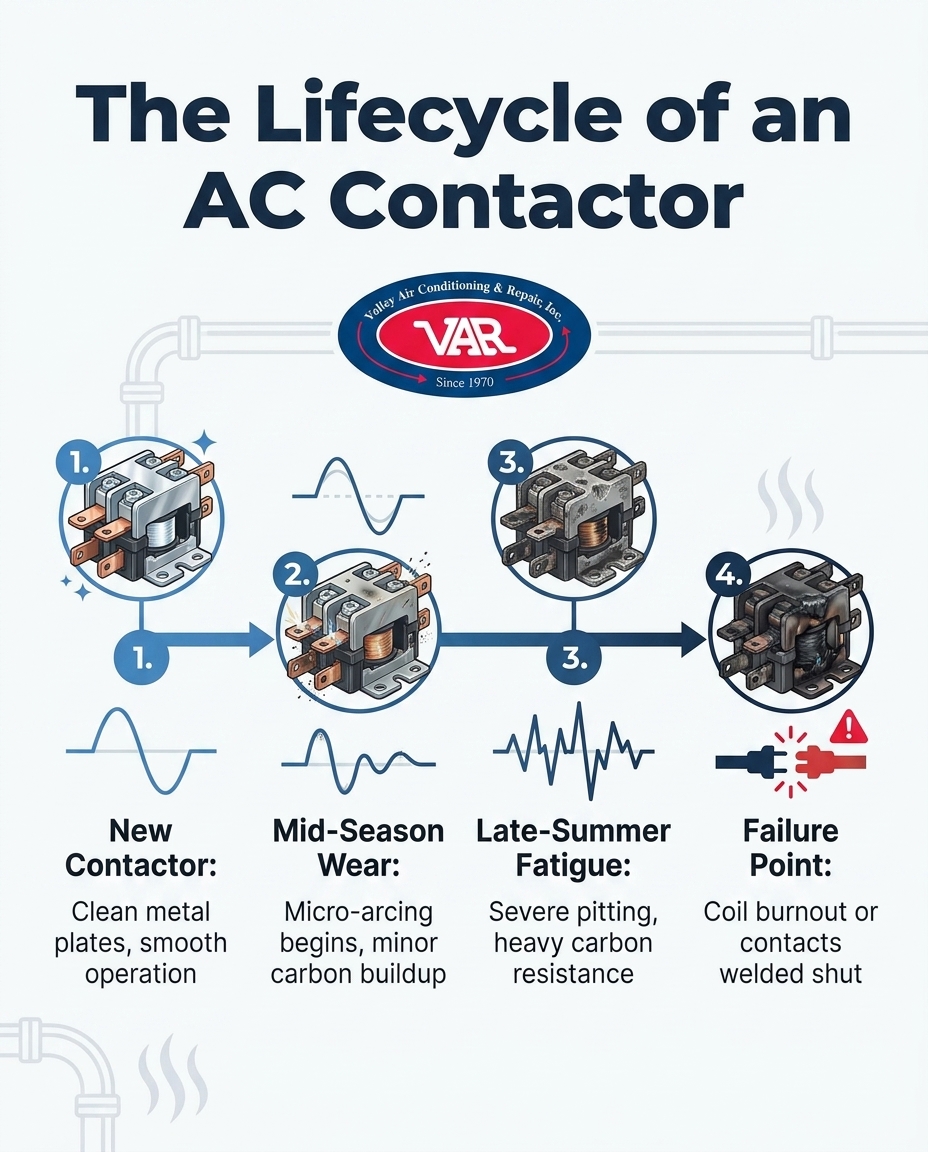
That tiny electrical arc is essentially a miniature lightning strike. It generates intense localized heat, sometimes reaching thousands of degrees for a split second. Every time this arc occurs, it burns away a microscopic layer of the metal plates and leaves behind a tiny deposit of black carbon soot. A single arc does no noticeable damage. However, when your system cycles on and off dozens of times a day, this micro-arcing becomes a cumulative, destructive force. Over months of operation, the smooth metal plates become scarred, pitted, and covered in carbon, setting the stage for an inevitable failure.
The physics of electrical arcing happens in every climate, but the extreme weather in our region drastically accelerates the timeline. Fresno experiences over 35 days a year with temperatures exceeding 100 degrees. This specific, brutal climate forces complete HVAC services to address heat-stressed electrical failures at a much higher rate than in milder parts of the country.
The Problem: When the ambient temperature outside climbs past 100 degrees, your home loses cold air much faster. To maintain your desired indoor temperature, the thermostat forces the AC to cycle on and off continuously. Instead of cycling 20 times a day, the system might cycle 60 or 80 times. This multiplies the number of electrical arcs the contactor endures, rapidly accelerating the carbon buildup and metal degradation. Furthermore, the excessive outdoor heat prevents the component's magnetic coil from cooling down properly between cycles.
The Cause: By the time August arrives, the component has endured massive cumulative fatigue. The coil is heat-stressed, and the metal plates are badly scarred. One local homeowner reached out during a brutal stretch of 110-degree days while stuck in quarantine. Their system had completely stopped working at the worst possible time. The extreme, unyielding heat had forced the system to cycle so frequently that the contactor simply burned out under the load.
The Solution: Valley Air Conditioning & Repair brings extensive local experience diagnosing these specific heat-stressed electrical failures in Central Valley systems. When our technician arrived for that quarantined homeowner, they quickly diagnosed the fried component and replaced it, restoring the cooling immediately. Because our teams understand exactly how Fresno residential areas stress these high-voltage parts, we know exactly what warning signs to look for before the switch completely fails.
When a technician opens the outdoor cabinet and declares the contactor is bad, they are usually looking at one of three specific physical issues. Understanding the anatomy of this breakdown helps explain why the part must be completely replaced rather than simply cleaned or repaired.
As the micro-arcing blasts the metal plates thousands of times during the late-summer cooling season, it actually vaporizes tiny amounts of the metal. This creates a crater-like surface known in the industry as pitting. Instead of two smooth, flat surfaces pressing firmly together, you end up with jagged, uneven terrain. This uneven surface drastically reduces the physical contact area between the plates, making it much harder for the 240 volts to cross the bridge. The electricity has to squeeze through a smaller area, which generates even more destructive heat.
The soot left behind by the electrical arcs is made of carbon. Carbon is a resistor, meaning it actively fights the flow of electricity. If the metal plates become coated in a thick layer of black carbon, the voltage cannot push through it. The thermostat might send the signal, the electromagnet might pull the plates together, but the carbon buildup creates a physical wall that stops the power. The result is a system where the indoor fan blows, but the AC is not starting outside.
Surprisingly, one of the most common causes of a failed contactor has nothing to do with electricity at all. Insects, particularly ants, earwigs, and spiders, are naturally drawn to the warmth and the low-frequency electromagnetic hum generated by the contactor coil. They often crawl inside the switch housing. When the thermostat calls for cooling and the heavy metal plates slam shut, any bugs caught in the middle are instantly crushed. A crushed bug between the contact plates creates a physical barrier that completely blocks the high-voltage electrical current, resulting in a dead compressor.
While a breakdown often feels sudden, these heavy-duty switches usually exhibit warning signs before they completely give out. Because the degradation happens gradually over the summer, paying attention to the sounds and behaviors of your outdoor unit can give you a crucial head start. If you notice any of these symptoms in Fresno residential areas, early professional intervention can save you from a completely silent system.
• Loud humming or buzzing: If you hear a distinct, loud electrical hum coming from the outdoor cabinet even when the fan isn't spinning, the magnetic coil is likely struggling. This means the 24-volt signal is arriving, but the coil is too weak or heat-damaged to pull the heavy metal plates closed.
• Rapid chattering or clicking: A chattering noise that sounds like a machine gun indicates a fluctuating electrical connection. The electromagnet is rapidly pulling and dropping the contacts, usually due to a failing coil, a loose wire, or severe pitting on the plates. This rapid chattering is incredibly dangerous for the compressor.
• Indoor fan runs, but no cold air: If your vents are blowing warm air and the outdoor unit is completely silent, the high-voltage bridge has likely failed. The low-voltage thermostat is working, but the heavy power is being blocked by carbon buildup or a burned-out coil.
• The system won't shut off: In extreme cases of heat and arcing, the metal plates can actually melt and weld themselves together. If this happens, the switch becomes stuck in the "closed" position. The outdoor unit will continue to run non-stop, freezing the coils, even if you turn the thermostat completely off.
When an AC stops working, it is tempting to look up tutorials online and attempt a quick fix. However, when dealing with the contactor, do-it-yourself diagnostics are incredibly dangerous and strictly ill-advised. There is a massive difference between changing a dirty air filter and interacting with the high-voltage load circuit of your cooling equipment.
The contactor handles 220 to 240 volts of raw electricity. This level of power is lethal. Unlike the safe 24-volt thermostat wires inside your home, the power coursing through the outdoor cabinet can cause severe injury or death if handled improperly. Testing a failing switch requires checking for voltage drops and resistance while the system is under a live electrical load. This requires specialized multimeters, insulated tools, and extensive professional training to perform safely.
Beyond the severe safety hazards, replacing this component incorrectly can destroy the rest of your system. If a homeowner installs a replacement part with the wrong amperage rating, or wires the high-voltage lines incorrectly, it can send a catastrophic surge of power directly into the compressor. The compressor is the heart of the system and the most expensive part to replace. A licensed technician during the late-summer cooling season knows exactly how to safely discharge capacitors, verify the correct replacement specifications, and test the electrical draw to ensure your expensive compressor is fully protected.
An AC contactor acts as a heavy-duty switch that turns the outdoor AC unit on and off. When your indoor thermostat calls for cooling, it sends a low-voltage signal to the contactor. The contactor then closes a physical metal bridge, allowing high-voltage electricity to flow directly to the heavy-lifting components: the compressor and the condenser fan. Without it, the outdoor unit cannot receive the power it needs to start.
Repeated electrical arcing causes pitting and carbon buildup on the metal contacts over time. Every time the switch closes, a tiny spark jumps the gap, slowly burning away the metal and leaving behind resistive soot. Additionally, extreme heat and continuous cycling in Fresno residential areas wear out the magnetic coil, and sometimes bugs or debris can physically block the contacts from closing.
Loud buzzing or humming from the outdoor unit is one of the most common early warning signs. You may also notice that the indoor AC fan blows warm air because the outdoor compressor isn't turning on to cool the refrigerant. In some cases, if the metal plates melt and weld shut, the outdoor unit will refuse to turn off even when the thermostat is satisfied.
The indoor blower fan may still run and circulate air because it operates on a separate electrical circuit inside the house. However, the outdoor condenser fan usually will not run if the contactor has completely failed. The only exception is if the system uses a dual-pole contactor and only one side of the bridge has burned out, which can cause erratic outdoor fan behavior.
Yes, insects are naturally drawn to the warmth and the electromagnetic hum of the contactor coil. Ants, earwigs, and spiders frequently crawl between the heavy metal plates. When the thermostat signals the switch to close, the bugs get crushed, creating a physical barrier of organic matter that stops the high-voltage electrical current from crossing the bridge.
A sudden loss of cooling is incredibly stressful, but recognizing that a failed contactor is often a natural consequence of heavy usage during a brutal summer can help ease the frustration. The extreme heat forces your equipment to cycle thousands of times, and the physics of high-voltage arcing means that degradation is inevitable. Understanding this diagnosis takes the mystery out of sudden breakdowns and highlights the sheer amount of electrical stress your equipment endures.
The best way to prevent this specific failure from ruining your comfort is to catch the wear and tear before the switch completely burns out. During the late-summer cooling season, heavily pitted contacts and weakened magnetic coils can be identified long before they cause a total system shutdown. By relying on professional preventative AC maintenance, a licensed technician can safely inspect the high-voltage components, measure the electrical resistance, and replace a struggling switch on your schedule—ensuring your home stays consistently cool when the heat is at its worst.

As a business with many AC units, it is essential to have a responsive AC company. Valley Air Conditioning understands our needs. They are always responsive and our AC is up and running very quickly.
I had them do an AC check on the home I was buying, they were honest and quick. I hired them to do the summer and Fall maintenance for $149. Happy with this company!
100% recommend. I called, same day they came out and gave me estimate. Conley was honest and didn't try to recommend/sell us anything we didn't need. When I called him with questions before making a decision, he happily answered and was not annoyed by me contacting him. Conley and VAR
This is a group of good people. Very professional and knowledgeable. They take the time to listen and find the best solution that fits best for any situation. There's no way you can go wrong in choosing VAR.
We have used Valley Air for over fifteen years. The last two years ,Matt came to our house to service twice a year. Always on time, so polite and so professional. This is a very honest company and you can always depend on them and trust them. The office always treats everyone cheerfully and always want to do what you need done very fast YOU CAN COUNT ON THIS Company


