.webp)


Understanding the Role of the Furnace Draft Inducer Motor
A sudden furnace lockout on a chilly fall morning is frustrating, but it might save your life. See how the draft inducer motor acts as a crucial safety shield against toxic gases.
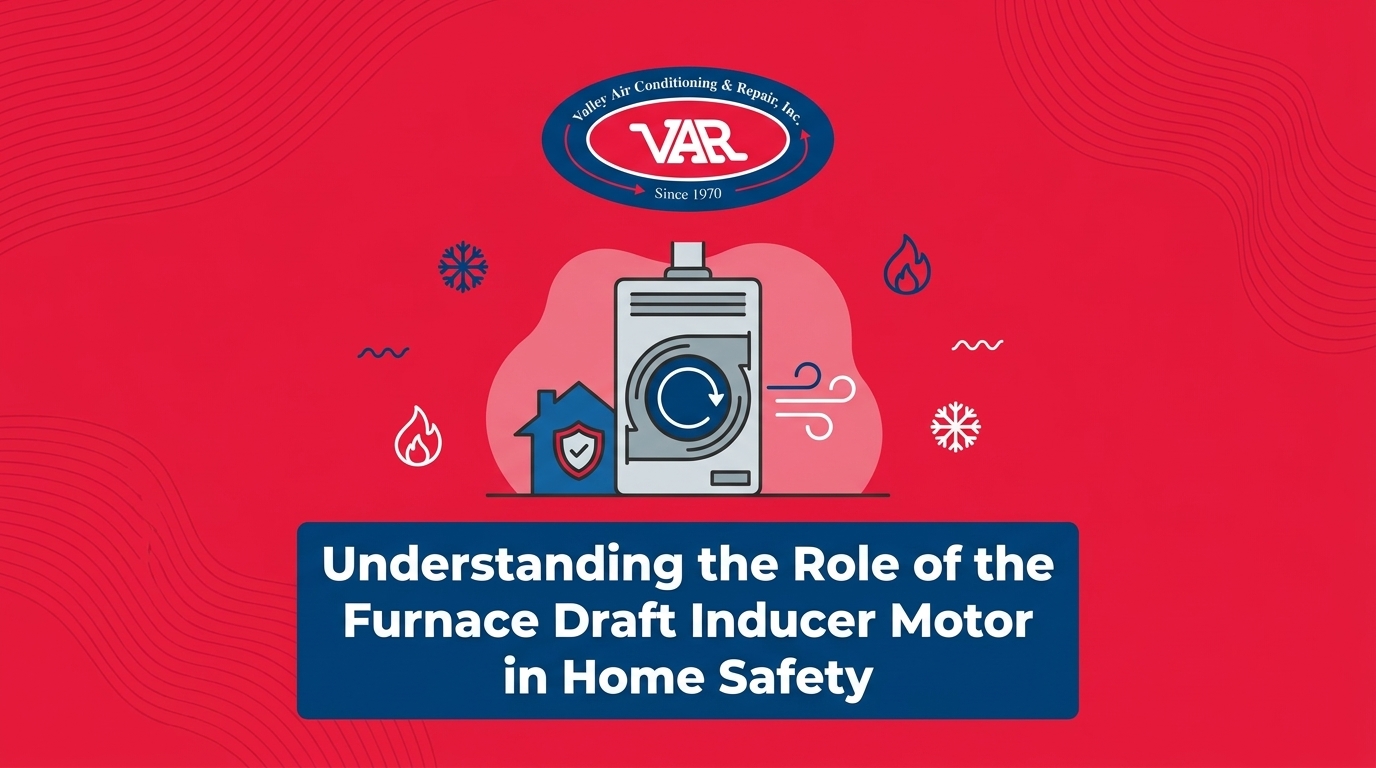
You wake up to the first real chill in the air, walk over to the thermostat, and switch it to heat. Instead of the comforting rush of warm air, you hear a strange whining sound from the utility closet—and then nothing. The system shuts down completely. If you are dealing with this exact scenario, you are not alone. Understanding the Role of the Furnace Draft Inducer Motor is the key to figuring out why your heating system is refusing to start when you need it most.
For comprehensive diagnostics and reliable heating services, our team is ready to help you restore comfort safely.
During the September pre-heating season, many homeowners decide to give their furnace a test run before the serious winter weather arrives. This is a highly recommended practice, but it often reveals hidden issues that developed while the system sat dormant over the summer. When you turn the system on and experience an immediate shutdown, the immediate reaction is usually frustration. You might assume that the furnace is completely broken or that you are facing a massive repair bill just as the holidays approach.
However, this initial "failure" is rarely a random breakdown. In modern heating systems, an immediate shutdown before any heat is produced is almost always a deliberate, life-saving safety mechanism. Your furnace is programmed to run a series of strict self-checks before it ever allows gas to flow into the combustion chamber. If any of these checks fail, the system locks itself out to protect your home and your family.
At the very heart of this safety protocol is a component known as the draft inducer motor. While the main blower fan gets all the credit for circulating warm air through your vents, the draft inducer motor is the unsung hero of the HVAC system. It works behind the scenes to ensure that the environment inside your furnace is perfectly safe for ignition. When it struggles, the entire system halts—and for very good reason.
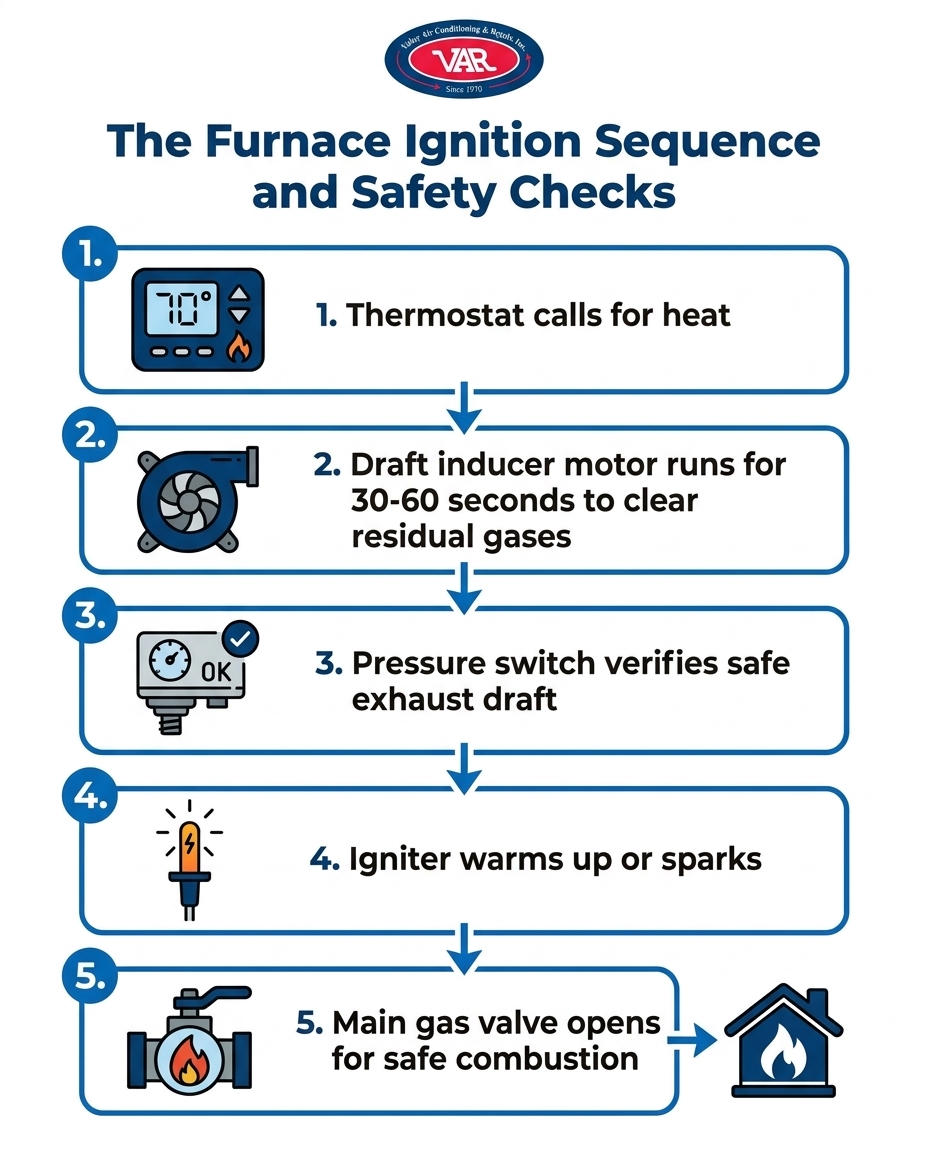
To truly appreciate why your furnace is locking out, you need to understand the chronological steps that occur every single time your heating system cycles on. Modern furnaces do not simply ignite a flame the moment your thermostat calls for heat. Doing so would be incredibly dangerous. Instead, they follow a highly regulated, step-by-step safety sequence. If you invest in thorough pre-season furnace preparation, technicians spend a significant amount of time verifying that this exact sequence happens flawlessly.
1. The Thermostat Calls for Heat: You set the temperature higher than the current room temperature. The thermostat sends a low-voltage electrical signal to the furnace control board, initiating the heating cycle.
2. The Draft Inducer Motor Starts: Before any gas valves open or sparks are generated, the control board sends power directly to the draft inducer motor. You will usually hear a low hum or the sound of a small fan spinning up. This fan typically operates for 30 to 60 seconds to purge the heat exchanger of any lingering gases from the previous cycle.
3. The Pressure Switch Verifies Flow: As the inducer motor runs, it creates a negative pressure (a vacuum) inside the draft system. A small, sensitive diaphragm called a pressure switch detects this vacuum. If the draft is strong enough, the switch closes, signaling to the control board that it is safe to proceed.
4. The Igniter Warms Up: Once the pressure switch gives the green light, the control board sends voltage to the hot surface igniter (which glows bright orange) or the spark igniter (which clicks rapidly).
5. The Gas Valve Opens: Only after the igniter is fully prepped does the main gas valve open, releasing fuel into the burners where it is safely ignited.
If the draft inducer motor fails to start, or if it runs but cannot pull enough vacuum to satisfy the pressure switch, the sequence halts immediately at step two. The igniter will never glow, and the gas valve will never open.
Now that we know when the draft inducer motor operates, we need to define exactly what it is and what mechanical function it serves. In simple terms, the draft inducer motor is a small but powerful exhaust fan located inside the furnace cabinet, usually mounted directly near the heat exchanger and connected to the flue pipe.
Its primary job is to pull fresh air through the heat exchanger and push residual, potentially dangerous combustion gases out through the flue or vent pipe to the exterior of your home. By aggressively venting these gases, the inducer motor ensures a clean, oxygen-rich environment for the burners. Fire requires oxygen to burn cleanly and efficiently; if the combustion chamber is choked with leftover exhaust gases, the resulting flame will be unstable, inefficient, and highly dangerous.
The presence of a draft inducer motor is a relatively modern advancement in residential heating. Understanding how older systems worked highlights just how critical this component is today.
• Venting Mechanism — Naturally Drafted Furnaces (Older Models): Relied on the natural buoyancy of hot air rising up a vertical chimney to carry exhaust gases away. — Induced Draft Furnaces (Modern Models): Uses a mechanical fan (the inducer motor) to actively push exhaust gases out through a dedicated flue pipe.
• Efficiency — Naturally Drafted Furnaces (Older Models): Lower efficiency (typically 60-70%). Much of the heat energy was lost up the chimney to maintain the draft. — Induced Draft Furnaces (Modern Models): High efficiency (80-98%). Heat is extracted thoroughly, leaving cooler exhaust that must be mechanically pushed out.
• Safety Profile — Naturally Drafted Furnaces (Older Models): Susceptible to downdrafts, bird nests, or atmospheric pressure changes pushing exhaust back into the home. — Induced Draft Furnaces (Modern Models): Highly secure. If the mechanical draft fails, safety switches immediately lock out the gas valve to prevent spillage.
Modern, high-efficiency furnaces extract so much heat from the combustion process that the remaining exhaust gases are simply too cool to rise out of a chimney on their own. The draft inducer motor provides the necessary mechanical force to push these toxic gases safely out of your living space.
When you search online because your "furnace makes noise but won't ignite," you are likely experiencing a pre-ignition lockout. While this is incredibly frustrating when your house is cold, reframing this annoyance into an appreciation for holistic system safety is important. Your furnace is doing exactly what it was designed to do: protecting you.
The most common homeowner complaint during early fall is hearing the furnace click on, hearing a motor hum or whine, and then experiencing a total shutdown a minute later. The house remains cold, and the thermostat may flash an error code. The immediate problem is a lack of heat, but the mechanical problem is a failure in the exhaust draft.
The draft inducer motor does not work in isolation. It works in a direct, tandem partnership with the furnace pressure switch. The pressure switch is a safety device designed to measure the physical vacuum created by the inducer motor. If the inducer motor is failing, spinning too slowly, or if the flue pipe is blocked by a bird's nest or debris, the required vacuum will not be achieved. The pressure switch will detect this lack of draft and refuse to close its electrical circuit.
Because the pressure switch remains open, the main furnace control board never receives the "all clear" signal. As a direct result, the system enforces a safety lockout. The main gas valve is physically prevented from opening. This holistic safety system ensures that your furnace will never dump highly flammable gas into a combustion chamber that cannot safely vent its exhaust. This mechanism works alongside other critical checks—similar to how your furnace flame sensor dictates safe operation after the flame is lit—to provide end-to-end protection from the moment the thermostat clicks until the cycle ends.
Because the draft inducer motor is a mechanical component with moving parts, bearings, and an electrical motor, it is subject to wear and tear over time. Educating yourself on the auditory and operational signs that this specific component is struggling can help you catch a failure before you are left completely without heat.
• Loud whining or howling: A distinct, high-pitched whining noise right after the thermostat clicks usually indicates that the bearings inside the inducer motor are wearing out or lacking lubrication.
• Grinding or scraping sounds: This is a severe symptom. It often means the blower wheel inside the inducer assembly has cracked, come loose, or is physically scraping against the metal housing as it spins.
• A low, electrical hum: If you hear a hum but do not hear the sound of moving air, the motor may be receiving electrical power but is physically seized or has a failed starting capacitor.
• The motor runs continuously but no heat is produced: In some failure modes, the inducer motor will run endlessly, trying to build up enough vacuum to satisfy the pressure switch. Because it cannot reach the required pressure, the burners never ignite, and the fan simply runs until you turn off the system.
• Intermittent starting: You may notice the furnace attempts to fire multiple times. You hear the fan start, stop, start again, and then eventually the system shuts down entirely, entering a hard safety lockout that requires a manual reset.
The golden rule of furnace safety: These symptoms should never be ignored or bypassed. If your furnace is struggling to start, it is communicating a significant mechanical or safety issue that requires immediate professional attention.
To truly grasp why the inducer motor is so heavily monitored by safety switches, we have to look at the byproduct of burning natural gas or propane. The most severe risk of incomplete combustion and exhaust failure is the production and accumulation of Carbon Monoxide (CO).
Carbon Monoxide is a byproduct of incomplete combustion in heating appliances. It is a colorless, odorless, and tasteless gas, which is why it is frequently referred to as the "silent killer." According to data from the Centers for Disease Control and Prevention (CDC), accidental CO poisoning is responsible for hundreds of deaths and thousands of emergency room visits every single year in the United States. Proper exhaust ventilation is not just a performance metric for your furnace; it is a critical life-safety requirement.
When a draft inducer motor begins to fail, it loses its ability to aggressively pull air through the heat exchanger. This leads to a sluggish draft. Without enough oxygen flowing over the burners, the combustion process becomes incomplete, causing a massive spike in carbon monoxide production.
Worse, because the exhaust fan is weak, those highly toxic gases are not pushed out of the flue pipe efficiently. Instead, they can backdraft or spill out of the furnace cabinet and directly into your living space. The blower motor (which pushes warm air into your rooms) can then pick up these spilled gases and distribute them through your ductwork into every bedroom in the house.
This is exactly why having functional, battery-backed CO detectors installed on every level of your home, especially near sleeping areas, is absolutely mandatory alongside a well-maintained heating system.
When facing a furnace lockout, the temptation for some homeowners is to search for quick fixes or DIY repair videos online. However, diagnosing and repairing safety-critical exhaust components is never a DIY project. The risks associated with improperly handling gas valves, exhaust flues, and safety switches are simply too high.
When a furnace locks out during the ignition sequence, the draft inducer motor is only one suspect. A licensed professional knows that the root cause could be any of the following:
• A failing draft inducer motor that cannot reach the proper RPMs.
• A physically blocked flue pipe (often caused by leaves, bird nests, or ice accumulation).
• A faulty or stuck pressure switch that is reading the vacuum incorrectly.
• A cracked heat exchanger that is disrupting the internal draft pressures.
• A blocked condensate drain line in a high-efficiency furnace, causing water to back up into the inducer housing.
Bypassing safety switches or attempting to "jump" a pressure switch to force the furnace to run puts your entire household at severe risk of fire or carbon monoxide poisoning. Valley Air Conditioning & Repair's commitment is to prioritize your family's safety over quick, cheap fixes when diagnosing critical components. We never compromise on safety protocols.
During a recent winter cold snap, one local homeowner reached out when their heater was completely out and required a specific replacement part. A technician accurately diagnosed the safety failure and offered to return after hours to make the repair, ensuring the correct component was installed and the workspace was left spotless. This level of professional care ensures that the root cause is identified using specialized tools, like digital manometers, to measure exact draft pressures and verify completely safe operation before the technician ever leaves your home.
In Fresno, the transition from summer heat to early fall chill can happen rapidly. We often experience sharp drops in nighttime temperatures during the fall transition, requiring reliable and safe heating systems seemingly overnight. This sudden shift in weather makes a dependable furnace absolutely vital.
Because the inducer motor sits idle for months during the scorching summer, the September pre-heating season is precisely when hidden issues surface. Bearings dry out, dust accumulates, and electrical components degrade. Routine inspections catch inducer motor wear and tear before a cold-weather breakdown occurs.
Whether it is the peak of summer—like one local customer who recently needed a completely new air-conditioning system and had it installed and running wonderfully within a week—or the rapid transition into fall, swift and professional attention matters. Applying that same proactive mindset to your heating system prevents emergency lockouts.
When you schedule a professional routine maintenance plan visit, the technician does much more than just change the filter. Regarding the exhaust and safety sequence, they will:
• Test inducer motor amperage: Ensuring the motor is not drawing too much power, which indicates imminent failure.
• Inspect the flue pipe: Checking for any obstructions, rust, or physical damage that could impede exhaust flow.
• Verify pressure switch operation: Confirming the switch opens and closes at the exact manufacturer-specified vacuum ratings.
• Examine the heat exchanger: Looking for hairline cracks that could leak carbon monoxide.
By scheduling an inspection before the deepest cold sets in, you guarantee that your system's safety mechanisms are fully operational.
A furnace lockout on a chilly morning is undeniably annoying, but it is vital to remember that this shutdown means your system is actively protecting your home from toxic gases. The draft inducer motor and its accompanying safety switches form a critical barrier between your family and the hazards of incomplete combustion.
Understanding the role of the draft inducer motor empowers you as a homeowner to make safe, informed decisions rather than panicking when a pre-season test fails. If you hear strange whining noises, grinding sounds, or experience an ignition failure, do not attempt to bypass the system. Rely on your local experts to diagnose the issue properly. A clear, professional explanation of what the motor does and a safe, accurate repair will ensure you enjoy a warm, worry-free winter season.
What are the symptoms of a bad draft inducer motor?
The most common symptoms include a loud whining, humming, or grinding noise immediately after the thermostat calls for heat. You may also notice the furnace attempting to start multiple times before locking out completely. In some cases, the motor will run continuously, but the furnace will never ignite because it cannot generate enough draft to satisfy the safety switches.
Can a furnace run without a draft inducer?
No, a modern induced-draft furnace cannot and will not run without a functioning draft inducer motor. The furnace's internal safety sequence requires the inducer to create a specific vacuum pressure before the gas valve is allowed to open. If the inducer is broken, removed, or failing, the pressure switch will keep the system locked out to prevent carbon monoxide buildup.
Why does my furnace inducer motor run but no heat?
If the inducer motor is running but you have no heat, it usually means the motor is failing to pull enough vacuum to close the pressure switch, or the flue pipe is physically blocked. It can also indicate that the pressure switch itself is faulty or that the sequence is stalling at the next step, such as a burnt-out hot surface igniter. A professional diagnostic is required to pinpoint the exact failure point in the sequence.
What does a bad inducer motor sound like?
A failing inducer motor often sounds like a high-pitched whine or a low, struggling electrical hum. If the blower wheel inside the assembly is damaged or loose, it will produce a harsh grinding, rattling, or scraping noise as metal rubs against metal. Any noise other than a smooth, steady fan sound is a clear warning sign of impending failure.
Why is my furnace locked out before ignition?
Your furnace locks out before ignition as a deliberate safety measure to prevent raw gas from entering a combustion chamber that cannot safely vent its exhaust. This pre-ignition lockout is triggered when the control board detects that the draft inducer motor or the pressure switch has failed its mandatory safety check. Bypassing this lockout is incredibly dangerous and can lead to carbon monoxide poisoning.
How long should the inducer motor run before the burners ignite?
Under normal operating conditions, the draft inducer motor should run for about 30 to 60 seconds before the burners ignite. This brief period allows the fan to purge the heat exchanger of any lingering gases from the previous heating cycle, ensuring a clean, oxygen-rich environment for safe and efficient combustion.

As a business with many AC units, it is essential to have a responsive AC company. Valley Air Conditioning understands our needs. They are always responsive and our AC is up and running very quickly.
I had them do an AC check on the home I was buying, they were honest and quick. I hired them to do the summer and Fall maintenance for $149. Happy with this company!
100% recommend. I called, same day they came out and gave me estimate. Conley was honest and didn't try to recommend/sell us anything we didn't need. When I called him with questions before making a decision, he happily answered and was not annoyed by me contacting him. Conley and VAR
This is a group of good people. Very professional and knowledgeable. They take the time to listen and find the best solution that fits best for any situation. There's no way you can go wrong in choosing VAR.
We have used Valley Air for over fifteen years. The last two years ,Matt came to our house to service twice a year. Always on time, so polite and so professional. This is a very honest company and you can always depend on them and trust them. The office always treats everyone cheerfully and always want to do what you need done very fast YOU CAN COUNT ON THIS Company