.webp)


AC Repair in Fresno, CA: Troubleshooting the Fall HVAC Transition After a Brutal Summer
Why we emphasize safe fall heating startups. Use these home maintenance tips and troubleshooting steps to decide with confidence when to call a pro.
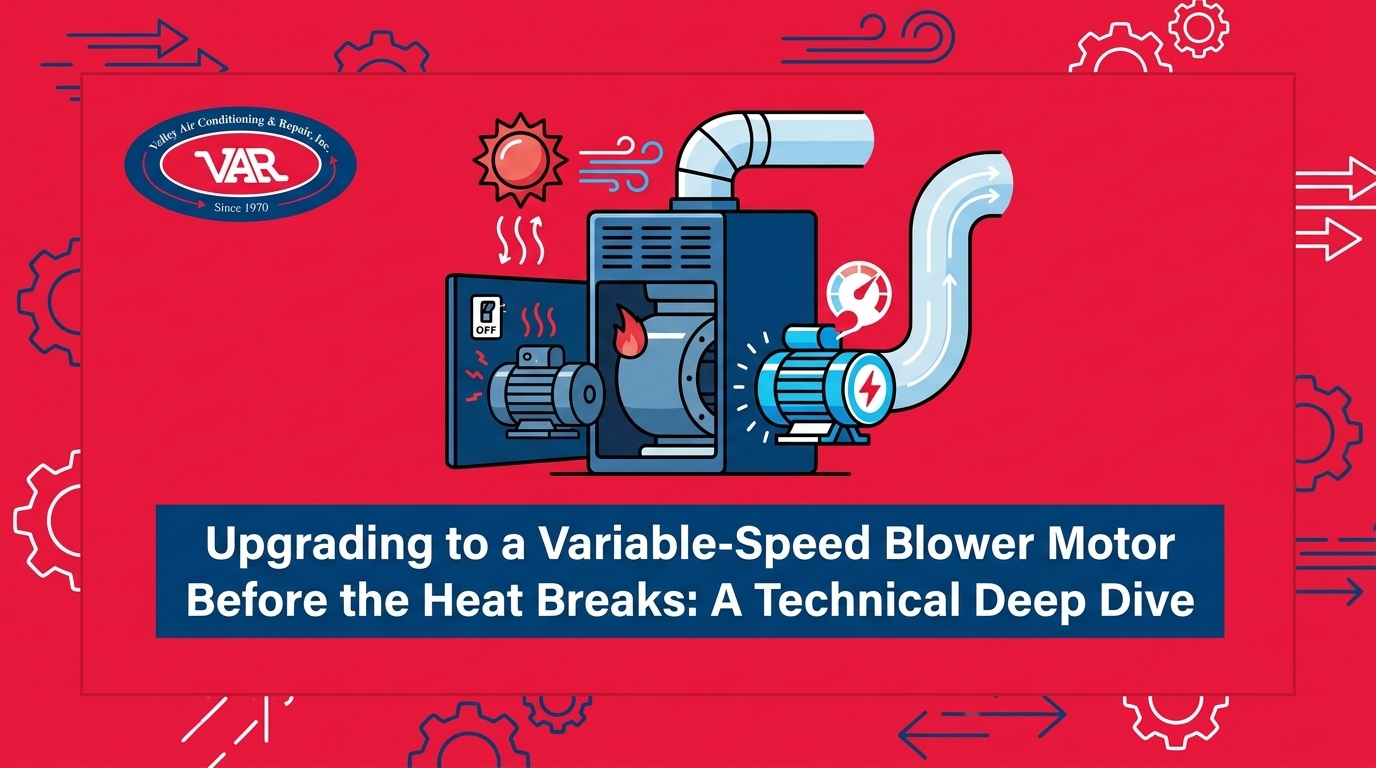
Is your air conditioner running relentlessly, yet your home still feels uncomfortably warm and sticky? Upgrading to a variable-speed blower motor before the heat breaks is a strategic decision that addresses the root cause of this exact problem. When the August late-summer heat settles over the region, aging cooling equipment is pushed to its absolute limits. Traditional single-stage units respond to this extreme weather by rapidly turning on and off in a jarring cycle, struggling to maintain a consistent indoor temperature while drawing massive amounts of electricity.
This relentless cycling takes a significant toll on both your comfort and your equipment. In areas like Fresno, where extreme summer temperatures force single-stage systems into overdrive, smooth modulation becomes highly valuable. Every time a standard motor kicks on at full capacity, it creates a disruptive blast of air and noise. Weighing the initial investment of a variable-speed upgrade against the immediate relief it provides in noise reduction and humidity control is the core decision many homeowners face as the cooling season drags on.
If you are tired of the constant noise and poor humidity control, securing a comprehensive HVAC system assessment is the first step toward lasting relief and superior indoor air quality.
To understand why an upgrade transforms your indoor environment, you have to look at the underlying mechanics of the equipment. Standard air handlers rely on PSC (Permanent Split Capacitor) motors. A PSC motor operates at a rigid, unyielding 100% capacity. Whenever the thermostat calls for cooling, the motor blasts air through the ductwork at maximum velocity until the target temperature is reached, at which point it shuts off completely. This binary operation—either full blast or completely off—leads to significant temperature swings and high energy consumption.
In contrast, ECM (Electronically Commutated Motors) technology powers variable-speed systems. An ECM continuously modulates airflow, operating across a wide range of speeds. Rather than blasting air, it ramps up gradually and often runs at lower, energy-efficient speeds for extended periods. This continuous modulation allows the system to adjust automatically to the static pressure of your ductwork, ensuring precise air delivery regardless of minor restrictions or filter density.
The energy consumption profiles of these two technologies are drastically different. A PSC motor requires a massive surge of electricity every time it starts, followed by high-wattage operation. An ECM, running at a lower capacity for sustained periods, uses a fraction of the electricity. For homeowners in Fresno, CA, making an air conditioning upgrade to ECM technology means trading full-blast electrical waste for low-capacity, sustained efficiency.
• Airflow Modulation — Single-Speed (PSC) Motor: Rigid 100% capacity (On/Off only) — Variable-Speed (ECM) Motor: Continuous, dynamic speed adjustment
• Energy Consumption — Single-Speed (PSC) Motor: High electricity draw with frequent surge starts — Variable-Speed (ECM) Motor: Low, sustained wattage at reduced speeds
• Static Pressure Response — Single-Speed (PSC) Motor: Airflow drops as filter gets dirty or pressure rises — Variable-Speed (ECM) Motor: Automatically adjusts torque to maintain steady airflow
• Temperature Consistency — Single-Speed (PSC) Motor: Frequent hot and cold spots between cycles — Variable-Speed (ECM) Motor: Even, consistent temperature distribution
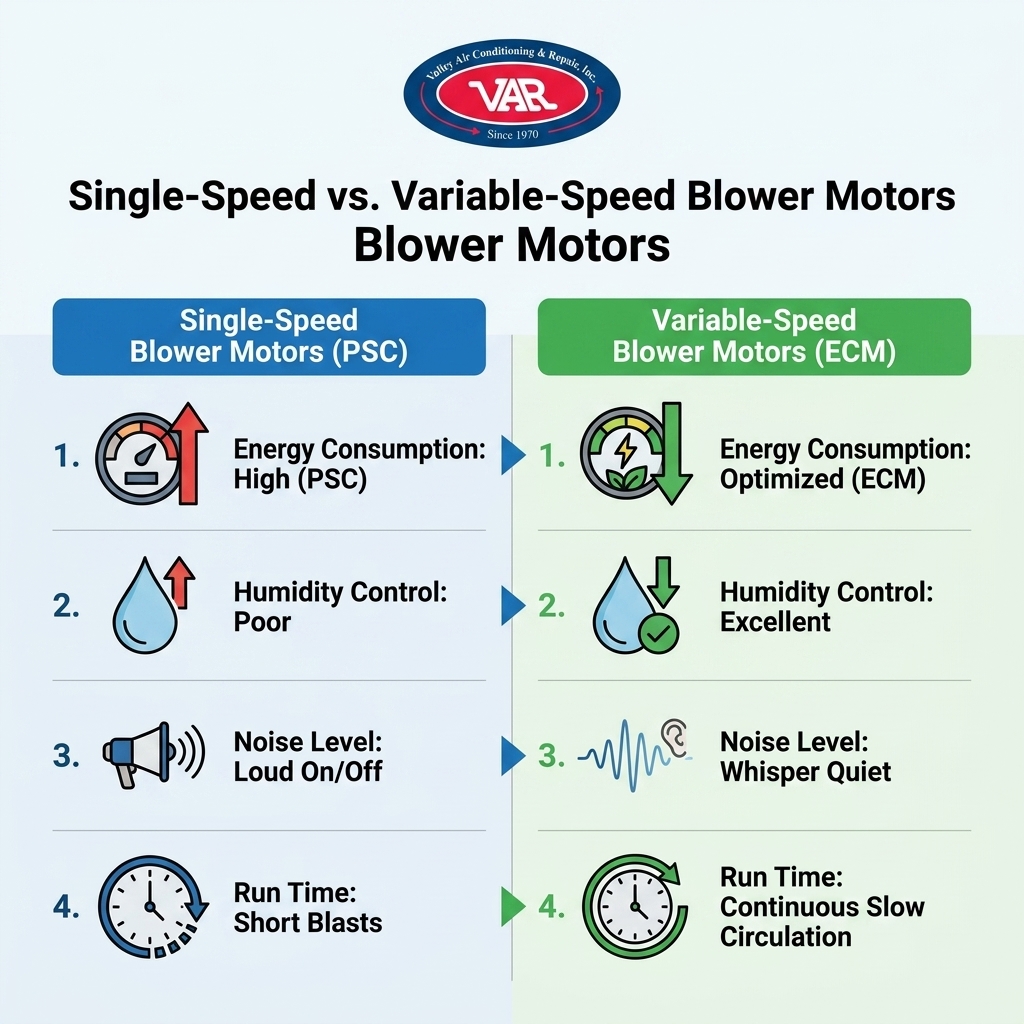
A common point of confusion during equipment upgrades is distinguishing between the indoor blower motor and the outdoor condenser fan. While they work in tandem during peak cooling demand, they serve entirely different functions in the refrigeration cycle. Understanding this distinction is critical to knowing exactly what changes when you invest in a variable-speed upgrade.
The outdoor unit, which houses the compressor and the condenser coil, relies on the AC condenser fan motor to expel heat. As the refrigerant absorbs heat from inside your home, it travels outside, where the condenser fan blows ambient air over the hot coils, releasing the trapped thermal energy into the outdoor atmosphere. This component is crucial for the chemical heat-transfer process, but it is located entirely outside your living space.
The indoor blower motor, located inside your air handler or furnace, is responsible for circulating conditioned air through your home's ductwork. It pulls warm indoor air across the freezing-cold indoor evaporator coil and pushes the newly chilled air out through your vents. Clarifying this distinction is vital: upgrading the indoor blower transforms the tactile indoor comfort experience—affecting the airflow you feel and the humidity levels you experience—independent of the outdoor unit's operation. When the August late-summer heat pushes your system to the brink, it is the indoor blower motor that dictates how evenly and quietly that cooling relief is distributed throughout your rooms.
One of the most profound benefits of variable-speed technology is its ability to resolve sticky, clammy indoor conditions. The physics of dehumidification rely heavily on contact time between the indoor air and the cold evaporator coil. Short, high-speed blasts from single-speed motors fail to remove adequate moisture from the air because the air simply moves too quickly over the coil to drop its water vapor.
Here is exactly how variable-speed mechanics resolve high indoor humidity:
1. Extended Contact Time: By operating at lower speeds, the ECM moves air over the chilled evaporator coil at a much slower pace. This increased contact time allows the coil to condense and extract significantly more water vapor from the passing air.
2. Continuous Circulation: Because the motor runs for longer durations at a low capacity, the air in your home is constantly being cycled past the dehumidifying coil, rather than sitting stagnant between cooling cycles.
3. Lowering the Dew Point: As moisture is steadily drained away, the indoor humidity drops. Lower humidity allows your body's natural cooling mechanisms (like the evaporation of sweat) to work efficiently.
4. Thermostat Optimization: With the sticky feeling eliminated, the physical sensation of the room is much cooler. This allows you to set your thermostat slightly higher without sacrificing any comfort, further reducing energy consumption.
In climates like Fresno, CA, consistent moisture management does more than just improve comfort; it actively prevents the growth of mold and mildew inside ductwork and dark corners of the home. By wringing out the ambient moisture, a variable-speed motor protects both your property and your respiratory health.
The acoustic impact of aging HVAC equipment is frequently underestimated until it begins to cause real irritation. Late-summer cooling fatigue isn't just about the temperature; it is heavily tied to the disruptive, mechanical sounds of a struggling system. Aging single-stage systems are notorious for their jarring "kick-on" noise—a loud click followed by a sudden, forceful rush of air that can interrupt conversations, wake light sleepers, and rattle loose vent covers.
Variable-speed motors eliminate this acoustic intrusion entirely. Instead of slamming into high gear, an ECM ramps up slowly. It begins moving air at a low, whisper-quiet speed, gradually increasing velocity only if the thermostat demands more aggressive cooling. For the vast majority of the day, the motor operates at these lower, nearly silent speeds. The airflow is so subtle that you may not even realize the system is running, yet the house remains perfectly comfortable.
This continuous, gentle air mixing also eliminates hot and cold spots throughout the house. When air is constantly circulating, temperatures equalize between the sunny living room and the shaded bedrooms. Escaping the August late-summer heat requires a sanctuary that is both cool and peaceful. Framing this consistent, quiet comfort as the ultimate cure for end-of-season cooling fatigue highlights exactly why the upgrade is so highly sought after by exhausted homeowners.
Transitioning from a standard PSC motor to an advanced ECM involves an initial financial commitment. Acknowledging the higher upfront installation cost of ECM technology compared to standard motors is important, but it is equally important to evaluate the long-term return on investment. The financial benefits of variable-speed technology accumulate steadily over the lifespan of the equipment.
Consider the following factors when weighing the investment:
• Reduced Monthly Consumption: Because the motor runs at lower capacities for the majority of its cycle, the long-term reduction in monthly electricity consumption is substantial. The massive electrical spikes caused by single-stage start-ups are entirely bypassed.
• System Longevity: The gentle ramp-up process reduces the mechanical torque and stress on the blower wheel, belts, and bearings. Less mechanical strain translates to fewer breakdowns and a longer operational lifespan for the entire air handler.
• Commercial and Residential Reliability: The durability of these systems is proven at scale. For example, when managing multiple HVAC units across a large commercial campus—like one property where technician Matt Bilodeau expertly handles ongoing heating maintenance, installations, and thermostat replacements—upgrading to advanced motor technology ensures that all complex HVAC needs are reliably met with maximum efficiency.
• Incentives and Rebates: Qualifying high-efficiency upgrades may be eligible for general federal tax credits or local utility incentives. While programs vary by location and year, upgrading to energy-efficient ECM technology often meets the criteria for these programs (always advise verifying current qualifications with a tax professional or your local utility provider).
To make the transition manageable during peak heat in Fresno, CA, homeowners can take advantage of flexible financing options. These payment solutions make the immediate upgrade accessible, allowing you to enjoy the comfort and efficiency benefits right away while managing the investment over time.
Realizing the full spectrum of benefits from a variable-speed motor requires far more than simply swapping out a part. ECM technology relies on complex electrical configurations, control board integrations, and highly specific airflow settings. Attempting a DIY installation or relying on an unqualified handyman is a guaranteed path to poor performance and potential system damage.
Precision calibration ensures that the new motor matches the exact static pressure of your existing ductwork. If the dip switches on the control board are set incorrectly, the motor may run at the wrong RPM, leading to frozen evaporator coils, inadequate airflow, or severe efficiency losses. Improper, non-professional installation also poses serious electrical safety hazards and will almost certainly void the manufacturer's warranty on the equipment.
Proper calibration maximizes the lifespan of the entire HVAC system by reducing mechanical strain. The motor must be programmed to "know" the parameters of your specific home. Leveraging Valley Air Conditioning & Repair's local reputation ensures that your professional installation is handled by experts who understand exactly how to configure these advanced systems for maximum efficiency and lifespan in Fresno, CA. Relying on an established local team guarantees accurate diagnostics, safe wiring, and a warranty-compliant installation that protects your investment for years to come.
Yes, the combination of lower electricity usage, extended equipment lifespan, and superior humidity control typically offsets the initial cost over time. By eliminating the high-wattage energy spikes associated with standard motors, a variable-speed upgrade provides steady, long-term savings. Furthermore, the immediate improvement in indoor comfort and noise reduction adds immense daily value to your home environment.
In many cases, yes, through a professional retrofit, though it requires compatible control boards and expert calibration to function correctly. Not every older furnace or air handler can natively communicate with an ECM. A licensed technician must evaluate your current HVAC control board to determine if a direct retrofit is possible or if an aftermarket control module is required to translate the signals.
It can run continuously at a very low, energy-efficient speed to circulate air and filter out pollutants, ramping up only when significant cooling is demanded. This continuous "fan-on" mode uses very little electricity compared to a traditional motor. By keeping the air moving, it prevents stagnant air pockets, continuously filters out dust, and maintains an exceptionally even temperature throughout the house.
By moving air over the cooling coils at a slower pace for longer durations, it allows the system to extract more moisture from the indoor air before shutting off. Fast-moving air simply doesn't have enough time to drop its condensation onto the cold coil. The slow, deliberate airflow of a variable-speed system maximizes contact time, pulling heavy humidity out of the air and draining it safely outside.
Absolutely. By eliminating the sudden, high-power activation of a single-stage system, it operates with a gradual, quiet airflow that is barely noticeable. You will no longer hear the loud "clunk" of the system engaging or the roaring rush of air through the vents. During the peak of the August late-summer heat, this whisper-quiet operation provides a peaceful, undisturbed indoor sanctuary.
Upgrading your blower motor is about much more than just modernizing a piece of equipment; it is about reclaiming the comfort and tranquility of your home. By transitioning from outdated single-speed technology to an advanced ECM, you effectively resolve both the physical discomfort of heavy indoor humidity and the acoustic annoyance of a loud, struggling system.
The long-term efficiency gains, combined with the reduction in mechanical wear and tear, easily justify the transition. Instead of enduring another cycle of poor cooling performance and high energy bills in Fresno, CA, take proactive steps to optimize your system. Schedule a professional assessment today to determine the best upgrade path for your home, and secure your comfort before the next extreme heat wave strikes.

As a business with many AC units, it is essential to have a responsive AC company. Valley Air Conditioning understands our needs. They are always responsive and our AC is up and running very quickly.
I had them do an AC check on the home I was buying, they were honest and quick. I hired them to do the summer and Fall maintenance for $149. Happy with this company!
100% recommend. I called, same day they came out and gave me estimate. Conley was honest and didn't try to recommend/sell us anything we didn't need. When I called him with questions before making a decision, he happily answered and was not annoyed by me contacting him. Conley and VAR
This is a group of good people. Very professional and knowledgeable. They take the time to listen and find the best solution that fits best for any situation. There's no way you can go wrong in choosing VAR.
We have used Valley Air for over fifteen years. The last two years ,Matt came to our house to service twice a year. Always on time, so polite and so professional. This is a very honest company and you can always depend on them and trust them. The office always treats everyone cheerfully and always want to do what you need done very fast YOU CAN COUNT ON THIS Company