.webp)


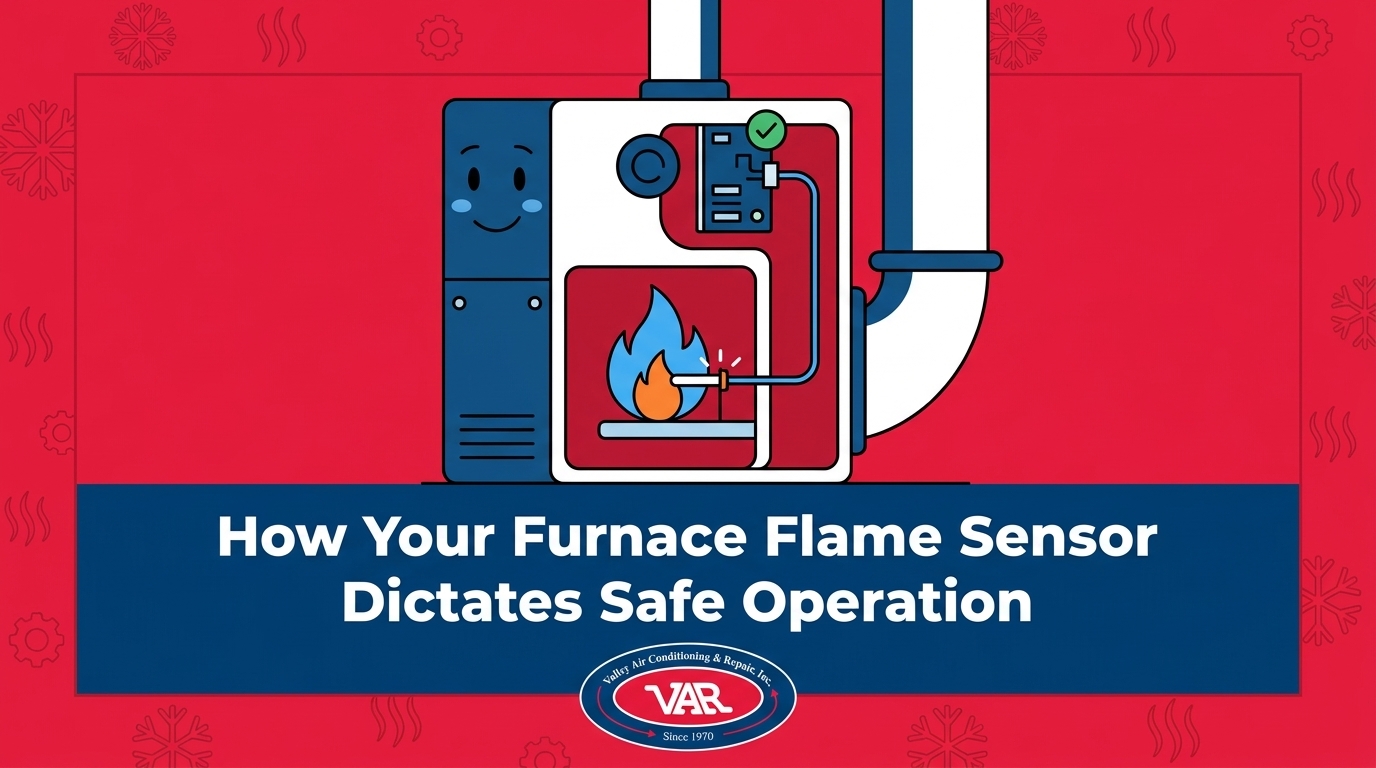
How Your Furnace Flame Sensor Dictates Safe Operation
If your heating system fires up only to shut down seconds later, a dirty flame sensor is likely to blame. See why this tiny rod triggers a strict safety lockout.
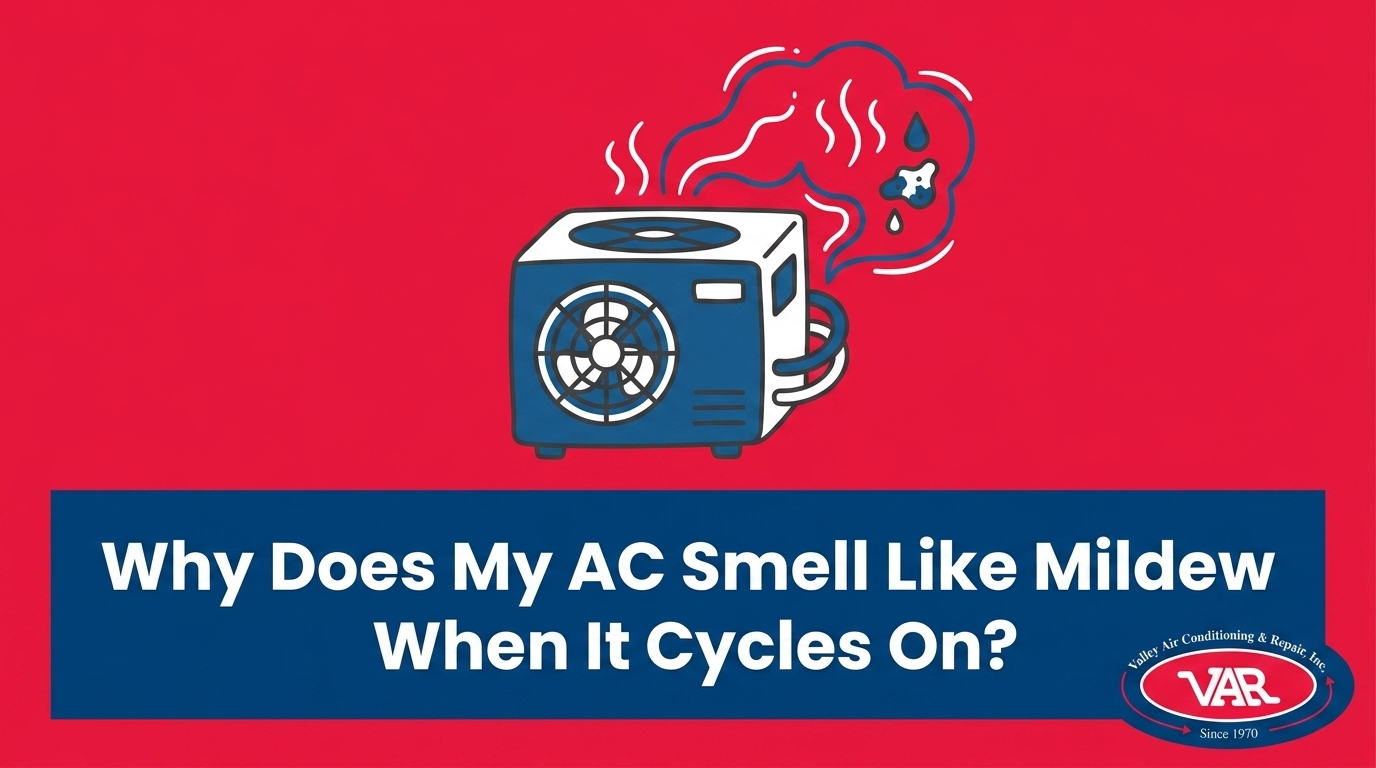
Your air conditioning kicks on during a sweltering August afternoon, but instead of a refreshing breeze, you are hit with a heavy, musty smell. Why does my AC smell like mildew when it cycles on? At Valley Air Conditioning & Repair, Inc., this is one of the most common questions we hear from Fresno homeowners during the peak cooling months of late summer. When that pungent, damp odor blasts from your vents, it immediately raises concerns about the air your family is breathing. You expect your HVAC system to provide relief from the heat, not to fill your living space with the unmistakable scent of old gym clothes or a damp basement.
Experiencing this sudden foul odor forces a critical decision point for many homeowners. You need to know exactly what you are dealing with. Is this a harmless quirk of an aging system? Is it simply time to swap out an old air filter? Or does this smell indicate a deeper issue, like active bacterial growth hiding inside the dark corners of your ductwork or air handler? Understanding the root cause of the smell is the first step toward breathing clean air again.
The good news is that you do not have to live with a musty house. Resolving this issue requires understanding the mechanics behind the odor, recognizing how seasonal usage impacts your equipment, and knowing when to call in a professional for air conditioning services. By addressing the source of the moisture and biological growth, you can permanently eliminate the smell and restore a healthy, comfortable environment to your home.
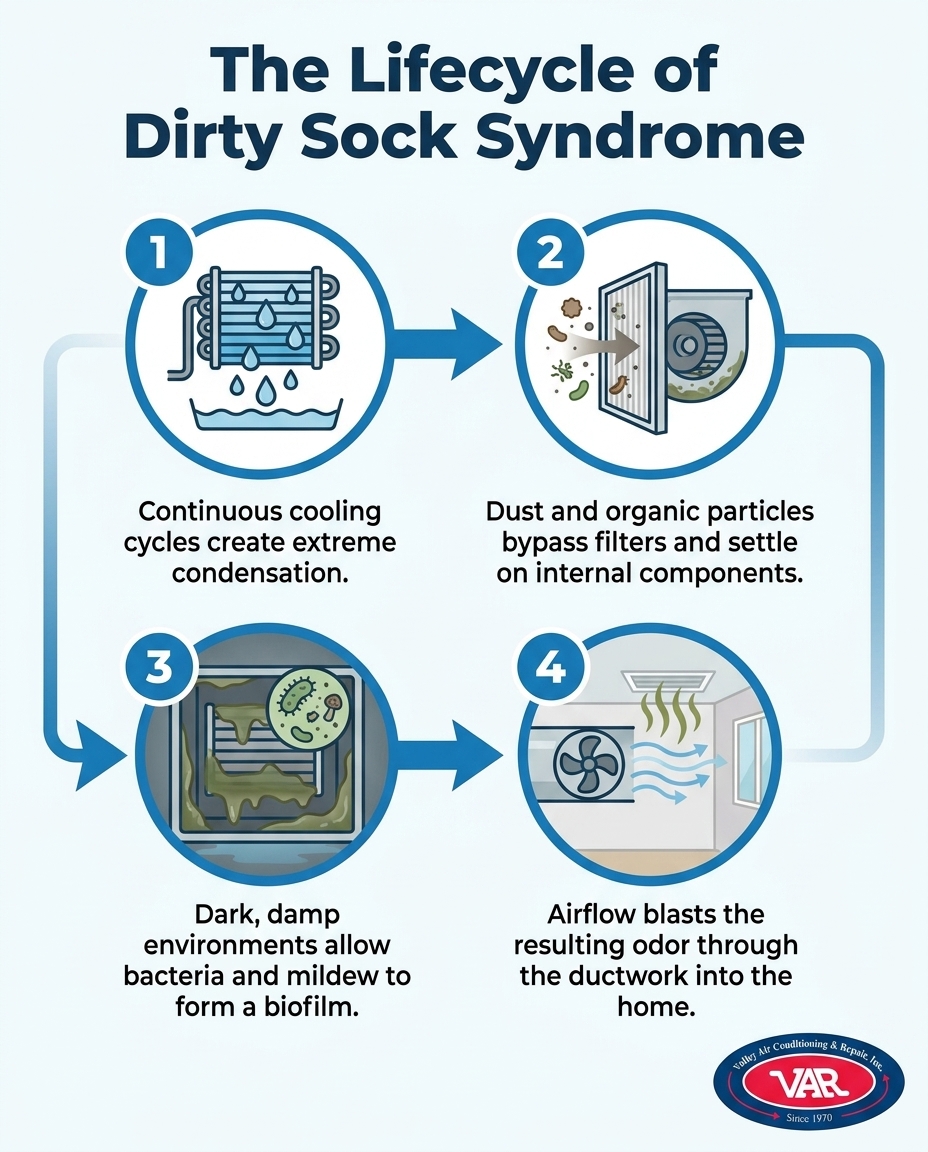
When your AC smells like mildew as it cycles on, it is usually caused by Dirty Sock Syndrome. This happens when condensation builds up on the indoor evaporator coil, allowing bacteria and mildew to grow in the dark, damp environment. As the system powers up, the blower fan pushes air directly over this microbial growth, sending a concentrated blast of foul-smelling air through your ductwork and out of your vents.
To understand how Dirty Sock Syndrome develops, you have to look inside the air handler. The indoor evaporator coil is the component responsible for extracting heat from your home's air. As warm indoor air passes over the freezing cold metal coils, moisture is pulled out of the air. This process naturally creates a significant amount of condensation. While most of this water drips safely into a drain pan and flows outside, the coil itself remains perpetually wet during cooling cycles.
This dark, damp, and enclosed environment creates the perfect breeding ground for biological contaminants. Over time, microscopic organic matter—like dead skin cells, pet dander, and standard household dust—sneaks past your air filter and sticks to the wet coil. When you combine constant moisture with organic food sources in a pitch-black cabinet, bacteria and mildew thrive. They bind together to form a slimy layer known as a biofilm.
It is important to clarify the difference between standard dust buildup and active microbial growth. A dusty system might smell slightly stale, but it will not produce a strong, pungent stench. The distinct "dirty sock" or mildew smell is the direct result of living microbes off-gassing inside your HVAC system.
The mechanics of Dirty Sock Syndrome explain how the bacteria grows, but the timeline is heavily influenced by our local climate. In our years of servicing HVAC systems across Fresno, we have seen how the intense summer heat forces air conditioners to run almost continuously for months on end. This relentless operation maximizes the amount of condensation generated inside the system, creating a ripe environment for bacteria as the season progresses into the back-to-school transition.
The Problem: When you first turn your AC on in May or June, the system is relatively dry from the winter months. The indoor coil has not yet accumulated enough persistent moisture to support a massive bacterial colony. However, as the daily high temperatures stay locked in the upper 90s and low 100s, your system works overtime. The constant cooling cycles mean the evaporator coil never fully dries out.
The Cause: The cumulative effect of this constant moisture is what eventually leads to the odor. Even with a high-quality air filter, tiny organic particles inevitably bypass the media over three or four months of heavy usage. These particles settle into the wet, tightly packed fins of the evaporator coil. By the time late August arrives, the mixture of Fresno dust and relentless condensation has matured into a thick, odorous biofilm.
The Solution: The odor often becomes most noticeable when the system transitions between cooling cycles or when the weather slightly shifts, allowing the coil to warm up just enough to release the trapped gases. Understanding this climate connection helps explain why the smell suddenly appears late in the season. It is not a random failure; it is the culmination of months of hard work by your cooling system.
When faced with a sudden mildew smell, most homeowners immediately want to know what they can do to fix it themselves. Establishing clear boundaries between safe DIY tasks and jobs that require a licensed professional is vital for both your safety and the longevity of your cooling system. If you are unsure where to start, reviewing our comprehensive AC troubleshooting guide can help you identify the symptoms.
There are a few safe, necessary first steps every homeowner should take when dealing with poor indoor air quality. First, check and replace your standard 1-inch or media air filter. A heavily saturated, clogged filter restricts airflow and can harbor its own odors. If the filter is visibly damp or caked in gray dust, swap it out immediately. Next, ensure all vents and return registers are fully open and unblocked by furniture. Finally, inspect the area around your indoor unit for external moisture sources, such as a leaking water heater or a roof leak dripping onto the cabinet.
While changing a dirty filter is a great start, it usually will not cure a deeply rooted mildew smell. The odor originates from the indoor evaporator coil, which is sealed inside the air handler cabinet. Accessing this area requires removing panels, navigating high-voltage electrical components, and working around delicate refrigerant lines.
We strongly warn against DIY attempts to clean internal components. Our technicians frequently repair systems where well-meaning homeowners have accidentally crushed the incredibly thin aluminum fins on the evaporator coil with household brushes or vacuums. Furthermore, treating biological growth requires specialized, non-corrosive chemical cleaners. Using bleach or standard household cleaners can eat through the metal, causing catastrophic refrigerant leaks and immediately voiding your manufacturer warranty.
• Changing the Air Filter — DIY vs. Professional: Safe for Homeowners — Why It Matters: Improves airflow and removes trapped surface dust before it enters the system.
• Clearing Blocked Vents — DIY vs. Professional: Safe for Homeowners — Why It Matters: Ensures proper air circulation and reduces strain on the blower motor.
• Accessing the Air Handler — DIY vs. Professional: Requires a Professional — Why It Matters: Involves high-voltage wiring and delicate, pressurized refrigerant lines.
• Cleaning the Evaporator Coil — DIY vs. Professional: Requires a Professional — Why It Matters: Requires non-corrosive chemicals to safely remove biofilm without destroying thin metal fins.
• Clearing the Condensate Line — DIY vs. Professional: Requires a Professional — Why It Matters: Ensures biological contaminants and standing water are properly flushed from the drain pan.
Once you recognize that the smell is coming from deep inside the system, it is time to look at long-term, professional solutions. Temporary fixes like spraying aerosol air fresheners into your return vents or lighting candles will only mask the scent for a few hours. These tactics do absolutely nothing to solve the underlying biological growth, and in some cases, adding more chemicals to the air can further irritate your respiratory system. To truly eliminate the odor by late summer, you need to address the root cause.
At Valley Air Conditioning & Repair, Inc., our specific expertise lies in diagnosing complex issues and safely treating systems to ensure breathable indoor air. We focus on permanent indoor air quality solutions that remove existing buildup and prevent it from returning.
The first step in resolving Dirty Sock Syndrome is a professional deep cleaning of the internal components. This is not a simple wipe-down; it is a methodical process designed to eradicate the biofilm.
1. Safe Removal of Organic Buildup: A technician will carefully expose the evaporator coil and apply a specialized, foaming chemical cleaner. This cleaner is designed to safely lift the sticky biofilm away from the delicate aluminum fins without causing corrosion.
2. Clearing the Condensate Drain Pan: The drain pan sits beneath the coil to catch dripping water. If bacteria is growing on the coil, it is almost certainly growing in the pan as well. The technician will scrub the pan and flush the drain line to remove any standing water and sludge.
3. Applying Antimicrobial Treatments: Once the coil and pan are clean, a professional-grade antimicrobial spray is often applied to inhibit future bacterial growth on the freshly cleaned surfaces.
If you want to actively prevent bacteria from returning, advanced indoor air quality upgrades are the best long-term investment. One of the most effective tools against Dirty Sock Syndrome is a UV germicidal light.
1. Continuous Neutralization: UV-C light naturally disrupts the DNA of mold, mildew, and bacteria, rendering them unable to reproduce. When installed correctly, the light continuously bathes the dark coil in neutralizing energy.
2. Direct Integration: These lights are mounted directly inside the air handler or ductwork, focusing their energy right where the moisture collects. This proactive approach stops the biofilm from ever forming in the first place.
Dealing with a foul odor blasting through your home is stressful, but it is also largely preventable. The key to stopping Dirty Sock Syndrome before it starts is ongoing, proactive care. Bi-annual tune-ups are designed to catch minor moisture issues before they escalate into major biological problems. When a technician inspects your system in the spring, they can identify early signs of buildup on the indoor evaporator coil and clean it before the heavy summer heat arrives.
Keeping internal components clean does more than just prevent bad smells; it maintains your system's overall efficiency. A coil covered in a thick layer of biofilm cannot transfer heat effectively, forcing your compressor to work harder and longer to cool your home. By keeping the metal clean, you reduce wear and tear, lower your energy consumption, and extend the lifespan of the equipment.
The impact of routine care is significant. Just recently, our team helped a local Fresno homeowner who reached out in the spring because their 13-year-old AC unit needed preventive maintenance. Our technician performed ongoing care and thoroughly cleaned the internal components, including the heat exchanger. The outcome? Even at 13 years old, the system is running like new, proving that consistent attention keeps aging equipment efficient and odor-free.
Connecting routine care to better overall indoor air quality year-round is the smartest approach for any homeowner. By scheduling routine AC maintenance, you ensure that the air circulating through your living spaces remains fresh, clean, and safe for your family.
A musty smell when the AC first turns on is typically caused by a buildup of bacteria and mildew on the indoor evaporator coil. This phenomenon, known as Dirty Sock Syndrome, occurs because the coil remains dark and damp after cooling cycles. As the fan kicks on, it blows air over this biological growth, pushing the foul odor straight into your living spaces. The smell is often most intense during the first few minutes of operation before the condensation begins to wash some of the dormant gases down the drain.
While a mild musty smell isn't usually an immediate emergency, it is not ideal to continually breathe air that has passed over bacterial growth. Running the system will continue to distribute these microscopic contaminants throughout your home, which can trigger allergies or respiratory irritation for sensitive individuals. If the smell is strong and persistent, we recommend limiting usage until a professional can inspect and clean the internal components.
Getting rid of the mildew smell requires a professional deep cleaning of the evaporator coil and the condensate drain pan. A licensed technician must use specialized, non-corrosive foaming cleaners to safely strip the bacterial biofilm from the delicate metal fins. To keep the smell from returning, many homeowners choose to install UV germicidal lights inside the air handler to continuously neutralize organic growth.
No, Dirty Sock Syndrome will not resolve itself without intervention. The bacteria and mildew feeding on the dust and condensation inside your system will continue to multiply as long as the environment remains dark and damp. Even if the smell temporarily fades during cooler weather, the dormant biofilm will reactivate and produce odors again as soon as the heavy cooling season resumes.
A dirty air filter alone rarely causes a strong mildew smell, but it is a major contributing factor to the problem. When a filter becomes clogged, it allows more organic dust and debris to bypass the media and settle onto the wet evaporator coil. This debris acts as a food source for bacteria. Replacing a saturated filter is an important first step, but it will not eliminate an odor that has already established itself deeper inside the system.
A professional HVAC technician can typically resolve the immediate odor during a single service visit. The process of safely accessing the air handler, applying the specialized chemical coil cleaner, and flushing the condensate drain lines usually takes a few hours. If you decide to add a UV light for long-term prevention, the installation can often be completed during the same appointment, restoring fresh air to your Fresno home by the end of the day.
You do not have to live with a musty, foul-smelling home every time your cooling system cycles on. While a blasting mildew odor in late summer is a common consequence of heavy condensation and bacterial growth, it is a problem with a definitive, professional solution. Masking the scent with sprays or attempting risky DIY cleanings will only prolong your frustration and potentially damage your equipment.
The safest and most effective path forward is to seek a professional diagnostic to address the internal moisture and safely remove the biofilm from your system. If you are tired of holding your breath every time the AC kicks on this August, it is time to take action. Schedule an inspection with our team at Valley Air Conditioning & Repair, Inc. today to deep-clean your system and explore proven indoor air quality solutions that will keep your home smelling fresh all year long.

As a business with many AC units, it is essential to have a responsive AC company. Valley Air Conditioning understands our needs. They are always responsive and our AC is up and running very quickly.
I had them do an AC check on the home I was buying, they were honest and quick. I hired them to do the summer and Fall maintenance for $149. Happy with this company!
100% recommend. I called, same day they came out and gave me estimate. Conley was honest and didn't try to recommend/sell us anything we didn't need. When I called him with questions before making a decision, he happily answered and was not annoyed by me contacting him. Conley and VAR
This is a group of good people. Very professional and knowledgeable. They take the time to listen and find the best solution that fits best for any situation. There's no way you can go wrong in choosing VAR.
We have used Valley Air for over fifteen years. The last two years ,Matt came to our house to service twice a year. Always on time, so polite and so professional. This is a very honest company and you can always depend on them and trust them. The office always treats everyone cheerfully and always want to do what you need done very fast YOU CAN COUNT ON THIS Company