.webp)


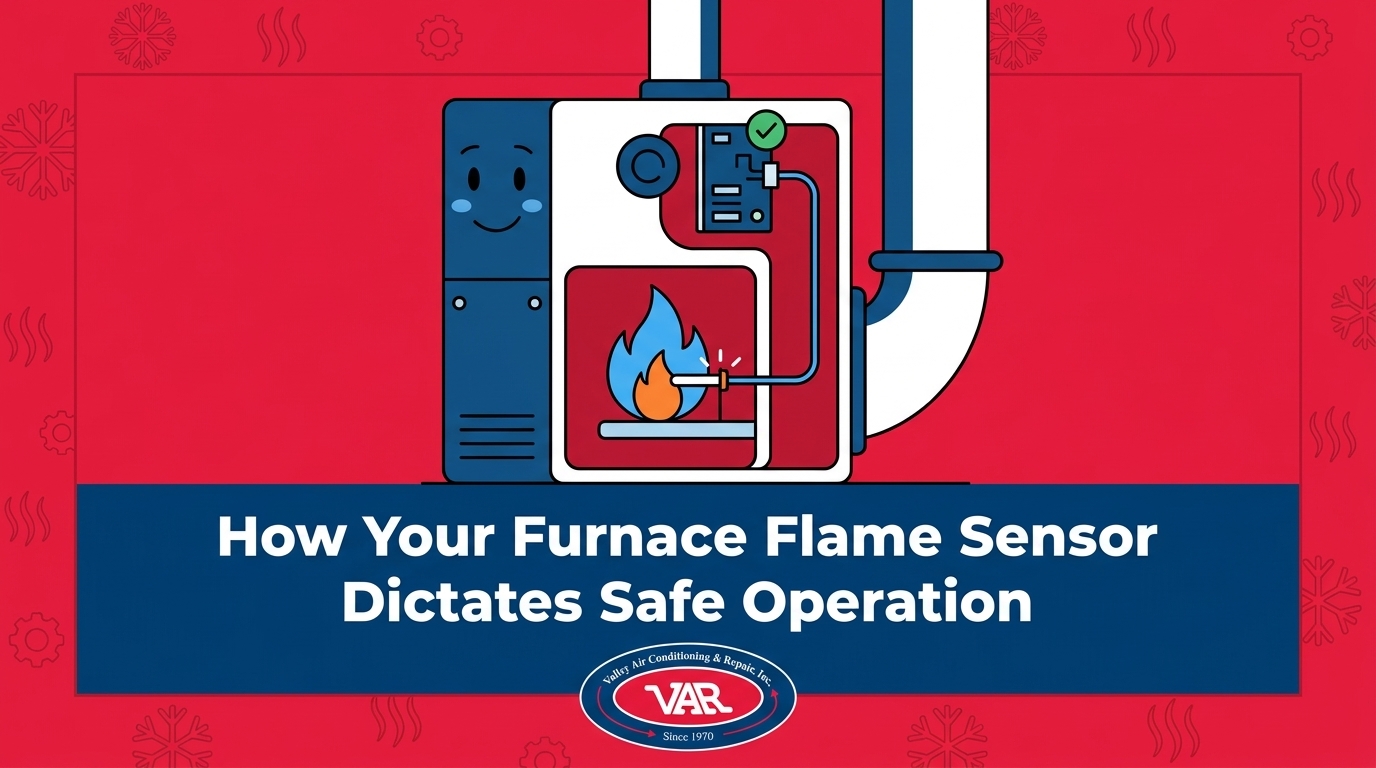
How Your Furnace Flame Sensor Dictates Safe Operation
If your heating system fires up only to shut down seconds later, a dirty flame sensor is likely to blame. See why this tiny rod triggers a strict safety lockout.
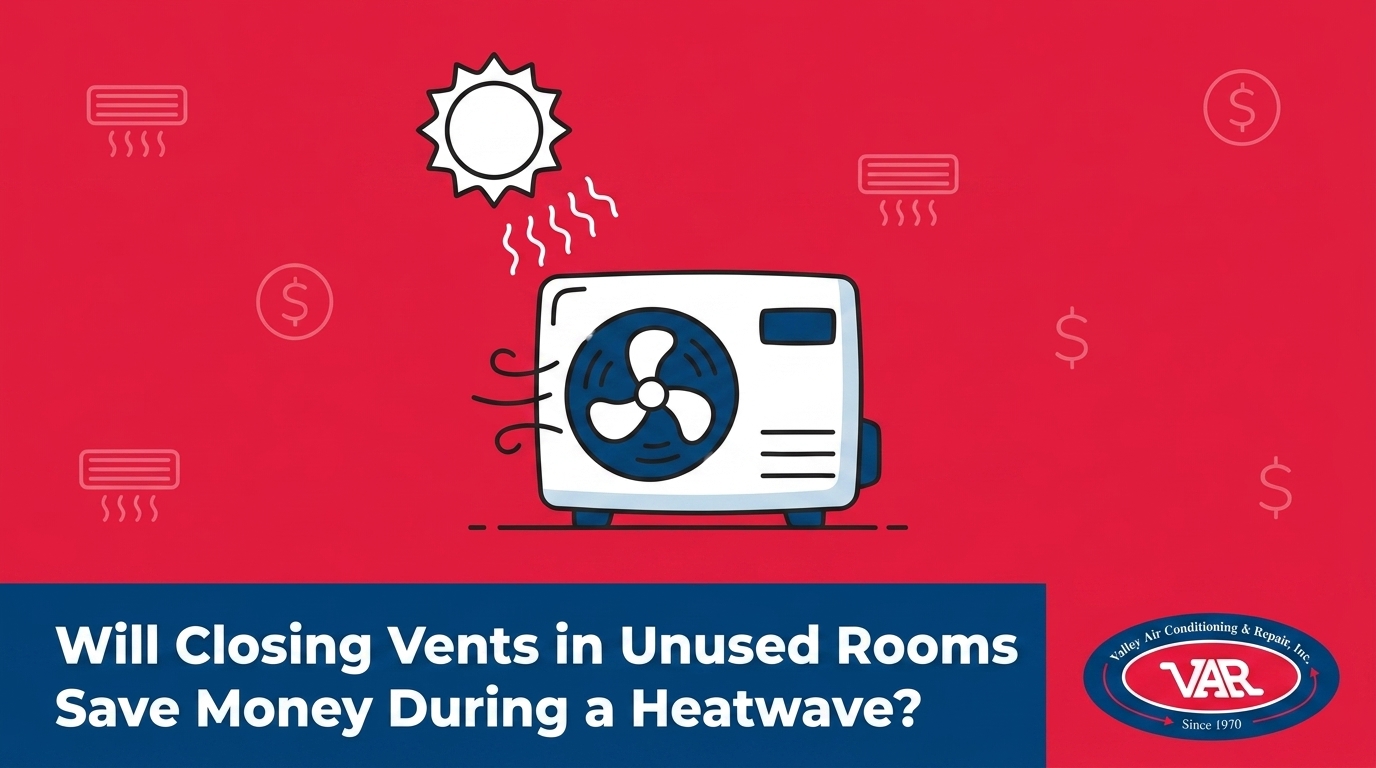
Is your summer utility bill creeping up, making you wonder, Will closing vents in unused rooms save money during a heatwave? It is a completely logical question. You have a guest bedroom or a formal dining room that sits empty most of the week. The afternoon temperatures outside are soaring, and your air conditioner is running non-stop to keep the main living areas comfortable. It seems to make perfect sense to shut the register in that unused room, assuming it will force more cold air into the spaces you actually occupy and give your system a break. However, the short answer is a definitive no. Closing vents does not save money.
If you need help evaluating or repairing your air conditioning systems, our team is ready to assist.
In reality, shutting registers creates a cascade of hidden problems. Modern heating and cooling systems operate as carefully balanced loops. They are designed to push and pull a very specific volume of air throughout your entire home. When you close a vent, you disrupt this delicate balance. Instead of saving energy, you create a roadblock in the ductwork. This roadblock drastically increases static pressure within the system.
For homeowners dealing with a relentless Fresno summer heatwave (100°F+), experimenting with airflow is incredibly risky. During these extreme temperature spikes, your equipment is already working at its absolute maximum capacity. By restricting the airflow, you force the system to work much harder to achieve the same cooling results. This common energy-saving myth inevitably leads to increased daily energy consumption, compromised indoor comfort, and a high likelihood of expensive, permanent system damage.
To understand why this trick fails, you have to look at how central air conditioning actually works. Most homeowners don't realize that an AC unit is not like a water faucet. When you turn off a faucet in your bathroom, the municipal water pump does not keep pushing the same amount of water into your house. The system adjusts. HVAC systems do not work this way.
Your central air conditioner is calibrated during installation to push a very specific volume of air, measured in cubic feet per minute (CFM). The blower motor inside your indoor air handler is sized to match the exact square footage and ductwork layout of your home. It does not know that you closed a vent in the spare bedroom. It does not automatically scale back its output or use less electricity. It continues trying to push the exact same CFM of cold air through the ductwork.
What happens to the trapped air:
• The exit path is blocked: The cold air travels down the duct branch toward the guest room, only to hit a closed metal louver.
• The air is forced elsewhere: Because the blower is still pushing air from behind, that trapped air has to go somewhere. It squeezes backward and forces its way out through the remaining open vents in the house.
• The velocity increases, not the capacity: You might feel air blowing harder out of the living room vent and assume the trick is working. In reality, you are just feeling the same amount of air being forced through a smaller total opening, much like putting your thumb over the end of a garden hose.
At Valley Air Conditioning & Repair, our commitment to honest homeowner education means we want you to understand the real math behind this myth. Any perceived short-term savings on your monthly utility bill are completely eclipsed by the long-term financial risk. The cost of a blown blower motor vs. perceived monthly energy savings makes closing vents a terrible gamble. You might save three dollars on your electric bill, only to face a massive repair invoice when the overworked equipment finally breaks down.
The core issue with closing vents comes down to a concept called static pressure. In simple terms, static pressure is the resistance to airflow within your ductwork. A well-designed HVAC system has low static pressure, meaning the air flows freely from the blower, through the ducts, into your rooms, and back through the return grilles with minimal resistance.
The Problem: When you close registers, you artificially spike the static pressure. Think of it like trying to breathe heavily through a tiny coffee stirrer instead of a wide straw. Your lungs have to work significantly harder to move the same amount of air. Your blower motor experiences this exact same struggle when vents are shut.
The Cause: The sudden blockage in the supply ducts means the air has nowhere to go, creating a high-pressure zone inside the thin metal or flexible ductwork. According to data from the Department of Energy (DOE) and the Lawrence Berkeley National Laboratory (LBNL), this increased pressure forces conditioned air out of tiny seams and joints in the ductwork. In fact, spiking the static pressure can exacerbate duct leakage by up to 10 percent. Instead of cooling your living room, that expensive cold air is pushed out into your hot attic or crawlspace.
The Solution: Leave all interior vents fully open to maintain the system's natural balance. If you are already experiencing uneven cooling, you might need professional help fixing weak airflow from your vents rather than just shutting them.
The damage caused by high static pressure depends heavily on the type of blower motor inside your system. Neither outcome is good for your wallet.
• PSC (Single-Speed) Motor — Response to Closed Vents (High Static Pressure): Cannot adjust its speed; struggles against the sudden resistance in the ducts. — Resulting Consequence: The motor overheats, moves significantly less air, and risks sudden, complete burnout.
• ECM (Variable-Speed) Motor — Response to Closed Vents (High Static Pressure): Automatically ramps up its RPMs to try and overcome the artificial resistance. — Resulting Consequence: Consumes drastically more electricity to fight the blockage, masking the airflow problem until it fails prematurely.

The mechanical consequences of operating a central cooling system with closed vents extend far beyond the ductwork. The most immediate and severe danger is the threat to your evaporator coil and your compressor. Air conditioning does not actually "create" cold air; it removes heat from the air inside your home. It does this by blowing warm return air over a freezing cold evaporator coil filled with chemical refrigerant.
When you restrict the airflow by closing vents, not enough warm return air passes over those cold coils. Without that constant supply of warm air to absorb the cold, the temperature of the coil drops rapidly. The natural humidity and condensation present on the coil begin to freeze. Within hours, the entire evaporator coil can become encased in a solid block of ice.
Once the coil freezes, airflow is blocked entirely. The system will continue to run, but no cold air will reach your rooms. Worse, liquid refrigerant can flow backward down the refrigerant lines and slug the outdoor compressor—the most expensive component in your entire system. A damaged compressor usually means replacing the entire outdoor unit.
Simultaneously, the blower motor is fighting a losing battle against the high static pressure. The excessive strain causes the motor's internal components to overheat. The combination of frozen coils, liquid slugging, and an overworked motor drastically shortens the lifespan of the entire HVAC system. When you weigh the cost of a blown blower motor vs. perceived monthly energy savings, it becomes clear that keeping all vents open is the only financially sound choice.
The risks associated with restricted airflow exist year-round, but they become exponentially more dangerous during peak summer weather. During a typical Fresno summer heatwave (100°F+), your central air conditioner is pushed to its absolute limits. The equipment is designed to handle this load, provided it has ideal operating conditions.
During these extreme temperature spikes, your system experiences continuous run times. It might run for hours on end without cycling off just to maintain a tolerable indoor temperature. The internal components are already running hot. The ductwork in your attic is surrounded by ambient temperatures that can easily exceed 130 degrees.
Detailing how restricting airflow during these periods changes the equation is critical. When you close vents during a heatwave, you introduce an artificial, massive strain right when the system is most vulnerable. Extreme ambient heat combined with internal mechanical strain guarantees overheating. The blower motor cannot shed its heat fast enough, and the electrical capacitors are pushed past their thermal limits.
Effective heat exchange requires maximum, unobstructed airflow. The system needs to pull in as much warm air as possible from the house and push out as much conditioned air as possible to keep the cycle moving. Choking off this cycle during a 105-degree afternoon is a recipe for a total system breakdown. If you want to ensure your system survives the summer, keeping the vents open and investing in routine HVAC maintenance are the most effective strategies.
If closing vents is off the table, you might be wondering how you can actually manage your cooling costs without risking a catastrophic breakdown. Fortunately, there are several safe, proven methods to reduce your energy consumption that do not involve straining your blower motor.
Here is a checklist of effective strategies to keep your home cool and your bills manageable:
• Utilize ceiling fans properly: Ceiling fans do not lower the actual temperature of the room, but they create a wind-chill effect on your skin. This allows you to set your thermostat a few degrees higher without sacrificing your personal comfort. Just remember to turn the fan off when you leave the room.
• Upgrade insulation and weatherstripping: The most common reason homes struggle to stay cool is that the conditioned air is escaping. Sealing gaps around windows and doors, and ensuring your attic has adequate insulation, will keep the cold air inside where it belongs.
• Keep interior doors open: Your system needs a clear return air pathway back to the central filter grille. Closing heavy interior doors traps air in individual rooms, creating pressure imbalances similar to closing vents. Keep bedroom doors cracked or fully open whenever possible.
• Block out solar heat gain: Close your blinds, shades, or thermal curtains during the hottest parts of the day. Blocking direct sunlight prevents the greenhouse effect inside your home, significantly reducing the heat load your AC has to handle.
• Consider professional zoning systems: If you truly want different temperatures in different rooms, DIY vent closing is not the answer. A professionally installed zoning system uses mechanical dampers and a specialized bypass duct to safely direct airflow without causing static pressure spikes.
Implementing these strategies provides real savings. Remember, comparing the cost of a blown blower motor vs. perceived monthly energy savings always favors keeping the system healthy. For the best results, schedule pre-season AC preparation to ensure your equipment is running at peak efficiency before the extreme heat arrives.
No, closing vents in unused rooms does not save money. It disrupts the system's balanced airflow, forces the equipment to work harder, and can actually increase your daily energy consumption. Modern HVAC systems push a set volume of air, and blocking a vent just forces that same air through a smaller opening, spiking the internal pressure.
Yes, it is highly damaging to close AC vents in the summer, especially during peak temperatures. Restricted airflow prevents enough warm air from reaching the indoor unit, which can cause the evaporator coil to freeze solid. Additionally, the added resistance forces the blower motor to overheat and potentially burn out entirely.
Closing too many vents causes a severe spike in static pressure throughout your ductwork. This intense pressure can significantly increase hidden duct leakage, forcing your expensive conditioned air into the attic or walls. Ultimately, it risks immediate mechanical failure of the blower motor or the outdoor compressor.
You can safely cool your house down by using ceiling fans to create a wind-chill effect, blocking direct sunlight with thick thermal curtains, and ensuring your air filter is completely clean. Leaving all interior doors and vents open ensures proper return airflow. Scheduling professional maintenance is also critical to ensure optimal system performance during a 100-degree spike.
Static pressure is the resistance to airflow within a heating and cooling system. High static pressure means the system has to work significantly harder to push air through the ducts, much like trying to breathe through a tiny straw. Keeping vents open and filters clean helps maintain low, healthy static pressure.
When the temperatures soar, the temptation to micromanage your home's airflow is completely understandable. However, leaving your vents fully open is always the safest, most cost-effective choice for your system's longevity. Proper, unobstructed airflow prevents catastrophic breakdowns when the heat is at its worst, ensuring your home stays comfortable without putting your equipment at risk.
Never forget the harsh reality of the cost of a blown blower motor vs. perceived monthly energy savings. The few dollars you might hope to save are simply not worth a sudden, expensive system failure in the middle of a brutal heatwave. If you are struggling with high energy bills or uneven cooling throughout your home, we encourage you to seek professional guidance for legitimate efficiency improvements. Contact our team today to schedule an inspection and ensure your system is perfectly balanced for the summer heat.

As a business with many AC units, it is essential to have a responsive AC company. Valley Air Conditioning understands our needs. They are always responsive and our AC is up and running very quickly.
I had them do an AC check on the home I was buying, they were honest and quick. I hired them to do the summer and Fall maintenance for $149. Happy with this company!
100% recommend. I called, same day they came out and gave me estimate. Conley was honest and didn't try to recommend/sell us anything we didn't need. When I called him with questions before making a decision, he happily answered and was not annoyed by me contacting him. Conley and VAR
This is a group of good people. Very professional and knowledgeable. They take the time to listen and find the best solution that fits best for any situation. There's no way you can go wrong in choosing VAR.
We have used Valley Air for over fifteen years. The last two years ,Matt came to our house to service twice a year. Always on time, so polite and so professional. This is a very honest company and you can always depend on them and trust them. The office always treats everyone cheerfully and always want to do what you need done very fast YOU CAN COUNT ON THIS Company