


.webp)



Why Is My AC Blowing Warm Air? Fall HVAC Troubleshooting & Startup Smells
Smelling burning dust this fall? Get clear answers with our home maintenance tips and troubleshooting to know when to call a pro for your heating system.
When adding cooling without ductwork options compared side by side, the right choice becomes much clearer. Here's a quick look at the most common solutions:
| System | Efficiency (SEER2) | Noise Level | Best For |
|---|---|---|---|
| Ductless Mini-Split | 16-35 | 19-32 dB | Whole-home or zoned cooling |
| High-Velocity Small-Duct | 14-18 | 40-50 dB | Historic homes |
| Window AC | 10-15 | 50-65 dB | Single-room, temporary |
| Portable AC | 8-12 | 52-70 dB | Renters, short-term use |
Millions of homes across the country — including many older bungalows and historic properties throughout California's Central Valley — were built long before central air conditioning became the norm. No vents. No ductwork. And come July in Modesto or Turlock, that's a serious problem.
Adding traditional ductwork to an existing home isn't a simple fix, either. It can mean dropped ceilings, torn-out walls, and significant disruption to your home's character. Many homeowners have been told they'd need to build soffits or sacrifice architectural details just to get comfortable.
The good news? There are several modern cooling options that skip the ductwork entirely — and some of them are surprisingly efficient, quiet, and minimally invasive.
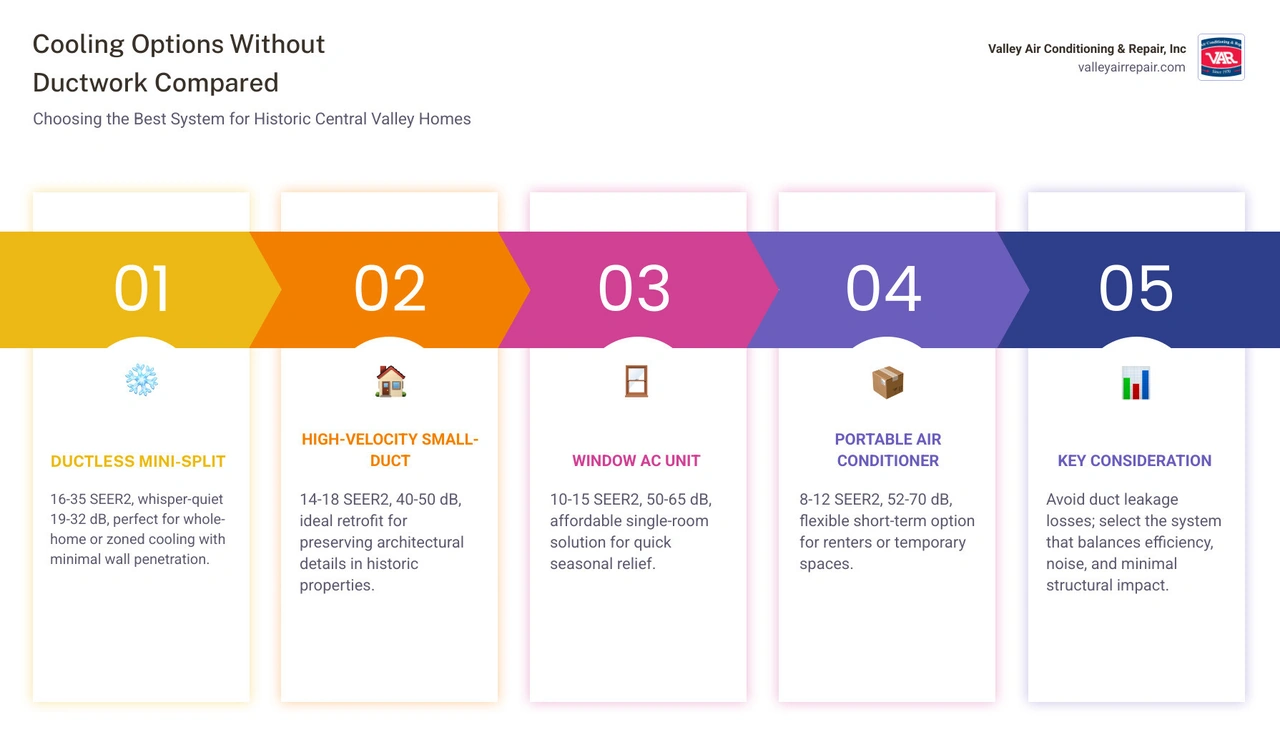
When we look at the primary options for adding cooling to a home without existing ductwork, we generally find four major choices. Each of these systems operates differently, with varying degrees of efficiency, noise, and installation impact.
Traditional ducted central air conditioning systems are highly common, but they have a major hidden flaw: energy loss. On average, traditional ducted systems can lose up to 30% of their cooled air through leaks and poorly insulated duct runs before that air ever reaches a room. When you choose a non-ducted option, you bypass this issue entirely.
To help you make an informed decision for your home, let us break down how these options stack up under our hot Central Valley sun. Whether you are looking to cool a single new home addition or find a whole-home solution, understanding these primary systems is the first step. For comprehensive home cooling strategies, you can explore our specialized services in Residential Air Conditioning.
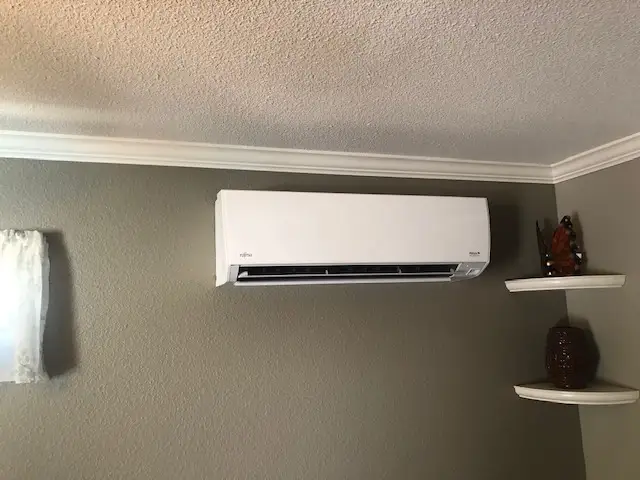
Ductless mini-split systems are widely considered the gold standard for non-ducted cooling. These systems consist of an outdoor compressor unit connected to one or more indoor air handlers via a small conduit containing refrigerant lines and electrical wiring.
What makes mini-splits stand out is their use of advanced inverter-driven technology. Instead of turning completely on and off like a traditional air conditioner, the compressor adjusts its speed dynamically to meet the exact cooling needs of the room. This works much like a dimmer switch or vehicle cruise control, maintaining a steady, comfortable temperature without wasting energy on constant cycling.
Because each indoor unit operates independently, mini-splits offer unmatched zoned comfort. You can cool only the rooms you are currently using, which keeps your utility bills low. With SEER2 ratings reaching up to 35, they are by far the most energy-efficient permanent option on the market. If you want to learn more about how these systems operate, check out our dedicated page on Mini Split Systems.
While mini-splits are incredibly popular, they are not the only option. Let’s look at how high-velocity systems, window units, and portable air conditioners compare:
The primary reason so many Central Valley homeowners are moving toward ductless mini-splits is the sheer difference in energy efficiency and overall comfort.
Traditional central systems struggle with energy loss. Because mini-splits don't rely on a web of dusty ducts in a roasting-hot attic, they eliminate duct leakage entirely. This architectural advantage allows ductless mini-split systems to reduce energy consumption by up to 40% compared to conventional ducted systems.
Additionally, the variable-speed inverter compressors do an exceptional job of managing indoor humidity. Instead of blasting cold air and shutting off quickly (which can leave a room feeling damp and clammy), a mini-split runs continuously at a lower speed. This steady airflow constantly pulls moisture out of the air, creating a much more comfortable indoor environment.
Indoor air quality also gets a major upgrade. Traditional ducts collect dust, pet dander, and allergens over time, which are then blown into your living spaces every time the system turns on. Mini-splits feature multi-stage filtration systems built directly into each indoor air handler, capturing dust and allergens before they circulate. For homeowners in areas like Oakdale, choosing a high-efficiency setup can make a massive difference in daily comfort. You can read more about this in our guide on Ductless Heat Pump Installation Oakdale.
For owners of historic bungalows or older homes in neighborhoods throughout Fresno, Clovis, and Madera, preserving the architectural integrity of the property is a top priority. Plaster walls, original woodwork, and high ceilings are part of what makes these homes so special, and cutting into them to install traditional ductwork is often out of the question.
In fact, installing new ductwork in an existing older home can add up to $18,000 on top of the purchase price and installation expense for the AC system itself. That is a massive extra expense just to prepare the home for central air.
Ductless mini-splits offer an incredibly low-impact alternative. Instead of tearing down drywall or building bulky soffits that ruin the aesthetic of a room, a mini-split installation requires only a tiny 3-inch hole in the exterior wall. This small opening is all that is needed to run the copper refrigerant lines, control wiring, and condensate drain line from the indoor air handler to the outdoor compressor.
This non-invasive process means a single-zone system can often be installed in just a few hours, while a whole-home multi-zone system usually takes only one to two days. There is no messy drywall reconstruction, no paint matching, and no structural damage. If you are in the Fresno area and want to see how we can bring modern comfort to your classic home, explore our services for Mini Split Installation Fresno CA.
Modern ductless mini-splits are not just for keeping you cool during our intense Central Valley summers; they are also highly efficient heating systems. Because they are air-source heat pumps, they operate by moving heat rather than creating it.
In the summer, they move heat from inside your home to the outdoors. In the winter, they reverse this process, extracting heat from the outdoor air and bringing it inside. This method is incredibly efficient—often 200% to 400% more efficient than standard electric baseboard heaters or older furnaces. Even when temperatures drop during chilly Valley winter nights, modern cold-climate heat pumps can maintain excellent heating capacity.
Making the switch to this high-efficiency technology is also highly supported by financial incentives in June 2026. Under the federal Inflation Reduction Act, Section 25C tax credits can cover 30% of the cost of qualifying heat pump mini-split installations, up to $2,000 per year. Additionally, many local utility companies offer rebates for upgrading to ENERGY STAR® certified heat pump systems.
These incentives make upgrading to a permanent, high-efficiency ductless system a highly practical investment for long-term home value and daily comfort. To learn more about how heat pumps can transform your home's heating and cooling efficiency, check out our guide on Heat Pump Installation Fresno CA.
Yes! Most modern ductless mini-splits are designed as heat pumps. They utilize a reversing valve to change the flow of refrigerant, allowing them to provide whisper-quiet cooling in the summer and highly efficient heating in the winter. This eliminates the need for separate heating and cooling systems, saving you space and maintenance costs. To understand how this works in warm, dry climates, read our article on How Does a Heat Pump Work in a Desert Climate.
With proper maintenance, a high-quality ductless mini-split system typically lasts 15 to 20 years. This is significantly longer than the 5-to-8-year lifespan of window units and the 3-to-6-year lifespan of portable ACs.
The most important maintenance task you can perform is cleaning the reusable mesh filters inside the indoor units every 2 to 4 weeks. This keeps airflow unrestricted and ensures the system operates at peak efficiency. When it finally comes time to upgrade an older, inefficient system, you can learn about your options on our Heat Pump Replacement Fresno CA page.
Absolutely. One of the biggest complaints about window units is the constant, loud rattling of the compressor right inside your living space. In a ductless mini-split system, the noisy compressor is located entirely outdoors.
The indoor air handlers operate at incredibly low noise levels, typically between 19 and 32 decibels. To put that in perspective, 19 decibels is literally quieter than a human whisper or rustling leaves. Most homeowners find that they completely forget the unit is even running.
When adding cooling without ductwork options compared side by side, the ductless mini-split stands out as the clear winner for long-term comfort, energy savings, and ease of installation. It preserves the classic charm of your older home, cuts down your monthly utility bills, and provides whisper-quiet performance all year long.
At Valley Air Conditioning & Repair, Inc., we have been serving our neighbors throughout the Central Valley since 1970. Our business has grown through honest word-of-mouth and a true customer-first philosophy built on trust and honorable intentions. Whether you are in Fresno, Clovis, Madera, Modesto, Turlock, or any of our surrounding service communities, our expert team is here to help you find the perfect comfort solutions.
Ready to reclaim your home from the summer heat? Schedule your mini-split consultation today!

As a business with many AC units, it is essential to have a responsive AC company. Valley Air Conditioning understands our needs. They are always responsive and our AC is up and running very quickly.
I had them do an AC check on the home I was buying, they were honest and quick. I hired them to do the summer and Fall maintenance for $149. Happy with this company!
100% recommend. I called, same day they came out and gave me estimate. Conley was honest and didn't try to recommend/sell us anything we didn't need. When I called him with questions before making a decision, he happily answered and was not annoyed by me contacting him. Conley and VAR
This is a group of good people. Very professional and knowledgeable. They take the time to listen and find the best solution that fits best for any situation. There's no way you can go wrong in choosing VAR.
We have used Valley Air for over fifteen years. The last two years ,Matt came to our house to service twice a year. Always on time, so polite and so professional. This is a very honest company and you can always depend on them and trust them. The office always treats everyone cheerfully and always want to do what you need done very fast YOU CAN COUNT ON THIS Company


