.webp)


Troubleshooting Your Fall Heating Startup: Burning Smells and Short-Cycling Explained
Why we shut down furnaces for certain burning smells. Apply these home maintenance tips and troubleshooting steps to safely navigate your fall startup.
Capacitor failure why it is the most common ac repair is not a coincidence — it comes down to one simple fact: capacitors are small, heat-sensitive electrical components that work incredibly hard every single time your AC turns on. In Modesto and across the Central Valley, where summer temperatures routinely push past 100°F, that stress adds up fast. According to HVAC industry data, capacitor failure accounts for roughly 30% of all AC service calls — with some technicians reporting that a blown capacitor is behind as many as 7 out of 10 repairs they handle.
Here is why capacitor failure is so common:
If your AC is humming but not starting, blowing warm air, or shutting off unexpectedly during a hot May afternoon in Modesto, a failing capacitor is often the first suspect.

To understand why these parts fail so often, it helps to know what they actually do. Think of an AC capacitor as a small, high-powered battery pack that lives inside your outdoor unit. However, unlike a standard battery that provides a steady flow of power, a capacitor is designed to store up a massive electrical charge and then release it in a sudden "kick" to start the heavy motors in your system.
Standard household wiring simply doesn't provide enough "oomph" to get a massive AC Condenser Fan Motor or a heavy-duty compressor spinning from a dead stop. The capacitor provides that initial torque.
There are three main types of capacitors you’ll find in a Central Valley home:
These components are measured in microfarads (µF) and voltage ratings. If the microfarad level drops even 10% below its rated capacity, the motor it supports will struggle to run, leading to the "hard starting" we see so often in cities like Clovis and Madera.
It’s the question every homeowner asks when their system goes down: "Why this part again?" In our decades of experience serving the Valley since 1970, we’ve seen that capacitor failure why it is the most common ac repair comes down to the sensitive nature of the component's internal chemistry.
Inside that silver cylinder is a "sandwich" of conductive foil and a delicate dielectric material (often a specialized fluid or paper). This material is highly sensitive to electrical and thermal stress. When the Valley sun beats down on a rooftop unit or a condenser tucked against a south-facing wall in Turlock, the internal temperature of that capacitor can soar.
Over time, this heat causes the dielectric fluid to evaporate or break down chemically. Once that happens, the capacitor can no longer hold its charge. It’s a wear-and-tear item, much like the brake pads on your car. Because it is the "first responder" to every electrical demand the AC makes, it takes the brunt of the damage to protect more expensive parts like the compressor.
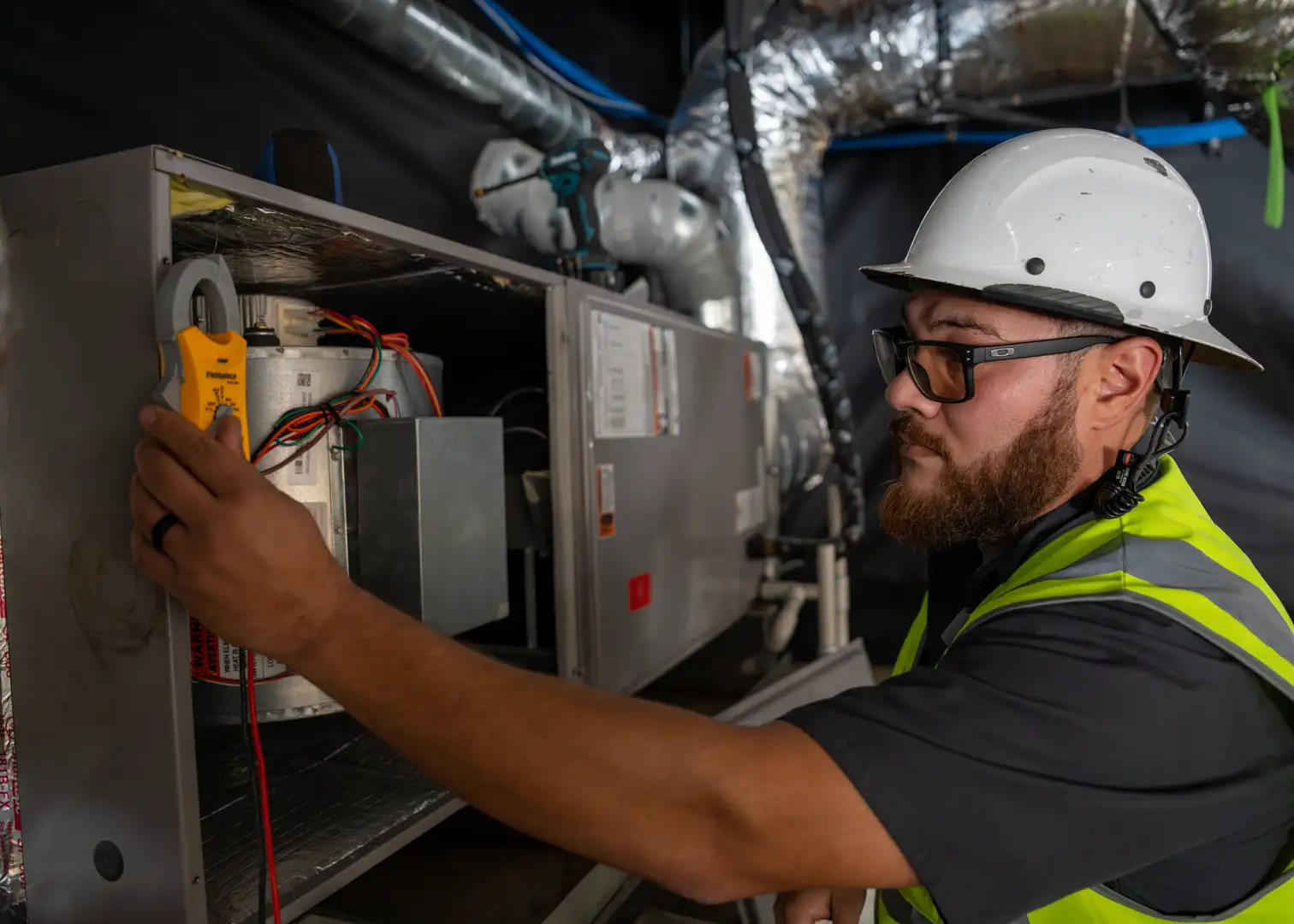
Catching a failing capacitor early can save you from a much larger headache. If you notice 5 Signs AC Capacitor is Failing in Madera, it’s time to call in the professionals before the motor burns out.
In Modesto, the visual signs are often the most telling. A healthy capacitor has a flat, silver top. A failed one often looks like it’s "mushroomed" or bulging. In extreme cases, you might even see oily residue leaking from the top or burn marks around the wire terminals.
| Symptom | Start Capacitor Failure | Run Capacitor Failure |
|---|---|---|
| Startup | Motor won't turn over at all | Motor starts but runs hot/sluggish |
| Sound | Loud humming or silence | Buzzing or clicking |
| Air Temp | Warm air immediately | Air starts cool, then turns warm |
| System Behavior | Breaker trips on startup | System "short cycles" (on/off) |
The Central Valley climate is particularly brutal on electrical components. During May 2026, as we transition into the peak cooling season, several factors converge:
Beyond just "getting old," several specific triggers cause capacitor failure why it is the most common ac repair in our region:
While you can't stop the sun from shining in Fresno, you can take steps to ensure your capacitor lasts as long as possible.
In a perfect environment, a capacitor might last 15 to 20 years. However, in the Central Valley, the average lifespan is typically closer to 5 to 10 years. Factors like heavy summer usage in Lemoore or intense heat in Reedley mean that most homeowners will need to replace a capacitor at least once or twice during the life of their AC system.
We strongly advise against it. If the capacitor is weak, the motor will struggle to turn, generating massive amounts of internal heat. This can lead to "fried" motor windings or, even worse, a dead compressor. Replacing a capacitor is a quick and straightforward repair; replacing a compressor is a major operation that can sometimes mean it’s better to replace the entire unit.
We don't just guess based on symptoms. Our technicians use specialized multimeters to measure the capacitance in microfarads. We also perform a "visual" check for bulging and a "load test" to see how the component performs under actual operating conditions. We also check the "Dissipation Factor" to see how much energy the capacitor is losing as wasted heat.
At Valley Air Conditioning & Repair, Inc., we’ve built our reputation on being the "trusted Modesto HVAC experts" since 1970. We know that when your AC quits, you don't want a complicated sales pitch—you want your comfort restored quickly and honestly.
Because capacitor failure why it is the most common ac repair is something we encounter every day in Biola, Kingsburg, and across the Valley, we always keep high-quality, properly rated capacitors on our trucks. Our customer-first philosophy means we’ll diagnose the problem accurately, check the health of your motors to ensure the capacitor failure didn't cause secondary damage, and get your home cool again with honorable intentions.
Whether you are in Turlock, Manteca, or right here in Modesto, don't let a small part cause a big problem. If you hear that tell-tale humming or your air just isn't as cold as it should be, reach out to us for expert Air Conditioning Services. We’re here to make sure your system is ready for whatever the Valley summer throws at it!

As a business with many AC units, it is essential to have a responsive AC company. Valley Air Conditioning understands our needs. They are always responsive and our AC is up and running very quickly.
I had them do an AC check on the home I was buying, they were honest and quick. I hired them to do the summer and Fall maintenance for $149. Happy with this company!
100% recommend. I called, same day they came out and gave me estimate. Conley was honest and didn't try to recommend/sell us anything we didn't need. When I called him with questions before making a decision, he happily answered and was not annoyed by me contacting him. Conley and VAR
This is a group of good people. Very professional and knowledgeable. They take the time to listen and find the best solution that fits best for any situation. There's no way you can go wrong in choosing VAR.
We have used Valley Air for over fifteen years. The last two years ,Matt came to our house to service twice a year. Always on time, so polite and so professional. This is a very honest company and you can always depend on them and trust them. The office always treats everyone cheerfully and always want to do what you need done very fast YOU CAN COUNT ON THIS Company