.webp)


AC Repair in Fresno, CA: Troubleshooting the Fall HVAC Transition After a Brutal Summer
Why we emphasize safe fall heating startups. Use these home maintenance tips and troubleshooting steps to decide with confidence when to call a pro.
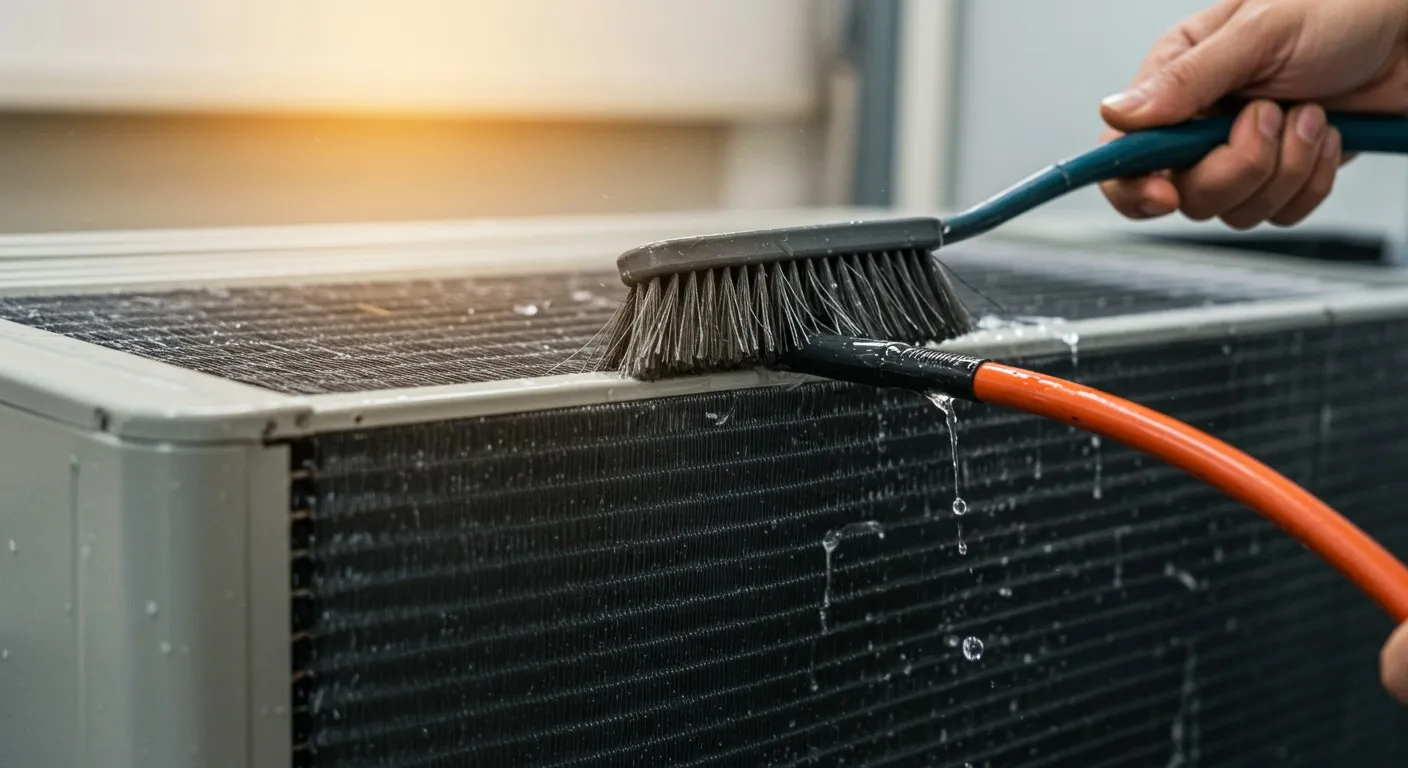
Knowing how often to change your AC filter in dusty desert conditions is one of the most important maintenance habits you can build as a homeowner in California's Central Valley. The short answer:
Quick Answer: How Often to Change Your AC Filter in Dusty Desert Conditions
| Filter Type | Standard Climate | Dusty Desert Conditions |
|---|---|---|
| Fiberglass (1-inch) | Every 30 days | Every 15-30 days |
| Pleated (1-inch) | Every 60-90 days | Every 30-45 days |
| Pleated (4-5 inch media) | Every 6-12 months | Every 3-6 months |
| Washable/Electrostatic | Monthly cleaning | Every 2-3 weeks cleaning |
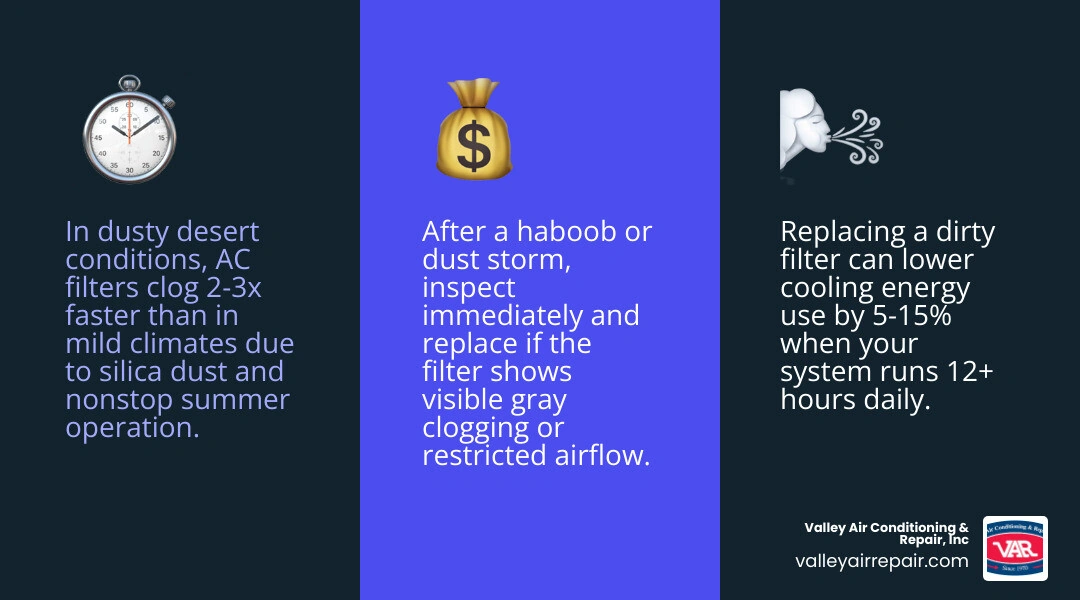
Standard filter packaging typically says replace every 60 to 90 days. That advice was written for homes in cooler, wetter climates — not for houses dealing with desert dust, silica particles, and AC systems running 12 or more hours a day through a long, brutal summer. In dusty desert environments, filters can load up two to three times faster than in cleaner climates. A filter that would last two months in a mild region can be fully clogged in just a few weeks when fine desert particulates are involved. According to the U.S. Department of Energy, replacing a dirty, clogged filter with a clean one can lower cooling energy use by 5% to 15% — savings that add up quickly when your system runs almost nonstop from spring through fall.
Living in the Central Valley means our air conditioners are the absolute unsung heroes of our homes. From Sanger to Kerman, we rely on our cooling systems to keep us safe and comfortable when outdoor temperatures regularly climb past triple digits. Because our systems run almost continuously during the hottest months, they act as massive vacuum cleaners for our indoor spaces. Every single cubic foot of air in your home passes through that filter multiple times a day.
When we look at how often to change your AC filter in dusty desert conditions, we have to throw the standard "change it every three months" rule right out the window. In our dry, dusty environment, a filter can easily become saturated with fine soil, pollen, and agricultural dust in as little as 30 days.
During the peak of summer, we recommend adopting a strict 30-day checking routine. If you neglect this simple task, you run the risk of dealing with the dreaded "blow-by effect." This occurs when the suction from your air handler becomes so strong against a clogged filter that it actually pulls dirty air and dust around the edges of the filter frame. This unfiltered, dusty air then deposits directly onto your sensitive indoor coils and blower motor, leading to major system issues. To understand exactly what happens to your system when this dust builds up, take a look at our detailed guide on Dirty Air Filters on Your HVAC System.
Not all air filters are created equal, and the material your filter is made of plays a massive role in how quickly it will clog up in our Valley air. Let's break down the most common filter types and how they hold up against our local desert-like dust loads.
To help you choose the right replacement cadence and understand the steps involved in swapping them out, you can read more about our professional AC Filter Replacement services.
| Filter Material | Dust Capture Efficiency | Recommended Desert Lifespan | Best Suited For |
|---|---|---|---|
| Fiberglass | Very Low (Captures only large debris) | 15 - 30 Days | Temporary use / basic system protection |
| Standard Pleated | Moderate to High (Great for dust & pollen) | 30 - 45 Days | Standard residential homes in the Valley |
| Deep Media (4-5") | Excellent (Captures fine silica & dander) | 3 - 6 Months | Homes with high dust loads or allergy sufferers |
| Washable Mesh | Low to Moderate (Requires frequent cleaning) | Clean every 2 weeks | Eco-conscious homeowners willing to wash |
While our outdoor environment is naturally dusty, what goes on inside your home also plays a major role in how quickly your filter fills up. No two households in Fresno or Clovis are exactly alike, which is why a rigid calendar schedule doesn't always work.
If you have pets, they act as little "dust factories." Dogs and cats constantly shed hair and dander, and when they run around, they stir up settled dust from your carpets and floors. A home with a single dog or cat will typically need its filter changed every 30 days. If you have multiple pets, you should check your filter every 20 days.
Allergy and asthma sufferers also require a much cleaner filter to keep symptoms at bay. If anyone in your household struggles with respiratory issues, keeping a fresh filter in place is non-negotiable. Additionally, the size of your home matters. Smaller homes have less air volume, meaning the air circulates through the filter more frequently, often causing the filter to clog faster than it would in a sprawling estate. For a deeper look at how to balance these household factors with your climate, check out our guide on Proper HVAC Maintenance for Desert Climate.
Our Central Valley geography presents some very unique challenges for heating and cooling systems. Unlike coastal regions where moisture helps weigh down dust and keep it on the ground, our dry climate allows fine particles to remain suspended in the air for long periods.
One of the biggest culprits is agricultural dust. Across Madera, Sanger, and Parlier, active farming tilling, harvesting, and tractor traffic kick up massive amounts of fine soil. This soil contains highly abrasive silica particles. When these microscopic, sharp mineral fragments are sucked into your HVAC system, they don't just clog the filter — they can actually act like microscopic sandpaper on the moving parts of your blower motor.
Furthermore, our region frequently experiences high PM10 concentrations (particulate matter that is 10 micrometers or less in diameter). On dry, windy days, these particles infiltrate our homes through tiny gaps around windows and doors, landing directly in your return air vents. Keeping up with Preventative AC Maintenance is the best way to shield your system from this constant environmental onslaught.
While we may not experience the massive Saharan sandstorms, the Central Valley does get its fair share of dry windstorms and agricultural dust events. A single windy afternoon during harvest season can kick up three months' worth of dust and dump it right into your neighborhood.
If we experience a major wind or dust event, you should inspect your AC filter immediately afterward. Do not wait for your scheduled monthly swap. A heavy dust storm can completely cake a brand-new pleated filter in a matter of hours. If you ignore your filter after a storm, the severe restriction in airflow can cause your system to work twice as hard, leading to rapid wear and tear. To keep your system running smoothly year-round, especially after severe weather, learn more about our comprehensive HVAC System Maintenance protocols.
In our low-humidity environment, dust behaves very differently than it does in humid climates. In wet climates, moisture in the air binds dust particles together, causing them to clump and settle to the ground quickly. In the dry air of the Valley, dust remains bone-dry, lightweight, and highly airborne.
This dry dust easily bypasses basic filtration and makes its way deep into your system. Once these dry particles manage to get past a dirty or poorly fitting filter, they head straight for your damp indoor evaporator coil. The moisture on the cooling coil acts like a magnet, turning that dry dust into a thick, muddy paste. This mud insulates the coil, preventing it from cooling your home efficiently and forcing your system to run longer, hotter cycles. To see how keeping your coils clean and your filters fresh directly impacts your monthly utility costs, read about How a Tune-Up Improves Efficiency and Lowers Bills.
Selecting the right filter for a dry, dusty climate is a delicate balancing act. You want a filter that is efficient enough to trap fine silica dust, but not so restrictive that it starves your air handler of the airflow it needs to function.
Air filters are rated using the MERV (Minimum Efficiency Reporting Value) scale, which ranges from 1 to 16 for residential systems:
If you are looking for advanced filtration to combat heavy outdoor dust, we offer specialized indoor air quality solutions tailored to our local communities:
It is a common misconception that buying the highest-MERV filter available is always the best choice for a dusty home. In reality, putting a MERV 13 or higher filter into an older HVAC system can be like putting a brick in your return air duct.
High-efficiency filters have incredibly tight weaves. Because they are so dense, they require a powerful blower motor to push air through them. If your system's air handler wasn't designed to handle that level of static pressure, the restricted airflow will cause the blower motor to overheat and work under severe strain.
Even worse, when airflow is severely restricted, the temperature of your indoor evaporator coil can quickly drop below freezing. The condensation on the coil will turn to ice, completely blocking airflow and potentially causing liquid refrigerant to flood back into your compressor. This can result in a sudden, catastrophic compressor failure. Always consult with a professional before upgrading to a high-MERV filter to ensure your system can handle the static pressure.
You don't need any fancy gadgets to check your filter's health. The easiest and most reliable method is the Light Test:
No, you should never attempt to wash a disposable pleated filter. These filters are constructed from specialized paper and synthetic fibers that are designed to remain completely dry.
If you spray a disposable filter with water, you will instantly destroy its structural integrity, causing the pleats to collapse and rendering it useless. Furthermore, trapping moisture inside those tight paper fibers creates the perfect breeding ground for mold and bacteria. Once you turn your AC back on, those mold spores will be blown directly into your home's air supply. If you prefer a reusable option, look into electrostatic washable filters specifically designed for wet cleaning, and always ensure they are 100% dry before sliding them back into your system.
Ignoring your air filter in a dusty environment is a recipe for a system breakdown. Over time, a completely clogged filter will cause several severe issues:
Taking care of your air conditioning system in California's Central Valley doesn't have to be complicated, but it does require consistency. Staying on top of how often to change your AC filter in dusty desert conditions is the single best DIY task you can perform to protect your system, maintain clean indoor air, and keep your utility bills manageable during our scorching summers.
At Valley Air Conditioning & Repair, Inc., we have been serving our local communities — from Fresno and Clovis to Sanger, Madera, and Kerman — with a customer-first philosophy since 1970. Our business has been built on trust, honorable intentions, and friendly, reliable service. While changing your filter is a great step to take on your own, your system still needs professional attention to wash away deep-seated desert dust from coils, calibrate electrical connections, and ensure peak efficiency.
Don't let a dusty summer catch your system off guard. Schedule residential HVAC maintenance and repair today with our friendly team, and let us help you keep your home a cool, clean oasis all year long!

As a business with many AC units, it is essential to have a responsive AC company. Valley Air Conditioning understands our needs. They are always responsive and our AC is up and running very quickly.
I had them do an AC check on the home I was buying, they were honest and quick. I hired them to do the summer and Fall maintenance for $149. Happy with this company!
100% recommend. I called, same day they came out and gave me estimate. Conley was honest and didn't try to recommend/sell us anything we didn't need. When I called him with questions before making a decision, he happily answered and was not annoyed by me contacting him. Conley and VAR
This is a group of good people. Very professional and knowledgeable. They take the time to listen and find the best solution that fits best for any situation. There's no way you can go wrong in choosing VAR.
We have used Valley Air for over fifteen years. The last two years ,Matt came to our house to service twice a year. Always on time, so polite and so professional. This is a very honest company and you can always depend on them and trust them. The office always treats everyone cheerfully and always want to do what you need done very fast YOU CAN COUNT ON THIS Company