.webp)


Common Homeowner Questions Answered: Why Does My Heater Smell Like It's Burning?
Is that burning smell normal? We have your common homeowner questions answered. See why fall dust burn-off happens and when to call a professional.
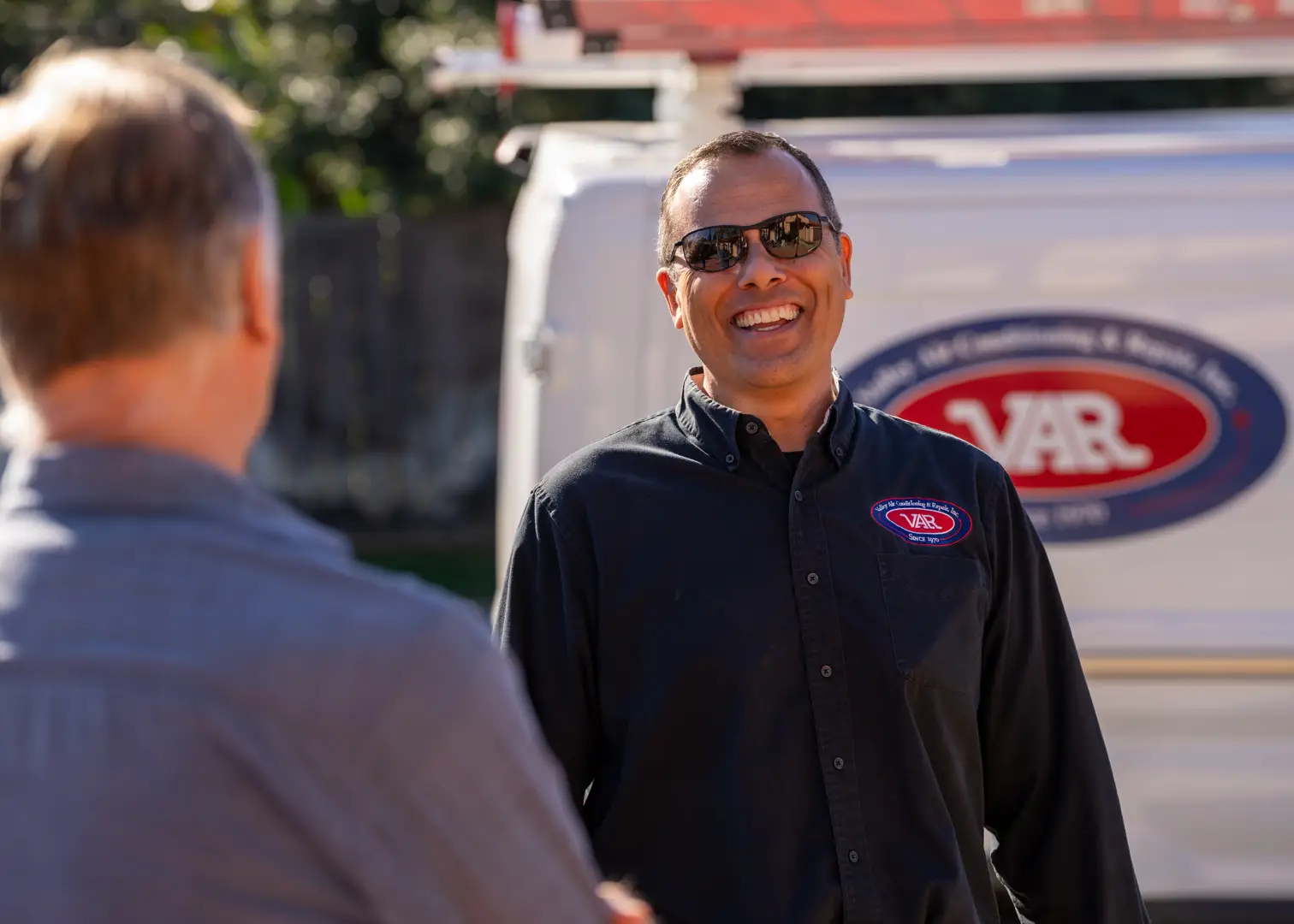
How to choose the right AC for your Central Valley home comes down to five key steps:
Living in the Central Valley means your air conditioner isn't a seasonal appliance — it's a necessity that runs hard for months on end. Fresno and Modesto regularly see temperatures climb past 100°F for weeks at a stretch, and even a slightly wrong AC decision can mean sky-high energy bills, uneven cooling, or a system that wears out years too soon.
The stakes are real. About 19% of central AC systems purchased between 2009 and 2024 ran into at least one significant problem, and 24% stopped working as well as they should — or failed completely. In a climate as demanding as the Central Valley's, a poor AC choice doesn't just cause discomfort. It costs you.
The good news? Getting it right isn't complicated when you know what to look for. This guide walks you through everything — from sizing and efficiency ratings to system types, advanced features, and professional installation — so you can make a confident decision and stay cool all summer long.
When we talk to homeowners in places like Clovis or Fresno who are dealing with triple-digit heat, the first question is always: "Which one is the best?" The truth is, the "best" unit is the one that is specifically tailored to your home's unique footprint.
Choosing a new system isn't like buying a toaster where you just pick the shiniest one on the shelf. In 2026, the technology has advanced significantly, but the physics of cooling remain the same. To figure out how to choose the right AC for your Central Valley home, we have to look at the "cooling load." This is the amount of heat your AC needs to remove to keep you comfortable.
We always recommend starting with a professional cooling audit. This involves more than just glancing at your square footage. We look at your ceiling height, the quality of your insulation, and even which way your house faces. Without this data, you're essentially guessing—and in our climate, a guess can be a very expensive mistake.
Proper planning ensures your system doesn't just "blow cold air" but actually manages the environment of your home efficiently. This is why Proper HVAC Maintenance for Desert Climate is so vital; even the best-chosen unit will struggle if it isn't cared for in these harsh conditions.

In the HVAC world, we measure cooling capacity in "tons." One ton of cooling is equivalent to 12,000 BTUs (British Thermal Units) per hour. Most homes in high-heat areas require between 2 and 5 tons, but the "bigger is better" mentality is a dangerous myth.
If your unit is oversized, it will engage in something called "short cycling." This means it turns on, blasts the house with cold air, and shuts off before it can properly dehumidify the air or reach peak efficiency. This constant starting and stopping is like driving your car in stop-and-go traffic—it wears out the compressor and leads to uneven temperatures. You might feel a "clammy" cold because the moisture hasn't been pulled from the air.
On the flip side, an undersized unit is just as bad. It will run constantly, struggling to reach the temperature set on your thermostat. This leads to massive utility bills and a system that burns out years before its time. If you've ever wondered Why Your AC Runs Constantly in Arizona Heat, improper sizing is often the primary culprit.
To get it perfect, we use the Manual J calculation. This industry-standard formula accounts for:
Efficiency is measured by the Seasonal Energy Efficiency Ratio, or SEER2. As of 2026, the standards have become stricter to help homeowners save money and reduce energy strain. Think of SEER2 like the MPG rating on a car—the higher the number, the less energy it uses to produce the same amount of cooling.
In the extreme heat of the valley, we generally suggest looking for a SEER2 rating of 16 or higher. While the federal minimum for new split systems is 14, those extra points of efficiency pay for themselves quickly when the sun is beating down day after day. Energy Star certified models typically start at 15 SEER2, and the most advanced models can reach 26 SEER2.
Upgrading to a high-efficiency unit can sometimes significantly reduce your electricity bill compared to an old, struggling system. This is a major factor when deciding Is It Worth Fixing an Old AC Unit in the Desert. Often, the savings on your monthly bill make the transition to a new unit the smarter financial move. Plus, under the Energy Efficient Home Improvement Credit (Section 25C), you may be eligible for a federal tax credit on qualifying high-efficiency models.
Depending on your home’s layout, you generally have three main paths to take: Central AC, Ductless Mini-Splits, or Heat Pumps.
Central Air Conditioning is the classic choice for homes that already have a network of ducts. It’s a "whole-house" solution that uses one large outdoor unit and an indoor evaporator coil to distribute air evenly through every room. It’s often the most cost-effective if your ductwork is in good shape.
Ductless Mini-Splits are gaining massive popularity in 2026, especially for home additions, converted garages, or older homes without space for ducts. They consist of a small outdoor compressor and one or more indoor air handlers mounted on the wall. The big advantage here is zoned cooling. You can keep the bedroom at 72°F while leaving the guest room at 78°F, saving a fortune on energy.
Heat Pumps are the "magic" of the HVAC world. Despite the name, they are incredible at cooling. They work by moving heat from one place to another rather than generating cold. In the winter, they flip the process to provide efficient heating. Modern heat pumps are now fully capable of handling extreme desert summers.
| Feature | Central Air | Ductless Mini-Split | Heat Pump |
|---|---|---|---|
| Installation | Requires ductwork | Easy (no ducts needed) | Can be ducted or ductless |
| Efficiency | High (if ducts are sealed) | Very High (no duct loss) | Excellent |
| Zoning | Difficult/Expensive | Built-in by design | Available |
| Best For | Whole-house cooling | Additions/Specific rooms | Year-round comfort |
When we determine how to choose the right AC for your Central Valley home, we have to look at the "envelope" of your house. Your AC doesn't work in a vacuum; it’s fighting the environment.
For those in our service areas, our AC Replacement Clovis CA Complete Guide goes into even more detail about how these local factors change the game for replacement.
If you're buying a system today, you aren't just buying a box that blows cold air. You're buying a piece of smart technology. Here are the features we think are "must-haves" for 2026:
If you're looking for a new setup, checking out our AC Installation Fresno Complete Guide can help you navigate these high-tech options.
You could buy the most expensive, high-efficiency AC unit in the world, but if it's installed poorly, it will perform like a budget model. Professional installation is the single most important factor in the lifespan of your system.
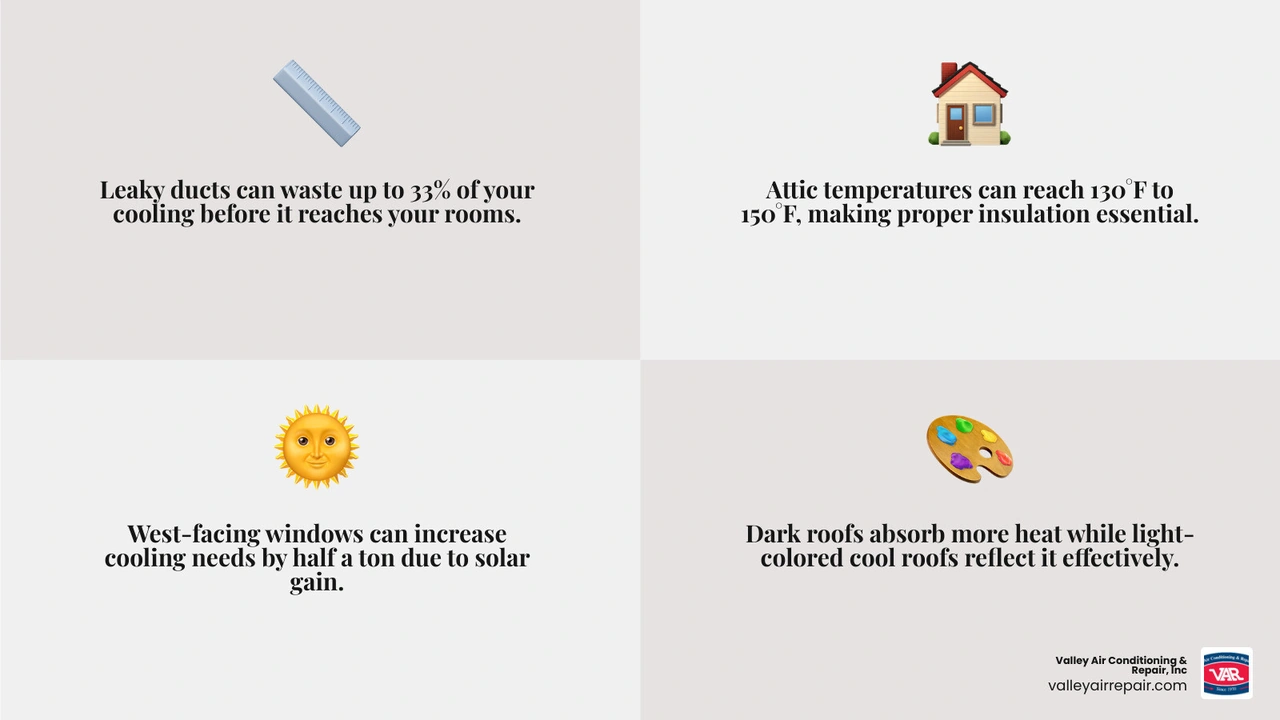
One of the biggest issues we see is leaky ductwork. Leaky ducts can waste 20 to 30 percent of cooled air. During a professional installation, we ensure that the ductwork is sized correctly for the new unit's airflow and that every joint is sealed tight. We also verify the "refrigerant charge"—if it's off by even a little bit, the unit won't cool properly and will consume more electricity.
Once the system is in, the work isn't over. Annual tune-ups are the secret to making a system last 12 to 15 years instead of 8. This includes cleaning the coils, checking the electrical connections, and ensuring the condensate drain is clear. For every degree you raise your thermostat, you save about 3% on your utility bill. Using a ceiling fan can also make you feel 3°F to 4°F cooler, allowing you to set the AC a little higher without sacrificing comfort.
Detailed care is what we preach in our Proper HVAC Maintenance for Desert Climate guide—it's the best way to protect your investment.
In 2026, we recommend a minimum of 16 SEER2 for Central Valley homes. While the upfront cost is higher than a 14 SEER2 unit, the extreme heat means your AC runs more hours per year than in many other regions. The energy savings will typically "pay back" the price difference within a few cooling seasons.
While a general rule of thumb used to be 1 ton per 400-500 square feet, modern standards suggest that "over-tonning" is a common mistake. Most Central Valley homes need between 2 and 5 tons. The only way to know for sure is through a Manual J load calculation performed by a professional.
Absolutely. Modern high-performance heat pumps are designed to operate efficiently even when outdoor temperatures exceed 110°F. They are an excellent choice for the Central Valley because they provide both high-efficiency cooling in the summer and cost-effective heating during our chilly nights.
Choosing the right air conditioner is one of the biggest investments you'll make for your home. It’s the difference between a summer spent worrying about the electric bill and a summer spent in total, "crisp-air" comfort.
At Valley Air Conditioning & Repair, Inc., we’ve been helping homeowners navigate these choices since 1970. Our customer-first philosophy means we don't just sell you a unit; we find the cooling solution that fits your life and your budget. Whether you're in Fresno, Clovis, Modesto, or any of our surrounding communities, we bring decades of expertise to every job.
Ready to find the perfect system for your home? Contact us today for expert air conditioning services and let’s get your home ready for the heat!

As a business with many AC units, it is essential to have a responsive AC company. Valley Air Conditioning understands our needs. They are always responsive and our AC is up and running very quickly.
I had them do an AC check on the home I was buying, they were honest and quick. I hired them to do the summer and Fall maintenance for $149. Happy with this company!
100% recommend. I called, same day they came out and gave me estimate. Conley was honest and didn't try to recommend/sell us anything we didn't need. When I called him with questions before making a decision, he happily answered and was not annoyed by me contacting him. Conley and VAR
This is a group of good people. Very professional and knowledgeable. They take the time to listen and find the best solution that fits best for any situation. There's no way you can go wrong in choosing VAR.
We have used Valley Air for over fifteen years. The last two years ,Matt came to our house to service twice a year. Always on time, so polite and so professional. This is a very honest company and you can always depend on them and trust them. The office always treats everyone cheerfully and always want to do what you need done very fast YOU CAN COUNT ON THIS Company