.webp)


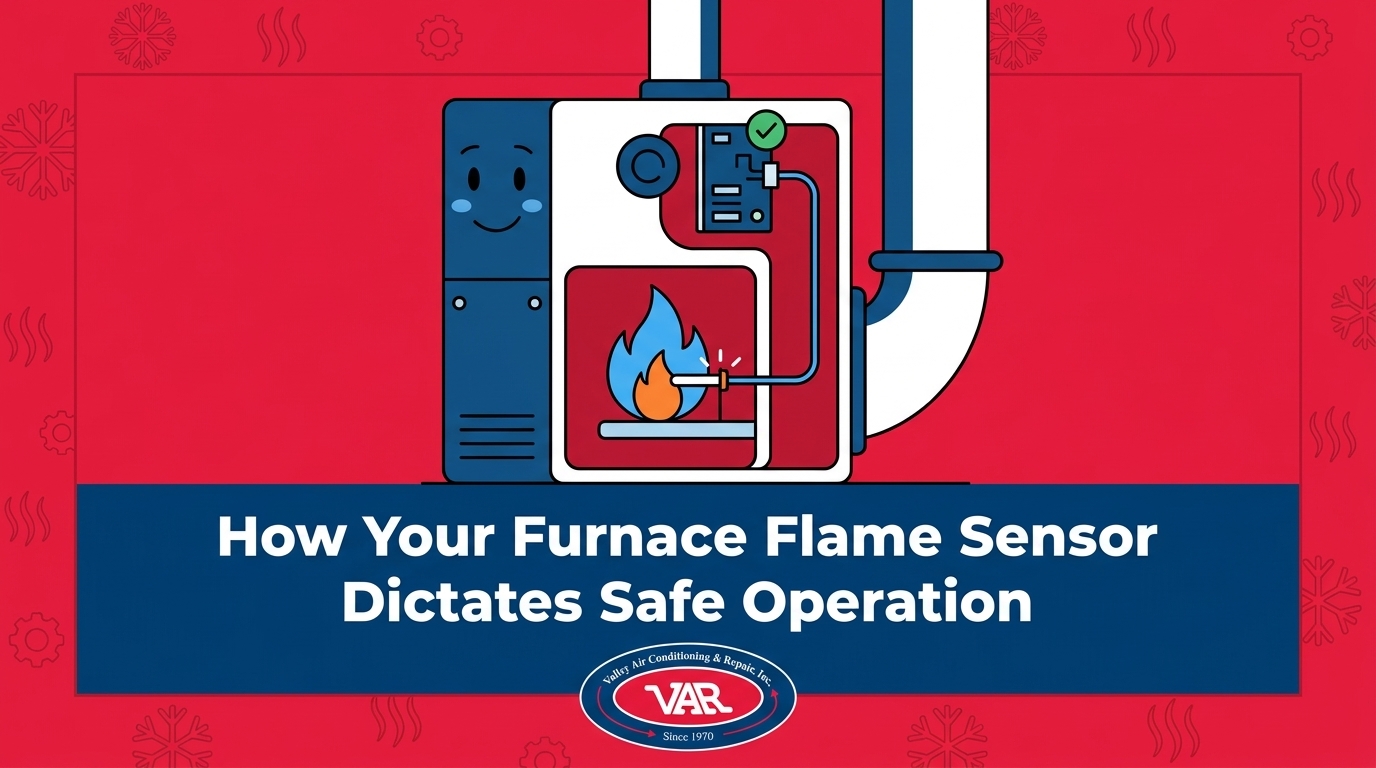
How Your Furnace Flame Sensor Dictates Safe Operation
If your heating system fires up only to shut down seconds later, a dirty flame sensor is likely to blame. See why this tiny rod triggers a strict safety lockout.

August in the Central Valley is a transitional time, and based on the surge of service calls we receive every fall, dealing with dusty indoor air as Fresno kids head back to school is a challenge almost every local homeowner faces. The moment the calendar flips to late summer, you might notice a sudden, thick layer of dust settling on your coffee table just hours after you wiped it down. Sunbeams shining through your living room windows suddenly reveal a hazy cloud of floating particles. This sudden spike in indoor dust accumulation during the August back-to-school transition is incredibly frustrating, especially when you feel like you are constantly cleaning.
If you are tired of breathing in airborne debris, our team can help you explore professional indoor air quality solutions to take back control of your home's environment.
The core decision point for most homeowners is figuring out if this is simply a housekeeping issue or a sign that the HVAC system requires professional attention. When kids start running between dusty school playgrounds, sports fields, and your living room, they bring a massive amount of outdoor debris inside. However, your vacuum and duster can only do so much. If your home stays dusty no matter how often you clean, we typically find the problem lies in how your cooling system handles the late-summer load. Addressing the root cause means looking closely at both your home's air cycling mechanics and the integrity of your filtration setup.
Generic indoor air quality advice often ignores the severe regional factors we deal with in Fresno. The late-summer dry heat creates a uniquely high-particulate outdoor environment that easily overwhelms standard household defenses. During this time of year, the San Joaquin Valley Air Pollution Control District frequently records elevated PM10 levels—particulate matter that is 10 micrometers or less in diameter. This isn't just normal household lint; it is fine, powdery dirt combined with harvest-season agricultural dust.
Because the humidity drops and the soil bakes in the late-summer sun, this specific type of dust becomes highly volatile. It takes very little wind to lift these fine particles into the air, where they hang suspended for hours. At Valley Air Conditioning & Repair, Inc., our deep understanding of local agricultural dust challenges allows us to see exactly how these regional factors impact residential cooling equipment. We know firsthand that what works for a home in a mild, humid climate simply will not cut it against Central Valley dust.
You might keep your doors and windows shut tight, but agricultural dust is remarkably persistent. Here is a pattern we see often in how it finds its way inside:
• Wind-driven infiltration: Afternoon breezes push fine dirt through microscopic gaps in window seals, weather stripping, and tiny cracks in your home's exterior.
• The composition of the dust: Unlike standard household dust (which is mostly dead skin cells and fabric fibers), PM10 agricultural dust is incredibly fine and easily becomes airborne the moment someone walks across a room.
• Pressure imbalances: If your home has exhaust fans running or duct leaks, it can create negative pressure, literally sucking outdoor air and dust into your living space from the attic or outside.
The August back-to-school transition creates a perfect storm for indoor air quality issues. Suddenly, you have a massive influx of dirt entering the house. Kids drop backpacks on the floor, kick off shoes covered in playground sand, and track in dirt from sports practices. At the exact same time, August in Fresno features average highs near 100 degrees, meaning your cooling equipment is running almost constantly to keep the house comfortable.
This is where the mechanical behavior of your HVAC system intersects with your family's routine. If you want to understand how this dirt spreads so fast, you have to look at the mechanics of your air conditioning systems. Your AC doesn't just push cold air out; it pulls warm air in through the return vents to cool it down. When kids track fine dust onto the carpets, the constant suction from the return vents pulls those newly introduced particles up into the air stream.
Because the system is running non-stop to fight the 100-degree heat, that dust is rapidly cycled through the ductwork and blown out into every single room of the house. The sudden, stubborn dust layer you see on your furniture isn't a failure of your cleaning routine—it is the direct result of high-volume, high-velocity air cycling.

When Central Valley homeowners notice a sudden dust problem, our technicians at Valley Air Conditioning & Repair, Inc. usually advise that the first step is checking the air filter. However, simply swapping the filter might not solve the issue if you don't understand how air flows through your system. Air is lazy; it always takes the path of least resistance. If your filter is clogged with heavy August dust, the blower motor still needs to pull air to cool the house. Instead of pulling air through the dirty filter, the suction forces air around the edges of the filter frame—a phenomenon known as filter bypass.
When bypass occurs, raw, unfiltered air carrying all that back-to-school dirt gets sucked directly into your delicate cooling equipment and blown back into your home. Our team frequently spots signs of filter bypass when we see thick dirt buildup on the return grille itself, or if the space immediately inside the ductwork behind the filter looks exceptionally grimy.
To stop this, we recommend focusing on choosing the right MERV filter for Valley conditions. You need a rating high enough to catch fine agricultural dust, but not so restrictive that it chokes off the airflow your AC needs to survive the late-summer heat.
Many homeowners grab the cheapest filter available at the hardware store, not realizing how ineffective they are against our local climate challenges.
• Standard 1-Inch Fiberglass — What It Catches: Large debris, pet hair, heavy lint — Performance Against Valley Dust: Poor. Fine PM10 agricultural dust passes right through the loose weave.
• Pleated MERV 8 — What It Catches: Pollen, dust mites, mold spores — Performance Against Valley Dust: Good baseline. Captures most daily back-to-school dirt without restricting airflow.
• Pleated MERV 11-13 — What It Catches: Fine powders, smog, microscopic particles — Performance Against Valley Dust: Excellent for air quality, but requires frequent monitoring to prevent airflow restriction.
If you are consistently changing your high-quality filter but your home is still covered in a daily layer of dust, you might be dealing with a deeper mechanical issue. In our years of servicing Fresno homes, we've found that the hidden culprit is often leaky air ducts located in your attic or crawlspace. The attic of a Central Valley home in August is an incredibly hostile environment—it is sweltering hot and filled with decades of accumulated, unfiltered dust, insulation fibers, and debris.
Your return ductwork is under negative pressure, meaning it acts like a giant vacuum hose. If a section of that ductwork becomes unsealed, cracked, or completely disconnected, it will pull that raw attic dust directly into your air stream. Because this air enters the system after the filter, it gets blown straight into your bedrooms and living areas.
Signs of leaky ductwork include:
• Dust accumulating unusually fast, even the day after a deep clean and a fresh filter installation.
• Higher than normal energy bills, as your system is sucking in 130-degree attic air and trying to cool it.
• Certain rooms feeling significantly warmer or dustier than the rest of the house.
Connecting duct integrity directly to the overall health of your indoor air environment is crucial. However, it is vital to understand that duct sealing is not a DIY job. Locating the leaks, applying the correct mastic sealant, and ensuring the system is balanced requires a licensed professional to diagnose and repair safely.
Managing indoor air quality during the dry late-summer season requires a proactive approach. While you can't control the agricultural dust outside, you can control how much of it cycles through your home during the August back-to-school transition. Based on the service calls we field every August, here is a practical checklist we recommend to help you immediately improve your home's air quality:
• Establish a dedicated "drop zone": Set up a specific area at your main entryway for school shoes, cleats, and backpacks. Isolating outdoor dirt at the door prevents it from reaching the return vents in your main living areas.
• Seal the house during peak heat: Keep your windows and doors tightly closed during peak heat and windy afternoons to block agricultural dust from blowing inside.
• Upgrade and monitor your filter: Switch to a pleated filter designed to capture fine particulates. During August and September, check this filter bi-weekly. The combination of high AC usage and back-to-school dirt will clog it much faster than in the spring.
• Schedule ongoing preventive maintenance: Consistent care keeps your system from becoming a dust distribution network. For instance, one Central Valley homeowner recently needed help keeping their older system running efficiently. By performing ongoing preventive maintenance and thoroughly cleaning the heat exchanger, our technicians maintained that 13-year-old unit so it continues to run like new, proving that routine care protects both your machinery and your indoor air.
There is a distinct threshold where routine housekeeping and simple filter changes are no longer effective. If you are dusting constantly, changing filters rapidly, and still suffering from poor indoor air quality, it is time for professional HVAC intervention. A comprehensive system inspection goes far beyond what a homeowner can safely see or reach.
During a professional visit, our technicians will check the evaporator coil for severe dust buildup. When dust bypasses a filter, it often sticks to the wet, cold evaporator coil, creating a layer of grime that chokes off airflow and breeds odors. Professional maintenance ensures the system can handle the constant cooling demand of late summer without circulating poor air back into your living space.
Establishing a seasonal routine prevents these issues from sneaking up on you. Another local homeowner initially called us for an honest, quick AC check prior to a home purchase in the spring. Because our inspection was thorough and clearly explained the system's condition, that customer immediately established a routine HVAC maintenance plan for ongoing seasonal care. That kind of proactive scheduling ensures your equipment is clean and ready long before the heavy demands of August arrive.
Managing indoor air quality during the dry late-summer season requires much more than just a vacuum and a dusting cloth. The combination of the August back-to-school transition, constant cooling demands, and Central Valley agricultural dust means your HVAC system is working overtime. It is essential to distinguish between routine maintenance, like swapping a dirty filter, and signs of failing ductwork that require expert attention.
Don't wait until your home is covered in a persistent layer of grime and your family is breathing in unfiltered debris. Schedule your seasonal tune-up and duct inspection with our team now, so you can secure actionable, geographically relevant advice to keep your home's air clean, healthy, and comfortable all school year long.
The sudden spike in dust is caused by a combination of dry regional heat, agricultural particulates, and increased foot traffic. During late summer, the soil is incredibly dry, allowing fine PM10 dust to easily become airborne. When kids return to school, they track this dirt inside, where your constantly running AC system quickly pulls it into the return vents and cycles it throughout the house.
Yes, your HVAC system plays a major role in removing airborne dust, provided it is equipped with the right filter and is properly sealed. As air is pulled through the return ducts, a high-quality pleated filter traps fine particles before they reach the blower motor. However, if the filter is cheap, clogged, or bypassed, the system will actually make the dust problem worse by blowing it into every room.
Our team recommends upgrading to a high-quality pleated filter right at the beginning of August, before the heavy foot traffic begins. Because the AC runs constantly during the late-summer heat, a standard filter will clog very quickly. It is highly recommended to check your newly upgraded filter every two weeks during this peak season to ensure it isn't restricting airflow.
Running the AC constantly will reduce dust only if your filtration system and ductwork are in perfect condition. If you have a high-quality, clean filter, the constant air cycling will continuously scrub the air. Conversely, if you have leaky return ducts in the attic or a clogged filter causing bypass, running the AC will dramatically increase the amount of dust blown into your living space.
A MERV 8 to MERV 11 filter is generally the best balance for capturing fine agricultural dust without suffocating your AC unit. MERV 8 filters are excellent at catching the majority of daily dirt and pollen, while MERV 11 filters catch even finer powders and smog particles. Always ensure your specific HVAC system can handle the airflow resistance of a higher MERV rating before upgrading.
The most common sign of leaky ductwork is an unusually fast accumulation of dust even immediately after cleaning and changing the air filter. You might also notice dark, dusty streaks on the ceiling around your supply vents or experience higher than normal energy bills. If you suspect your return ducts are pulling in raw attic dust, you need a licensed professional to perform a thorough inspection and seal the leaks safely.

As a business with many AC units, it is essential to have a responsive AC company. Valley Air Conditioning understands our needs. They are always responsive and our AC is up and running very quickly.
I had them do an AC check on the home I was buying, they were honest and quick. I hired them to do the summer and Fall maintenance for $149. Happy with this company!
100% recommend. I called, same day they came out and gave me estimate. Conley was honest and didn't try to recommend/sell us anything we didn't need. When I called him with questions before making a decision, he happily answered and was not annoyed by me contacting him. Conley and VAR
This is a group of good people. Very professional and knowledgeable. They take the time to listen and find the best solution that fits best for any situation. There's no way you can go wrong in choosing VAR.
We have used Valley Air for over fifteen years. The last two years ,Matt came to our house to service twice a year. Always on time, so polite and so professional. This is a very honest company and you can always depend on them and trust them. The office always treats everyone cheerfully and always want to do what you need done very fast YOU CAN COUNT ON THIS Company