.webp)


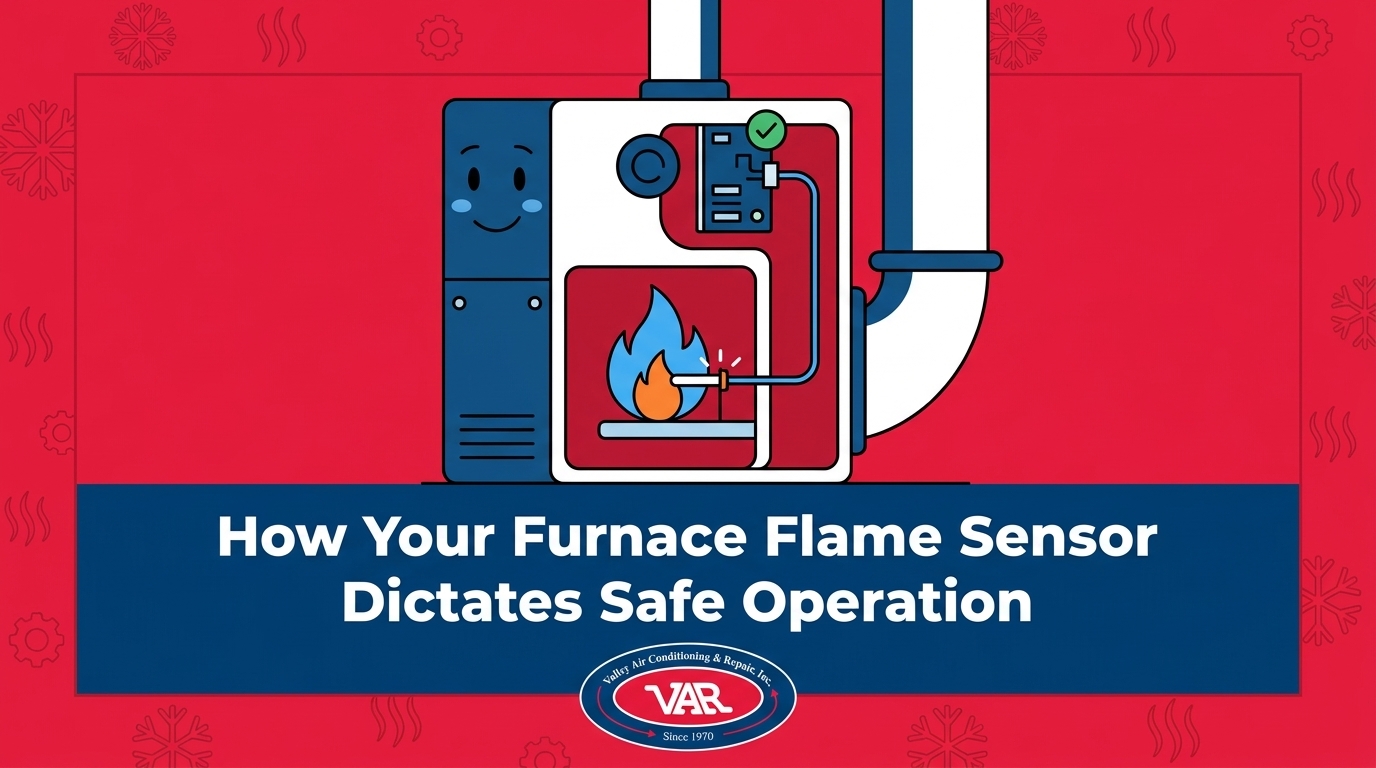
How Your Furnace Flame Sensor Dictates Safe Operation
If your heating system fires up only to shut down seconds later, a dirty flame sensor is likely to blame. See why this tiny rod triggers a strict safety lockout.
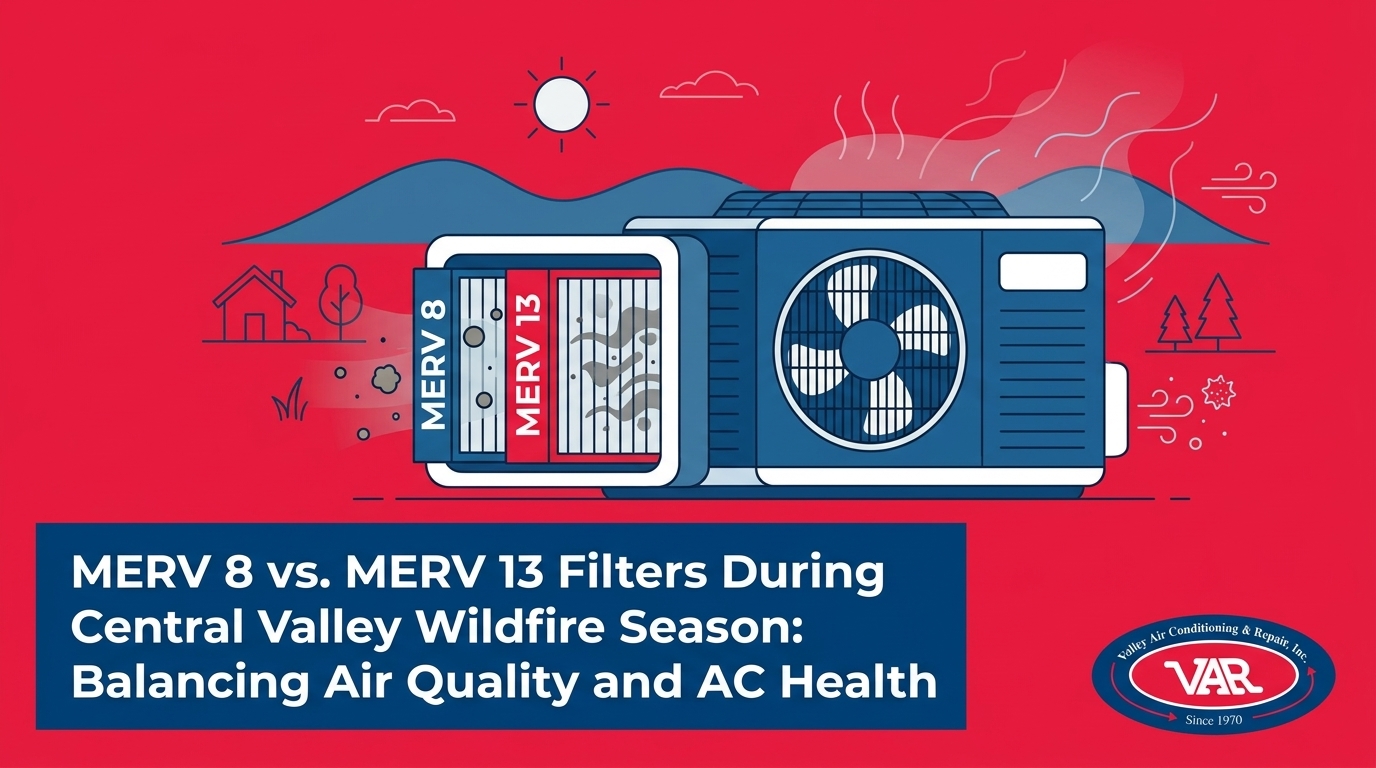
July weather brings a brutal combination of 105-degree temperatures and hazardous air quality, forcing homeowners into a difficult choice regarding MERV 8 vs. MERV 13 filters during Central Valley wildfire season. When the sky turns orange and the air smells like a campfire, your first instinct is likely to buy the thickest, highest-rated air filter available to protect your family's lungs. However, blindly upgrading to a hospital-grade filter without understanding your HVAC system's mechanical limits can lead to catastrophic compressor failure right when you need cooling the most.
If you are concerned about the performance of your air conditioning systems under heavy load, or want to explore safer indoor air quality solutions, we can help ensure your home stays both cool and safe.
The compounding challenge of mid-summer weather means your air conditioner is already working overtime. During a severe heatwave, cooling units often run at 100% duty cycles—meaning they almost never shut off—just to keep indoor temperatures livable. When you introduce dense, restrictive filter media into a system running non-stop, you force the blower motor to work against immense resistance. Homeowners must weigh the urgent need for aggressive smoke filtration against the very real risk of suffocating their equipment. Surviving the Central Valley wildfire season requires a strategic approach to indoor air quality, not just a quick trip to the hardware store for the most expensive filter on the shelf.
To make an informed decision about your home's air filtration, you first need to understand what you are actually trying to capture. The MERV (Minimum Efficiency Reporting Value) scale is the industry standard for rating how effectively a filter traps airborne particles. The scale runs from 1 to 16 for residential applications, with higher numbers indicating tighter weaves and better filtration capabilities.
During the Central Valley wildfire season, the primary threat to your respiratory health is PM2.5. These are microscopic particulate matter droplets and ash particles that are 2.5 microns or smaller in diameter. Because they are so tiny, they can bypass your body's natural defenses, travel deep into your lungs, and even enter your bloodstream.
Here is how the two most common filter ratings stack up against this specific threat:
• MERV 8 capabilities: A standard MERV 8 filter is excellent at protecting your HVAC equipment from everyday dust, lint, and pollen. However, it captures only about 20% of PM2.5 particles. It will stop large ash, but the dangerous microscopic smoke will pass right through.
• MERV 13 capabilities: A MERV 13 filter is densely woven to capture bacteria, virus carriers, and fine smoke. It can trap up to 90% of PM2.5 particles, which is why it is the EPA and ASHRAE recommended standard for wildfire smoke filtration.
• The airflow trade-off: The tighter the weave required to catch microscopic smoke, the harder it is for air to pass through. This physical reality is the root of the conflict between air quality and HVAC mechanical health.
The core technical conflict of using high-efficiency filters in standard residential systems comes down to one crucial metric: static pressure. Static pressure is the resistance to airflow in your heating and cooling system's ductwork. Your blower motor is designed to push and pull a specific volume of air against a specific amount of resistance.
Think of your HVAC system like a person trying to breathe. Using a standard filter is like breathing through a thin cotton t-shirt—air moves freely. Upgrading to a MERV 13 filter is like trying to breathe through a heavy wool blanket. The thick, restrictive filter media forces the blower motor to work significantly harder to pull the same amount of air into the system. High MERV filters can increase static pressure by 0.1 to 0.2 inches of water column, which is a massive jump for a residential system.
When airflow is reduced because of this dense media, the entire mechanical operation of the cooling cycle is disrupted. Older or improperly sized single-stage blower motors are simply not rated to pull air through dense MERV 13 media. They will strain, overheat, and draw excess electricity trying to overcome the resistance. If your system already has slightly undersized return ducts—a common issue in many Fresno CA homes—adding a restrictive filter pushes the static pressure beyond the system's operational limits.
Before installing a high-efficiency filter, the solution is to understand your system's baseline static pressure. If you ignore this metric, the restricted airflow will inevitably lead to severe mechanical consequences. In fact, ignoring airflow resistance is exactly how restrictive or dirty filters cause frozen evaporator coils, a costly repair that leaves you without air conditioning during the hottest part of the year.
Understanding the mechanical failure process that occurs when airflow is choked is essential for protecting your investment. Your air conditioner does not actually "create" cold air; it removes heat from the air inside your home. This process relies entirely on a precise volume of warm air blowing over the indoor evaporator coil.
1. Normal Heat Absorption: The evaporator coil sits inside your indoor air handler and is filled with highly chilled liquid refrigerant. As the blower motor pulls warm air from your home and pushes it over this coil, the refrigerant absorbs the heat, turning into a gas, and cooling the air that blows back into your rooms.
2. Airflow Restriction: When a thick MERV 13 filter chokes the incoming airflow, there is no longer enough warm air passing over the evaporator coil. The refrigerant inside the coil still drops in temperature, but it has no heat to absorb.
3. Condensation and Freezing: Because the coil becomes unnaturally cold, the normal condensation (humidity) that forms on the outside of the metal fins begins to freeze. Once a thin layer of ice forms, it acts as an insulator, further preventing heat absorption. Within hours, the entire coil can become encased in a solid block of ice.
4. Compressor Slugging: This is where the damage becomes catastrophic. If the refrigerant does not absorb enough heat to turn into a gas, it travels back to the outdoor compressor as a liquid. Compressors are designed to pump gas, not liquid. This process, known as liquid slugging, can permanently destroy the compressor's internal valves.
This risk skyrockets when the AC runs non-stop during summer heatwaves. With temperatures frequently hitting 105 degrees in Fresno CA, your system is forced to run constantly. There is absolutely no downtime for a partially frozen coil to thaw out, meaning a restrictive filter can cause a total system breakdown in a matter of days.
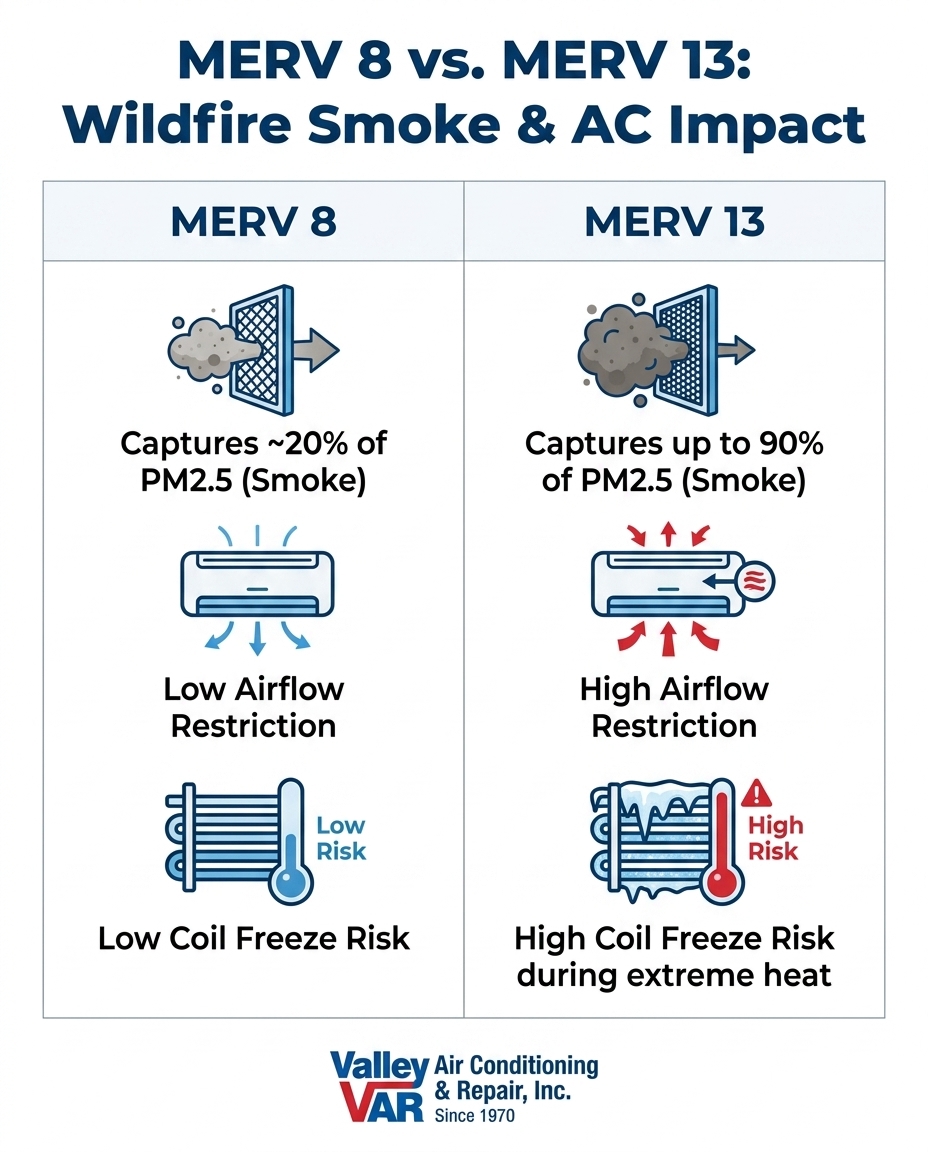
To help you weigh your options during the Central Valley wildfire season, it helps to look at the exact differences between these two filtration standards. The right choice depends entirely on balancing your need for clean air with your equipment's tolerance for static pressure.
• PM2.5 (Smoke) Capture Rate — Standard MERV 8 Filter: Captures roughly 20% of fine smoke particles. — High-Efficiency MERV 13 Filter: Captures up to 90% of fine smoke particles.
• Airflow Restriction — Standard MERV 8 Filter: Low resistance; allows maximum airflow for cooling. — High-Efficiency MERV 13 Filter: High resistance; significantly increases static pressure.
• Coil Freeze Risk — Standard MERV 8 Filter: Very low, assuming the filter is changed regularly. — High-Efficiency MERV 13 Filter: High, especially during extreme heat and continuous AC operation.
• Replacement Frequency (Smoke Events) — Standard MERV 8 Filter: Requires replacement every 2 to 4 weeks. — High-Efficiency MERV 13 Filter: Requires replacement every 2 to 3 weeks as it clogs rapidly.
• Best Use Case — Standard MERV 8 Filter: Protecting HVAC equipment in older or single-stage systems. — High-Efficiency MERV 13 Filter: Protecting respiratory health in variable-speed, modern systems.
Deciding which filter to use requires pragmatic local expertise that protects both your respiratory health and your expensive AC compressor. There is no blanket "buy MERV 13" recommendation that applies to every home in Fresno CA. Instead, you need to evaluate your specific equipment.
Certain modern HVAC configurations are designed to overcome high static pressure. If your system features a variable-speed blower motor, it can automatically ramp up its RPMs to compensate for the restrictive filter media. Additionally, if you have a 4-inch or 5-inch media filter cabinet rather than a standard 1-inch slot, you are in a much better position. A 4-inch MERV 13 filter has significantly more surface area than a 1-inch version, which spreads out the airflow resistance and drastically lowers the static pressure penalty. If you have had recent professional airflow testing confirming your ductwork is adequately sized, a MERV 13 is likely safe to use.
If you live in an older home with original ductwork, or if your system uses a standard single-stage blower motor, you should generally avoid MERV 13 filters. Systems restricted to 1-inch filter slots simply do not have the surface area to support dense media without choking the airflow. Furthermore, if you have a history of frozen evaporator coils, warm air blowing from your vents, or frequent system overheating, upgrading your filter will only exacerbate those mechanical failures.
Most homeowners don't realize that you don't have to rely solely on your central HVAC system to clean your air. The safest and most effective hybrid strategy is to use a standard MERV 8 filter in your central ductwork to protect the compressor and maintain maximum cooling airflow. Then, deploy standalone HEPA air purifiers in the rooms you occupy most, such as bedrooms and the living room. HEPA purifiers handle the heavy lifting of removing PM2.5 smoke particles without putting a single ounce of strain on your central air conditioner.
The most important step you can take is having a professional evaluate your static pressure capabilities during your pre-season AC preparation, long before the smoke settles into the valley.
Surviving heavy smoke events requires adjusting your maintenance habits. When the air quality index (AQI) reaches hazardous levels during the Central Valley wildfire season, your HVAC system is pulling in a massive volume of debris. To protect your equipment and keep your indoor air as clean as possible, follow these operational guidelines:
• Increase replacement frequency: Change your filters much more frequently during heavy smoke events. Regardless of whether you use a MERV 8 or a MERV 13, you should be checking the filter weekly and replacing it every 2 to 3 weeks. A clogged MERV 8 will restrict airflow just as badly as a brand new MERV 13.
• Adjust your thermostat fan settings: If your system has been evaluated and can handle the static pressure, keep the HVAC fan set to 'ON' instead of 'AUTO'. This continuously circulates and filters the indoor air even when the cooling cycle cycles off, preventing smoke from settling in your home.
• Maximize available airflow: Ensure all return vents and supply registers remain completely unblocked. Moving furniture, rugs, or curtains away from vents reduces secondary static pressure, making it easier for the blower motor to pull air through the filter.
• Keep the blower motor clean: A blower wheel caked in fine dust loses its ability to cup and push air effectively. Schedule a routine HVAC maintenance plan to ensure the motor and internal components are professionally cleaned and operating at peak efficiency before the extreme heat arrives.
It can, if the system's blower motor is not designed to handle the increased static pressure, leading to overheating or frozen coils. Older single-stage motors and systems with undersized ductwork are particularly vulnerable to mechanical strain when forced to pull air through dense media. Always have your static pressure checked before upgrading during the Central Valley wildfire season.
Yes, a filter clogged with smoke particles restricts airflow over the evaporator coil, causing condensation to freeze. Without enough warm indoor air blowing across the chilled refrigerant, the temperature drops rapidly until ice forms. This ice acts as an insulator, which can eventually lead to liquid refrigerant flowing backward and destroying your compressor.
Use a standard MERV 8 filter in your central HVAC system and supplement with portable HEPA air purifiers in commonly used rooms. This hybrid approach ensures your air conditioner receives the maximum airflow it needs to keep your home cool, while the standalone units scrub the fine PM2.5 smoke particles out of your breathing space.
During heavy smoke events, check filters weekly and replace them every 2 to 4 weeks to prevent severe airflow restriction. The sheer volume of ash and particulate matter in the air can clog a brand-new filter in a matter of days, drastically increasing static pressure and putting your cooling equipment at risk.
MERV 8 protects the HVAC equipment from dust and debris but captures very little of the fine PM2.5 particles found in wildfire smoke. While it will keep your blower motor and evaporator coil clean, it will not significantly improve your indoor air quality or protect your respiratory health during a heavy smoke event without secondary purification.
Surviving the harsh reality of summer in Fresno CA requires balancing the need for clean, breathable air with the mechanical realities of extreme heat. You cannot afford to sacrifice your air conditioner's airflow just to filter out smoke, because a frozen evaporator coil will leave you stranded in 105-degree weather. By understanding the static pressure limits of your specific equipment, you can implement a filtration strategy that works.
You don't have to choose between breathing clean air and keeping your AC running smoothly. Whether that means upgrading to a 4-inch media cabinet or utilizing a hybrid approach with standalone purifiers, a clear decision framework makes all the difference. Reach out to an expert to evaluate your system's static pressure capabilities and ensure you have the right strategy in place for the next wave of MERV 8 vs. MERV 13 filters during Central Valley wildfire season.

As a business with many AC units, it is essential to have a responsive AC company. Valley Air Conditioning understands our needs. They are always responsive and our AC is up and running very quickly.
I had them do an AC check on the home I was buying, they were honest and quick. I hired them to do the summer and Fall maintenance for $149. Happy with this company!
100% recommend. I called, same day they came out and gave me estimate. Conley was honest and didn't try to recommend/sell us anything we didn't need. When I called him with questions before making a decision, he happily answered and was not annoyed by me contacting him. Conley and VAR
This is a group of good people. Very professional and knowledgeable. They take the time to listen and find the best solution that fits best for any situation. There's no way you can go wrong in choosing VAR.
We have used Valley Air for over fifteen years. The last two years ,Matt came to our house to service twice a year. Always on time, so polite and so professional. This is a very honest company and you can always depend on them and trust them. The office always treats everyone cheerfully and always want to do what you need done very fast YOU CAN COUNT ON THIS Company