.webp)


How a Cracked Heat Exchanger Develops Over Years of Heating Cycles
Your furnace may have worked perfectly last spring, but invisible metal fatigue happens while it sits dormant. Understand the hidden risks before the first fall freeze.
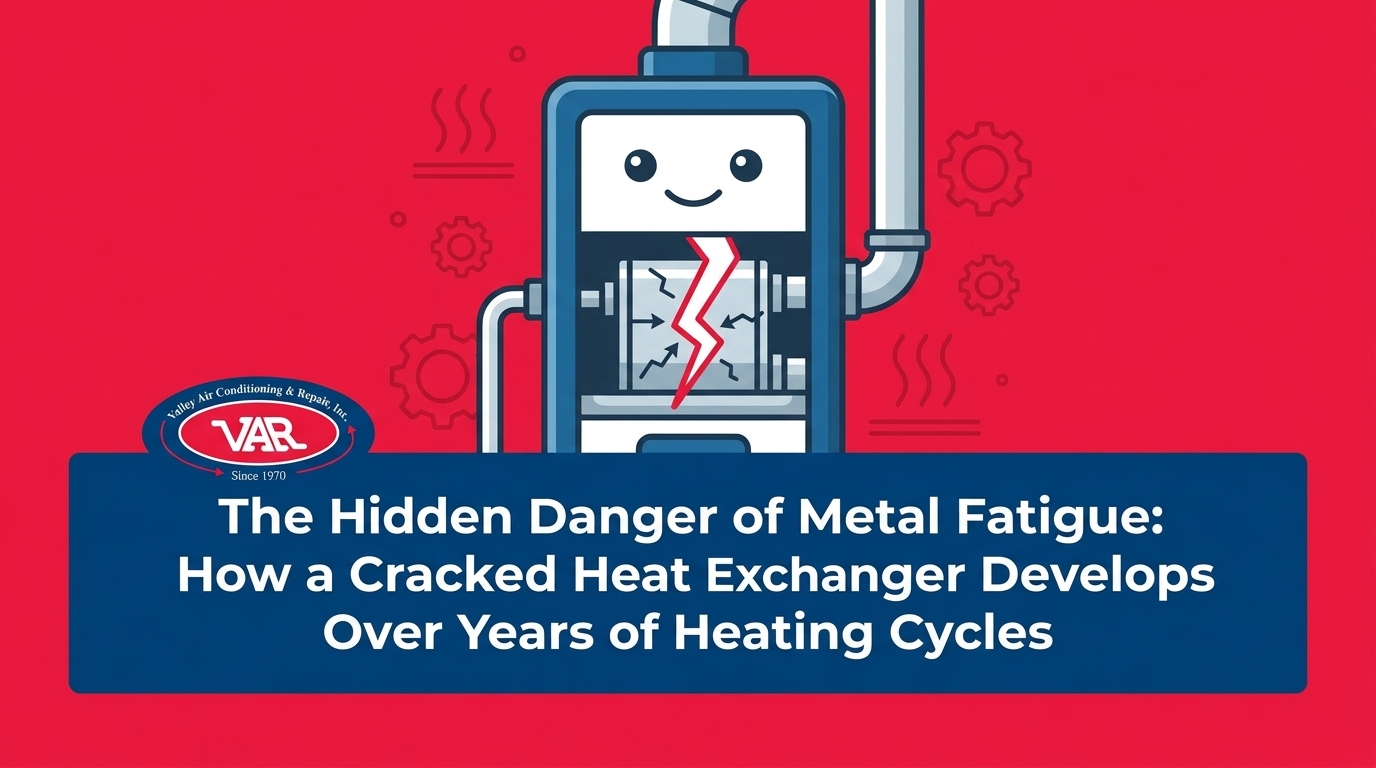
Your heating system may have run perfectly when you finally shut it down last spring, but understanding exactly how a cracked heat exchanger develops over years of heating cycles reveals a hidden problem that does not go away during the off-season. Homeowners often assume that a dormant furnace is a safe furnace. In reality, the most critical components of your heating equipment endure invisible wear and tear that can silently worsen while the system sits unused over the summer months.
To ensure your home is fully prepared for the early fall pre-heating transition, it is critical to secure professional heating services before the first cold morning arrives. Catching mechanical wear early is the absolute best way to prevent a sudden safety hazard when you need your system the most.
Understanding this mechanical wear is the key to protecting your household. Metal fatigue is not a sign of a defective unit; it is an inevitable result of how heating systems operate over time. When your furnace sits idle, residual moisture and natural settling can exacerbate the microscopic stress fractures that formed during the previous winter. By the time you turn the thermostat up for the first real chill of autumn, those tiny weaknesses may have expanded into serious vulnerabilities.
While your air conditioner works overtime, your furnace is technically off, but it is still subjected to environmental changes. Here is what happens during those quiet months:
• Residual condensation: Moisture from summer humidity can settle on the metal components, leading to minor surface oxidation that weakens stressed areas.
• Dust accumulation: Airborne particles settle directly on the burners and the heat exchanger surface, creating an insulating layer that will cause the metal to heat unevenly when first ignited.
• Temperature fluctuations: Even without the burners firing, the ambient temperature in your attic or garage fluctuates daily, causing microscopic shifting in the metal housing.
Because these changes happen out of sight, homeowners are often caught off guard when a seemingly healthy furnace fails its first safety check of the season.
To grasp why metal fatigue is so dangerous, you first need to understand the role of the heat exchanger. This component is the primary safety wall in your entire HVAC system. It acts as a solid metal barrier separating the breathable air circulating through your living room from the toxic combustion gases created by the burners.
Without a healthy heat exchanger, you face a direct risk of combustion gas leaks and carbon monoxide risks. Protecting this barrier is exactly why establishing a routine heating maintenance plan is so highly recommended by industry professionals.
The heat transfer process itself is an intense mechanical operation. When your thermostat calls for heat, the burners ignite inside the hollow chambers of the heat exchanger. The metal barrier quickly absorbs this intense heat. Next, your system's blower fan activates, pushing cold indoor air over the outside of these hot metal chambers. The air absorbs the heat from the metal and is then pushed through your ductwork to warm your home. At no point should the breathable air ever touch the actual flames or the exhaust gases inside the chamber.
The job of a heat exchanger is incredibly demanding because it must manage two extreme temperatures simultaneously. Consider the environment inside your furnace during a standard heating cycle:
• The interior chamber: Burner flames blast the inside of the metal, creating temperatures that can easily exceed several hundred degrees Fahrenheit in a matter of seconds.
• The exterior surface: At the exact same time, the blower fan forces 60-degree return air across the outside of the metal to be warmed.
This massive temperature differential places immense structural stress on the metal. The material must be robust enough to contain the toxic exhaust, yet conductive enough to transfer heat efficiently. Over thousands of cycles, this balancing act takes a heavy toll on the structural integrity of the steel or aluminized metal.
The core issue behind heat exchanger failure comes down to a basic law of physics: thermal expansion. When metal is heated by the burners, it expands. When the cycle ends and the metal cools down, it contracts back to its original shape. This continuous expansion and contraction happens every single time your furnace turns on and off.
Think of it like bending a metal paperclip back and forth. You can bend it a dozen times without any visible issue, but eventually, the continuous stress weakens the structural integrity of the metal, and it snaps. Your heat exchanger operates on the exact same principle, just on a much larger and hotter scale. Thousands of these heating cycles occur in a single season, accumulating stress over years of operation. This is a natural physical reality that affects all furnaces, regardless of the brand, the model, or the initial quality of the installation.
The breakdown of a heat exchanger does not happen overnight. It begins at a microscopic level where stress fractures start to form along the seams, curves, and weakest points of the metal. These initial micro-cracks are completely invisible to the naked eye, yet they fundamentally compromise the metal's strength.
As the furnace continues to operate through the early fall pre-heating transition and into the colder months, the daily thermal expansion forces these microscopic fissures to open slightly wider. When the metal cools, the cracks close back up. Over years of use, this constant flexing causes the micro-cracks to grow, eventually breaching the full thickness of the metal wall.
• Years 1-5 — State of the Heat Exchanger: Metal expands and contracts smoothly. No significant fatigue. — Safety Risk Level: Low (Assuming proper airflow and maintenance)
• Years 6-10 — State of the Heat Exchanger: Microscopic stress fractures begin to form at high-stress curves and seams. — Safety Risk Level: Moderate (Requires close monitoring during annual tune-ups)
• Years 11-15+ — State of the Heat Exchanger: Micro-cracks deepen and may breach the metal entirely during expansion. — Safety Risk Level: High (Elevated risk of carbon monoxide exposure)

It is easy to assume that furnaces only wear out quickly in deep-freeze climates where the snow piles high and the heater runs for days on end. However, the physics of metal fatigue actually tell a different story. Mild climates with drastic daily temperature swings can be exceptionally harsh on heating equipment.
Take the climate in Fresno CA, for example. During the late fall and winter, it is common to experience chilly mornings in the low 40s followed by mild, sunny afternoons that reach into the 60s or 70s. This drastic diurnal temperature variation forces the furnace to operate in short, frequent bursts rather than long, steady cycles.
When the morning is cold, your thermostat calls for heat, and the heat exchanger rapidly expands. A few hours later, the sun warms the house, the thermostat shuts the system down, and the metal rapidly contracts. This rapid, frequent expansion and contraction is known as short-cycling, and it accelerates metal fatigue significantly faster than steady, prolonged heating.
In a deep-freeze climate, a furnace might turn on and stay on for hours, meaning the metal expands once and stays expanded until the house reaches a stable temperature. In regions with large daily temperature swings, the metal is constantly expanding, contracting, expanding, and contracting. This acts exactly like rapidly bending that paperclip back and forth. Because of this localized climate factor, regular inspections are incredibly critical for homeowners in areas with high daily temperature variations.
A crack in your heat exchanger is not just a mechanical failure; it is a severe health hazard. Once those micro-cracks breach the full thickness of the metal, the separation between the breathable air and the toxic exhaust is gone. This is where the physics of metal fatigue bridge directly to life safety.
As the furnace operates, the powerful blower fan creates positive pressure over the exterior of the heat exchanger. This pressure can actually force breathable air through the newly formed cracks and into the combustion chamber. When this happens, it alters the delicate oxygen balance of the burner flame. The flame begins to burn improperly, which creates excess soot and drastically increases the production of carbon monoxide.
If the situation worsens, the pressure dynamics can flip, allowing carbon monoxide to escape out of the combustion chamber, mix with the home's breathing air, and circulate through your vents. If an inspection reveals a breached heat exchanger, pursuing an HVAC system replacement is often the only responsible path forward to protect the household.
Carbon monoxide is an odorless, colorless, and tasteless gas. You cannot see it, and you cannot smell it. According to CDC data, non-fire-related carbon monoxide poisoning is responsible for hundreds of fatalities and thousands of emergency room visits annually in the United States. Because the symptoms of CO exposure—headaches, dizziness, nausea, and fatigue—mimic the common flu, many homeowners do not realize they are in danger until it is too late.
Warning signs of a compromised heat exchanger include:
• Soot buildup: Black soot accumulating around the furnace cabinet or registers indicates improper combustion.
• Unusual odors: While CO is odorless, the other exhaust gases escaping with it often smell similar to formaldehyde or sulfur.
• Flame discoloration: A healthy burner flame should be steady and blue. A flickering, yellow, or dancing flame often indicates a cracked heat exchanger altering the oxygen flow.
• Water pooling: Unexplained moisture around the base of the furnace can signal that escaping combustion gases are condensing outside the exhaust flue.
One of the most dangerous myths in home maintenance is that a visual inspection is enough to declare a furnace safe. A technician shining a standard flashlight into the burner compartment can only see a small fraction of the heat exchanger's surface area. Because the component is tightly coiled and hidden deep inside the cabinet, the vast majority of the metal is completely obscured from view.
Furthermore, the stress fractures caused by metal fatigue are often microscopic when the metal is cold. A crack that opens up to a millimeter wide when the furnace is blasting at full heat might close up so tightly when the system is off that it becomes virtually invisible to the naked eye. This is why basic visual checks often miss the early stages of combustion gas leaks and carbon monoxide risks.
To truly verify the integrity of a heat exchanger, licensed professionals rely on advanced diagnostic tools. Valley Air Conditioning & Repair utilizes rigorous diagnostic equipment, including advanced combustion analyzers, to perform comprehensive safety checks. This scientific method detects invisible breaches long before they become a severe carbon monoxide threat.
A combustion analyzer features a specialized probe that is inserted directly into the exhaust flue while the furnace is running. The tool measures the exact chemical makeup of the exhaust gases in real-time. If the oxygen levels fluctuate unexpectedly when the blower fan turns on, or if the carbon monoxide parts-per-million (PPM) spike beyond safe thresholds, the technician immediately knows the heat exchanger is compromised—even if the crack is completely hidden from view.
• Basic Visual Check — What It Detects: Large, gaping holes or heavy rust on visible surfaces. — Limitations: Cannot see 80% of the metal; misses microscopic cracks that close when cold.
• Combustion Analysis — What It Detects: Exact chemical makeup of exhaust; real-time oxygen and CO levels. — Limitations: Requires specialized, calibrated equipment and advanced training to interpret data.
• Infrared Camera — What It Detects: Heat signatures and localized hot spots on the metal. — Limitations: Can only detect issues on the surfaces the camera lens can physically reach.
Because these diagnostics require handling live combustion gases and interpreting complex chemical data, DIY inspections are strongly discouraged. Only licensed professionals have the equipment and training necessary to verify heat exchanger integrity safely.
The average lifespan of a well-maintained gas furnace is typically between 15 and 20 years. However, as the system ages, the risk of metal fatigue increases exponentially. The metal has endured tens of thousands of expansion and contraction cycles, meaning an older furnace requires much closer monitoring than a brand-new installation.
One of the biggest factors that accelerates heat exchanger failure is restricted airflow. If your furnace filter is clogged, or if the blower motor is failing, the system cannot push enough cold air over the metal to cool it down during the cycle. This causes the heat exchanger to overheat, drastically increasing the thermal stress and causing micro-cracks to form much earlier in the system's lifespan. Proactive cleaning and maintenance eliminate these airflow restrictions, keeping the metal within its safe operating temperatures.
Consistent, professional upkeep can keep even a decade-old system running safely and efficiently. A typical pattern we see involves older systems that receive rigorous, routine care. For example, one local property owner has relied on ongoing preventive maintenance and thorough heat exchanger cleanings to manage a 13-year-old unit. By addressing minor wear early and ensuring perfect airflow, that aging unit has been kept in like-new working condition, safely managing the early fall pre-heating transition year after year.
If your system is approaching the double digits in age, scheduling comprehensive fall maintenance for aging furnaces is the smartest move you can make. Do not wait for the first real cold snap to put maximum strain on a system that hasn't been evaluated since last winter.
Understanding the physics of your furnace empowers you to make smarter safety decisions for your home. Metal fatigue is an invisible, inevitable process, but it does not have to be a dangerous one if you stay ahead of the curve. The extreme temperature fluctuations during the early fall pre-heating transition demand that your equipment is in peak condition.
True peace of mind comes from knowing your heat exchanger is fully intact and professionally verified by advanced combustion analysis. As the colder weather approaches, take the time to explore routine maintenance options. By prioritizing a thorough professional inspection now, you safeguard your home, protect your indoor air quality, and ensure a warm, safe season for your entire household.
A furnace heat exchanger cracks due to continuous thermal expansion and contraction over years of use. Every time the burners ignite, the metal expands from the intense heat, and when the cycle ends, it cools and contracts. Over thousands of heating cycles, this constant flexing causes metal fatigue, leading to microscopic stress fractures that eventually widen into full cracks. Poor airflow from dirty filters can also cause the metal to overheat, accelerating this cracking process.
A cracked heat exchanger is dangerous because it removes the protective barrier between the breathable air in your home and the toxic exhaust gases created by the furnace burners. When the metal breaches, carbon monoxide, sulfur dioxide, and other harmful combustion byproducts can escape into the ductwork and circulate through your living spaces. Because carbon monoxide is an odorless and colorless gas, a leak can quickly become a life-threatening safety hazard without the homeowners ever realizing it.
Knowing if your heat exchanger is bad usually requires professional diagnostic tools, but there are a few warning signs you can look for. If you notice black soot building up around the furnace cabinet, strange odors resembling formaldehyde, or a yellow, flickering burner flame instead of a steady blue one, the heat exchanger may be compromised. However, because microscopic cracks are often invisible to the naked eye, a professional combustion analysis is the only definitive way to know if the component has failed.
No, a cracked heat exchanger cannot be safely repaired or welded. The extreme temperature fluctuations and constant thermal expansion inside a furnace will quickly break any weld or patch applied to the metal. Industry safety standards dictate that once a heat exchanger is cracked, the only acceptable solutions are to replace the heat exchanger component entirely or to replace the entire furnace unit to ensure the household's safety.
A furnace heat exchanger should be inspected at least once a year, ideally during the early fall before the heavy heating season begins. Annual inspections allow technicians to monitor the metal for early signs of fatigue and ensure the burners are operating efficiently. For furnaces that are over ten years old, this annual check is absolutely vital, as the accumulated wear and tear drastically increases the likelihood of stress fractures forming.

As a business with many AC units, it is essential to have a responsive AC company. Valley Air Conditioning understands our needs. They are always responsive and our AC is up and running very quickly.
I had them do an AC check on the home I was buying, they were honest and quick. I hired them to do the summer and Fall maintenance for $149. Happy with this company!
100% recommend. I called, same day they came out and gave me estimate. Conley was honest and didn't try to recommend/sell us anything we didn't need. When I called him with questions before making a decision, he happily answered and was not annoyed by me contacting him. Conley and VAR
This is a group of good people. Very professional and knowledgeable. They take the time to listen and find the best solution that fits best for any situation. There's no way you can go wrong in choosing VAR.
We have used Valley Air for over fifteen years. The last two years ,Matt came to our house to service twice a year. Always on time, so polite and so professional. This is a very honest company and you can always depend on them and trust them. The office always treats everyone cheerfully and always want to do what you need done very fast YOU CAN COUNT ON THIS Company