.webp)


How Your Furnace Flame Sensor Dictates Safe Operation
If your heating system fires up only to shut down seconds later, a dirty flame sensor is likely to blame. See why this tiny rod triggers a strict safety lockout.

Are you wondering, is condensation on my home's AC ductwork normal in July? If you have recently popped your head into the attic to grab a stored item or investigate a noise, only to find water droplets gleaming on your ductwork, your immediate reaction might be panic. Finding unexpected moisture anywhere in your house during the July peak summer heat is alarming, especially when it is hovering directly above your ceilings. You rely heavily on your air conditioning system to keep your living space comfortable, and seeing it sweat profusely can make you question if a major breakdown is imminent.
The short answer is that while a tiny amount of surface dampness can occur under extreme conditions, significant condensation is usually a warning sign. The core decision point you face right now is determining whether this moisture is a harmless physical reaction to the sweltering heat, or a clear indicator of compromised duct insulation and airflow issues. Before you assume the worst about your system, it helps to understand exactly what is happening in the dark, overheated space above your ceiling. Diagnosing the issue without panic starts with looking at the extreme temperature clashes occurring inside your home.
To understand why your ducts are sweating, you have to look at the basic physics of the dew point. The dew point is simply the temperature at which air can no longer hold all of its water vapor, forcing some of that moisture to condense into liquid water. You see this exact same scientific principle in action when you take a freezing cold glass of ice water outside on a warm afternoon. Within minutes, the outside of the glass is covered in sweat. The glass isn't leaking; the cold surface is simply pulling moisture out of the warmer surrounding air.
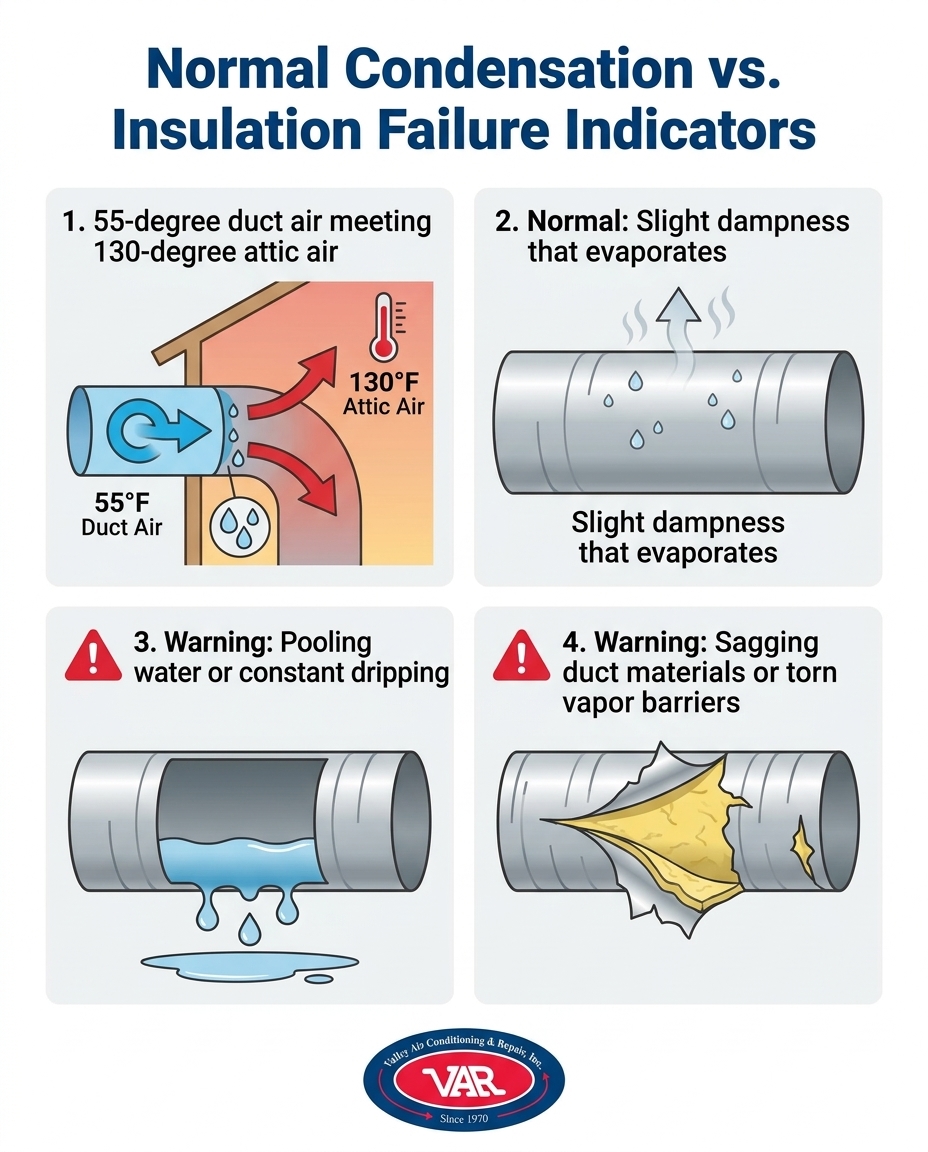
Your attic ductwork operates on the exact same principle, just on a much larger and more complex scale. During the summer, your air conditioner is pushing chilled, conditioned air—usually sitting right around 55 to 60 degrees Fahrenheit—through those metallic or flexible tubes. Meanwhile, the environment outside those tubes is punishingly hot. It is incredibly common to see triple-digit attic temperatures, often soaring between 130 and 150 degrees Fahrenheit during the peak of the afternoon. This creates a massive temperature differential of 70 degrees or more.
Understanding how your existing ductwork affects your AC is heavily tied to this temperature clash. The insulation wrapped around your ducts is the only barrier preventing that 55-degree air from directly chilling the outer jacket of the duct to the point where it meets the 130-degree air. When that insulation is intact, thick, and properly sealed, the outer surface of the duct stays close to the ambient attic temperature, and no condensation forms. However, when that barrier is thin, compressed, or torn, the cold escapes to the outer layer, dropping the surface temperature below the dew point, and the sweating begins.
If you search online for advice about sweating ducts, you will often find articles written for homeowners in Florida, Texas, or the deep South. In those high-humidity climates, the ambient air is so saturated with moisture that even perfectly insulated ducts might develop a light layer of condensation on a particularly muggy day. The dew point in those regions is incredibly high, meaning it doesn't take much of a temperature drop to create water droplets.
However, the climate context for Fresno area homes is entirely different. The Central Valley is famous for its extreme, baking dry heat. During our summer heatwaves, the ambient outdoor humidity is typically very low. Because the air is dry, the dew point is much lower, which means a surface has to get significantly colder to pull moisture out of the air.
This regional difference is highly critical for your diagnosis. In our dry summer heat, significant condensation on your attic ductwork is almost never just a harmless weather anomaly. Because there is so little moisture in the ambient air to begin with, excessive sweating points directly to a severe mechanical warning sign. It means the temperature clash is so extreme—either because the insulation has completely failed or the duct surface is freezing cold—that it is forcing what little moisture exists in the attic air to condense. In the Central Valley, sweaty ducts are an immediate red flag for an insulation breach, not just a byproduct of the afternoon weather.
When you are inspecting your attic during triple-digit attic temperatures, safety is your top priority. You should never attempt to cut into your ductwork, peel back the outer vapor barrier, or blindly apply duct tape to wet surfaces. However, you can use safe, visual indicators to assess the severity of the condensation and determine if you need professional intervention. The table below breaks down what you might see and what it actually means for your system.
• Minor Surface Dampness — What It Looks Like: A slight, barely visible sheen of moisture on the outer silver jacket that evaporates as the day cools. — What It Means: Normal micro-climate reaction to extreme heat; insulation is likely intact. — Recommended Action: Monitor for a few days to ensure it does not worsen.
• Pooling Water — What It Looks Like: Visible puddles forming on the attic floor, insulation, or ceiling joists directly beneath the ducts. — What It Means: Severe insulation failure or a significant tear in the vapor barrier causing heavy condensation. — Recommended Action: Call a professional for AC troubleshooting immediately.
• Constant Dripping — What It Looks Like: Water actively dripping from the lowest points of the ductwork or from taped joints. — What It Means: The temperature barrier has failed entirely, or cold air is leaking directly into the attic space. — Recommended Action: Requires immediate professional sealing and re-insulating.
• Sagging Materials — What It Looks Like: The flexible ductwork looks heavy, droopy, or is resting heavily on the attic floor. — What It Means: Water has saturated the inner fiberglass insulation, destroying its thermal resistance and adding massive weight. — Recommended Action: Professional replacement of the compromised duct sections is necessary.
• Torn Vapor Barriers — What It Looks Like: Visible rips, tears, or peeling tape on the outer silver or black plastic jacket of the duct. — What It Means: Humid attic air is bypassing the protective layer and hitting the cold inner core directly. — Recommended Action: Professional repair and resealing of the vapor barrier.
While failing insulation is the most common culprit for sweating ducts, it is not the only mechanical issue that can cause this problem. Sometimes, the insulation is perfectly fine, but other factors are altering the temperature equation in your attic. During the July peak summer, these secondary causes can force your system to work harder, eventually leading to a condensation crisis.
1. Assess your attic ventilation: Trapped heat drastically raises the temperature of the air surrounding the ducts.
2. Check for airflow restrictions: Blocked air inside the ducts makes the surfaces unusually cold.
3. Inspect for frozen evaporator coils: A freezing system sends dangerously cold air through the network.
Your attic needs to breathe. Roof vents, soffit vents, and gable vents are designed to allow the superheated air to escape and draw in relatively cooler outside air. When these vents are blocked by blown-in insulation, debris, or poor construction, the heat becomes trapped. This trapped heat not only pushes the attic temperature to dangerous extremes, but it also raises the dew point threshold. Proper venting allows the attic to cycle air efficiently, reducing the surface temperature extremes that cause your ducts to sweat.
Condensation happens when the duct surface gets too cold. But why would it get colder than normal? The answer usually lies in restricted airflow. When your AC blower pushes cold air into the ducts, that air is supposed to travel quickly into your living spaces. If you have a clogged air filter, closed supply vents, or a failing blower motor, the cold air moves sluggishly. Because the restricted air stays in the ducts longer, it drops the surface temperature of the ductwork significantly lower than its normal operating range. Clogged filters are a primary culprit for this imbalance, turning your ducts into ice-cold condensation magnets.
It can be tempting to close the attic hatch, ignore the sweating ducts, and hope the problem resolves itself when the weather cools down. However, leaving severe condensation unaddressed in Fresno area homes is a recipe for expensive, cascading damage. The water dripping from your ductwork does not just disappear; it actively degrades your home's infrastructure.
First, persistent moisture completely compromises the R-value of your duct insulation. Most residential ducts use a layer of spun fiberglass to resist heat transfer. Fiberglass works by trapping tiny pockets of air. When that fiberglass gets wet, the water displaces the air. Because water is an excellent conductor of heat, wet insulation loses almost all of its thermal resistance. Your AC system is suddenly forced to work much harder to push cold air through an uninsulated tube baking in a hot attic, driving up your energy bills and accelerating wear and tear on your compressor.
Second, gravity guarantees that the condensation will eventually fall. This leads to severe water damage to your attic floors, the wooden joists, and the drywall ceilings directly below the ductwork. Homeowners often first realize they have a duct condensation problem when an ugly, brown water stain suddenly blooms on their hallway ceiling.
Finally, dark, damp attic spaces combined with extreme heat create the perfect breeding ground for mold and mildew. If mold begins to grow on or inside the compromised ductwork, those spores can eventually be circulated into your living spaces, severely affecting your family's indoor air quality.
If you have discovered sweating ducts during the July peak summer, there are safe, immediate steps you can take to mitigate the issue without resorting to dangerous DIY repairs. Guessing about insulation failure or attempting to re-tape wet ducts yourself is never worth the risk of causing further damage to your system.
• Check your indoor air filter: Turn off your system, locate your return air filter, and inspect it. If it is caked in dust and pet hair, replace it immediately. Restoring proper airflow is the fastest way to stop ducts from getting unusually cold.
• Open all supply vents: Walk through your home and ensure that all floor, wall, and ceiling registers are fully open and unblocked by furniture or rugs. Closing vents in unused rooms does not save energy; it restricts airflow and causes cold air to back up into the attic ducts.
• Monitor the condensation safely: After changing the filter and opening vents, wait 24 hours. Check the attic again using a flashlight from a safe vantage point. If the dripping has stopped, airflow was likely the culprit.
• Schedule a professional evaluation: If the condensation persists, puddles are forming, or the ducts look sagging and damaged, it is time to stop troubleshooting. You need to schedule an AC system inspection.
Working with a local expert who intimately understands Central Valley heat stress ensures you get an accurate diagnosis. A professional technician can quickly determine whether the issue is a simple airflow restriction, a failing blower motor, or degraded insulation that needs to be completely replaced.
Cold conditioned air is cooling the duct's exterior below the dew point of the surrounding hot attic air. When the 55-degree air inside the duct chills the outer surface, any moisture in the 130-degree attic air condenses into liquid water. This physical reaction is heavily exacerbated by contributing factors like compressed, failing insulation or restricted airflow that makes the ducts colder than they should be.
While a tiny amount of dampness can occur during extreme heatwaves, pooling water or constant dripping is bad. Persistent condensation indicates that your system is suffering from severe energy loss, as the cold air is being affected by the attic heat before it ever reaches your living room. Furthermore, constant dripping risks severe water damage to your ceilings, drywall, and attic joists.
The most effective way is to ensure the ducts are properly insulated and sealed by a professional HVAC technician. Upgrading to a higher R-value insulation prevents the cold inner air from chilling the outer jacket. Homeowners can also help stop the problem by changing their air filters regularly and keeping all interior vents open to maintain proper, fast-moving airflow.
Yes, persistent moisture from sweating ducts creates an ideal environment for mold and mildew growth. When water drips onto wooden joists, attic floorboards, or nearby blown-in insulation, it provides the hydration mold spores need to thrive in the dark heat. This can eventually compromise your home's structural integrity and your indoor air quality if the duct system has any return leaks.
Yes, an oversized AC system cools the air inside your home too quickly without running long enough to remove ambient humidity. This process, known as short-cycling, creates massive, rapid temperature drops inside the ductwork while leaving the surrounding environment unstable. This operational imbalance can heavily contribute to temperature clashes and accelerated sweating in the attic.
Poor ventilation traps extreme heat, making the attic significantly hotter than it should naturally be during the summer. When triple-digit attic temperatures are allowed to climb unchecked, it widens the temperature gap between the ambient air and the chilled ducts. Proper roof and soffit ventilation allows the attic to breathe, lowering the ambient temperature and reducing the severity of the condensation.
Discovering wet, dripping ductwork in your attic is stressful, but guessing about the cause isn't worth the risk of extensive water damage to your home. Whether the issue stems from a clogged filter restricting your airflow or a complete failure of your ductwork's thermal barrier, identifying the root cause quickly is essential for protecting your property. If you are dealing with persistent condensation in your Fresno area homes, it is time to secure peace of mind. Reach out for professional AC repair today to get a clear, non-alarmist explanation of your system's health, so you know exactly what needs to be fixed to keep your home cool and dry all summer long.

As a business with many AC units, it is essential to have a responsive AC company. Valley Air Conditioning understands our needs. They are always responsive and our AC is up and running very quickly.
I had them do an AC check on the home I was buying, they were honest and quick. I hired them to do the summer and Fall maintenance for $149. Happy with this company!
100% recommend. I called, same day they came out and gave me estimate. Conley was honest and didn't try to recommend/sell us anything we didn't need. When I called him with questions before making a decision, he happily answered and was not annoyed by me contacting him. Conley and VAR
This is a group of good people. Very professional and knowledgeable. They take the time to listen and find the best solution that fits best for any situation. There's no way you can go wrong in choosing VAR.
We have used Valley Air for over fifteen years. The last two years ,Matt came to our house to service twice a year. Always on time, so polite and so professional. This is a very honest company and you can always depend on them and trust them. The office always treats everyone cheerfully and always want to do what you need done very fast YOU CAN COUNT ON THIS Company