Your Quick Guide to Residential Heating Installation in Clovis, CA
Residential heating installation in Clovis, CA is something many homeowners face when their old system starts failing — especially as the Central Valley's cool winters set in. Clovis winters are mild compared to much of the country, but nighttime temperatures regularly dip into the low 30s and 40s. When your heating system isn't up to the job, home comfort drops fast.
Here's a quick overview of what residential heating installation in Clovis involves:
- Choose the right system - Gas furnaces, heat pumps, and ductless mini-splits are all common options for Clovis homes
- Size it correctly - A system too large or too small wastes energy and wears out faster
- Hire a licensed contractor - Professional installation protects your warranty and keeps your home safe
- Prepare your home - Clear the work area and schedule a home assessment before installation day
- Understand your warranty - Reputable local companies offer strong coverage on new systems
- Look into rebates - California and local utilities offer energy efficiency incentives for qualifying equipment
Choosing the right heating system — and getting it installed properly — makes a real difference in your comfort, your energy bills, and your indoor air quality for years to come.
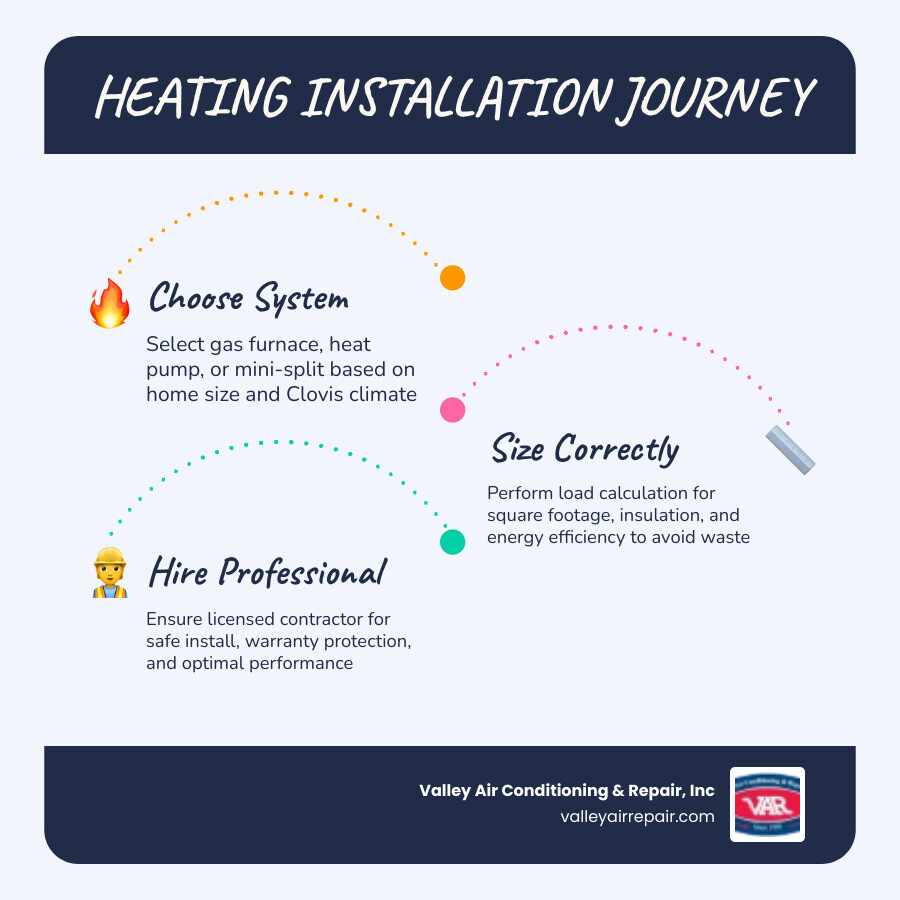
Simple guide to residential heating installation in clovis, ca:
When to Consider Residential Heating Installation in Clovis, CA
Deciding whether to patch up an old heater or invest in a new one is a common dilemma for homeowners in "the Valley." While we all love a good DIY fix, there comes a point where a total system replacement is the only logical choice for your wallet and your sanity.
One of the primary factors is system age. Most traditional gas furnaces have a life expectancy of about 15 to 20 years. If your unit was installed back when the Spice Girls were topping the charts, it’s likely running on borrowed time. Heat pumps generally have a slightly shorter lifespan of 10 to 15 years because they pull double duty, providing both heating and cooling year-round.
Another major red flag is the "frequent repair" cycle. If you find yourself calling for Heating Repair Clovis CA every other month, those service fees are essentially a down payment on a new system that you aren't getting. A good rule of thumb: if a single repair costs more than half the price of a new unit, it’s time to upgrade.
Warning Signs Your System is Failing
Beyond the age of the unit, keep an ear (and a nose) out for these symptoms:
- Rising Utility Bills: If your PG&E bill is skyrocketing but you haven't changed your habits, your heater is likely losing its efficiency.
- Strange Noises: Banging, rattling, or screeching sounds often indicate mechanical failure or a cracked heat exchanger.
- Inconsistent Temperatures: If the living room is a sauna but the bedrooms feel like the Arctic, your system can no longer distribute heat effectively.
- Yellow Burner Flames: In a gas furnace, the flame should be a crisp blue. A yellow or flickering flame can indicate incomplete combustion and the potential presence of carbon monoxide.
- Poor Indoor Air Quality: Old systems often struggle to filter out dust and allergens, leading to increased respiratory issues for your family.
If you are experiencing these issues, checking out our Heating Repair Clovis CA Guide can help you determine if a fix is possible or if you should move forward with a full installation.
Choosing the Right System for the Central Valley Climate
Clovis has a unique climate. We don't deal with the sub-zero blizzards of the Midwest, but our damp, foggy winters (hello, Tule fog!) require a reliable heat source. When looking at Heating Services, you generally have three main paths to choose from.
1. Gas FurnacesThese are the traditional workhorses of the Central Valley. They provide high-capacity heating and are very effective during those rare nights when the temperature drops toward freezing. Modern gas furnaces are incredibly efficient compared to models from two decades ago.
2. Heat PumpsHeat pumps are becoming the "gold standard" for California homes. Instead of generating heat, they transfer it from the outside air into your home. They are incredibly energy-efficient and provide both heating and cooling. Because our winters are relatively mild, a heat pump can handle Clovis weather with ease while significantly lowering your carbon footprint.
3. Ductless Mini-SplitsIf you have a home without existing ductwork, or if you’ve added a sunroom or converted a garage, ductless mini-splits are fantastic. They allow for "zoned" heating, meaning you only heat the rooms you are actually using.
Furnace vs. Heat Pump: A Comparison
| Feature | Gas Furnace | Heat Pump |
|---|
| Energy Source | Natural Gas / Propane | Electricity |
| Best For | Extreme cold / Existing gas lines | Mild climates / All-electric homes |
| Efficiency | High (measured in AFUE) | Very High (measured in HSPF) |
| Functions | Heating only | Heating & Cooling |
For more localized insights, you might find our Heating Installation Fresno Guide helpful, as the requirements for Clovis and Fresno are virtually identical.
Energy Efficiency and System Sizing for Residential Heating Installation in Clovis, CA
Efficiency isn't just a buzzword; it’s the difference between a $150 monthly bill and a $300 one. When shopping for a system, look for the AFUE (Annual Fuel Utilization Efficiency) rating. A rating of 95% means that 95 cents of every dollar spent on gas goes directly into heating your home, with only 5 cents lost to exhaust.
However, even the most efficient unit will fail if it isn't sized correctly. This is where professional HVAC Services become vital. We perform a "Manual J" load calculation, which looks at:
- Total square footage of your home.
- The quality and amount of attic insulation.
- The type and efficiency of your windows.
- The orientation of your home (how much sun it gets).
An oversized system will "short cycle," turning on and off rapidly, which wears out the motor and leaves your home feeling clammy. An undersized system will run constantly, never reaching the desired temperature and sending your energy bills through the roof.
The Professional Installation Process and Preparation
Once you've selected your system, the real work begins. Proper residential heating installation in Clovis, CA isn't just about "swapping boxes." It’s a technical process that requires precision.
To prepare for your installation day, we recommend:
- Clearing the Workspace: Ensure there is a clear path to your furnace (usually in the attic, closet, or garage) and the outdoor unit.
- Securing Pets: The noise and open doors can be stressful for furry friends, so it's best to keep them in a safe, quiet room.
- Reviewing Permits: In Clovis, a permit is required for HVAC replacements. This ensures the job is done to code and passes a safety inspection.
Our team handles the heavy lifting, including a thorough ductwork inspection. There is no point in putting a high-tech heater on old, leaky ducts—it's like trying to drink a milkshake through a straw with holes in it. If you're looking for more details on the regional standards, check out our HVAC Installation Fresno CA page.
What to Expect During Your Residential Heating Installation in Clovis, CA
On the day of the install, our technicians will arrive and begin by protecting your flooring. The process generally follows these steps:
- Old System Removal: We carefully disconnect and haul away your old, inefficient unit.
- Component Integration: We install the new furnace or heat pump, ensuring all electrical and gas line connections are secure and meet local safety codes.
- Thermostat Calibration: We’ll set up your new thermostat (and show you how to use it!).
- Rigorous Testing: We don't just turn it on and leave. We test the airflow, check for leaks, and ensure the system is cycling correctly.
- Homeowner Walkthrough: We explain the maintenance requirements and answer any questions you have about your new investment.
Our deep roots in the community mean we are familiar with specific building styles in all Clovis CA Locations, from the historic homes near Old Town to the newer developments toward the foothills.
Benefits of Professional HVAC Installation
Why not just hire a "handyman" for your residential heating installation in Clovis, CA? The risks far outweigh the initial savings. Professional installation by a licensed team like Valley Air Conditioning & Repair, Inc. offers several critical advantages:
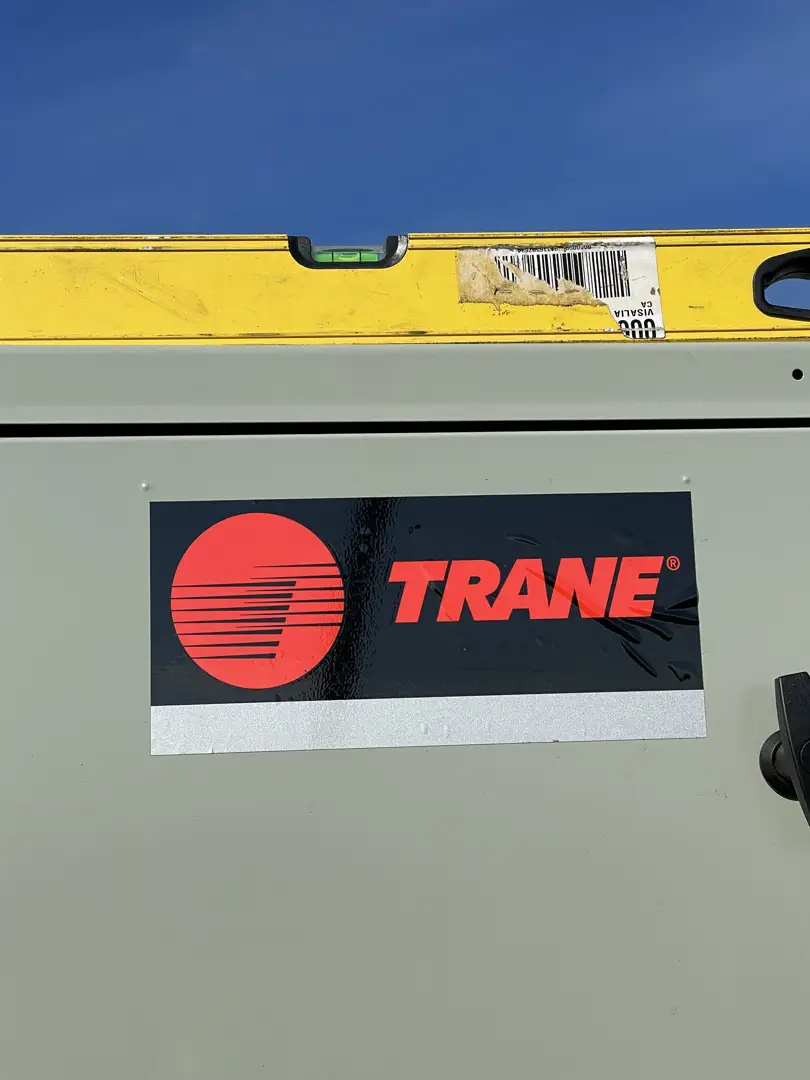
- Warranty Protection: Most manufacturers, like Trane or Lennox, require professional installation to validate their 10-year parts warranties. If a "trunk slammer" installs it and it breaks, you're on the hook for the full cost.
- Safety Standards: Dealing with natural gas and high-voltage electricity is dangerous. We ensure every connection is airtight and every wire is properly grounded to prevent fires or carbon monoxide leaks.
- Indoor Air Quality: A professional installation includes ensuring the filtration system is properly sealed, keeping Valley dust and pollen out of your lungs.
- Long-Term Reliability: A system that is installed correctly from day one will last years longer than one that was forced into place.
For a deeper dive into why quality matters, see our Best Heating Installation Clovis CA Guide. We focus on airflow optimization to ensure every room in your house stays cozy, regardless of the temperature outside. You can also explore our Heating Installation Clovis CA Guide for a step-by-step breakdown of our service commitment.
Frequently Asked Questions
How long does a typical heating installation take?
In most cases, a standard residential heating installation in Clovis, CA can be completed in a single day. If we are replacing ductwork or relocating a unit (for example, moving a furnace from a closet to the attic), it may take two days. We always aim to get your heat back on as quickly as possible so you don't have to spend a night shivering.
Which heating system is most efficient for Clovis homes?
For most Clovis residents, a high-efficiency heat pump or a hybrid "dual-fuel" system is the most efficient choice. Since our winters rarely stay below freezing for long, heat pumps operate in their "sweet spot" of maximum efficiency for most of the season. However, if you already have natural gas lines, a high-AFUE gas furnace is also a very cost-effective and reliable option.
What maintenance does a new system require?
To keep your warranty valid and your system running at peak performance, you should schedule an annual tune-up. Think of it like an oil change for your car. You should also change your air filters every 1–3 months, especially during the summer and winter when the system is running most frequently. Regular maintenance can extend the life of your system by several years.
Conclusion
At Valley Air Conditioning & Repair, Inc., we’ve spent over 55 years perfecting the art of home comfort in the Central Valley. Since 1970, our customer-first philosophy has been built on a foundation of trust and honorable intentions. We don't just see ourselves as HVAC technicians; we see ourselves as your neighbors, dedicated to keeping Clovis families warm and safe.
Whether you are dealing with a furnace that finally gave up the ghost or you are looking to slash your energy bills with a modern heat pump, we are here to help. Our team of EPA and NATE-certified experts brings decades of experience to every job, ensuring your installation is seamless, safe, and built to last.
Don't wait for the next cold snap to realize your heater isn't up to the task. Schedule your professional Residential Heating Installation in Clovis, CA today and experience the peace of mind that comes with a job done right.


.webp)