.webp)


Why Is My Heat Pump Blowing Cool Air When Set to Heat?
Testing a heat pump in early fall can be alarming if the vents produce lukewarm air. This guide explains the physics behind 85-degree supply air and when to call a professional for repairs.
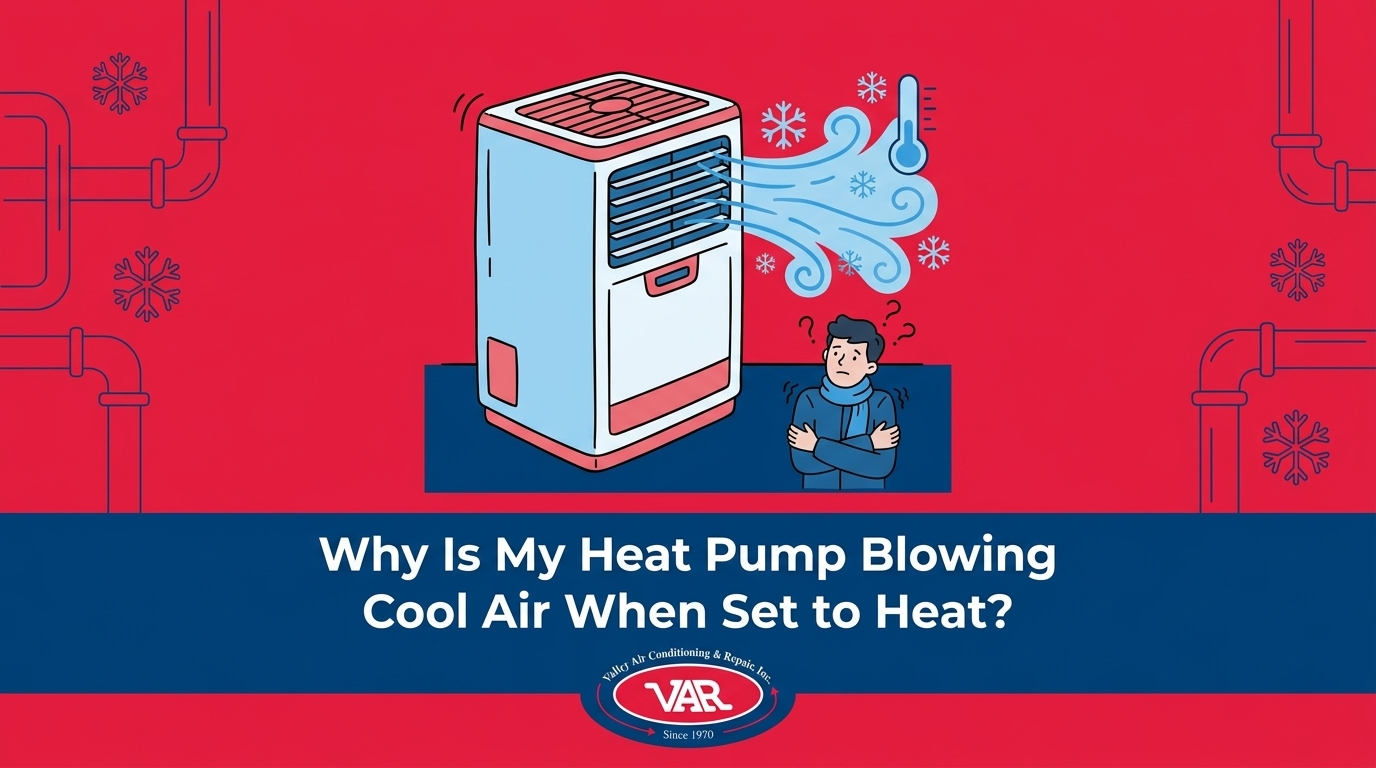
If you are standing over a vent during an early fall pre-heating-season test and wondering, "Why is my heat pump blowing cool air when set to heat?" you are not the first homeowner to ask this question. In fact, our team at Valley Air Conditioning & Repair fields dozens of these exact calls every September. As the seasons change and temperatures begin to drop here in Fresno, many people turn on their heating equipment for the first time in months, only to be met with a breeze that feels surprisingly chilly. This immediate sensation often leads to panic, with homeowners assuming their compressor has failed or their system requires a massive repair right before winter arrives.
Whether you are looking to upgrade your existing heating systems or you need immediate heat pump service to diagnose a malfunction, understanding how your equipment operates is the first step.
During an early fall pre-heating-season test, what feels like a malfunction is very often completely normal operation. We regularly explain to our customers that heat pumps do not generate heat in the same way that traditional furnaces do. Instead of burning fuel to create a massive spike in temperature, they absorb ambient heat from the outside air, compress it, and transfer it indoors. Because of this mechanical difference, the air coming out of your vents will inherently feel different than what you might expect. The core decision point for any homeowner is distinguishing between normal heat pump supply air and an actual system failure that requires professional intervention.
Traditional gas furnaces create a false standard for how hot supply air should feel. If you grew up in a home with a gas furnace, you are accustomed to blasts of scorching air filling the room. Heat pumps operate on a much more gradual, energy-efficient curve. By understanding the baseline temperatures your system is designed to produce, you can accurately assess whether your unit is simply doing its job or if it is time to call one of our licensed technicians for an inspection.
To understand why your system feels like it is blowing cold air, you have to look at the physiological difference between human skin temperature and standard heat pump supply air. In our experience, this discrepancy is the root cause of unnecessary worry during an early fall pre-heating-season test.
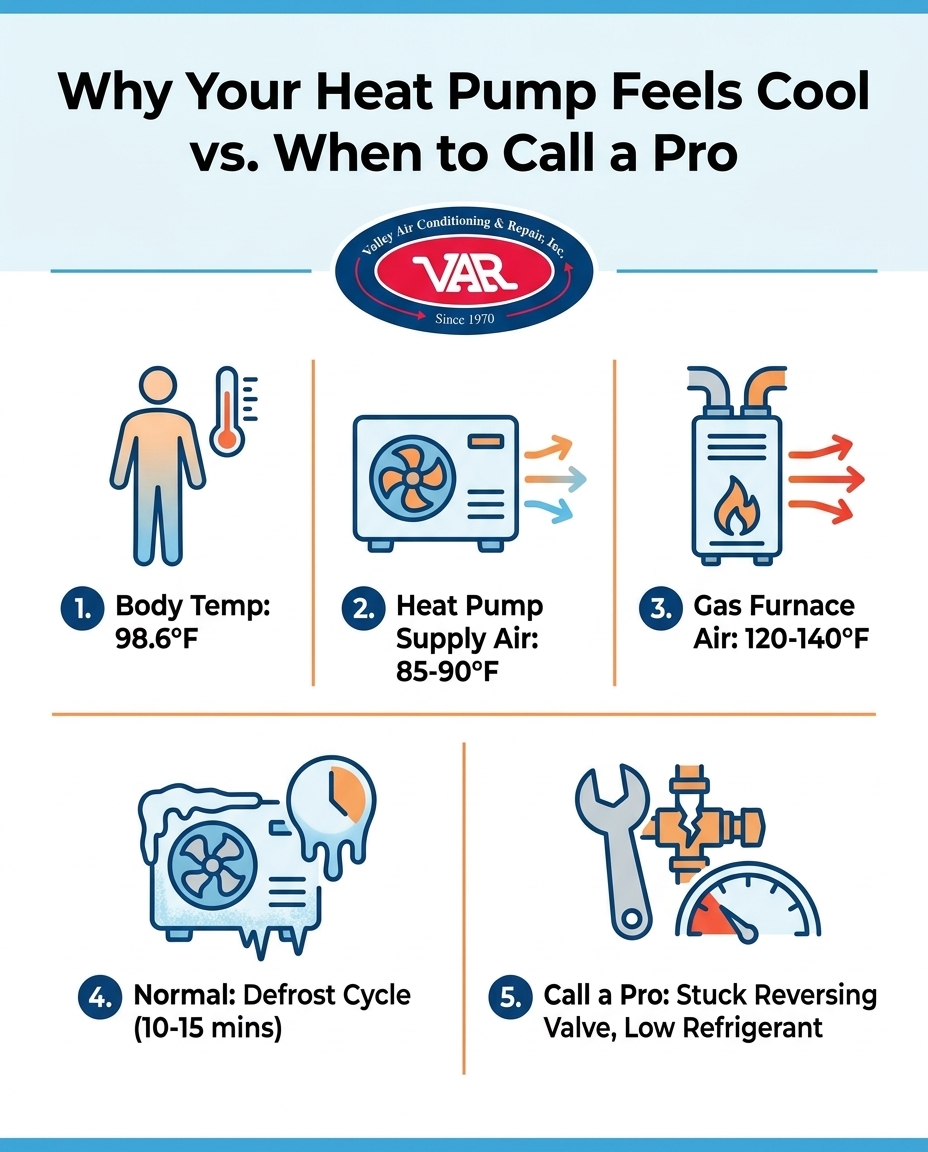
The physiological baseline is simple: normal human body temperature is roughly 98.6°F. Your skin is highly sensitive to anything that falls below this threshold. A properly functioning heat pump is designed to produce an 85-90°F supply air temperature. While 85°F is more than warm enough to heat a room to a comfortable 70°F, it is still significantly cooler than your body temperature.
Because the 85-90°F supply air temperature is cooler than 98.6°F skin, blowing air will naturally feel cool to the touch. This is known as the wind chill effect. When moving air passes over your skin, it evaporates trace amounts of moisture, creating a cooling sensation. Even if the air coming out of the vent is technically warm enough to heat your house, the velocity of the air combined with a temperature below 98.6°F tricks your brain into thinking the air is cold.
• Human Body Temperature — Typical Temperature Range: 98.6°F — How It Feels on Human Skin (98.6°F): Neutral baseline
• Standard Heat Pump Supply Air — Typical Temperature Range: 85°F – 90°F — How It Feels on Human Skin (98.6°F): Cool, especially with active airflow
• Traditional Gas Furnace — Typical Temperature Range: 120°F – 140°F — How It Feels on Human Skin (98.6°F): Very warm to hot
Contrast this physiological reality with a gas furnace, which blasts 120-140°F air into the living space. That air is well above human body temperature, so it instantly feels hot to the touch. Homeowners often misjudge their heat pump's performance because they are expecting the scorching heat of a gas furnace. As long as your thermostat is slowly rising to your desired set point, the 85-90°F supply air temperature is doing exactly what it was engineered to do.
Another common operational feature that surprises homeowners during an early fall pre-heating-season test is the defrost cycle. This built-in mechanism temporarily reverses the heating process to protect the outdoor equipment from ice buildup.
Our technicians know firsthand how rapidly the weather shifts in the Central Valley during September. Fresno's transition from warm early fall days to rapidly chilling nighttime temperatures can trigger unexpected early-season defrost cycles, surprising homeowners who are not used to seeing frost on their units so early in the year. When outdoor temperatures drop and moisture is present in the air, condensation forms on the outdoor coil and freezes. If left unchecked, this ice would block airflow and severely damage the compressor.
To prevent damage, the heat pump defrost cycle activates automatically. Here is how the process works:
1. The sensor detects ice: Internal sensors monitor the temperature of the outdoor coil. When it drops below freezing and frost begins to accumulate, the system initiates the defrost mode.
2. The system reverses: The reversing valve shifts, temporarily placing the unit into cooling mode. This takes the warm refrigerant from inside your house and sends it to the outdoor coil to melt the ice.
3. Cool air blows indoors: Because the system is temporarily in cooling mode, it will blow cool air through your indoor vents. This is a normal byproduct of the melting process.
4. Auxiliary heat engages (usually): Many systems are equipped with backup electric heat strips that turn on during a defrost cycle to offset the temporary drop in indoor temperature. However, you may still feel a brief chill.
5. Normal heating resumes: Once the outdoor sensor detects that the ice has melted (usually after 10 to 15 minutes), the reversing valve shifts back to heating mode, and the 85-90°F supply air temperature returns.
Because this is a temporary state, the best course of action is patience. Always wait at least 15 minutes before assuming the system is broken. If the cool air persists for hours, you may have a deeper mechanical issue.
Before you call one of our technicians for an early fall pre-heating-season test, you should rule out the most common user error we see in the field: incorrect thermostat settings. Modern thermostats are highly advanced, but a simple switch can result in unheated air circulating through the home, leading you to believe the system has failed.
The primary culprit is usually the fan setting. Most thermostats have two fan options: "Auto" and "On."
• The "Auto" Setting: This is the correct setting for normal operation. The blower fan will only run when the heat pump is actively heating the air to the standard 85-90°F supply air temperature. Once the room reaches the desired temperature, both the heating cycle and the fan shut off.
• The "On" Setting: If the fan is set to "On," it will circulate air continuously, 24 hours a day, regardless of whether the heat pump is actively heating.
When the fan is set to "On" and the heating cycle is resting, the system simply moves room-temperature air through the ductwork. If your home is currently 68°F, the vents will blow 68°F air. Because this is far below human body temperature, and significantly lower than the expected 85-90°F supply air temperature, it feels distinctly cold and drafty.
The quick fix: Walk over to your thermostat and verify that the system mode is set to "Heat" and the fan setting is switched to "Auto." If you make this adjustment and the air warms up during the next heating cycle, your system is perfectly fine.
While physiological illusions, defrost cycles, and thermostat settings explain the majority of cool-air complaints during an early fall pre-heating-season test, actual hardware failures do happen. Setting clear boundaries on when a professional is needed is crucial for maintaining your equipment. Diagnosing refrigerant leaks or replacing internal valves requires a licensed professional—never attempt DIY repairs on these high-pressure, specialized components.
Our team at Valley Air Conditioning & Repair provides deep Central Valley expertise in accurate diagnostics, ensuring homeowners are never pushed into unnecessary repairs for normal defrost cycles while swiftly fixing true mechanical failures. If you have ruled out the thermostat and waited out a potential defrost cycle, you may need our heat pump services in Fresno to address one of the following issues.
The reversing valve is the mechanical heart of a heat pump. It is a four-way valve that controls the direction of the flow of refrigerant. When engaged one way, the system provides air conditioning; when reversed, it provides heat. Over time, the internal sliding mechanism can become physically jammed, or the electrical solenoid that controls it can fail.
If the reversing valve is stuck in the cooling position, the unit will stay in AC mode no matter what the thermostat dictates. In this scenario, the system will actively blow refrigerated air into the home, rather than the expected 85-90°F supply air temperature. Replacing a reversing valve requires recovering the refrigerant, unbrazing the old valve, brazing a new one in place, and recharging the system—a complex job that demands a licensed technician.
Heat pumps rely on a precise charge of refrigerant to absorb and transfer heat. Unlike gas, refrigerant is not consumed during operation; it cycles continuously in a closed loop. If your system is low on refrigerant, it means there is a physical leak somewhere in the copper lines or coils.
A lack of pressure prevents the system from absorbing enough ambient heat from the outside air. As a result, it cannot reach the standard 85-90°F supply air temperature. The air coming from the vents will feel lukewarm or entirely cold, and the outdoor unit may freeze over solidly. A professional leak search and precise recharge are required to restore function.
Airflow is critical to the heat transfer process. If your return air filter is severely clogged with dust, pet hair, and debris, it chokes the blower motor. This restricted airflow prevents the system from properly distributing the 85-90°F supply air temperature into the home. Furthermore, the lack of airflow can cause internal components to overheat or the indoor coil to freeze, triggering safety switches that shut down the heating cycle entirely. Changing your filter regularly is the most impactful maintenance task a homeowner can perform.
When genuine malfunctions happen, our professional interventions are highly effective. For example, our team recently helped a local Fresno homeowner who experienced a sudden loss of heat during a cold snap. Our technician accurately diagnosed the issue, identified the specific failing component, and returned after hours to complete the repair—ensuring the home was warm and operational without replacing unnecessary parts.
Transitioning from reactive troubleshooting to proactive maintenance is the best way to ensure your home stays comfortable before winter weather peaks. An early fall pre-heating-season test is the best time to identify both minor quirks and major malfunctions. By having a professional evaluate the system before the first major freeze, you avoid the stress of an emergency breakdown.
A comprehensive professional tune-up covers far more than just a filter change. A licensed technician will check the exact refrigerant levels to ensure the system can achieve the 85-90°F supply air temperature. They will test the electrical solenoid on the reversing valve to ensure it switches smoothly between heating and cooling. They will also clean the outdoor coils, removing summer debris so the unit can efficiently absorb ambient heat.
Routine maintenance extends the lifespan of older units and keeps them running efficiently. In one instance, our crew serviced a 13-year-old unit that required ongoing preventive care. By trusting us to consistently perform pre-season maintenance and clean the internal heat exchange components, the system was kept running efficiently long past its average lifespan, saving the homeowner from a premature replacement.
Additionally, keeping your system properly maintained can have financial benefits. Generic energy efficiency rebates and federal tax credits may apply to well-maintained or upgraded systems. Homeowners are always advised to check with local utilities to see if their proactive maintenance or system upgrades qualify for current incentive programs. Investing in a routine maintenance plan ensures that your system is thoroughly vetted every fall and spring.
A properly functioning heat pump generally produces an 85-90°F supply air temperature. While this is warm enough to heat a home to a comfortable 70°F, it is lower than human body temperature (98.6°F) and significantly lower than the 120-140°F air produced by traditional gas furnaces.
Yes, it is frequently normal for the air to feel cool during an early fall pre-heating-season test. Because the 85-90°F supply air is cooler than your skin, moving air creates a wind chill effect. Additionally, the system may occasionally blow cool air for 10 to 15 minutes during a normal defrost cycle.
Start by checking your thermostat to ensure the fan is set to "Auto" rather than "On." Next, replace any dirty air filters that might be restricting airflow. If the system continues to blow cold air after 15 minutes (ruling out a defrost cycle), contact a licensed professional to inspect the refrigerant and reversing valve.
If your reversing valve is stuck, your system will remain entirely in air conditioning mode even when the thermostat calls for heat. You will feel actively refrigerated air coming from the vents, not just lukewarm air. Diagnosing and replacing a faulty reversing valve requires specialized tools and a licensed HVAC technician.
Yes, a severely clogged air filter restricts vital airflow through the system. This restriction prevents the equipment from effectively transferring heat, making the 85-90°F supply air temperature impossible to achieve. In severe cases, poor airflow can cause the system to freeze up or trigger safety shutdowns.
While cool-feeling air is often a normal physiological illusion caused by the difference between 98.6°F human skin and 85-90°F supply air temperature, persistent cold air requires an expert eye. Whether your system is stuck in a defrost cycle, suffering from a jammed reversing valve, or simply in need of a thorough cleaning, guessing at the problem only delays your comfort.
At Valley Air Conditioning & Repair, we highly encourage scheduling a professional inspection with our team during your early fall pre-heating-season test period before the harsh winter weather hits. Getting ahead of mechanical wear and tear ensures your home remains warm and efficient all season long. Reach out to us for accurate, local diagnostics to understand exactly how your system is performing, and enjoy the peace of mind that comes with a fully optimized heating system.

As a business with many AC units, it is essential to have a responsive AC company. Valley Air Conditioning understands our needs. They are always responsive and our AC is up and running very quickly.
I had them do an AC check on the home I was buying, they were honest and quick. I hired them to do the summer and Fall maintenance for $149. Happy with this company!
100% recommend. I called, same day they came out and gave me estimate. Conley was honest and didn't try to recommend/sell us anything we didn't need. When I called him with questions before making a decision, he happily answered and was not annoyed by me contacting him. Conley and VAR
This is a group of good people. Very professional and knowledgeable. They take the time to listen and find the best solution that fits best for any situation. There's no way you can go wrong in choosing VAR.
We have used Valley Air for over fifteen years. The last two years ,Matt came to our house to service twice a year. Always on time, so polite and so professional. This is a very honest company and you can always depend on them and trust them. The office always treats everyone cheerfully and always want to do what you need done very fast YOU CAN COUNT ON THIS Company