


.webp)


Why Is My AC Blowing Warm Air? Fall HVAC Troubleshooting & Startup Smells
Smelling burning dust this fall? Get clear answers with our home maintenance tips and troubleshooting to know when to call a pro for your heating system.
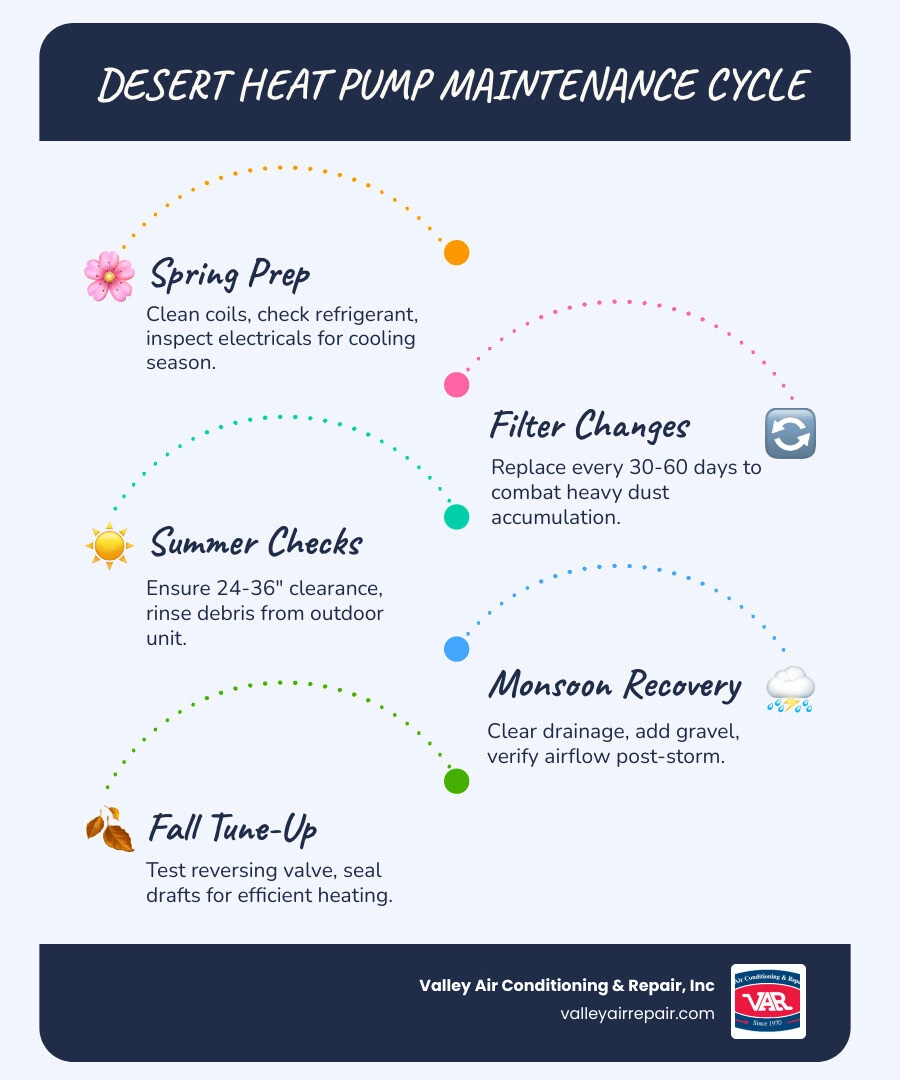
If you're looking for heat pump maintenance tips for desert homeowners, here's a quick summary of what matters most:
Desert living is hard on almost everything — and your heat pump is no exception. In places like the Central Valley of California, your system doesn't get a break. It cools your home through brutal summer heat, switches over to heating on cold winter nights, and battles dust, debris, and the occasional storm in between.
Unlike homes in milder climates, desert heat pumps run almost year-round. That constant demand — combined with dust accumulation, high ambient temperatures, and dramatic swings between day and night temperatures — creates a level of wear that most standard maintenance advice simply doesn't account for. According to industry data, proper maintenance can cut energy bills by up to 30%, but only if it's tailored to the conditions your system actually faces.
This guide is built specifically for desert homeowners who want to protect their investment, stay comfortable, and avoid expensive breakdowns at the worst possible time.
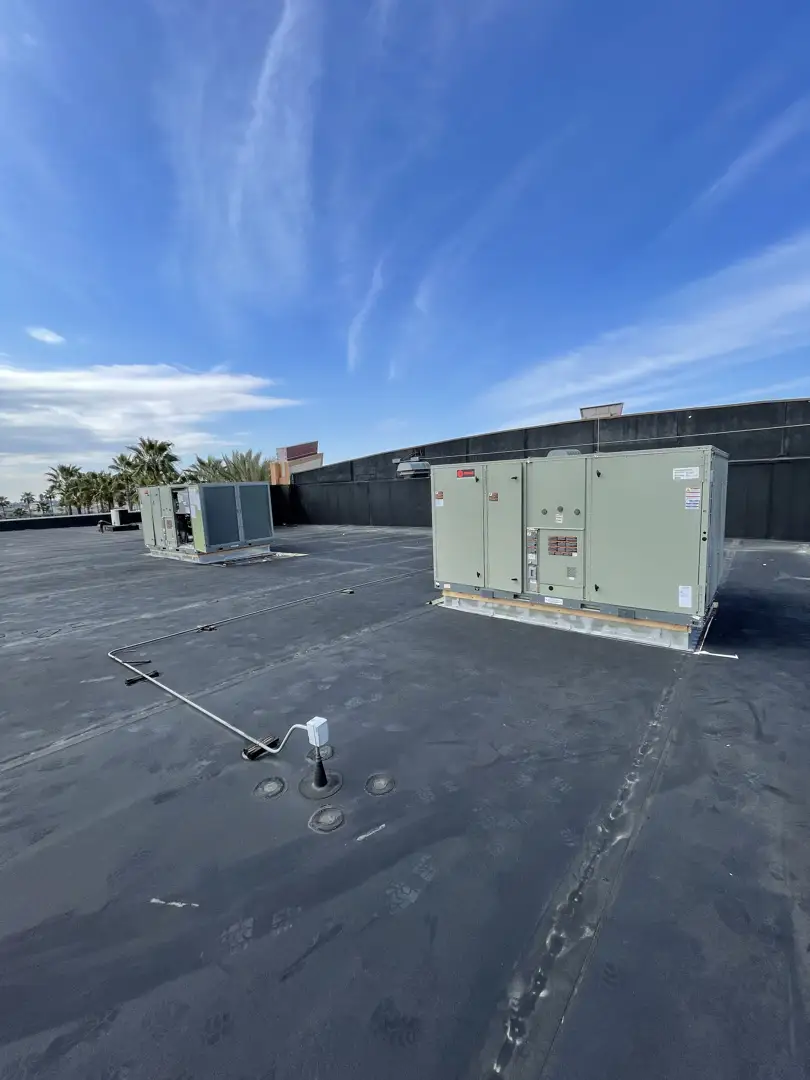
The Central Valley's climate is a unique beast. While a heat pump in a coastal area might enjoy mild temperatures and clean air, our units in places like Fresno, Clovis, and Madera face a relentless cycle of environmental stressors. Understanding these challenges is the first step toward Proper HVAC Maintenance for Desert Climate.
Dust is the silent killer of HVAC efficiency. In our region, dust isn't just a nuisance; it’s a constant environmental presence. Fine silt and sand particles find their way into every crevice of your outdoor unit. When dust coats the condenser coils, it acts as an insulator, trapping heat inside the system. This forces the compressor to work twice as hard to move heat out of your home, leading to cumulative wear that can shave years off the unit's lifespan.
While we are primarily an arid region, the monsoon season brings a specific set of risks. In some desert areas, 40% to 50% of annual rainfall occurs during these intense storms. This sudden influx of moisture, combined with high heat, creates a breeding ground for corrosion. It also impacts how your system handles humidity. If your drain lines aren't clear, that monsoon moisture can back up, leading to indoor water damage or system shut-offs.
One of the most overlooked challenges is the "diurnal swing"—the massive difference between daytime highs and nighttime lows. It isn't uncommon to see a 40-degree drop once the sun goes down. This requires your heat pump to switch roles frequently, expanding and contracting components as it moves between cooling and heating modes. This mechanical stress makes regular inspections vital to ensure the reversing valve and electrical connections remain secure.
Maintaining a heat pump in the desert isn't about one big annual chore; it's about consistent, small actions that prevent big problems. By following these heat pump maintenance tips for desert homeowners, you can ensure your system remains a reliable "workhorse" rather than a liability.
In the desert, the standard "change every three months" advice simply doesn't apply. Because of the high dust volume in areas like Fresno and Reedley, you should be checking your filters every 30 days.
For more on how your system handles these loads, check out our Heat Pump Clovis CA Complete Guide.
Your outdoor unit needs to "exhale" heat. If it's crowded by plants or buried in debris, it will overheat and eventually fail.
If you notice that your unit is struggling even after cleaning, it may be time to consult a Heat Pump Service Fresno CA Guide or a Heat Pump Repair Clovis CA Guide to check for deeper mechanical issues.
In the desert, efficiency is synonymous with survival. Small adjustments to how you manage your home's "envelope" can lead to a 10% or greater reduction in energy costs.
The Department of Energy suggests a cooling setting of 78°F when you are home. While that might sound warm to some, every degree you raise the thermostat in the summer can save you significantly on your power bill. During the winter months in the Central Valley, aiming for a range of 68–72°F is the "Goldilocks zone" for heat pump efficiency.
Using a smart thermostat allows you to "outsmart" the desert heat. These devices can learn your habits and adjust temperatures automatically. More importantly, they can implement "auxiliary heat lockouts." This prevents your system from switching to expensive electric resistance heating unless it is absolutely necessary, which is a key part of HVAC System Maintenance.
Your heat pump shouldn't have to cool the whole neighborhood.
While DIY tasks are essential, some things require a professional touch. Heat pumps are complex systems that use high-voltage electricity and pressurized refrigerant.
| Task | DIY (Homeowner) | Professional (Technician) |
|---|---|---|
| Filter Replacement | Yes (Monthly) | Included in Tune-up |
| Debris Removal | Yes (Weekly) | Deep Cleaning of Internal Components |
| Visual Inspection | Yes (Check for leaks/noises) | Comprehensive Component Testing |
| Refrigerant Levels | No (Requires EPA Certification) | Yes (Check for leaks and pressure) |
| Electrical Connections | No (Safety Risk) | Yes (Tighten and inspect wiring) |
| Reversing Valve Test | No | Yes (Ensures proper mode switching) |
If you notice any of the following, don't wait for your scheduled maintenance. Call for a Heat Pump Repair Reedley CA Guide immediately:
If your system is more than 12–15 years old and experiencing frequent issues, it might be time to look at a Heat Pump Replacement Fresno CA Guide to take advantage of modern, high-efficiency technology.
In our climate, we recommend a biannual schedule. You should have a professional visit in the spring to prepare for the brutal summer cooling season and again in the fall to ensure the heating components and reversing valve are ready for chilly desert nights. Regular service is the best way to avoid needing a Heat Pump Replacement Kingsburg CA Guide prematurely.
Beyond the ice buildup mentioned earlier, you might notice that the air coming from your vents isn't as cold as it used to be, or you might hear a faint hissing sound near the indoor or outdoor coils. Refrigerant doesn't "wear out"—if it's low, there is a leak. Professional leak detection is required to fix the issue permanently. This is a critical step during a new Heat Pump Installation Fresno CA to ensure the system starts its life with a perfect charge.
During a severe dust storm, you can temporarily turn off your unit to prevent it from sucking in massive amounts of silt. Once the storm passes, rinse the exterior with a hose. To protect against power surges common during monsoons, we highly recommend installing a dedicated HVAC surge protector. Finally, ensure the area around the unit has proper drainage (like gravel) to prevent standing water from corroding the base.
At Valley Air Conditioning & Repair, Inc., we’ve been serving "the Valley" since 1970. We know exactly what the heat, dust, and wind of Biola, Kerman, Sanger, and Selma can do to your home's comfort system. Our customer-first philosophy is built on the belief that a little prevention today saves a lot of headaches tomorrow.
By following these heat pump maintenance tips for desert homeowners, you aren't just checking chores off a list—you're extending the lifespan of your system, ensuring your family's comfort, and potentially saving up to 30% on your energy bills. Whether you need a routine tune-up or a complete Heat Pump Installation Fresno CA, we are here to provide the expert, honorable service you deserve.
Don't wait for the next record-breaking heatwave to find out if your system is ready. Keep it clean, keep it clear, and keep it running strong with the help of the local experts who know the desert best.

As a business with many AC units, it is essential to have a responsive AC company. Valley Air Conditioning understands our needs. They are always responsive and our AC is up and running very quickly.
I had them do an AC check on the home I was buying, they were honest and quick. I hired them to do the summer and Fall maintenance for $149. Happy with this company!
100% recommend. I called, same day they came out and gave me estimate. Conley was honest and didn't try to recommend/sell us anything we didn't need. When I called him with questions before making a decision, he happily answered and was not annoyed by me contacting him. Conley and VAR
This is a group of good people. Very professional and knowledgeable. They take the time to listen and find the best solution that fits best for any situation. There's no way you can go wrong in choosing VAR.
We have used Valley Air for over fifteen years. The last two years ,Matt came to our house to service twice a year. Always on time, so polite and so professional. This is a very honest company and you can always depend on them and trust them. The office always treats everyone cheerfully and always want to do what you need done very fast YOU CAN COUNT ON THIS Company


