


.webp)




AC Maintenance in Fresno, CA: Navigating Mid-Fall Heating Transitions and Startup Safety
Is that burning dust smell normal? Add this startup review to your seasonal home maintenance checklist and decide when to call a heating pro this winter.
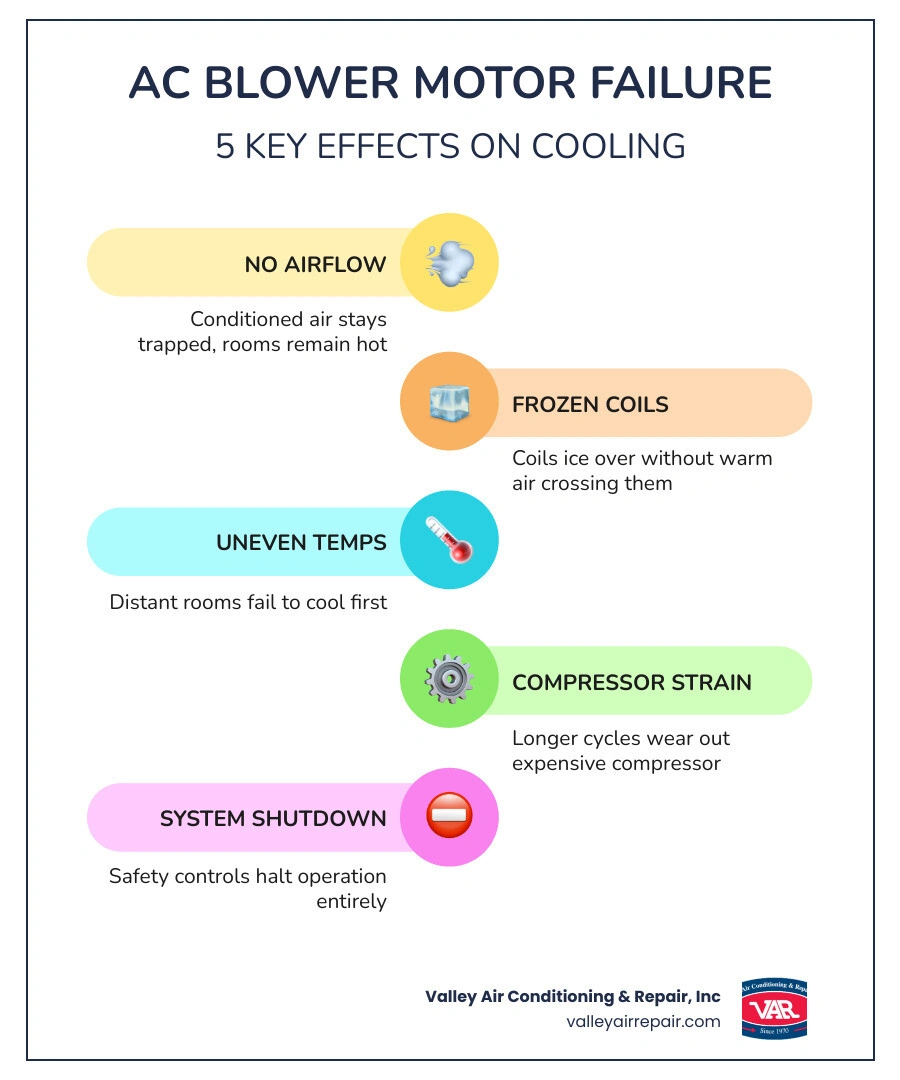
How a failed blower motor affects your cooling is something every Central Valley homeowner should understand before the summer heat peaks. When this single component stops working, your entire air conditioning system loses its ability to deliver cool air — even if the rest of the system is running perfectly.
Here is a quick look at the main ways a failed blower motor impacts your cooling:
Blower motors rarely fail without warning. Most homeowners notice comfort problems — weak airflow, rooms that won't cool down, or strange noises — well before the motor completely stops. The problem is that these signs are easy to dismiss as "just the summer heat" until the damage is already done.
At Valley Air Conditioning & Repair, Inc., we see this play out regularly across Modesto and the broader Central Valley, where high summer temperatures put HVAC systems under serious stress. A blower motor that is struggling in May can become a full system failure by July.
Understanding what your blower motor does, what goes wrong when it fails, and how to protect it is the best way to stay cool and avoid a costly breakdown.
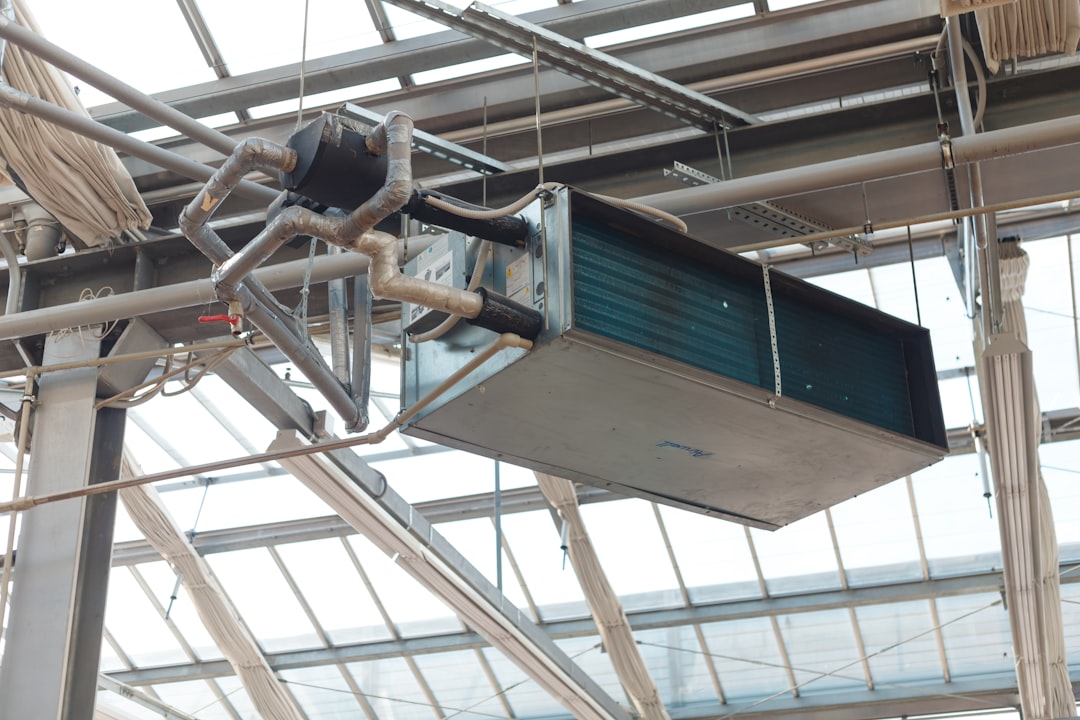
Think of the blower motor as the "heart" of your home’s climate control system. While the compressor and refrigerant do the heavy lifting of removing heat, the blower motor is responsible for the circulation that actually makes you feel comfortable. Its primary function is to spin a fan (often called a blower wheel) that draws air from your home through the return vents, pushes it across the evaporator coils to be cooled, and then distributes that conditioned air through the supply registers.
This component is a shared workhorse. It doesn't just sit idle during the winter; it is the same motor that pushes warm air through your home when the furnace or heat pump is running. Because it operates year-round, it undergoes significant wear and tear. Proper HVAC System Maintenance is vital because if this "heart" stops beating, the entire system—both heating and cooling—effectively flatlines.
When a blower motor begins to degrade, it doesn't always just quit. Often, it begins to spin slower or draw more electrical current to maintain its speed. This leads to a noticeable drop in airflow volume. When the volume of air moving through your home decreases, your thermostat becomes inaccurate. The air near the thermostat might stay warm while the air right next to a vent is freezing, causing the system to run longer and longer cycles. This extra run time translates directly into higher energy consumption and immense strain on the entire system.
In places like Modesto, Clovis, and Fresno, we rely on our AC systems to handle triple-digit temperatures. When the blower motor starts to fail, the symptoms are usually physical and audible.
One of the most common reasons your AC has weak airflow in Clovis is a blower motor that can no longer overcome the "static pressure" or resistance within your ductwork. You might notice that the vents in the master bedroom feel like they are barely breathing, while the unit in the attic or closet is making a racket.
Common warning signs include:
There is a delicate balance between the temperature of your evaporator coils and the air moving over them. The coils are filled with very cold refrigerant designed to absorb heat. If the blower motor fails to provide enough warm air, the moisture that naturally condenses on the coils doesn't just drain away—it freezes.
This creates a "vicious cycle." The ice acts as an insulator, preventing the refrigerant from absorbing heat. As the ice gets thicker, it further restricts airflow, making the coils even colder. Eventually, you end up with a solid block of ice inside your air handler, which can lead to water damage when it finally thaws.
The dangers of a bad blower motor go far beyond just a warm house. When the airflow stops, the cooling process doesn't just pause; it breaks. If you don't know what to do when your AC fan stops working, you risk damaging the most expensive part of your system: the compressor.
When the evaporator coils freeze due to a blower failure, the refrigerant inside the coils remains in a liquid state instead of turning into a gas. Your compressor is designed to pump gas, not liquid. If liquid refrigerant reaches the compressor—a phenomenon known as "liquid slugging"—it can destroy the internal valves and pistons instantly.
Furthermore, a failing motor can trip high-limit switches or circuit breakers. If you constantly have to reset a breaker to get your AC to work, the motor is likely drawing dangerous levels of amperage. Addressing these issues early is the only way to fix weak airflow from your HVAC vents before the damage becomes a total system replacement.
If our technicians determine that you need a fan motor repair or a full replacement, you will likely encounter two types of motors: PSC and ECM. Understanding the difference is key to your home's long-term energy efficiency.
| Feature | PSC (Permanent Split Capacitor) | ECM (Electronically Commutated Motor) |
|---|---|---|
| Speed Type | Fixed Speed (On/Off) | Variable Speed (Adjustable) |
| Energy Efficiency | Standard | High (uses up to 80% less electricity) |
| Airflow Consistency | Can vary with duct pressure | Maintains consistent CFM |
| Initial Cost | Lower | Higher |
| Longevity | 10-15 years | 10-15 years (with better protection) |
While a PSC motor is a reliable, "old-school" technology that simply turns on and off, an ECM motor is much smarter. It can ramp up or down based on the needs of your home, providing much quieter operation and significantly lower utility bills. Whether you are replacing an indoor blower or an AC condenser fan motor, choosing the right technology for the Central Valley climate can make a massive difference in your summer comfort.
Under ideal conditions, a blower motor should last between 10 and 15 years. However, "ideal conditions" are rare in dusty, high-heat areas like Madera, Merced, and Fresno. To keep your motor running for its full lifespan, proactive care is essential.
The biggest enemy of your blower motor is dirt. Dirty air filters on your HVAC system force the motor to work against high resistance, causing it to run hotter and wear out its bearings faster. We recommend:
No, it is not safe. If the motor is making noise, smelling like it's burning, or failing to move air, you should shut the system off immediately. Continuing to run the AC can lead to a frozen evaporator coil, which can cause water damage to your home and permanent mechanical failure of the compressor. If you notice the AC condenser fan is not spinning or the indoor blower is struggling, call for professional help right away to protect your investment.
In almost all forced-air systems, the blower motor is a shared component. Whether you have a gas furnace with electric cooling or a heat pump system, the same fan is used to move air through the house. In the winter, if the blower fails, the heat strips or heat exchanger will quickly overheat. Safety sensors (high-limit switches) will detect this lack of airflow and shut the system down to prevent a fire, leaving you without any way to regulate your home's temperature.
A blower wheel works like a turbine. When the blades become caked with dust and grime, they lose their aerodynamic shape. This makes the wheel heavier and much harder to turn. To compensate, the motor has to "work harder," which means it draws more electrical current (amperage). This extra electricity generates excess heat within the motor windings, eventually causing the insulation to fail and the motor to burn out.
When your blower motor "blows its last breath," it can feel like a disaster, especially in the middle of a Central Valley heatwave. However, by staying alert to the warning signs—like weak airflow and strange noises—and keeping up with regular maintenance, you can often catch these issues before they leave you sweating.
Valley Air Conditioning & Repair, Inc. has been the trusted name for HVAC service in "the Valley" since 1970. From Modesto to Kingsburg and everywhere in between, our family-owned team is dedicated to providing fast, honorable, and expert Air Conditioning services. We don't just fix parts; we ensure your entire system is running at peak efficiency to keep your family comfortable and your energy bills low.
If your AC is acting up, don't wait for the motor to fail completely. Contact us today for a professional diagnosis and experience the customer-first service that has kept us growing for over 50 years.

As a business with many AC units, it is essential to have a responsive AC company. Valley Air Conditioning understands our needs. They are always responsive and our AC is up and running very quickly.
I had them do an AC check on the home I was buying, they were honest and quick. I hired them to do the summer and Fall maintenance for $149. Happy with this company!
100% recommend. I called, same day they came out and gave me estimate. Conley was honest and didn't try to recommend/sell us anything we didn't need. When I called him with questions before making a decision, he happily answered and was not annoyed by me contacting him. Conley and VAR
This is a group of good people. Very professional and knowledgeable. They take the time to listen and find the best solution that fits best for any situation. There's no way you can go wrong in choosing VAR.
We have used Valley Air for over fifteen years. The last two years ,Matt came to our house to service twice a year. Always on time, so polite and so professional. This is a very honest company and you can always depend on them and trust them. The office always treats everyone cheerfully and always want to do what you need done very fast YOU CAN COUNT ON THIS Company


