Why Understanding How a Tune Up Improves Efficiency and Lowers Bills Can Save You Real Money
How a tune up improves efficiency and lowers bills comes down to one simple idea: a clean, well-adjusted system doesn't have to work as hard to keep your home comfortable — and less work means less energy used.
Here's a quick summary of how it works:
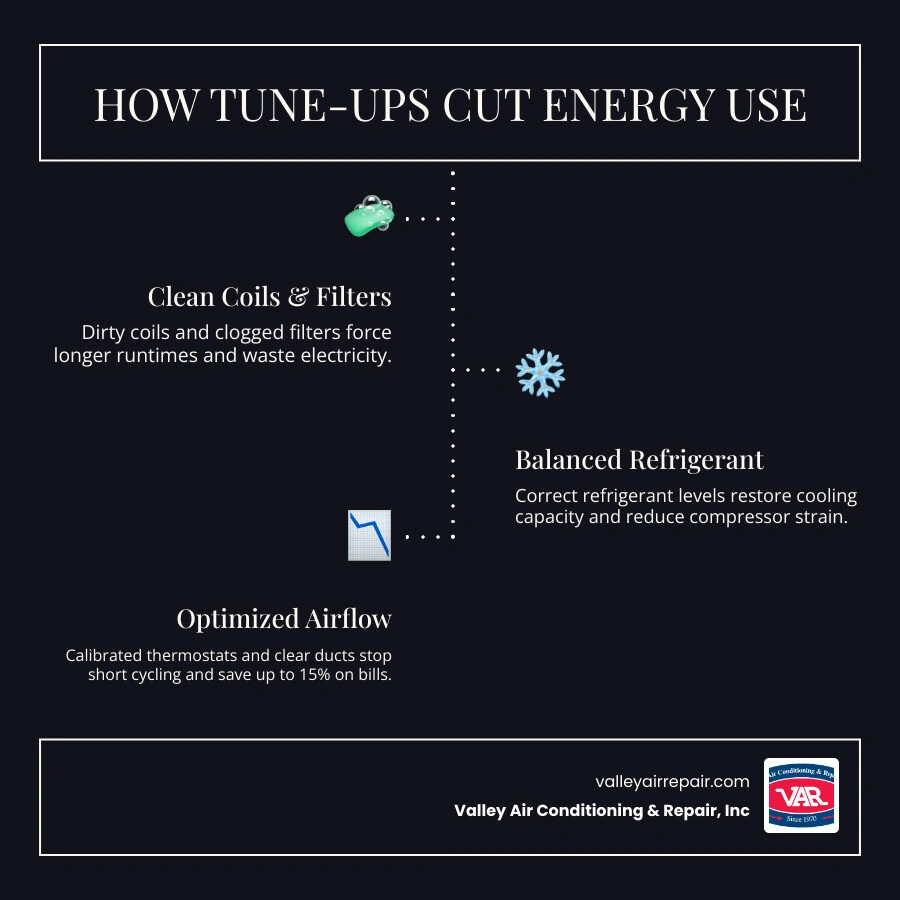
- Dirty coils and clogged filters force your system to run longer cycles, wasting electricity
- Low refrigerant levels reduce cooling capacity and put strain on the compressor
- Poor airflow from a dirty blower or leaky ducts means your system struggles to reach your set temperature
- Miscalibrated thermostats can cause short cycling, which spikes energy use every time the system restarts
- Neglected systems can use 15–30% more energy than a properly maintained one
The result? Homeowners who schedule regular professional tune-ups typically see a 5% to 15% reduction in monthly energy costs — and if a system has gone several years without service, that improvement can reach as high as 30%.
Think of it the way you think about your car. You wouldn't skip oil changes and expect the engine to keep running smoothly for years. Your HVAC system is no different. Over time, dust, friction, and small calibration issues quietly chip away at performance — and your utility bill quietly climbs as a result.
Whether your system has been running for one season or ten, a professional tune-up is one of the most straightforward ways to get it back to peak performance and keep your monthly bills under control.
What is an HVAC Tune-Up and What Does It Include?
Many homeowners in the Central Valley hear the term "tune-up" and assume it is just a quick visual inspection or a simple filter swap. In reality, a professional heating, ventilation, and air conditioning (HVAC) tune-up is a comprehensive, highly technical maintenance service designed to optimize every aspect of your comfort system.
When our experienced technicians perform a tune-up, they follow a rigorous multi-point checklist that targets the mechanical, electrical, and thermodynamic functions of your system. The service is divided into three primary phases:
- Comprehensive System Inspection: We perform a deep AC System Inspection to check for hidden wear and tear. This includes examining the physical integrity of the heat exchanger, checking the system's structural stability, and looking for signs of dangerous leaks or blockages.
- Deep Component Cleaning: Dirt is the single greatest enemy of HVAC efficiency. We clean the evaporator and condenser coils, clear out the blower motor assembly, and remove debris from the condensate drain line.
- Mechanical and Electrical Calibration: We test and tighten all electrical connections, measure voltage and current draws, lubricate moving parts to reduce friction, and verify safety controls. Finally, we calibrate your thermostat to ensure it is communicating accurately with your system.

By systematically addressing these areas, a professional tune-up eliminates the hidden drag on your system, preparing it to handle the blazing summer heat of Fresno and Clovis or the chilly winter nights in Madera and Sanger.
How a Tune Up Improves Efficiency and Lowers Bills by Restoring Your System
Over months of heavy use, your heating and cooling system undergoes a gradual, almost invisible decline in performance. Dust settles on internal components, moving parts lose their lubrication, and electrical connections loosen due to the natural expansion and contraction caused by heat. This creates mechanical resistance and limits heat transfer, leading to massive energy waste.
Without regular Preventative AC Maintenance, your system is forced to run longer runtimes to meet the temperature set on your thermostat. This extra runtime translates directly to higher utility bills.
Furthermore, this performance degradation directly impacts your system's Seasonal Energy Efficiency Ratio (SEER). For example, a system rated at 16 SEER might only perform at the level of a 12 SEER unit if it has been neglected for several years. A professional tune-up acts as a factory reset, restoring your system back to its original performance specifications.
To help visualize the difference, look at how a regularly maintained system compares to a neglected one:
| Performance Metric | Well-Maintained HVAC System | Neglected HVAC System (3+ Years) |
|---|
| Average Energy Consumption | Optimized (baseline) | 15% to 30% higher energy usage |
| System Lifespan | 15 to 20 years | 10 to 12 years |
| Unexpected Breakdown Risk | Extremely low (under 5%) | High (up to 95% of repairs are preventable) |
| Airflow Quality & Consistency | Strong, even throughout the home | Weak, leading to hot and cold spots |
| SEER/AFUE Performance | Operates at 95%–100% of rated efficiency | Drops significantly (e.g., 16 SEER performs like 12 SEER) |
| Warranty Status | Fully compliant and protected | Risk of voided manufacturer warranty |
How a Tune Up Improves Efficiency and Lowers Bills Through Airflow Optimization
Proper airflow is the lifeblood of any HVAC system. When airflow is restricted, your system has to work twice as hard to move conditioned air through your home.
During a professional tune-up, several key areas are addressed to optimize airflow:
- Air Filter Replacement: While replacing a clogged filter is a simple task, it is incredibly impactful. Replacing a dirty filter can cut your cooling energy use by up to 15% instantly.
- Blower Motor Cleaning: Dust buildup on blower wheel blades acts like tiny weights, reducing their aerodynamic efficiency. A dirty blower wheel can reduce airflow by up to 20%, forcing the motor to draw more electricity to spin.
- Static Pressure Testing: Technicians measure the static pressure—essentially the "blood pressure" of your HVAC system—to detect internal blockages or severe ductwork leaks. In the Central Valley, leaky ducts can easily account for up to 20% of your cooling loss, wasting conditioned air before it ever reaches your living spaces.
If you live in Clovis, scheduling regular AC Maintenance Clovis CA ensures that your system's airflow is fully optimized before the extreme summer temperatures arrive.
How a Tune Up Improves Efficiency and Lowers Bills by Correcting Refrigerant Levels
Your air conditioner does not actually "create" cold air; instead, it uses refrigerant to absorb heat from inside your home and dump it outdoors. For this process to work efficiently, the refrigerant charge must match the manufacturer’s exact specifications.
If your system's refrigerant is low—even by a tiny margin—its cooling capacity drops significantly. This causes several efficiency-killing issues:
- The system must run much longer cycles to cool your home.
- Low refrigerant levels put immense strain on the compressor, which is the most expensive component in your AC. Running a compressor with incorrect refrigerant levels is one of the fastest ways to burn it out.
- Heat transfer across the evaporator coils becomes unbalanced, which can cause the coils to freeze over entirely, blocking all cooling.
Testing and correcting refrigerant levels requires specialized precision gauges and EPA certification, which is why a professional AC Tune-Up Fresno CA is so critical to protecting your investment and keeping your bills low.
Key Components Serviced to Maximize Efficiency
To understand how a tune-up delivers such impressive energy savings, it helps to look at the specific physical components that our technicians service during a visit:
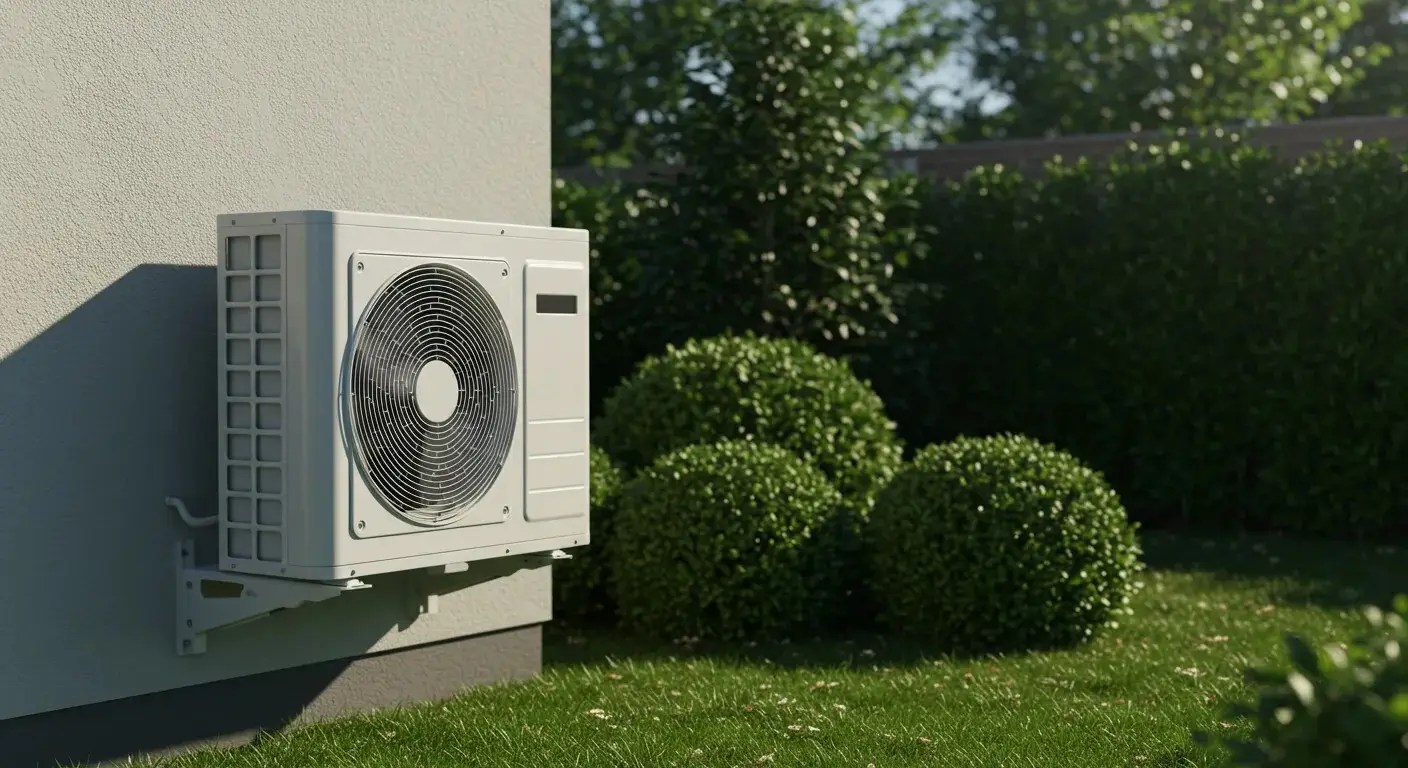
- Condenser Coils (Outdoor Unit): The outdoor condenser coil releases the heat pulled from your home. Because it sits outside, it quickly becomes coated in dirt, pollen, and yard debris. This layer of grime acts as an insulating blanket, blocking heat transfer and forcing the compressor to run hotter and longer. We power-wash these coils to restore optimal thermal exchange.
Evaporator Coils (Indoor Unit): Located inside your home, the evaporator coil absorbs heat from your indoor air. If dust bypasses your air filter, it settles on these wet coils, creating a barrier that prevents the refrigerant from absorbing heat efficiently. Cleaning this coil drastically reduces compressor runtime.
Electrical Contacts and Capacitors: We inspect electrical contacts for pitting or corrosion and test capacitors to ensure they are delivering the correct voltage. Weak capacitors force motors to draw high inrush currents on startup, spiking your electricity bill and wearing out motors prematurely.
- Moving Parts Lubrication: Friction is a major source of energy loss. We lubricate all bearings, motors, and fans to ensure they spin freely with minimal electrical draw.
- Condensate Drain Line: Algae and mold love to grow in the warm, damp environment of your AC’s drain line. We flush and clear these lines to prevent water backups that can cause catastrophic water damage to your home or trigger safety float switches that shut down your cooling system unexpectedly.
Understanding these mechanical details highlights How Spring Maintenance Prevents Breakdowns in Extreme Heat, giving you peace of mind when the valley temperatures soar past triple digits.
Frequently Asked Questions About HVAC Efficiency
How often should I schedule an HVAC tune-up?
For maximum efficiency and lowest utility bills, you should schedule an HVAC tune-up twice a year: once in the spring for your air conditioning system and once in the fall for your heating system.
If you use a heat pump that provides both heating and cooling year-round, biannual visits are still the gold standard because the system never gets a seasonal break. Scheduling your maintenance during the mild "shoulder seasons" (typically March through May, and September through November) ensures your system is primed and ready before extreme weather hits.
For local heating tips and schedules, check out our comprehensive Heating Maintenance Fresno Guide.
While we highly encourage homeowners to handle basic maintenance tasks—such as changing air filters every 30 to 90 days, keeping outdoor units clear of weeds and debris, and ensuring indoor registers are unblocked—a full tune-up must be left to the professionals.
A comprehensive tune-up requires specialized diagnostic tools, such as digital manifold gauges, electrical multimeters, and static pressure probes. Additionally, handling chemical refrigerants requires EPA certification, and working around high-voltage electrical circuits or gas lines presents serious safety hazards. Finally, most major HVAC manufacturers require documented annual professional maintenance to keep your equipment warranty valid.
If your system is overdue for a professional visit, it will usually let you know. Watch out for these common warning signs:
- Unexplained Spikes in Your Energy Bills: If your utility bills are suddenly 15% to 20% higher than the same month last year, your system is likely losing efficiency.
- Weak Airflow: If the air blowing out of your vents feels weak or barely cool, there is an airflow or heat transfer issue.
- Frequent Cycling (Short Cycling): If your system turns on and off rapidly every few minutes, it is wasting massive amounts of electricity on startup cycles.
- Unusual Noises: Squealing, grinding, clanging, or banging noises indicate worn belts, failing bearings, or loose mechanical parts that need immediate attention before they cause a total system failure.
Conclusion
At Valley Air Conditioning & Repair, Inc., we have been keeping Central Valley homes comfortable and energy-efficient since 1970. Built on a foundation of trust, honorable intentions, and a customer-first philosophy, we treat your home’s comfort as our top priority. Whether you are in Fresno, Clovis, Madera, Sanger, Kerman, or any of our surrounding service locations, our expert technicians are here to help you restore your system’s peak efficiency and put money back in your pocket.
Don't wait for your utility bills to climb or your system to fail on a hot summer afternoon. Schedule your professional AC tune-up with Valley Air Conditioning & Repair, Inc. today to start saving on your energy bills!


.webp)