.webp)


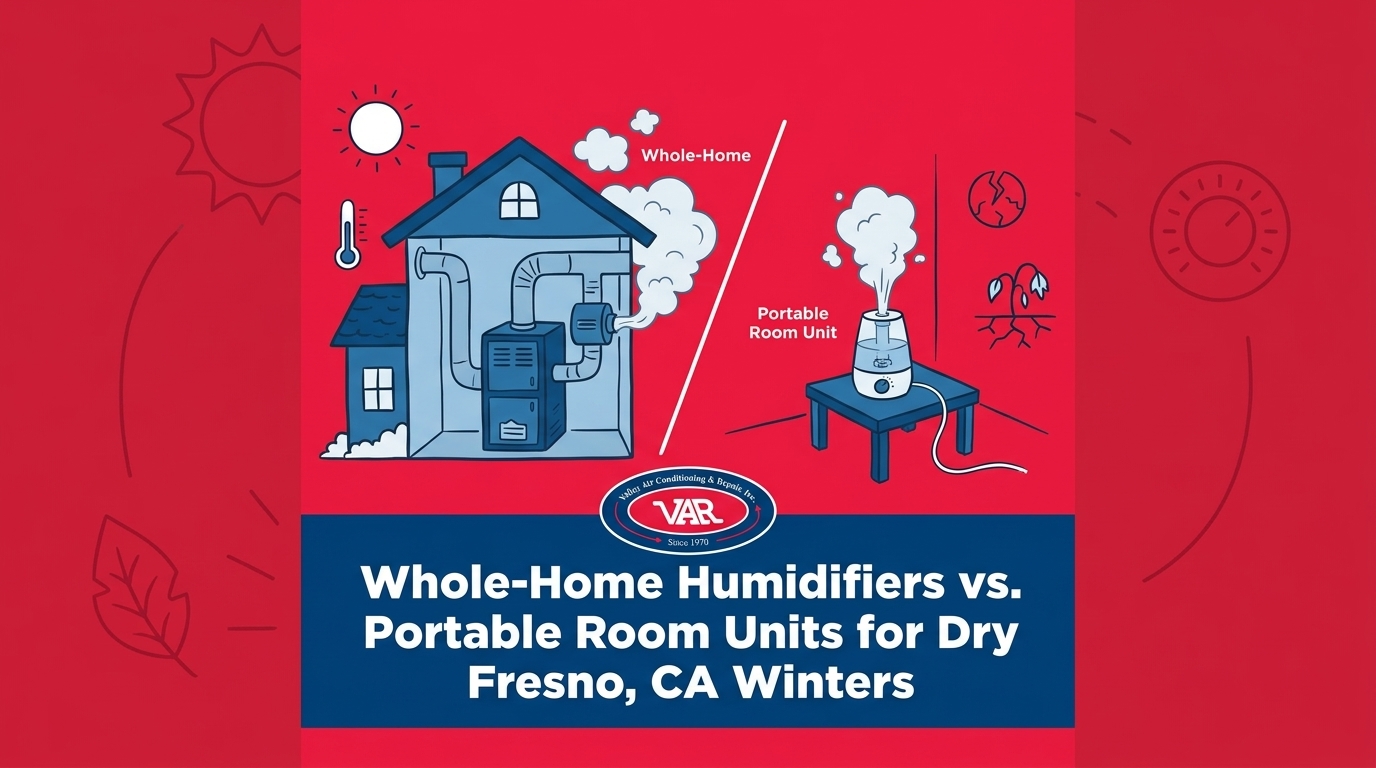
Whole-Home Humidifiers vs. Room Units for Dry Fresno Winters
Escaping dry indoor air means choosing between the daily chore of refilling portable tanks or upgrading to a central system. See which option delivers lasting comfort.
How refrigerant leaks happen and how they are repaired is one of the most common questions homeowners in Modesto, CA ask when their AC stops cooling properly. Here is a quick answer:
How refrigerant leaks happen:
How refrigerant leaks are repaired:
Refrigerant is the substance that makes your air conditioner actually cool your home. It absorbs heat from inside and carries it outside — over and over, thousands of times a day. When it leaks, that cycle breaks down. Your system works harder, your energy bills climb, and eventually your compressor can fail entirely. Because refrigerant is a sealed, closed-loop system, any loss at all means there is a breach somewhere that needs to be found and fixed — not just topped off.
In the Central Valley, where summers push temperatures well past 100°F, a refrigerant leak is not a minor inconvenience. It is a problem that gets worse the longer it goes unaddressed.

To understand why a leak is such a big deal, we have to look at what refrigerant actually does. Think of refrigerant as the "blood" of your cooling system. It is a specialized chemical blend designed to move through a continuous thermodynamic cycle, shifting between liquid and gas states at specific temperatures.
In your Modesto home, the process starts at the indoor evaporator coils. As warm air from your living room is blown over these cold coils, the liquid refrigerant inside absorbs the heat. This heat causes the refrigerant to evaporate into a gas. That gas then travels to the outdoor condenser unit, where it is compressed back into a liquid, releasing the heat into the outside air.
Without the proper amount of refrigerant, this heat transfer simply cannot happen. If your system is low, it’s like trying to run a marathon while dehydrated. You might keep moving for a while, but your performance will drop, and eventually, the "engine" will give out. We often see systems that have lost only a small portion of their charge, yet their efficiency has already plummeted by 10% to 20%. To dig deeper into the mechanics, you can Understand AC Refrigerant Leaks and Solutions to see how these systems are designed to stay sealed.
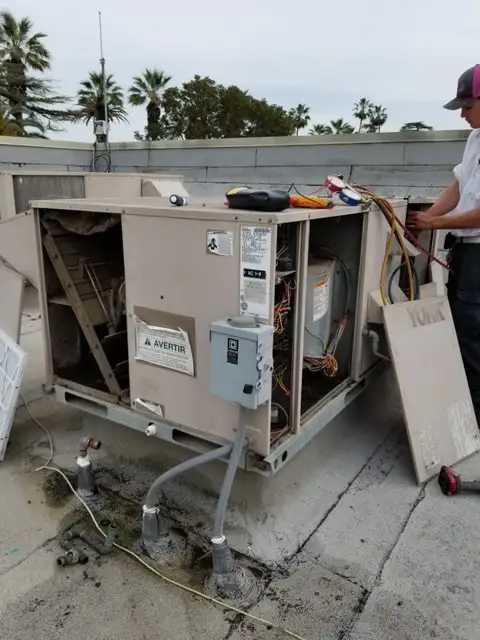
The most important thing to remember is that an air conditioner is a sealed system. Unlike the gasoline in your car, refrigerant is not "used up" or consumed. If the level is low, it means there is a hole, a crack, or a loose connection somewhere in the line.
How refrigerant leaks happen and how they are repaired involves a combination of environmental factors and precise mechanical restoration. When we arrive at a home in Clovis or Turlock, we aren't just looking to "gas it up." We are looking for the root cause of the breach. Releasing these chemicals into the atmosphere isn't just bad for your wallet; it’s a significant environmental hazard. For instance, R-410A (the most common refrigerant in modern homes) is over 2,000 times more damaging to the climate than carbon dioxide. That is why professional intervention is non-negotiable.
Why does a solid copper pipe suddenly start leaking? It usually comes down to one of these common "leak gremlins":
Understanding these mechanical stresses is key, especially when dealing with Common Heat Pump Pressure Problems that can mimic or cause leaks.
Once we’ve confirmed the system is low, we begin a tactical search. We don't guess; we use science.
Proper repair ensures you won't be Troubleshooting AC Refrigerant Pressure Issues again in a few months.
You don't need a technician's license to spot the early warning signs of a leak. If you live in Fresno, Madera, or Ripon, keep an eye (and ear) out for these symptoms:
If you notice your AC Has Low Refrigerant Pressure Clovis, it’s time to shut the system down and call for help before the damage spreads.
Ignoring a leak is a recipe for a very expensive summer. When refrigerant levels drop, your system enters a "death spiral." First, efficiency drops by 20% to 40%. This means your unit runs longer and harder just to maintain the same temperature, sending your utility bills through the roof.
More importantly, the refrigerant is what cools the compressor. Without that cooling flow, the compressor—the most expensive part of your HVAC system—will overheat and eventually burn out. Furthermore, the oil that lubricates the compressor is carried by the refrigerant. If the refrigerant is gone, the oil stays trapped in the lines, leaving the compressor to grind itself to pieces.
From an environmental standpoint, an estimated 500 million pounds of refrigerant leak out every year in the U.S. By fixing a leak, you are doing your part to keep these potent greenhouse gases out of our Central Valley air.
Sometimes, fixing a leak is the right move. Other times, it’s like putting a new transmission in a 20-year-old car. Here is how we help our neighbors in Oakdale and Riverbank decide:
| Factor | Repair the Leak | Replace the System |
|---|---|---|
| System Age | Under 10 years old. | Over 12–15 years old. |
| Refrigerant Type | Uses R-410A (available). | Uses R-22 (obsolete and very expensive). |
| Repair History | This is the first major issue. | Frequent breakdowns and "top-offs." |
| Warranty Status | Coils are still under parts warranty. | Warranty has expired. |
| Efficiency Goals | Happy with current utility bills. | Want to save 20-30% on energy. |
With the 2025 refrigerant regulations approaching, many manufacturers are moving toward new, even greener refrigerants. If your system is an older R-22 model, the cost of the gas alone often makes a repair illogical. A new, energy-efficient installation can pay for itself in a few years through lower monthly bills and increased reliability.
Absolutely not. Your AC is a closed-loop system. If a technician tells you that you just "need a little Freon" every spring, they are ignoring a hole in your system. A permanent repair is the only way to protect your compressor and your wallet in the long run.
While most residential leaks happen slowly and outdoors, a major indoor leak can impact air quality. In very high concentrations in enclosed spaces, refrigerant can cause dizziness, headaches, or even asphyxiation by displacing oxygen. If you smell a faint, sweet, chemical odor (like nail polish remover), turn off the system and ventilate the house.
It’s actually the law. Under EPA Section 608, only certified technicians are legally allowed to purchase or handle refrigerants. Beyond the legalities, the tools required—like vacuum pumps, manifold gauges, and recovery tanks—are specialized and expensive. Attempting a DIY fix can lead to system contamination, personal injury, or heavy fines.
At Valley Air Conditioning & Repair, Inc., we have been serving "the Valley" since 1970. Whether you are in Biola, Kerman, Sanger, or Selma, we understand that your family's comfort depends on a system that works perfectly. Our customer-first philosophy means we won't just sell you a quick fix; we’ll give you the honest truth about how refrigerant leaks happen and how they are repaired.
Don't let a small leak turn into a total system failure during a Central Valley heatwave. From Modesto to Yosemite Lakes, we are here to ensure your AC stays cold and your energy bills stay low.

As a business with many AC units, it is essential to have a responsive AC company. Valley Air Conditioning understands our needs. They are always responsive and our AC is up and running very quickly.
I had them do an AC check on the home I was buying, they were honest and quick. I hired them to do the summer and Fall maintenance for $149. Happy with this company!
100% recommend. I called, same day they came out and gave me estimate. Conley was honest and didn't try to recommend/sell us anything we didn't need. When I called him with questions before making a decision, he happily answered and was not annoyed by me contacting him. Conley and VAR
This is a group of good people. Very professional and knowledgeable. They take the time to listen and find the best solution that fits best for any situation. There's no way you can go wrong in choosing VAR.
We have used Valley Air for over fifteen years. The last two years ,Matt came to our house to service twice a year. Always on time, so polite and so professional. This is a very honest company and you can always depend on them and trust them. The office always treats everyone cheerfully and always want to do what you need done very fast YOU CAN COUNT ON THIS Company