.webp)


Guide
How to Do AC Tune-Up: Phoenix Guide for Homeowners

Why a Central Valley AC Tune-Up Guide for Homeowners Is Essential Reading
This guide covers everything Central Valley homeowners need to keep a cooling system running strong through long, hot summers. Here is a quick overview of the most important steps:
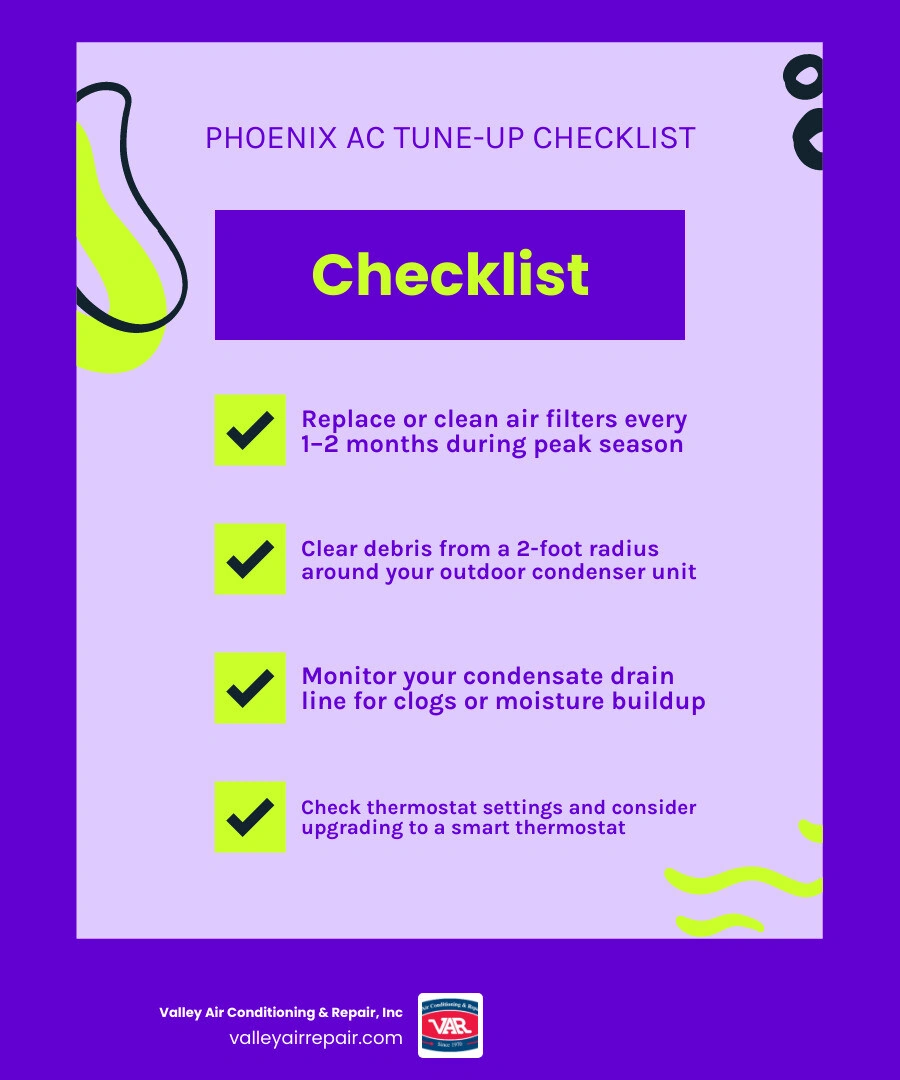
Quick AC Tune-Up Checklist for Homeowners:
- Replace or clean air filters every 1-2 months during peak season
- Clear debris from a 2-foot radius around your outdoor condenser unit
- Schedule a professional tune-up in spring (March-May) before extreme heat arrives
- Monitor your condensate drain line for clogs or moisture buildup
- Check thermostat settings and consider upgrading to a smart thermostat
- Book a fall service visit (October-November) to address summer wear
- Call a licensed technician for refrigerant checks, electrical inspections, and coil cleaning
Owning an air conditioner in the Central Valley comes with long cooling seasons, heavy summer demand, and plenty of dust. Many homeowners rely on their AC for much of the year, and that kind of repeated use puts real stress on filters, coils, motors, and electrical components.
The consequences of skipping maintenance can be serious. A neglected AC is not just less efficient - it is more likely to break down during the hottest stretch of the season, when you need it most and fast relief matters.
The good news is that regular tune-ups can improve system performance, help prevent many common breakdowns, and support better efficiency. A well-maintained system also runs more effectively, which matters when cooling is one of the biggest drivers of your monthly energy use.
Whether you have lived in the Valley for years or are newer to the area, this guide from Valley Air Conditioning & Repair, Inc. will walk you through what needs to be done - and when - to help keep your home comfortable and your system running reliably.
Why Central Valley Homeowners Need Regular AC Maintenance
Central Valley heat is hard on air conditioners in a way milder climates simply do not match. When an AC system runs for long stretches of the year, normal wear stops being "normal" and starts to look more like a marathon through summer. Filters load up faster, coils collect more dust, capacitors and motors stay under heavier stress, and efficiency drops as outdoor temperatures rise.
That matters because once temperatures move well above 95 degrees, air conditioner efficiency begins to fall noticeably. In real life, that means your system has to work harder to deliver the same comfort. Add dust, pollen, and storm debris to the mix, and performance can decline fast.
A few regional climate factors make maintenance especially important:
- Long cooling season with extended AC use
- Triple-digit temperatures that increase thermal stress
- Dust and airborne debris that clog filters and coat coils
- Heavy summer workload that exposes weak electrical parts
- Seasonal humidity swings that can contribute to drain line issues
Dust is one of the biggest warm-climate problems. It settles on condenser coils and acts like an insulating blanket, making it harder for heat to escape. It also clogs filters and restricts airflow indoors. When airflow drops, the system can struggle to cool evenly, run longer cycles, and use more electricity.
Regular maintenance helps prevent those problems before they turn into emergency calls. A clean, well-maintained HVAC system can operate more efficiently than a neglected one, and sealing duct leaks can prevent a significant amount of wasted cooled air. Consistent tune-ups may also help extend service life.
For homeowners in hot, dusty climates, seasonal care is not optional. It is part of protecting comfort, efficiency, and equipment life. For more climate-specific maintenance tips, see Proper HVAC Maintenance for Desert Climate.
Professional AC tune-up guide for Central Valley homeowners
A professional tune-up goes far beyond changing a filter or spraying off the outdoor unit. During a thorough service visit, the goal is to inspect, clean, test, and fine-tune the parts that affect cooling, safety, and reliability.
A solid professional tune-up checklist typically includes:
Thermostat inspection and calibration
The technician checks that the thermostat is reading correctly, communicating with the system properly, and calling for cooling when it should.Air filter inspection
Even if the filter is homeowner-maintained, it should still be checked for size, fit, airflow direction, and dust loading.Condenser coil cleaning
Outdoor coils often collect dirt fast in hot, dusty conditions. Cleaning them helps the system release heat more efficiently.Evaporator coil inspection
If accessible, the indoor coil is inspected for dirt buildup that can reduce airflow and cooling capacity.Refrigerant level and pressure check
Low refrigerant can cause poor cooling, short cycling, or coil freezing. A technician checks for proper charge and signs of leaks.Electrical connection inspection
Loose or damaged electrical connections can lead to unsafe operation, intermittent issues, or no-cool breakdowns.Capacitor and contactor testing
These are common failure points in hot weather. Catching a weak capacitor early can help prevent a midsummer shutdown.Blower component inspection
The blower motor, wheel, and related parts are checked to ensure proper airflow through the home.Condensate drain and pan check
Even in dry climates, AC systems create condensation. A blocked drain can lead to water damage or system shutoff.Lubrication of moving parts
Where applicable, motors and bearings are checked and lubricated to reduce friction and wear.Safety control and system control testing
The technician confirms the equipment starts, runs, and shuts down correctly.Airflow and performance testing
This may include checking temperature split, return and supply airflow, and overall system response.
This kind of service is designed to catch small issues before they become expensive, inconvenient, and uncomfortable. If you want to learn more about ongoing maintenance support, visit AC Maintenance Fresno CA or AC Maintenance Clovis CA.
AC tune-up guide for Central Valley homeowners: Professional vs. DIY
There is absolutely a place for homeowner maintenance. But there is also a line between helpful upkeep and tasks that should stay in professional hands.
| Homeowner tasks | Professional tasks |
|---|---|
| Change or clean air filters | Test refrigerant charge and pressure |
| Keep 2 feet of clearance around outdoor unit | Inspect and repair electrical components |
| Gently rinse visible outdoor debris from condenser cabinet | Deep clean coils safely and thoroughly |
| Check vents are open and unobstructed | Test capacitors, contactors, and amp draw |
| Monitor for odd sounds, smells, or leaks | Diagnose airflow imbalances and system controls |
| Watch condensate line for clogs or overflow | Identify hidden wear before breakdowns |
DIY is great for routine upkeep. Professional service is essential for diagnostics, safety testing, refrigerant-related work, and electrical inspection. Those systems require specialized tools, experience, and careful handling. In short, homeowners can help the AC stay cleaner, but technicians verify that it is actually operating correctly.
If your system is already showing warning signs, a tune-up may need to turn into a repair visit. You can explore related service pages here: AC Service Fresno CA and AC Maintenance Madera CA.
Monthly DIY Maintenance Tasks for Desert Climates
If you live in a dusty, high-heat climate, monthly check-ins make a big difference. Think of them as brushing your teeth for your AC. Not glamorous, but very helpful.
Here are the main homeowner tasks we recommend:
Check the air filter
This is the most important DIY job. In dusty conditions, filters can clog quickly, especially during heavy cooling months. Check them monthly and replace or clean them as needed. Many desert-climate homes benefit from higher-efficiency filters, and MERV 11 or higher is often recommended where dust and allergens are a concern, as long as your system can support that filter without restricting airflow.
Make sure:
- The filter is the correct size
- The arrow points in the direction of airflow
- The filter is not visibly packed with dust
For related service information, see AC Tune Up Clovis CA.
Clear the area around the outdoor unit
Keep at least a 2-foot clearance around the condenser. Remove leaves, weeds, trash, and anything else blocking airflow. Desert debris has a way of showing up where it is least welcome.
Gently rinse the outdoor cabinet
With power off, you can lightly rinse dirt from the exterior and visible coil surface using a garden hose on low pressure. Do not use a pressure washer. If the coil is heavily impacted, leave deep cleaning to a technician.
Check vents and registers indoors
Walk through the home and make sure supply and return vents are open and not blocked by furniture, rugs, or curtains. Dust buildup on registers can also be cleaned.
Watch for duct and vent issues
A simple visual look can help spot disconnected ducts, obvious gaps, or heavy dust around vent connections. Leaky or obstructed ducts can waste up to 30% of cooled air, so airflow issues should not be ignored. More support is available through AC Maintenance Sanger CA.
Monitor the condensate drain
Check for moisture around the indoor unit, water near the drain pan, or sludge buildup at the drain outlet. Even in low-humidity regions, your air conditioner still removes moisture from indoor air.
Pay attention to how the system sounds and feels
Notice changes such as:
- Longer run times
- Rooms that never seem to cool down
- New rattling or buzzing sounds
- Weak airflow from vents
- A sudden jump in energy use
For broader maintenance help, visit AC Maintenance Kerman CA.
When to Schedule Your AC Tune-Up in the Central Valley
Timing matters. If you wait until the first major heat wave, you are joining the same line as everyone else whose AC suddenly decided it had had enough.
The best schedule is usually:
- Spring tune-up: March through May
- Fall tune-up: October through November
Why spring is ideal
A spring visit prepares the system for the highest cooling demand of the year. It gives time to find weak parts, airflow restrictions, dirty coils, thermostat issues, or refrigerant problems before summer hits full force.
Why fall service also helps
A fall tune-up helps address wear from the long cooling season. It is also a smart time to inspect the system after months of steady use and get ahead of issues that could carry into the next year.
For many homeowners, annual maintenance is the minimum. But in extreme-use conditions, older systems, heavily used homes, pet households, or homes with persistent dust may benefit from twice-yearly service.
If you want to build a preventative routine, take a look at Preventative AC Maintenance, AC Service Sanger CA, and AC Maintenance Parlier CA.
AC tune-up guide for Central Valley homeowners: Signs You Need Service
Do not wait for a complete breakdown if your AC is already showing warning signs.
Common signs your system needs prompt service include:
- Weak airflow from vents
- Warm or uneven cooling
- Short cycling, where the system starts and stops too often
- Unusual noises such as buzzing, grinding, rattling, or squealing
- Musty, burning, or otherwise strange odors
- Water or moisture around the indoor unit
- Ice buildup
- Sudden increase in energy bills
- Thermostat not matching actual comfort in the home
Grinding sounds can indicate motor trouble. Buzzing may point to electrical issues. Musty odors can suggest biological growth or moisture problems. Burning smells should always be taken seriously.
If you notice these issues, schedule service sooner rather than later. Helpful resources include AC Service Clovis CA and AC Tune Up Madera CA.
Frequently Asked Questions about Central Valley AC Maintenance
How often should I schedule a professional tune-up in the Central Valley?
At least once a year, preferably before summer. In very hot, dusty conditions where systems run for much of the year, twice-yearly service is often the better choice. Spring and fall is a strong schedule for older systems, high-use homes, and anyone who wants fewer surprises during heat waves.
What is the best thermostat setting for a Central Valley summer?
For many homes, 78 degrees when occupied is a practical balance between comfort and efficiency. When you are away, raising the temperature a few degrees can reduce unnecessary runtime. Ceiling fans can help rooms feel cooler without forcing the AC to do all the work.
A smart thermostat can also help by:
- Running schedules automatically
- Reducing cooling when no one is home
- Improving consistency
- Alerting you to unusual runtime patterns
Can a tune-up help reduce my monthly energy bills?
Yes. A clean, properly adjusted AC generally uses less energy than a neglected one. Research consistently shows that maintenance can improve performance and reduce avoidable strain. Dirty filters, clogged coils, poor airflow, and duct leakage all make the system work harder.
You can improve savings even more by pairing tune-ups with these habits:
- Change filters regularly
- Seal leaky ducts
- Add attic insulation where needed
- Use blinds or curtains during peak sun
- Run ceiling fans in occupied rooms
- Keep the outdoor unit clear
- Avoid setting the thermostat dramatically lower than needed
Conclusion
A dependable AC is not just about comfort in extreme heat. It is part of protecting your home, your indoor air, and your peace of mind. Regular tune-ups help prevent breakdowns, support efficiency, extend system life, and keep small issues from turning into major problems.
At Valley Air Conditioning & Repair, Inc., we believe good service starts with honest guidance and a customer-first approach. That has been our philosophy since 1970, and it is still how we serve homeowners across the Valley today.
If you want to keep your system ready for the hottest months of the year, explore AC Tune Up Fresno CA or learn more through our maintenance and service resources, including AC Service Fresno CA and Preventative AC Maintenance.
When your AC has to work this hard, a little prevention goes a very long way.
Recent Posts
Customer Testimonials

As a business with many AC units, it is essential to have a responsive AC company. Valley Air Conditioning understands our needs. They are always responsive and our AC is up and running very quickly.
I had them do an AC check on the home I was buying, they were honest and quick. I hired them to do the summer and Fall maintenance for $149. Happy with this company!
100% recommend. I called, same day they came out and gave me estimate. Conley was honest and didn't try to recommend/sell us anything we didn't need. When I called him with questions before making a decision, he happily answered and was not annoyed by me contacting him. Conley and VAR
This is a group of good people. Very professional and knowledgeable. They take the time to listen and find the best solution that fits best for any situation. There's no way you can go wrong in choosing VAR.
We have used Valley Air for over fifteen years. The last two years ,Matt came to our house to service twice a year. Always on time, so polite and so professional. This is a very honest company and you can always depend on them and trust them. The office always treats everyone cheerfully and always want to do what you need done very fast YOU CAN COUNT ON THIS Company
Blogs
Stay updated with our latest blog posts.