.webp)


Guide
Arizona HVAC Rebates You Shouldn’t Leave on the Table

I'm looking to upgrade my home's heating and cooling. Who in Fresno specializes in energy-efficient systems and local rebates?
Energy rebates for HVAC upgrades in the Central Valley can put serious money back in your pocket — yet many eligible homeowners never claim a single dollar. Between federal tax credits, state-run programs like TECH Clean California, and utility rebates from providers like PG&E, the combined savings can be substantial. Despite this, many qualifying residents in areas like Fresno and Clovis are simply unaware these programs exist.
Here's a quick look at the main rebate sources available to Central Valley homeowners right now:
| Program | What It Covers | Benefit |
|---|---|---|
| TECH Clean California | Heat pumps, appliances, electrical panels | Substantial Rebates |
| Federal 25C Tax Credit | Heat pumps, central AC, insulation, audits | Annual Tax Credit |
| PG&E Rebates | Energy-efficient central AC units | Equipment Incentives |
| Local Utility Programs | AC upgrades, duct sealing, smart thermostats | Varies by equipment |
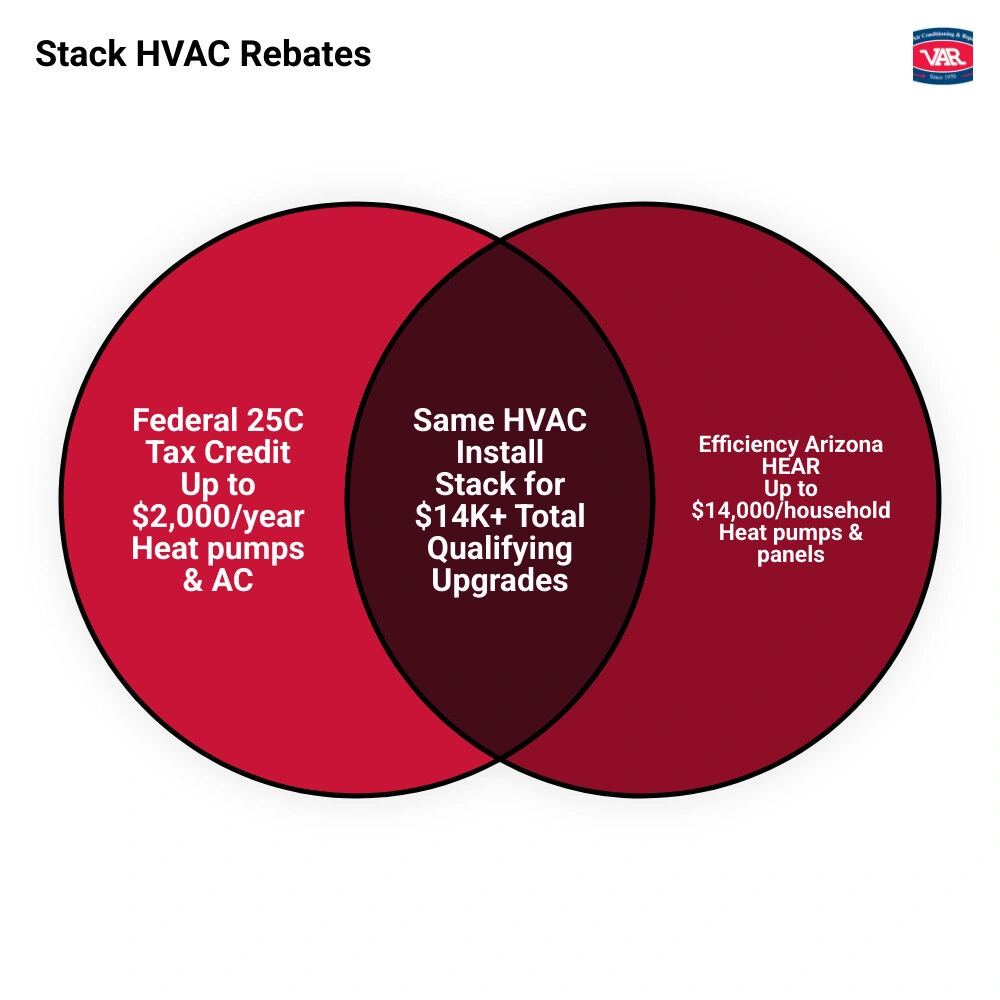
And those programs can often be stacked together — meaning you could claim a federal tax credit, a state rebate, and a utility rebate on the same installation.
With air conditioning accounting for a massive portion of a summer energy bill in the Central Valley, upgrading to a high-efficiency system isn't just a comfort decision — it's a financial one. One homeowner in the Fresno area reported a significant drop in their summer electric bills after completing an upgrade supported by local efficiency programs.
This guide breaks down every major rebate and tax credit available, who qualifies, how to apply, and how to stack incentives for maximum savings.
Navigating Central Valley Energy Rebates for HVAC Upgrades in 2026
As of May 2026, the landscape for home energy savings has never been more favorable for those of us living in the Central Valley. The cornerstone of these savings is the state's rollout of federal funds from the Inflation Reduction Act, often managed through programs like TECH Clean California. These initiatives are divided into pathways focusing on electrification and overall home efficiency.
These programs are particularly exciting for those looking into Residential HVAC Services. They often offer point-of-sale rebates, meaning the discount is applied directly at the time of purchase or through your contractor, potentially eliminating significant upfront costs. Other programs focus on modeled energy savings—if your upgrade is predicted to save a certain percentage of your energy usage, you could be eligible for additional rebates.
These programs are designed to make high-efficiency living accessible. Whether you are in Fresno, Clovis, or Madera, understanding how these state-managed funds interact with your local utility is the first step toward a more comfortable home.
Qualifying Equipment for Energy Rebates for HVAC Upgrades
Not every air conditioner qualifies for these incentives. To claim energy rebates for hvac upgrades, the equipment must meet strict efficiency standards.
- Heat Pumps: These are the "stars of the show" in 2026. A Heat Pump provides both heating and cooling by moving heat rather than creating it, making it incredibly efficient for our climate.
- SEER2 Ratings: Since 2023, the industry has moved to SEER2 ratings, which are more stringent than the old SEER standards. Most rebate programs require a minimum SEER2 rating to qualify.
- ENERGY STAR Certification: Look for the blue label. Equipment that is ENERGY STAR certified is a baseline requirement for almost all federal and state incentives.
- Variable-Capacity Systems: Systems that can "ramp up" or "ramp down" based on the actual cooling demand—rather than just being 100% on or 100% off—often qualify for the highest rebate tiers.
Income Eligibility and Rebate Tiers
Many programs are tiered to ensure those who need the most help receive it. Your eligibility is often determined by your Area Median Income (AMI).
- Low-Income Households: If your household income is below a certain threshold of the AMI, you may qualify for a larger portion of the project costs to be covered.
- Moderate-Income Households: For those in the middle-income brackets, programs typically cover a significant percentage of the project costs.
- Standard Income: While higher earners may not qualify for all point-of-sale rebates, they are still fully eligible for the federal 25C tax credits and most utility-specific rebates.
Federal Tax Credits vs. State Rebates: What’s the Difference?
It is easy to get confused between a "rebate" and a "tax credit," but the distinction is vital for your wallet.
The Federal 25C Tax Credit (also known as the Energy Efficient Home Improvement Credit) allows you to deduct a percentage of the cost of qualifying upgrades from the taxes you owe. This credit has annual limits for heat pumps and Air Conditioning units. Because this credit resets every year through 2032, you could theoretically install a heat pump this year and upgrade your windows or electrical panel next year to claim the credit again.
State and local rebates, however, are often "point-of-sale" or "post-purchase" cash back. These are not dependent on your tax liability. If you don't owe much in federal taxes, a rebate is much more valuable because it is direct cash or a direct discount.
Comparing 25C Federal Tax Credits and State Rebates
| Feature | 25C Federal Tax Credit | State & Utility Rebates |
|---|---|---|
| Type of Benefit | Tax Deduction (Off taxes owed) | Rebate (Cash back or Discount) |
| Limits | Annual Cap | Program or Lifetime Limits |
| Income Limits | None | Yes (Based on AMI) |
| Primary Focus | HVAC, Windows, Doors, Audits | Electrification & Efficiency |
| Refundable? | No (Must have tax liability) | Yes (Direct benefit) |
Utility-Specific Incentives: PG&E and Beyond
While federal and state programs grab the headlines, your local utility provider often offers the most straightforward savings. We always recommend checking with your specific provider before signing a contract.
- PG&E Incentives: PG&E often offers rebates based on the type of system you install. You can receive incentives for high-efficiency units, multi-stage systems, and variable-capacity systems.
- Local Utility Rebates: Many providers in the Central Valley provide incentives for energy-efficient AC units, but they also go beyond the equipment. They may offer rebates for duct sealing (which can be a huge source of energy loss) and smart thermostats.
- Performance Standards: Most providers require the use of a participating contractor to ensure the installation meets their performance standards.
Beyond the equipment, don't overlook Proper HVAC maintenance for desert climate. Many utilities offer smaller rebates for "tune-ups" or "check-ups" that ensure your system is running at peak efficiency before the high-heat days arrive.
How to Apply for Energy Rebates for HVAC Upgrades
The application process varies depending on which "pathway" you choose:
- The Contractor Pathway: This is the most common for Residential HVAC Maintenance & Repair and full system replacements. You work with a qualified contractor who handles the heavy lifting. They will provide the AHRI (Air-Conditioning, Heating, and Refrigeration Institute) certificate, which proves the indoor and outdoor units are a matched, efficient set.
- The Retail Pathway: This is generally used for smaller appliances like heat pump clothes dryers or water heaters. You’ll usually apply through a portal to receive a rebate after providing a paid invoice and model numbers.
Common pitfalls include not having a "paid in full" invoice or failing to submit the application within the utility's deadline.
Maximizing Your Savings Through Incentive Stacking
"Stacking" is the secret to getting a high-end, variable-speed system for a significantly lower price. In the Central Valley, the rules generally allow you to combine a utility rebate, a state rebate, and a federal tax credit.
For example, if you are a moderate-income household replacing a failing unit, you might:
- Receive a state rebate applied at the point of sale.
- Claim a utility rebate after the installation is complete.
- Claim a federal tax credit when you file your taxes next year.
Before you decide to move forward, it's worth asking: Is it worth fixing an old AC unit in the desert? Often, when you factor in these stacked incentives, the cost of a brand-new, warrantied, high-efficiency system is surprisingly close to the cost of a major repair on an older, inefficient unit.
Additional Incentives for Related Upgrades
When we talk about energy rebates for hvac upgrades, we aren't just talking about the box outside. To get the most out of your new system, you may need to upgrade other parts of your home. Many of these are also incentivized:
- Electrical Load Service Centers (Panels): If your old panel can't handle a new electric heat pump, you could get rebates to upgrade it.
- Insulation and Air Sealing: Incentives are often available to help keep the cool air inside where it belongs.
- Heat Pump Water Heaters: Significant rebates are available for these efficient appliances.
- Smart Thermostats: Often available for rebates through local utility providers.
- Electric Wiring: Incentives may support new high-efficiency Heating and cooling equipment.
Frequently Asked Questions about HVAC Rebates
Can renters apply for energy rebates for HVAC upgrades?
Yes! While the homeowner usually has to sign off on major equipment changes, many programs have pathways for renters. If a tenant pays for an energy audit or certain portable high-efficiency equipment, they may be able to claim the federal tax credit. For major systems like a heat pump, the landlord and tenant can work together to utilize rebates, which can drastically lower the property owner's investment while lowering the tenant's monthly bills. If you've ever wondered why your AC runs constantly in Arizona heat, it’s often due to an undersized or inefficient unit that a landlord might be more willing to replace if they knew about these substantial incentives.
What is the deadline for these rebate programs?
Many programs funded by the Inflation Reduction Act are scheduled to remain available through 2031. However, funding is not infinite. State programs are often "first-come, first-served," and once the allotted budget for a specific year is spent, it may close until the next funding cycle. The federal tax credit resets every January 1st, making it a permanent fixture for the next several years. If you need HVAC Services, it is better to act sooner rather than later to ensure the funds are still available.
How much can I save on my monthly bills after an upgrade?
While results vary by home size and insulation, the data is impressive. Replacing an old, low-efficiency system with a modern variable-capacity system can save a homeowner significantly on their annual energy bills. Some Central Valley residents have reported their electric bills dropping substantially after comprehensive upgrades. Over the lifespan of a unit, that adds up to thousands in energy savings alone, not even counting the money saved upfront through rebates.
Conclusion
Navigating energy rebates for hvac upgrades might seem like a full-time job, but the financial reward is well worth the effort. By combining state electrification rebates, federal tax credits, and local utility incentives, you can transform your home into a model of efficiency without breaking the bank.
At Valley Air Conditioning & Repair, Inc., we’ve been serving the Central Valley since 1970. Our family-owned business was built on a customer-first philosophy and honorable intentions. We know that a new HVAC system is a major investment, and our goal is to help you maximize every available cent of rebate money to make that investment as smart as possible. Whether you're in Fresno, Madera, Clovis, or any of our surrounding communities, we’re here to ensure you stay cool, comfortable, and within budget.
Recent Posts
Customer Testimonials

As a business with many AC units, it is essential to have a responsive AC company. Valley Air Conditioning understands our needs. They are always responsive and our AC is up and running very quickly.
I had them do an AC check on the home I was buying, they were honest and quick. I hired them to do the summer and Fall maintenance for $149. Happy with this company!
100% recommend. I called, same day they came out and gave me estimate. Conley was honest and didn't try to recommend/sell us anything we didn't need. When I called him with questions before making a decision, he happily answered and was not annoyed by me contacting him. Conley and VAR
This is a group of good people. Very professional and knowledgeable. They take the time to listen and find the best solution that fits best for any situation. There's no way you can go wrong in choosing VAR.
We have used Valley Air for over fifteen years. The last two years ,Matt came to our house to service twice a year. Always on time, so polite and so professional. This is a very honest company and you can always depend on them and trust them. The office always treats everyone cheerfully and always want to do what you need done very fast YOU CAN COUNT ON THIS Company
Blogs
Stay updated with our latest blog posts.