Federal Tax Credits for Heat Pump and AC Upgrades: What Central Valley Homeowners Need to Know
Federal tax credits for heat pump and ac upgrades are available to homeowners who installed qualifying equipment by December 31, 2025 — and if you did, you can still claim them when you file your 2025 taxes in 2026. Here's a quick summary of what's available:
| Upgrade Type | Credit Amount | Annual Cap |
|---|
| Qualifying heat pumps | 30% of cost | Up to $2,000 |
| Central air conditioners | 30% of cost | Up to $600 |
| Other efficiency improvements | 30% of cost | Up to $1,200 |
| Total possible annual credit | | Up to $3,200 |
These credits come from the Energy Efficient Home Improvement Credit (Section 25C), expanded under the Inflation Reduction Act. They are nonrefundable, meaning they reduce what you owe in federal income tax — but they don't generate a refund beyond your tax liability.
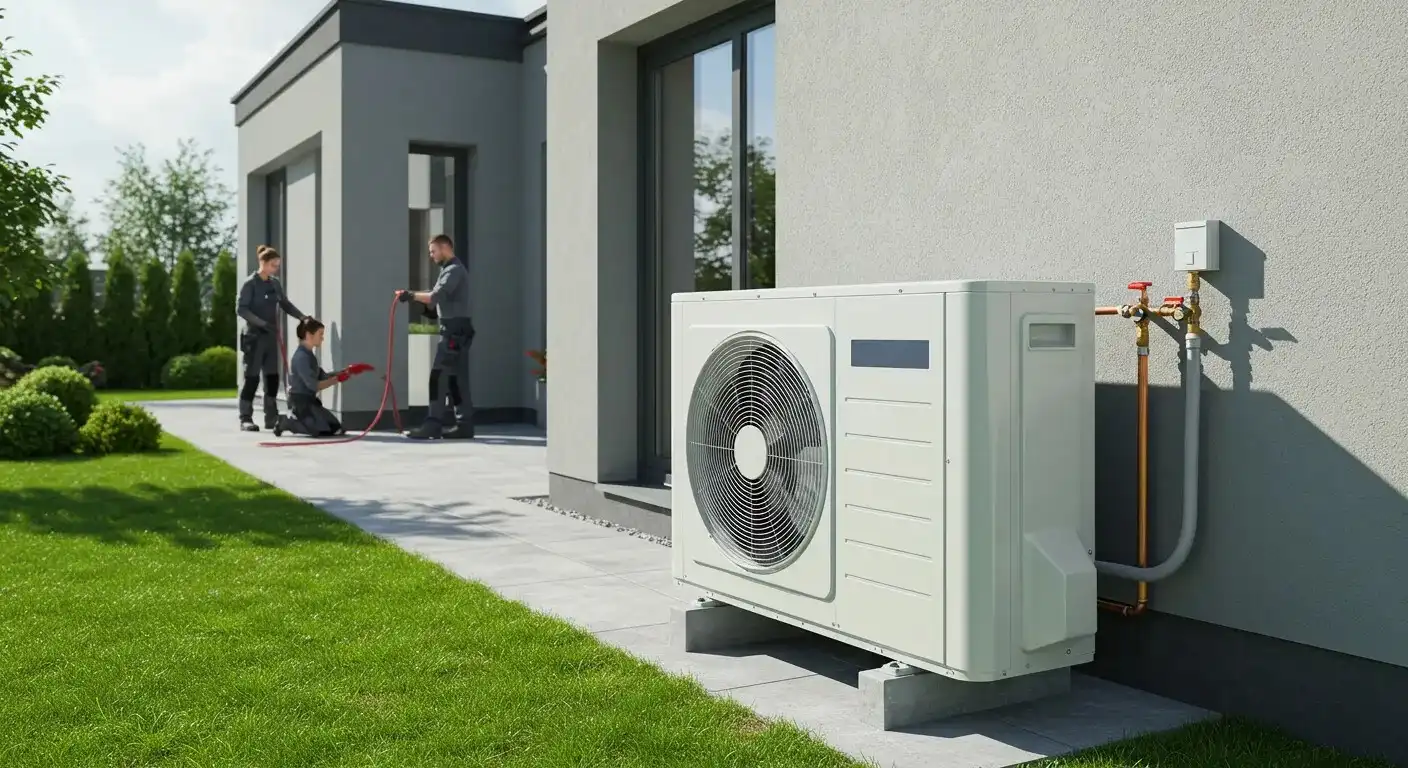
For homeowners across Modesto, Ceres, Turlock, and the broader Central Valley, upgrading to a high-efficiency heat pump or central AC system before the 2025 deadline was a smart financial move. If you completed an eligible installation, you could be sitting on significant tax savings you haven't claimed yet.
This guide breaks down exactly how the credits work, what efficiency standards your equipment needs to meet, and how to claim every dollar you're entitled to.
Understanding the Federal Tax Credits for Heat Pump and AC Upgrades
When navigating home improvements, understanding how tax credits offset your expenses is key. The Energy Efficient Home Improvement Credit, governed by Section 25C of the Internal Revenue Code, was substantially expanded to help families transition to cleaner, more efficient heating and cooling solutions.
Unlike a tax deduction, which simply lowers your taxable income, a tax credit is a dollar-for-dollar reduction of your actual tax liability. If you owe the federal government money at the end of the year, this credit directly wipes away a portion of that debt. Because this is a nonrefundable tax credit, it can reduce your tax liability to zero, but the IRS will not write you a check for any leftover amount.
Investing in high-efficiency systems not only yields these immediate tax advantages but also delivers long-term comfort and lower monthly utility bills. To understand how a new system can transform your home's energy profile, consider reading about the Benefits of Upgrading Your Aging HVAC System.
Annual Limits for Federal Tax Credits for Heat Pump and AC Upgrades
The structure of the 25C tax credit is designed to reward comprehensive home upgrades, but it does come with specific annual limits. The absolute maximum credit a taxpayer can claim in a single tax year for energy-efficiency upgrades is $3,200.
However, you cannot simply spend a lump sum on any single item and claim the full $3,200. The credit is divided into two distinct categories:
- The Heat Pump Category (Up to $2,000): You can claim 30% of the cost, up to $2,000 per year, for qualifying biomass stoves, heat pump water heaters, and air-source heat pumps.
- The General Efficiency Category (Up to $1,200): This covers home envelope improvements (insulation, doors, windows) and other residential energy property, such as central air conditioners and furnaces. Central AC units within this category are subject to an individual per-item cap of $600.
By understanding how these caps interact, you can plan your home improvements strategically. If you are interested in how a complete system replacement fits into your home comfort plan, check out our guide on pursuing an HVAC System Upgrade.
How to Claim Federal Tax Credits for Heat Pump and AC Upgrades
Claiming your tax credit is a straightforward process, but it requires careful attention to detail during tax season. To claim the credit for an eligible system installed in 2025, you must file IRS Form 5695 (Residential Energy Credits), Part II, along with your federal income tax return.
As we move through 2026, keeping precise records is more important than ever. For all eligible installations completed in 2025, the IRS introduced stricter verification rules. Taxpayers must ensure their installed equipment was produced by a "qualified manufacturer" and, where applicable, provide a Qualified Manufacturer Identification Number (QMID) or product PIN on their tax forms.
Always retain your itemized receipts, the contractor’s invoice showing installation dates, and the Manufacturer’s Certification Statement. This statement is a signed document from the manufacturer certifying that the specific model number meets the necessary federal efficiency standards.
Eligibility and Efficiency Standards for Heat Pumps and Air Conditioners
Not every air conditioner or heat pump sitting on a warehouse shelf qualifies for a federal tax credit. To ensure federal funds support truly clean energy, the IRS relies on strict efficiency standards established by the Consortium for Energy Efficiency (CEE).
To qualify for the 30% credit, your new equipment must meet or exceed the highest efficiency tier (excluding advanced tiers) established by the CEE that was in effect at the start of the year the system was placed in service. This applies to both split systems (where there are separate indoor and outdoor units) and packaged units (all-in-one outdoor systems).
Because the Central Valley experiences hot summers and cool winters, choosing the right system is crucial. If you live in the Fresno area and want to know how heat pumps perform locally, take a look at our Heat Pump Replacement Fresno CA Guide.
Central Air Conditioner Efficiency Requirements
If you upgraded to a new central air conditioner, the system must meet specific Seasonal Energy Efficiency Ratio 2 (SEER2) and Energy Efficiency Ratio 2 (EER2) ratings to qualify for the 30% credit (up to $600).
For systems installed in 2025, the standards are:
- Split Systems: Must achieve a SEER2 of $\ge$ 17.0 and an EER2 of $\ge$ 12.0.
- Packaged Systems: Must achieve a SEER2 of $\ge$ 16.0 and an EER2 of $\ge$ 11.5.
These modern metrics (SEER2 and EER2) reflect updated testing procedures designed to mimic real-world external static pressure more accurately than older SEER/EER ratings. If you are currently nursing an older, inefficient air conditioner and wondering whether it is worth fixing or replacing, read our analysis on Should You Repair or Replace Your AC?.
Heat Pump Efficiency Requirements
Heat pumps are the darlings of the Inflation Reduction Act, eligible for a much higher tax credit of up to $2,000. Because they provide both heating and cooling by transferring heat rather than creating it, they are incredibly efficient.
To qualify, an air-source heat pump must meet the highest non-advanced tier set by the CEE.
- Split Heat Pumps: Generally require high heating performance (HSPF2) alongside robust cooling efficiency (SEER2) ratings.
- Cold-Climate Heat Pumps: In colder regions, systems must meet additional low-temperature heating capacity standards, though our mild Central Valley winters mean standard CEE-compliant air-source heat pumps are typically the perfect fit.
Strategic Planning: Maximizing Your Tax Savings Across Multiple Years
Because the Energy Efficient Home Improvement Credit has an annual limit rather than a lifetime limit, smart homeowners can maximize their savings by spreading projects out over multiple tax years.
If you need multiple upgrades—such as a new air conditioner, improved attic insulation, and a heat pump water heater—doing them all in a single calendar year will cause you to bump up against the $3,200 annual cap, leaving money on the table. Spreading these projects out allows you to claim the maximum credit year after year.
When deciding which upgrades to prioritize, it is helpful to look at the overall financial picture of your home comfort. To see how repair costs stack up against new equipment purchases, explore the Cost of Repairing Old AC vs Buying a New System.
Combining HVAC Upgrades with Envelope Improvements
An efficient HVAC system can only do so much if your home is leaking conditioned air like a sieve. That is why combining HVAC upgrades with "building envelope" improvements is highly recommended.
Under the $1,200 general efficiency limit, you can claim:
- Insulation and Air Sealing: 30% of the cost, up to $1,200.
- Exterior Doors: 30% of the cost, up to $250 per door ($500 total).
- Exterior Windows and Skylights: 30% of the cost, up to $600.
- Home Energy Audits: 30% of the cost, up to $150, provided the audit is conducted by a certified professional.
Tip: Start with a professional home energy audit. It identifies exactly where your home is losing energy, and the $150 credit helps offset the cost.
Spreading Upgrades Over Multiple Tax Years
To see multi-year planning in action, consider this phased approach:
- Year 1: Schedule a professional home energy audit, seal your air ducts, and upgrade your attic insulation. You can claim 30% of these costs under the envelope category, easily reaching the $1,200 annual limit.
- Year 2: Replace your old, inefficient air conditioner with a CEE-compliant split system AC, claiming the maximum $600 credit.
- Year 3: Install a high-efficiency heat pump water heater or upgrade your main heating source to a hybrid heat pump, claiming up to the $2,000 heat pump limit.
By phasing these projects, you can claim thousands of dollars in total tax credits that would have been capped had you rushed to do everything at once.
Frequently Asked Questions About Energy Efficiency Tax Credits
Who qualifies to claim these federal tax credits?
The Energy Efficient Home Improvement Credit is primarily designed for individuals upgrading their personal residences.
- Primary Residence: You must own and use the home as your principal residence. The home must be located in the United States and must be an existing home, not a new construction.
- Renters: Renters actually can claim the credit for certain portable or tenant-installed eligible upgrades (like certain air conditioners or heat pumps), provided they paid for the equipment themselves.
- Second Homes: You can claim the credit for improvements made to a second home that you use as a residence, but you cannot claim the credit if you rent the property out and do not live in it.
- Landlords: Landlords who do not reside in the property cannot claim the 25C credit for rental properties.
How do rebates and utility incentives affect my tax credit?
If you receive a financial rebate or utility subsidy for your HVAC upgrade, you must subtract that amount from your total project cost before calculating your 30% tax credit.
For example, if a qualifying heat pump installation costs $6,000, and your local utility provider gives you a $1,000 rebate, your "qualified expense" for federal tax purposes is $5,000. Your tax credit would be 30% of $5,000 ($1,500), rather than 30% of $6,000 ($1,800).
State programs and utility incentives are excellent ways to lower your upfront costs, so stacking them with federal credits is always a winning strategy.
What documentation is required to claim the credit in 2026?
When filing your taxes in 2026 for an installation completed in 2025, make sure your files contain:
- The Contractor's Invoice: Showing the purchase price, labor costs, and installation date.
- The Manufacturer’s Certification Statement: A document certifying that the specific model meets CEE efficiency requirements.
- The QMID / Product PIN: For 2025 installations, you must include the Qualified Manufacturer Identification Number on IRS Form 5695 to validate your claim.
Conclusion
Maximizing your home's energy efficiency is a journey that pays dividends in both daily comfort and long-term savings. Whether you are looking to claim a credit for a system you installed last year or planning your next big comfort upgrade, keeping a close eye on federal tax guidelines ensures you don't leave money on the table.
At Valley Air Conditioning & Repair, Inc., we have been serving the Central Valley since 1970 with a customer-first philosophy built on trust and reliable service. If you live in Modesto, Ceres, Turlock, or any of our surrounding communities and need expert advice on selecting qualifying, high-efficiency systems for your home, we are here to help.
Ready to make your home more comfortable and energy-efficient? Contact the team at Valley Air Conditioning & Repair today to explore your options.


.webp)