.webp)


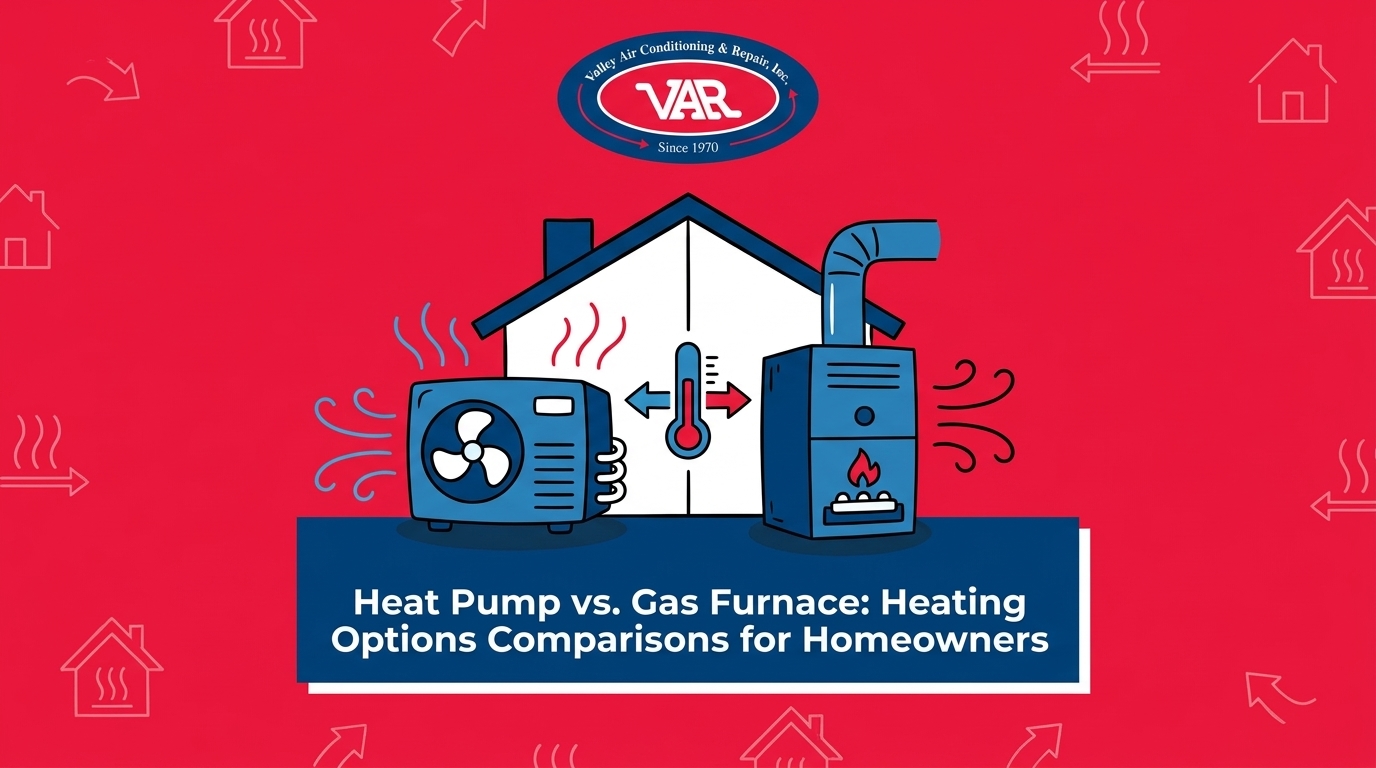
Heat Pump vs. Gas Furnace: Heating Options Comparisons for Homeowners
Deciding between a heat pump and gas furnace this fall? See our options comparisons for homeowners to evaluate winter performance. Compare your options today.
October is here, marking the rapid shift from extreme summer heat to a crisp autumn transition in Central California. As the weather cools, finding the right options comparisons for homeowners is an essential first step before the cold settles in for good. At Valley Air Conditioning & Repair, our technicians see it every year: families waiting until the first freezing night to discover their aging heater has finally failed. Transitioning from summer cooling to winter heating requires evaluating your equipment right now, long before those emergency breakdowns occur. While you may have recently relied on your system to battle triple-digit heat, fall is the definitive decision point for heating replacements. The October pre-winter heating startup season gives you the breathing room to make a calculated, informed choice about your home's long-term comfort.
If your current system is already showing signs of failure, you can schedule professional AC repair in Fresno to get immediate help. Otherwise, read on to explore how our team evaluates different heating technologies for our specific climate, so you can choose a system based on efficiency and capability rather than rushing a decision mid-winter.
Key factors to evaluate during the fall transition:
• System age: Equipment over 10 to 15 years old often experiences a sharp decline in efficiency and reliability.
• Recent repair frequency: If you spent the summer patching up your cooling side, the heating components may also be nearing the end of their operational lifespan.
• Energy consumption trends: A gradual increase in your utility bills indicates that your current setup is working harder to produce the same amount of heat.
• Indoor air quality: Older systems often struggle to filter out fall allergens and dust, circulating stale air throughout your living spaces.
To make the best decision for your home, you need to understand exactly how these two distinct systems operate. Both systems require properly sized ductwork to distribute air throughout your rooms, but their operational footprints and energy sources differ entirely. By integrating these systems with your existing air conditioning services infrastructure, you can optimize your entire HVAC network for year-round performance.
Here is a look at the fundamental differences between the two technologies:
• Pros of Heat Pumps: They provide both heating and cooling from a single unit, operate with remarkable energy efficiency in mild climates, and do not burn fossil fuels directly in your home.
• Cons of Heat Pumps: They rely entirely on electricity, which means heating stops during a power outage unless you have a backup generator.
• Pros of Gas Furnaces: They deliver high-temperature heat very quickly, operate effectively regardless of outdoor freezing conditions, and often have a slightly longer mechanical lifespan due to fewer moving parts running year-round.
• Cons of Gas Furnaces: They only provide heat, require a separate air conditioning unit for summer, and involve combustion, which necessitates strict carbon monoxide safety protocols.
Gas furnaces rely on traditional combustion to generate heat. The process begins when the thermostat signals the furnace to turn on. A valve opens, delivering natural gas to the burners, where an igniter lights the fuel. The resulting flames heat a critical metal component called the heat exchanger. As your blower motor pulls cold indoor air across the exterior of this hot metal exchanger, the air warms up and is pushed back through your ductwork. The dangerous exhaust gases from the combustion process never mix with your breathing air; instead, they are safely vented out of your home through a dedicated flue pipe. This method offers traditional reliability through direct flame heating, but it strictly requires access to natural gas lines and proper ventilation.
Air-source heat pumps do not generate heat through combustion. Instead, they utilize the science of heat transfer. Using a closed-loop system of copper refrigerant lines, a heat pump absorbs ambient thermal energy from the outside air—even when it feels cold to the human touch—and compresses that refrigerant to raise its temperature. The system then transfers this concentrated heat indoors, releasing it into your air supply. Because moving heat requires far less energy than creating it, modern high-efficiency heat pumps can deliver 1.5 to 3 times more heat energy to a home than the electrical energy they consume. This process is highly effective, especially when local temperatures align with the system's optimal operating range.
National heating advice often focuses on extreme freezing climates, like those in the Northeast or Midwest. This generic advice heavily skews expectations for California homeowners and can lead to purchasing the wrong equipment. When evaluating a heating system for Central Valley winters, the main consideration is matching the technology to the actual weather you experience. In our years of installing and servicing HVAC systems across Fresno, our team at Valley Air Conditioning & Repair looks at the specific thermal dynamics of our region rather than relying on national averages.
Air-source heat pumps operate at peak efficiency when temperatures remain above freezing. In extreme sub-zero climates, a heat pump must work much harder to extract the limited thermal energy from the frigid air. When this happens, the system often relies on energy-heavy auxiliary heating strips to make up the difference, which causes electricity usage to spike. However, our local climate rarely reaches those bitter extremes.
Fresno's average winter low temperatures in the 30s and 40s represent the absolute sweet spot for maximum heat pump efficiency. In this specific temperature band, a high-efficiency heat pump can easily extract plenty of ambient heat from the outdoor air. The system can maintain 100% heating capacity without ever needing to activate those expensive auxiliary heating strips. This climate-matched efficiency translates to significant reductions in overall energy consumption during the winter months. You get all the warmth your family needs, delivered through a process that uses a fraction of the energy required by traditional resistance heaters or older combustion models.
While heat pumps excel in mild climates, the gas furnace remains a powerhouse of traditional heating. For homeowners who prefer the familiar feel of combustion heating, breaking down the operational realities of a furnace is a vital part of the October pre-winter heating startup evaluation.
Gas furnaces provide high-temperature heat output very quickly. When a furnace kicks on, the air coming out of the vents is typically much warmer than the air produced by a heat pump. In our experience, some homeowners strongly prefer this intense, rapid morning warm-up, especially in older homes with drafty windows or poor insulation where quick heat recovery is necessary.
Modern high-efficiency furnaces have also evolved significantly. They achieve AFUE (Annual Fuel Utilization Efficiency) ratings of 90% or higher. An AFUE rating of 95%, for example, means that 95% of the fuel consumed is converted directly into usable heat for your home, with only 5% lost through the exhaust flue. This minimizes wasted fuel and maximizes the return on your energy investment.
• Heat Generation Method — High-Efficiency Gas Furnace: Combustion (burns natural gas) — Air-Source Heat Pump: Heat Transfer (moves ambient heat)
• Output Temperature — High-Efficiency Gas Furnace: High, rapid heat delivery — Air-Source Heat Pump: Steady, gradual warmth
• Primary Efficiency Metric — High-Efficiency Gas Furnace: AFUE (Annual Fuel Utilization Efficiency) — Air-Source Heat Pump: HSPF2 (Heating Seasonal Performance Factor)
• Climate Dependency — High-Efficiency Gas Furnace: Independent of outdoor weather — Air-Source Heat Pump: Highly efficient in mild 30s-40s weather
• Safety Considerations — High-Efficiency Gas Furnace: Requires carbon monoxide monitoring — Air-Source Heat Pump: No combustion gases present
Furthermore, gas furnaces operate completely independently of outdoor temperatures. Whether it is 45 degrees or a rare 25-degree freeze, the furnace burns gas at the exact same rate and delivers the exact same output. However, this traditional route carries a larger environmental footprint due to fossil fuel usage, and it requires strict adherence to safety protocols, including regular heat exchanger inspections and active carbon monoxide detectors.
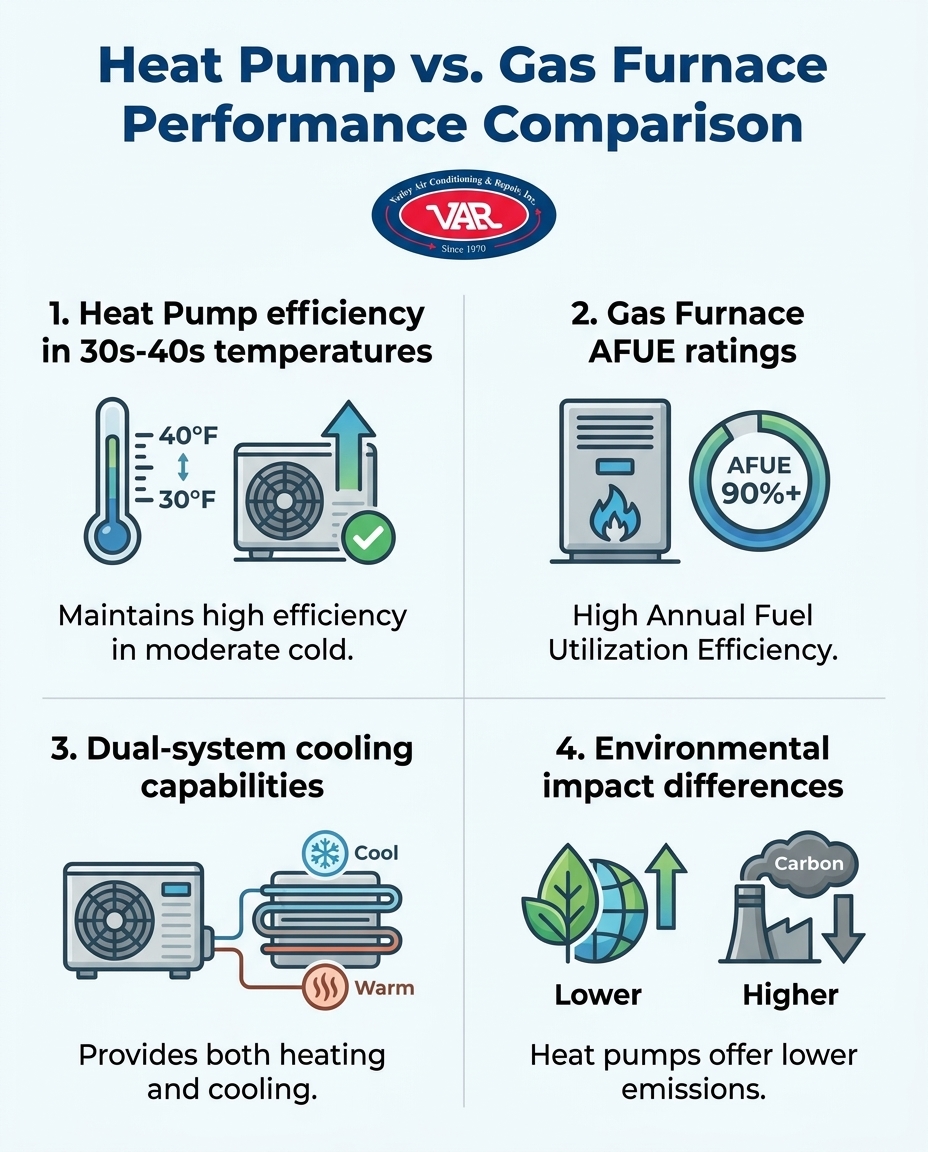
One of the most significant differences between these technologies is their scope of operation. A gas furnace only provides heating. To survive the blistering Central California summers, a home with a furnace requires a completely separate, standalone air conditioner. This means maintaining two distinct pieces of heavy equipment, each with its own set of electrical components, motors, and potential failure points.
A heat pump, however, acts as a two-in-one solution. It features a brilliant mechanical component known as a reversing valve. During the winter, the refrigerant flows in one direction, pulling heat from the outside and releasing it indoors. When summer arrives, the reversing valve shifts. The flow of refrigerant reverses, allowing the exact same piece of equipment to absorb heat from inside your home and pump it outside. In cooling mode, a heat pump acts as a high-efficiency air conditioner.
Consolidating your HVAC infrastructure to a single dual-purpose system can streamline your maintenance requirements and reduce the physical footprint of the equipment in your yard. You only have one system to tune up, one set of filters to monitor, and one primary mechanical unit to protect. If you have ever had to urgently research what to do if your AC is not turning on during a July heatwave, upgrading to a dual-purpose heat pump provides a fresh start for both your heating and cooling reliability. It ensures that the same advanced technology keeping you warm in December will seamlessly pivot to keep you cool the following August.
When you are ready to compare specific models during your October pre-winter heating startup, understanding the industry terminology is critical. Manufacturers use standardized ratings to measure how well a system uses energy. Knowing what these acronyms mean will help you evaluate the long-term operational costs of your new system.
The checklist for evaluating new heating systems:
• Understand HSPF2 for Heat Pumps: The Heating Seasonal Performance Factor measures the total space heating required during the season divided by the total electrical energy consumed. Higher HSPF2 ratings indicate better efficiency and lower long-term energy consumption.
• Look at AFUE for Gas Furnaces: The Annual Fuel Utilization Efficiency percentage tells you how much fuel turns into heat. A standard furnace might sit at 80%, while high-efficiency condensing models push past 95%.
• Check SEER2 Ratings: Because a heat pump also cools your home, you must evaluate its Seasonal Energy Efficiency Ratio. This ensures your summer cooling bills remain manageable.
• Consider Variable-Speed Technology: Both heat pumps and modern furnaces offer variable-speed blower motors. Instead of just turning "on" at full blast or "off," these motors adjust their output in small increments, maintaining a more consistent indoor temperature and reducing energy spikes.
• Research Generic Energy Rebates: Federal tax credits and local utility incentives may apply to qualifying high-efficiency heat pump installations. Homeowners should consult with a tax professional or local utility provider to verify current generic energy rebate programs before making a final decision.
Before you commit to a full system replacement, it is important to accurately assess the true condition of your current equipment. Not all heating issues require a full system replacement. Sometimes, poor performance, strange noises, or weak airflow are tied to failing individual components rather than a completely dead system.
Scheduling a thorough AC diagnostic service—which applies equally to the outdoor unit of a heat pump system—can reveal whether your current unit can be saved. A comprehensive diagnostic goes far beyond simply turning the thermostat on and off. A technician will test electrical components like capacitors and contactors, measure the exact voltage pulling through the compressor, inspect the heat exchanger for dangerous microscopic cracks, and verify that the refrigerant charge is perfectly balanced.
As a trusted local expert, our team at Valley Air Conditioning & Repair emphasizes the value of an honest, unbiased diagnostic evaluation. After performing countless inspections throughout the Central Valley, we often find that an objective technical assessment can identify warranty-covered repairs, a simple faulty sensor, or a clogged blower wheel rather than forcing an expensive, unnecessary upgrade. Knowing exactly what is wrong gives you the power to weigh the cost of a repair against the long-term benefits of a replacement.
Regardless of the system you ultimately choose—or if you decide to keep your current unit running for another season—enrolling in a preventative maintenance plan is critical. Routine maintenance protects your investment, ensures peak efficiency, and catches minor wear and tear during the October pre-winter heating startup window before those small issues turn into mid-winter breakdowns.
Both heat pumps and gas furnaces offer distinct advantages depending on your home's existing ductwork, electrical infrastructure, and your family's personal comfort preferences. A gas furnace delivers rapid, intense heat and proven reliability, while a heat pump offers incredible energy efficiency and the convenience of year-round dual-system operation.
By evaluating these systems against our average winter low temperatures in the 30s and 40s, homeowners can clearly see how to select the most efficient technology for our specific climate. A clear, technically sound evaluation ensures you make an informed choice before the winter cold officially sets in, protecting both your comfort and your energy budget.
Take the time to explore your options with a local expert to ensure your home remains comfortable and efficient all season long. To keep whichever system you choose running flawlessly year after year, consider securing a preventative maintenance plan today.
Is a heat pump or gas furnace better for California winters?
Based on what we see in the field every day, a heat pump is generally considered highly advantageous for California winters due to our mild climate. Because average winter temperatures rarely drop below freezing for extended periods, a heat pump can operate at peak efficiency, transferring ambient heat indoors using far less energy than a combustion furnace. However, homes that already have natural gas infrastructure and prefer rapid, high-temperature heat may still prefer a modern, high-efficiency gas furnace.
How efficient is a heat pump in 40-degree weather?
A heat pump is exceptionally efficient in 40-degree weather. At this temperature, there is abundant thermal energy in the outdoor air for the refrigerant to absorb and transfer inside. The system can easily maintain a comfortable indoor climate without ever needing to rely on secondary, energy-heavy auxiliary heating strips, resulting in low operational costs.
What should I consider when replacing my heater in the fall?
When replacing your heater in the fall, you should evaluate your current system's age, its recent repair history, and your rising energy bills. You must also consider whether you want to consolidate your heating and cooling into one unit (a heat pump) or maintain separate systems. Finally, look at efficiency ratings like AFUE or HSPF2 to understand the long-term energy usage of your new equipment.
Do heat pumps work effectively without auxiliary heat in mild climates?
Yes, heat pumps work incredibly well without auxiliary heat in mild climates. Auxiliary heat strips are typically only activated when outside temperatures plunge into extreme sub-freezing ranges and the heat pump struggles to extract enough thermal energy. In Central California's standard winter weather, a properly sized heat pump can handle 100% of the heating load on its own.
Are there generic tax credits available for high-efficiency heating systems?
Yes, federal tax credits and various local utility incentives frequently apply to qualifying high-efficiency heat pump and furnace installations. These generic energy rebate programs are designed to encourage homeowners to upgrade to environmentally friendly technologies. You should always consult with a tax professional or your local utility provider to verify current programs and eligibility requirements before purchasing a system.

As a business with many AC units, it is essential to have a responsive AC company. Valley Air Conditioning understands our needs. They are always responsive and our AC is up and running very quickly.
I had them do an AC check on the home I was buying, they were honest and quick. I hired them to do the summer and Fall maintenance for $149. Happy with this company!
100% recommend. I called, same day they came out and gave me estimate. Conley was honest and didn't try to recommend/sell us anything we didn't need. When I called him with questions before making a decision, he happily answered and was not annoyed by me contacting him. Conley and VAR
This is a group of good people. Very professional and knowledgeable. They take the time to listen and find the best solution that fits best for any situation. There's no way you can go wrong in choosing VAR.
We have used Valley Air for over fifteen years. The last two years ,Matt came to our house to service twice a year. Always on time, so polite and so professional. This is a very honest company and you can always depend on them and trust them. The office always treats everyone cheerfully and always want to do what you need done very fast YOU CAN COUNT ON THIS Company