.webp)


Preparing Clovis Commercial Properties for Fall Heating Demands
Transitioning commercial RTUs from summer cooling to fall heating requires proactive care. See how a September inspection prevents sudden tenant disruptions.
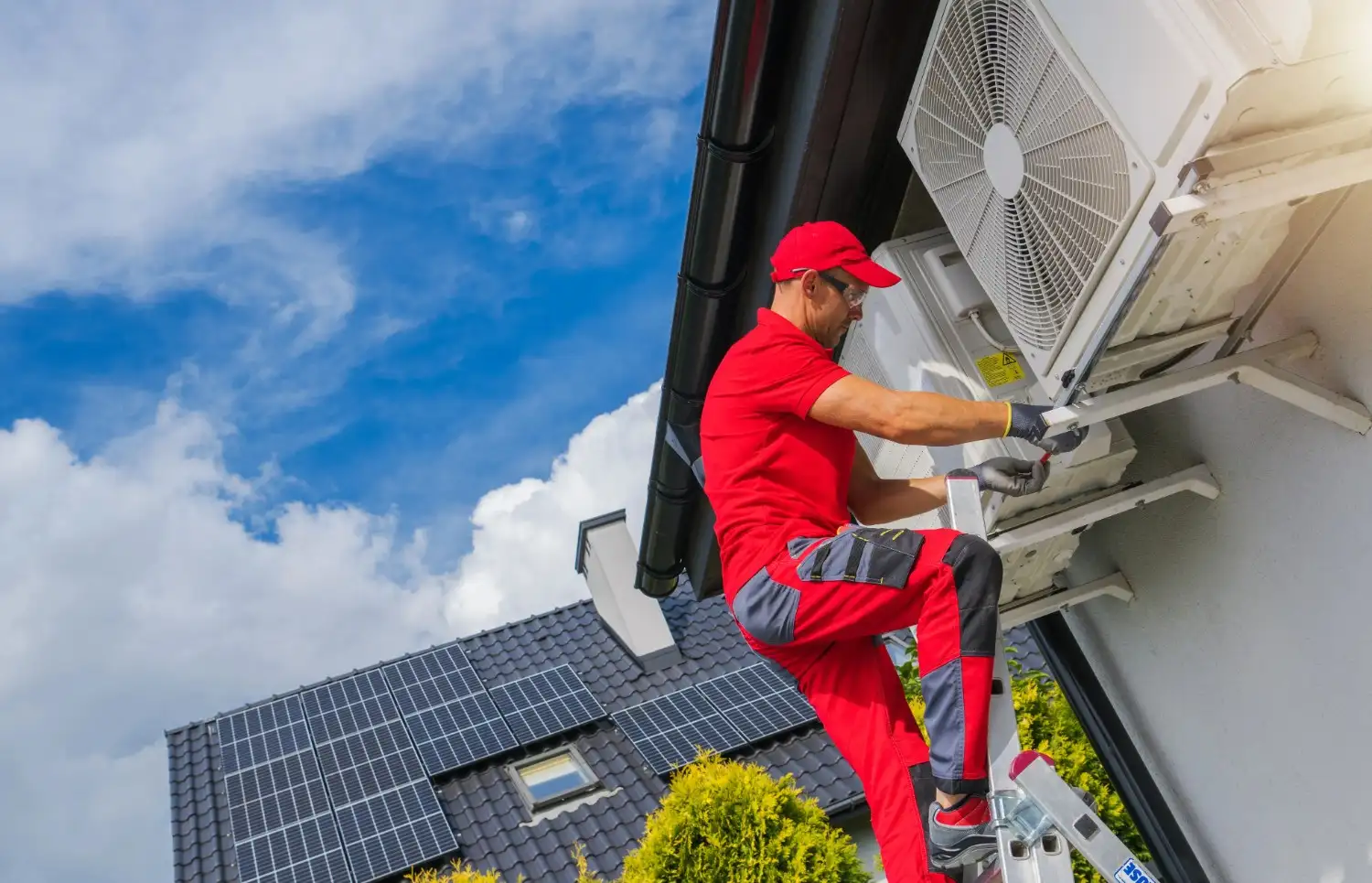
The signs your heat pump needs professional attention are often easy to miss — until the system stops working on the hottest or coldest day of the year. For homeowners in Modesto and the Central Valley, where heat pumps run hard through scorching summers and cool winters alike, catching problems early can mean the difference between a quick repair and a full replacement.
Here are the most common warning signs to watch for:
A well-maintained heat pump can last around 15 years, but skipping regular service shortens that lifespan significantly. According to the U.S. Department of Energy, heat pumps can cut electricity use for heating by up to 65% compared to electric resistance heating — but only when they're running properly. A struggling system delivers only a fraction of that efficiency, and the extra strain quietly drives up your monthly bills.
The good news is that most heat pump problems give you warning signs well before a full breakdown. Knowing what to look for puts you in control.
Easy signs your heat pump needs professional attention glossary:
In our beautiful but demanding Central Valley climate, our home comfort systems operate almost year-round. Because a heat pump handles both heating and cooling duties, it works twice as hard as a standalone furnace. This double-duty cycle means that wear and tear accumulate much faster.
Recognizing when your system is struggling is the first step toward protecting your investment. Early detection not only preserves your comfort but also prevents minor mechanical issues from snowballing into catastrophic system failures. By keeping a close eye—and ear—on your unit, you can maximize its operational lifespan and keep your home cozy or cool exactly when you need it most.
Your heat pump should operate with a gentle, predictable hum. When it starts "singing" a different tune, it is trying to tell you something is wrong.
Unusual noises are among the most immediate indicators of mechanical distress. If you hear grinding, it often points to worn-out bearings inside the blower motor or compressor. Rattling usually suggests loose components, panels, or debris inside the cabinet. Squealing or screeching is a classic sign of a failing belt or motor bearings that have lost their lubrication. If you hear a sharp, persistent hissing, you could be dealing with a high-pressure refrigerant leak. These mechanical issues require swift intervention. If you are experiencing sudden, loud disruptions, checking out our Emergency Heat Pump Service Fresno Guide can help you determine how quickly you need a technician at your door.
Odors are another sensory warning system. A persistent burning or electrical smell suggests overheating wires, melting plastic, or a failing motor capacitor. If you notice a musty, stale odor coming from your vents, you might be experiencing "dirty sock syndrome." This occurs when bacteria, mold, and mildew build up on the indoor evaporator coils due to stagnant moisture. These biological growths not only smell unpleasant but can also degrade your indoor air quality.
Have you noticed your monthly utility bills climbing higher and higher, even though your daily habits and local weather have remained relatively stable? A sudden, unexplained spike of 15% to 20% in your energy costs is a major red flag.
When internal components are dirty, worn, or failing, the heat pump has to work much harder and run much longer to reach the temperature set on your thermostat. For instance, dirty outdoor or indoor coils insulate the refrigerant lines, making it incredibly difficult for the system to transfer heat efficiently. Low refrigerant levels force the compressor to run continuously without ever fully satisfying your home's heating or cooling demands. To get your system back to peak efficiency and stop draining your wallet, consult our Heat Pump Service Fresno CA Guide for professional cleaning and system calibration tips.
When your heat pump is operating in peak condition, you should barely notice it. The air circulating through your home should feel fresh, consistent, and perfectly balanced. When performance starts to slip, you will quickly notice hot or cold spots and weak, sluggish airflow.
To help you distinguish between normal operation and a system in decline, review this helpful comparison table:
| System Feature | Normal Heat Pump Operation | Failing Heat Pump Symptoms |
|---|---|---|
| Air Temperature | Mildly warm in winter; crisp and cool in summer | Luke-warm, room-temperature, or completely incorrect air |
| Airflow Strength | Steady, strong breeze from all supply registers | Weak, barely noticeable draft or completely silent vents |
| Temperature Balance | Consistent, even comfort across all rooms | Significant hot or cold spots throughout the house |
| Cycle Frequency | Steady cycles lasting 15 to 20 minutes | Short, rapid cycles (on/off every few minutes) or constant running |
| Sound Level | Low, steady hum during startup and operation | Loud clanging, grinding, squealing, or persistent clicking |
If you find yourself constantly adjusting the thermostat because your living room feels like a sauna while your bedroom feels like an icebox, your heat pump is struggling.
Uneven temperature distribution can stem from several issues. A failing compressor may no longer have the mechanical strength to pump refrigerant effectively through the system. Alternatively, a malfunctioning reversing valve—the critical component that switches your heat pump between heating and cooling modes—can get stuck halfway, causing weak heat transfer. In larger homes, uneven temperatures might also point to issues with your zoning dampers or ductwork. If you live in the Clovis area and are dealing with these frustrating temperature swings, our Heat Pump Repair Clovis CA Guide offers excellent insights into how local technicians diagnose and resolve these complex issues.
Weak airflow from your vents is more than just a minor annoyance; it restricts the heat pump's ability to condition your home, putting massive strain on the entire system.
The most common culprit behind weak airflow is a severely clogged air filter. When the filter is packed with dust, pet dander, and hair, the blower motor has to work twice as hard to pull air through, which can cause the motor to overheat and fail prematurely. If the filter is clean, the problem could be a failing blower motor, a broken fan belt, or extensive leaks in your ductwork. Leaky ducts allow conditioned air to escape into your attic or crawlspace before it ever reaches your living areas. This drop in system pressure reduces comfort and wastes energy. To understand how pressure imbalances impact your system's health, check out our guide on Common Heat Pump Pressure Problems.
Two of the most destructive behaviors a heat pump can exhibit are short cycling and ice buildup. Both issues can quickly destroy major components, leading to premature system failure if they are not addressed by a professional.
Short cycling occurs when your heat pump turns on, runs for a brief few minutes, shuts off, and then repeats the process over and over again. This constant starting and stopping is incredibly damaging.
The startup phase is the most electrically and mechanically stressful part of a heat pump's cycle. Constant short cycling accelerates wear on the compressor and fan motors, leading to electrical burnouts. It also prevents the system from properly dehumidifying your home during our hot Valley summers. Short cycling can be triggered by a malfunctioning thermostat, a failing control board, low refrigerant levels, or even an oversized unit that cools or heats the home too quickly. If your system is short cycling or refuses to start at all, our guide on how to Fix a Heat Pump That Won't Turn On Kerman provides excellent troubleshooting steps to help you identify the root cause.
While it might seem strange to see ice forming on an HVAC unit in the middle of a warm season, ice buildup on your outdoor heat pump is a major warning sign.
In winter, a light, uniform layer of frost on the outdoor unit is normal, and your system's automatic defrost cycle should melt it away periodically. However, thick, solid blocks of ice covering the coils indicate a serious malfunction. Ice forms when the refrigerant temperature inside the coils drops below freezing and moisture in the air condenses and freezes on contact. This is usually caused by restricted airflow (such as dirty coils or a dead outdoor fan motor) or a refrigerant leak. Running a heat pump covered in ice can permanently damage the compressor. If you notice ice forming, turn the system off immediately and call a professional. For more localized advice on handling winter frost and system care, read our Heat Pump Tips Reedley CA.
As a homeowner, it is helpful to know what tasks you can safely handle yourself and when it is time to step back and call in the licensed professionals. Attempting to perform advanced repairs without the proper training and tools can void your warranty, damage your equipment, and even put your safety at risk.
There are several simple, high-impact maintenance tasks you can safely perform to keep your heat pump running smoothly:
For more specialized tips tailored to our local dry, dusty Valley climate, check out our Heat Pump Maintenance Tips for Desert Homeowners.
Any task that goes beyond basic cleaning and filter changes requires a professional.
Working with high-voltage electrical connections, testing control boards, and diagnosing compressor motor failures are highly dangerous tasks that carry severe risks of electrical shock or fire. Furthermore, handling refrigerant requires specialized EPA certification. It is illegal and unsafe for unlicensed individuals to handle, recharge, or dispose of chemical refrigerants. If your system requires deep coil cleaning, electrical diagnostic work, or a refrigerant charge, it is time to schedule a professional visit. If you suspect your system is reaching the end of its useful life, our Heat Pump Replacement Fresno CA Guide can help you plan your next steps.
A heat pump is generally considered "bad" or nearing the end of its life when it is between 10 and 15 years old and experiences frequent, costly breakdowns. If you find yourself calling for repairs multiple times a year, or if your energy bills remain high despite regular maintenance, the system is likely failing.
We recommend using the 50% Rule: if the cost of a single repair exceeds half the value of a brand-new system, investing in a modern, energy-efficient replacement is almost always the smarter financial choice. For homeowners in Clovis facing these tough decisions, our Emergency Heat Pump Replacement Clovis Tips offer fantastic guidance on how to navigate an unexpected system failure.
Deciding whether to repair or replace your heat pump comes down to three main factors: age, repair history, and overall energy efficiency.
If your heat pump is under 10 years old and the repair is a simple, straightforward fix (like replacing a capacitor or a fan motor), repairing the unit is usually the best path forward. However, if your system is over 12 years old, uses outdated refrigerant, or has a failing compressor, replacing the unit will save you more money in the long run through lower utility bills and fewer repair headaches. Modern heat pumps feature advanced variable-speed technology that provides far better temperature and humidity control. To weigh your options carefully, explore our comprehensive Heat Pump Replacement Clovis CA Guide.
If your heat pump is blowing cool air during a chilly winter day, it could be due to a few different reasons:
Your heat pump is the hard-working heart of your home's comfort system. Paying attention to early warning signs—like strange noises, unusual smells, uneven temperatures, or sudden utility bill spikes—will protect your home, your wallet, and your peace of mind.
At Valley Air Conditioning & Repair, Inc., we have been keeping families comfortable throughout the Central Valley since 1970. Our family-owned business was built on a simple, customer-first philosophy: honest work, honorable intentions, and trustworthy service. Whether you live in Fresno, Clovis, Reedley, Kerman, or any of our surrounding communities, we are here to provide the expert care your system deserves.
Don't wait for a minor issue to become a major breakdown. Schedule professional heat pump service with our friendly, experienced team today!

As a business with many AC units, it is essential to have a responsive AC company. Valley Air Conditioning understands our needs. They are always responsive and our AC is up and running very quickly.
I had them do an AC check on the home I was buying, they were honest and quick. I hired them to do the summer and Fall maintenance for $149. Happy with this company!
100% recommend. I called, same day they came out and gave me estimate. Conley was honest and didn't try to recommend/sell us anything we didn't need. When I called him with questions before making a decision, he happily answered and was not annoyed by me contacting him. Conley and VAR
This is a group of good people. Very professional and knowledgeable. They take the time to listen and find the best solution that fits best for any situation. There's no way you can go wrong in choosing VAR.
We have used Valley Air for over fifteen years. The last two years ,Matt came to our house to service twice a year. Always on time, so polite and so professional. This is a very honest company and you can always depend on them and trust them. The office always treats everyone cheerfully and always want to do what you need done very fast YOU CAN COUNT ON THIS Company