.webp)


Guide
A Comprehensive Guide to Preventing Arizona Heat Pump Issues

Why Common Heat Pump Problems in Arizona and How to Prevent Them Matter for Central Valley Homeowners
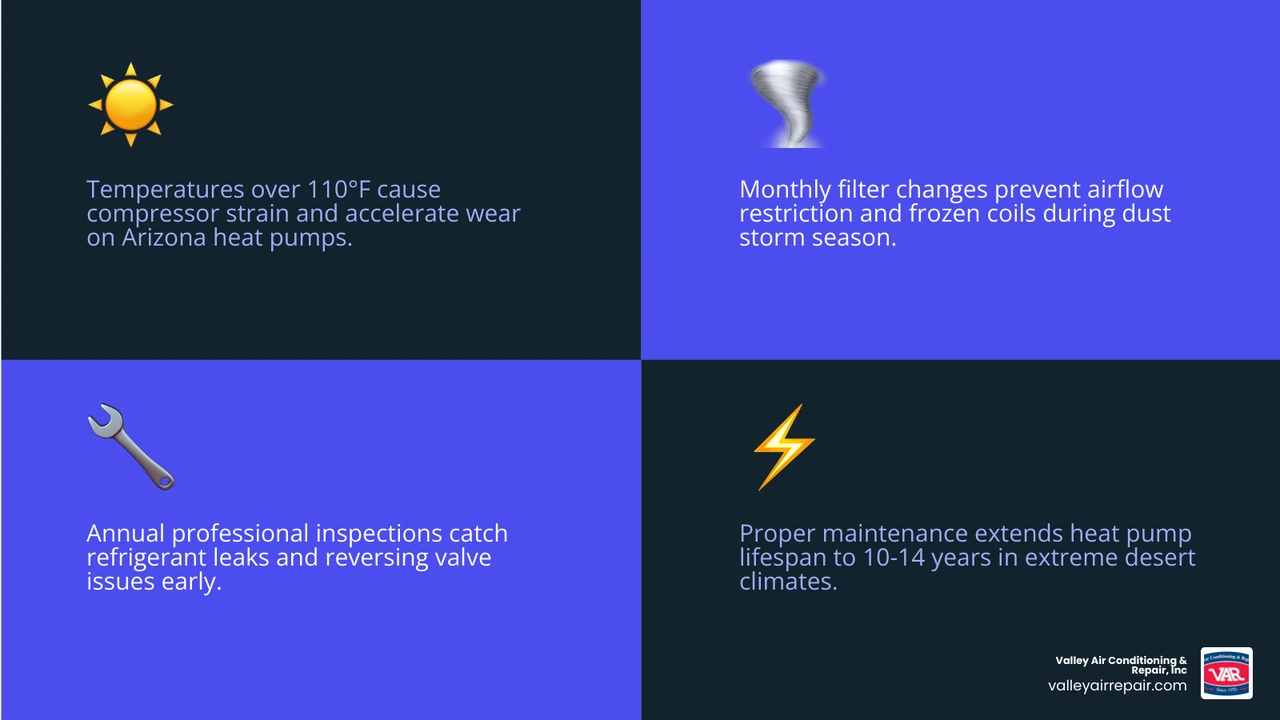
Understanding common heat pump problems in Arizona and how to prevent them is incredibly valuable for homeowners in Fresno and the surrounding Central Valley of California. While we are located in California, our dry, high-heat summer climate closely mirrors the desert Southwest. Summer temperatures in Fresno regularly push past 110°F, dust storms sweep across the valley, and extreme heat waves put serious stress on heat pump systems that would rarely face such extremes in milder regions.
Here's a quick overview of the most common heat pump problems that homeowners in hot, dusty climates face and how to prevent them:
| Problem | Common Cause | Prevention |
|---|---|---|
| Refrigerant leaks | Thermal stress on coils from extreme heat | Annual professional inspection |
| Clogged filters | Fine dust and frequent system use | Monthly filter checks; replace every 1-3 months |
| Reversing valve failure | Long cooling seasons; infrequent heating use | Seasonal professional tune-ups |
| Frozen coils | Low refrigerant or restricted airflow | Keep filters clean; schedule maintenance |
| Compressor strain | Continuous operation in 110°F+ heat | Shade outdoor unit; maintain coil cleanliness |
| Short cycling | Dirty components or improper sizing | Professional maintenance and load calculation |
| Unusual noises | Loose parts, debris, or motor wear | Clear debris; schedule professional inspection |
| Bad odors | Mold, electrical issues, or pests | Regular coil cleaning; professional diagnosis |
Heat pumps are one of the smartest choices for Fresno homes — they handle both heating and cooling in a single system and can cut energy consumption significantly compared to older HVAC equipment. But the same hot, dry environment that makes them so useful also accelerates wear and creates unique failure modes.
The good news is that most of these problems are preventable with the right maintenance habits and timely professional service. This guide walks you through everything you need to know — from spotting early warning signs to knowing when it's time to call in an expert.
An Overview of Common Heat Pump Problems in Arizona and How to Prevent Them
Living in a hot, dry climate means your HVAC system doesn't get much of a vacation. While traditional systems in other parts of the country operate seasonally, a heat pump in Fresno and the Central Valley is a year-round workhorse. In places like Arizona, as well as the equally scorching Central Valley of California, a heat pump's typical lifespan ranges from 10 to 14 years with proper maintenance. Without regular care, however, that efficiency drops off dramatically long before the decade mark.
Our unique climate exposes outdoor machinery to intense, daily environmental hazards. During the early summer months, extreme heat forces the system to run almost continuously. By late summer, high winds and dust storms blanket everything in a fine layer of silt.
Understanding these regional threats is the first step to protecting your investment. If you are currently weighing your options for home comfort, reading about Is a Heat Pump Right for Your Desert Home can help you understand how these systems balance year-round comfort against harsh outdoor elements.
How Extreme Desert Heat Causes Common Heat Pump Problems in Arizona and How to Prevent Them
When temperatures soar past 110°F, your heat pump has to work much harder to reject heat from inside your home to the boiling outdoor air. This extreme thermal stress is the primary driver behind several common system failures:
- Refrigerant Leaks: The intense heat causes the copper coils in your heat pump to expand and contract rapidly. Over time, this constant movement creates microscopic cracks in the coils or joints, allowing refrigerant to escape. Low refrigerant makes it incredibly difficult for the system to cool your home. If your system is struggling, check out our guide on Why Is My AC Running But Not Cooling to see if a leak might be the culprit.
- Compressor Strain: The compressor is the heart of your heat pump. When outdoor temperatures are extremely high, the compressor must operate at maximum capacity for hours on end. If the outdoor coils are coated in dust or restricted by nearby plants, the compressor can easily overheat, leading to electrical failure or complete mechanical breakdown.
- Capacitor Failure: High temperatures are notoriously tough on electrical components. The run capacitor, which provides the electrical boost needed to keep the fan motor and compressor running, can easily bulge and fail under extreme thermal stress, leaving your system completely lifeless on a triple-digit afternoon.
To prevent these heat-induced failures, we recommend providing your outdoor unit with some breathing room. While you should never crowd the unit, placing a shade structure or planting tall, airy trees several feet away to block direct afternoon sun can significantly lower the ambient temperature around the coils, reducing thermal stress.
Why Neglected Maintenance Leads to Common Heat Pump Problems in Arizona and How to Prevent Them
Because heat pumps in dry climates run almost continuously, neglecting basic maintenance acts as an absolute catalyst for system failure.
The chain reaction of neglected maintenance typically looks like this:
- Airflow Issues: Neglected Maintenance -> Clogged Air Filter -> Restricted Airflow -> Frozen Evaporator Coils
Overheating Issues: Dust Accumulation -> Insulated Coils -> Compressor Overheating & Failure
Clogged Filters and Airflow Restriction: Desert-like dust is incredibly fine and highly invasive. It bypasses cheap filters easily, coating the internal blower fan and evaporator coils. This restriction forces your system to run longer and work harder to pull air through, which drastically spikes your monthly energy consumption.
- Frozen Coils: It sounds counterintuitive, but a heat pump can easily freeze up in the middle of a hot summer. When airflow is restricted by a dirty filter or when refrigerant levels are low, the temperature of the indoor evaporator coil drops below freezing. Moisture in the air condenses on the coil and instantly turns to ice, completely blocking all cooling.
- Reversing Valve Sticking: The reversing valve is the component that allows a heat pump to switch between heating and cooling modes. Because Central Valley winters are relatively mild, your heat pump will spend the vast majority of its life in cooling mode. When you finally switch to heating mode during a chilly winter night, a neglected, dust-coated reversing valve may stick or fail to transition, leaving you with cold air blowing from your vents.
Establishing a consistent maintenance plan is the single best way to prevent these issues. To learn more about tailoring your upkeep schedule to dry, dusty environments, read our detailed guide on Proper HVAC Maintenance for Desert Climate.
Key Warning Signs of Heat Pump Trouble
Preventing a total system breakdown starts with paying attention to the subtle clues your heat pump gives you when something is wrong.

Keep an eye and an ear out for these common warning signs:
- Weak or Warm Airflow: If the air coming out of your supply registers feels weak or lukewarm when the system is in cooling mode, you are likely dealing with a severe airflow restriction, a failing blower motor, or a refrigerant leak.
- Strange Noises: Heat pumps are designed to operate relatively quietly. If you start hearing loud rattling, squealing, or grinding noises, turn off the system immediately. Rattling often points to loose panels or debris in the outdoor fan, while squealing or grinding usually indicates a failing motor bearing or compressor issue.
- Short Cycling: If your heat pump turns on, runs for a couple of minutes, and then shuts off abruptly before reaching your thermostat's set temperature, it is "short cycling." This places immense strain on the compressor and electrical contacts. It is often triggered by a clogged filter, a malfunctioning thermostat, or an oversized system.
- Constant Operation: On a 115°F afternoon, it is completely normal for your system to run almost continuously to maintain comfort. However, if your heat pump is running non-stop on a relatively mild day, it indicates a loss of cooling capacity. For a deeper dive into this issue, check out our article on When Constant AC Running Signals a Problem vs Normal Desert Operation.
- Auxiliary Heat Running Constantly: In the winter, if you notice the "AUX" or "EM" heat light staying on constantly on your thermostat when outdoor temperatures are well above freezing, your heat pump is struggling to extract heat efficiently and is relying on less efficient electric backup heat strips to keep you warm.
Essential Maintenance Steps for Desert Homeowners
While complex diagnostics should always be left to certified professionals, there are several simple, highly effective DIY maintenance steps you can take to keep your heat pump running efficiently all year long.
Monthly DIY Maintenance Checklist
- Inspect and Replace Air Filters: Check your air filters every 30 days. If you have pets, suffer from allergies, or if a major dust storm has recently rolled through, you may need to replace them monthly. At a minimum, change them every 90 days.
- Maintain Outdoor Unit Clearance: Keep a clear zone of at least two to three feet around your outdoor condenser unit. Trim back any desert landscaping, weeds, or shrubs, and regularly sweep away dry leaves and blowing debris that can block critical airflow.
- Gently Clean the Outdoor Coils: Turn off the power to your system at the outdoor disconnect box. Use a gentle garden hose (never a high-pressure washer, which will bend the delicate aluminum fins) to wash away accumulated dust, dirt, and pollen from the outdoor coils.
- Inspect the Condensate Drain Line: Locate your system’s condensate drain line (usually a white PVC pipe dripping near the outdoor unit). Ensure water is dripping freely when the system is cooling. If you suspect a clog, you can use a wet/dry vacuum to clear out built-up algae or dust.
Taking a proactive approach before the summer heat arrives is crucial. To get your system ready for the most demanding months of the year, follow the steps outlined in our guide on Spring AC Maintenance Before Arizona Summer.
When to Call a Professional HVAC Technician
While changing an air filter or clearing weeds is easy to do yourself, attempting complex repairs on a heat pump can be incredibly dangerous and may void your manufacturer's warranty.
To help you decide whether to handle an issue yourself or call in the experts, consider this simple breakdown:
- Safe for DIY:
- Changing the air filter
- Clearing weeds and debris around the outdoor unit
- Gently hosing off the outdoor coils
- Call a Professional:
- Electrical issues and component failures
- Refrigerant leaks and recharging
- Reversing valve issues or compressor failures
You should always call a professional HVAC technician for the following tasks:
- Refrigerant Handling: Refrigerant is a tightly regulated chemical that requires specialized tools and professional expertise to handle. If your system has a leak, a professional must find the source of the leak, repair it, evacuate the system, and recharge it to exact manufacturer specifications.
- Electrical Diagnostics: Heat pumps operate on high-voltage electrical circuits. Dealing with failing capacitors, burnt contactors, or damaged wiring poses a severe risk of electrocution and electrical fire if handled incorrectly.
- Sealed System Repairs: Replacing a compressor, fixing a stuck reversing valve, or repairing an evaporator coil requires cutting and brazing copper lines under dry nitrogen pressure. These are highly technical tasks that require professional expertise.
If you are experiencing any of these complex issues in the Central Valley, our expert team is ready to help. You can easily schedule service through our dedicated Heat Pump Repair Fresno CA page. If your system is beyond repair and you need a complete system replacement, we also offer top-tier installation services, which you can read about on our Heat Pump Installation Fresno CA page.
Repairing vs. Replacing Your Desert Heat Pump
When your heat pump begins acting up, you will eventually face a decision: do you proceed with another repair, or is it time to invest in a brand-new system?
To make the right choice, consider these three key factors:
- The Age of the System: If your heat pump is over 10 to 12 years old and is experiencing a major component failure (such as a bad compressor or a leaking coil), replacement is almost always the more reliable long-term decision.
- The Frequency of Repairs: If you find yourself calling an HVAC technician multiple times a year to fix different issues, those frequent breakdowns indicate that the system is reaching the end of its useful life.
- Energy Efficiency and SEER Ratings: Modern heat pumps are incredibly efficient. Older systems might have a SEER rating of 10 to 13, whereas modern units installed in hot climates easily achieve SEER ratings of 18 to 24+. Upgrading can immediately reduce your monthly energy consumption.
If you are struggling to decide whether to fix your current unit or start fresh, our guide on Is It Worth Fixing an Old AC Unit in the Desert provides a highly practical framework to help you make an informed decision. For those ready to make the switch, exploring the Heat Pump Benefits for Arizona Homeowners will highlight how modern variable-speed technology can transform your indoor comfort and lower your carbon footprint.
Frequently Asked Questions About Desert Heat Pumps
Why is my heat pump blowing cool air in heating mode?
Unlike gas furnaces, which blast hot air (around 120°F to 140°F) into your home, heat pumps deliver a steady stream of milder warmth, typically around 90°F. Because this is slightly cooler than your natural body temperature (98.6°F), the air coming from your vents can feel cool to the touch, even though it is actively warming your home.
However, if the air is truly cold, it could mean your system is in its automatic defrost cycle (which temporarily runs the cooling mode to melt outdoor ice), you have a stuck reversing valve, or your thermostat is set incorrectly. To better understand how these systems operate in extreme climates, read our guide on How Does a Heat Pump Work in a Desert Climate.
How often should I change my heat pump's air filter in Fresno and the Central Valley?
In dry, dusty environments like Fresno and the Central Valley, you should check your air filter once a month. During active dust storm seasons or periods of heavy system use, you will likely need to replace it every 30 to 60 days. Keeping a fresh filter in place is the easiest way to protect your system's compressor and maintain strong airflow.
Is it normal for a heat pump to run constantly during summer?
Yes, when outdoor temperatures exceed 100°F, it is entirely normal for a properly sized heat pump to run almost continuously to keep up with the heat load. Modern variable-speed heat pumps are specifically designed to run at lower, highly efficient speeds for long periods to maintain a steady indoor temperature and remove humidity. However, if the system runs constantly but your home remains uncomfortably warm, it's time to check for dirty coils, restricted airflow, or low refrigerant.
Conclusion
Your heat pump is the unsung hero of your home, keeping you cool through brutal summer afternoons and warm during chilly desert nights. By understanding the unique environmental challenges of dry, high-heat climates and taking a proactive approach to maintenance, you can easily prevent major breakdowns, lower your utility bills, and extend the lifespan of your system.
At Valley Air Conditioning & Repair, Inc., we have been serving our community with a customer-first philosophy built on trust, honorable intentions, and reliable service since 1970. Whether you need a simple seasonal tune-up, a complex repair, or a completely new, energy-efficient system installation, our highly trained team is here to help.
Don't wait for the next major dust storm or heat wave to compromise your comfort. Schedule your professional heat pump service today and let our family take care of yours!
Recent Posts
Customer Testimonials

As a business with many AC units, it is essential to have a responsive AC company. Valley Air Conditioning understands our needs. They are always responsive and our AC is up and running very quickly.
I had them do an AC check on the home I was buying, they were honest and quick. I hired them to do the summer and Fall maintenance for $149. Happy with this company!
100% recommend. I called, same day they came out and gave me estimate. Conley was honest and didn't try to recommend/sell us anything we didn't need. When I called him with questions before making a decision, he happily answered and was not annoyed by me contacting him. Conley and VAR
This is a group of good people. Very professional and knowledgeable. They take the time to listen and find the best solution that fits best for any situation. There's no way you can go wrong in choosing VAR.
We have used Valley Air for over fifteen years. The last two years ,Matt came to our house to service twice a year. Always on time, so polite and so professional. This is a very honest company and you can always depend on them and trust them. The office always treats everyone cheerfully and always want to do what you need done very fast YOU CAN COUNT ON THIS Company
Blogs
Stay updated with our latest blog posts.