.webp)



Why Is My Heat Pump Blowing Cool Air When Set to Heat?
Testing a heat pump in early fall can be alarming if the vents produce lukewarm air. This guide explains the physics behind 85-degree supply air and when to call a professional for repairs.
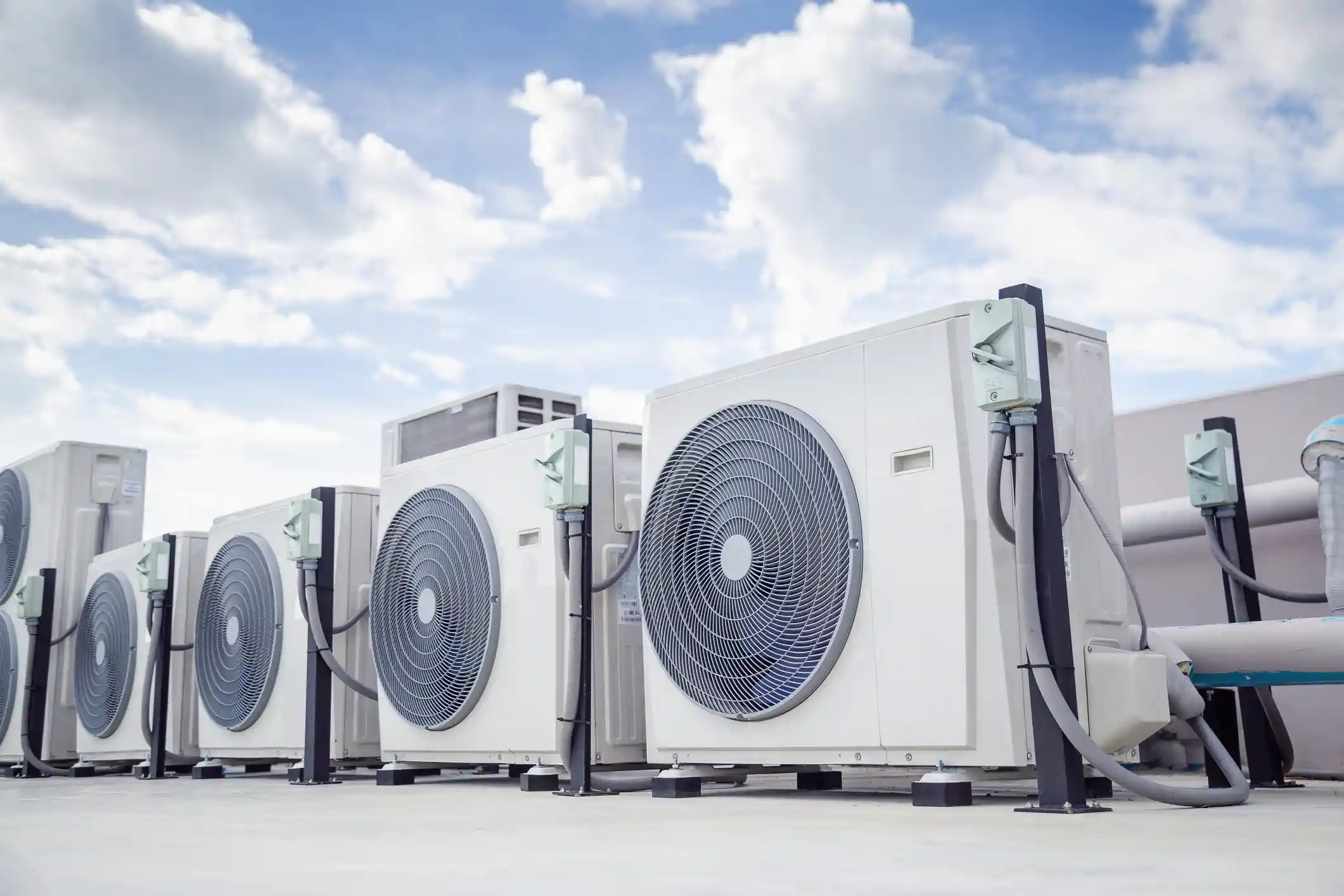
When summer hits the Central Valley hard, choosing between a mini split vs central AC becomes one of the most important decisions a homeowner can make about their home comfort — and it's rarely as simple as picking a system.
Here's a quick breakdown to address the core question:
| Factor | Mini Split | Central AC |
|---|---|---|
| Best for homes without ducts | Yes | No — requires extensive installation |
| Best for homes with existing ducts | Situational | Yes — highly practical upfront |
| Energy efficiency (SEER2) | 20–35+ | Up to ~26 |
| Duct energy losses | None | 20–30% typical |
| Heating capability | Yes (heat pump) | Cooling only (needs furnace) |
| Equipment lifespan | 15–20+ years | 12–15 years |
| Federal tax credit (Section 25C) | Yes (qualifying models) | Yes (qualifying models) |
| Zoning | Built-in | Requires complex retrofit |
The short answer: If your home already has ductwork in good shape, central AC is often the more straightforward choice. If you have no existing ducts — or you're adding a room, finishing a basement, or dealing with comfort hot spots — a mini split is almost always the smarter long-term solution.
But the initial setup is only part of the picture. How each system performs over years of use, how much energy it saves, and what incentives apply to your situation all factor into the real value. In the Central Valley, where cooling season runs long and electricity bills climb fast, those long-term efficiency numbers matter a lot.
For a deeper look at how these two systems stack up on every level — from installation complexity to monthly energy savings — this guide breaks it all down clearly so you can make a confident, informed choice.
Mini split vs central AC comparison terms you need:
To understand how the mini split vs central AC comparison plays out for your home, we first need to look at how these systems handle the air in your home. They are built on entirely different mechanical blueprints, which dictates how they are installed, maintained, and operated.
A traditional central air conditioner is a ducted system. It relies on a single, large indoor air handler (often tucked away in a closet, attic, or basement) connected to a network of hidden ducts. This central unit chills the air and pushes it through the entire house, using a single thermostat to control the temperature. If you want to cool your bedroom in Clovis, you have to cool the living room, the kitchen, and the guest hallway at the same time.
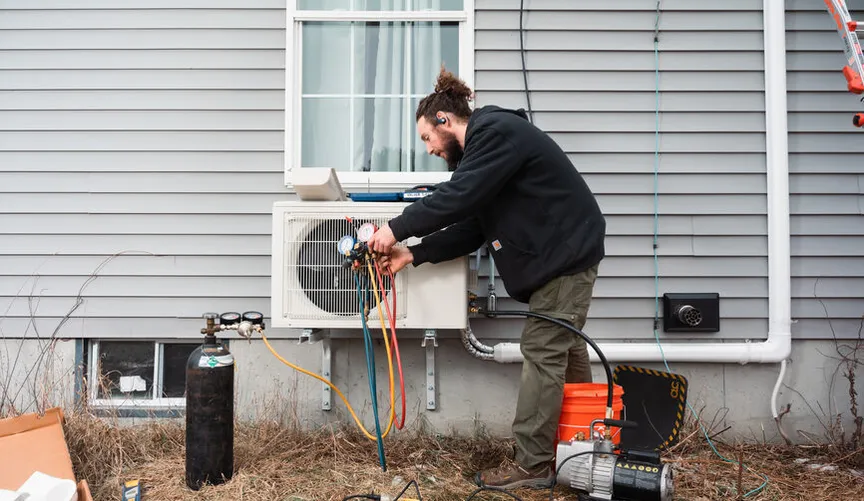
A Mini Split system, on the other hand, is ductless by design. Instead of one massive central unit, it uses a smaller outdoor condenser connected directly to one or more individual indoor air handlers mounted on your walls or ceilings. These indoor units are placed directly in the rooms you want to cool. Refrigerant lines, electrical wiring, and a condensate drain run through a small, non-invasive hole in your exterior wall to connect the indoor and outdoor components. Because each indoor unit operates independently, you get built-in zoning control. You can turn off the cooling in empty guest rooms while keeping your primary bedroom perfectly chilled.
A ductless mini split is often the undisputed champion for specific home layouts and regional comfort challenges. If you are building home additions, converting a garage into an office in Sanger, or finishing an attic space, running new ductwork to those spaces can throw your existing central system completely out of balance.
Older, historic properties — like those built before the 1960s in older neighborhoods of Fresno or Madera — often lack the physical wall cavity space required to run bulky metal ducts. Installing a mini split allows you to bring modern, whisper-quiet cooling to these homes without tearing down plaster walls or sacrificing closet space.
It is also an exceptional choice for solving "nuisance rooms" — those stubborn spots in your house that stay hot no matter what your central thermostat says. If you find yourself in need of a Mini Split Replacement Fresno CA, upgrading your existing ductless setup ensures you maintain that localized comfort.
Central air conditioning remains the gold standard for many traditional homes in the Valley, especially when the home was built with a complete, well-designed duct network already in place. If your existing ducts are clean, sealed, and in good structural condition, opting for a standard AC Installation Fresno CA is highly practical.
Central AC provides a completely uniform climate throughout the entire house under the command of a single thermostat. It also appeals to homeowners who prefer invisible aesthetics. With central systems, the mechanical equipment is hidden out of sight, leaving only flush, subtle registers on your walls or ceilings. Additionally, central systems make it simpler to integrate whole-home air quality upgrades, such as high-MERV filtration systems, humidifiers, or UV air purifiers, because all the home's air passes through a single central trunk.
When comparing upfront installation requirements, the physical layout of your home is the ultimate deciding factor. The table below outlines how these two systems compare qualitatively across key installation and design metrics:
| Upfront & Design Factor | Ductless Mini Split | Central AC |
|---|---|---|
| Installation Complexity | Low to Moderate (No major wall demolition required) | Moderate to Extremely High (Depends on ductwork needs) |
| Labor Hours Required | Typically completed in 1 day per zone | 1 to 2 days (with ducts) or up to a week (without ducts) |
| Visual Footprint | Indoor units are visible on walls or ceilings | Virtually invisible; relies on flush registers |
| Zoning Customization | High (Every single room is its own independent zone) | Low (Requires complex motorized dampers for zoning) |
| Electrical Upgrades | May require a dedicated subpanel for multi-zone systems | Often fits into existing high-voltage central AC circuits |
The complexity of your HVAC Installation Fresno CA directly impacts the installation labor. A single-zone mini split can often be installed in just a few hours because it only requires a small hole in an exterior wall. However, if you are planning a multi-zone mini split system to cover a large, multi-room home, the labor and material requirements increase as we run separate refrigerant line sets and electrical lines to each individual indoor air handler.
The presence and health of your home's ductwork is the single biggest swing factor in the mini split vs central AC comparison. If your home lacks ductwork entirely, installing a brand-new central AC system requires retrofitting ducts throughout your walls, ceilings, or crawl spaces. This is an incredibly invasive construction process that involves cutting into drywall, routing heavy metal or flexible pipes, and repairing plaster.
The labor and material requirements for a complete ductwork retrofit can easily exceed those of the actual air conditioning equipment itself. In this scenario, choosing a ductless mini split is almost always the more practical path.
Even if you have existing ductwork, it is vital to have it professionally inspected before committing to a standard AC Replacement Fresno CA. If your existing ducts are leaky, uninsulated, or improperly sized, they will severely degrade the efficiency of your new system. Repairing or replacing deteriorated ductwork adds a substantial step to a central AC installation, which might tip the scales back in favor of a multi-zone mini split.
If you are looking to cool a single room, such as a sunroom in Clovis or a newly converted garage studio, a single-zone mini split is highly practical. It requires only one outdoor condenser and one indoor head, keeping installation swift and straightforward.
However, when you scale up to a whole-home solution, the installation dynamics change. A multi-zone mini split system requires a larger outdoor compressor designed to handle multiple refrigerant circuits, plus several indoor air handlers. Running multiple line sets across different sides of your home requires meticulous planning, line-hide covers to protect the exterior aesthetics, and potentially complex condensate drainage solutions.
For a comprehensive breakdown of what goes into planning these larger installations, you can explore our AC Installation Clovis CA Complete Guide.
While the upfront installation is a one-time event, your monthly energy usage is a recurring reality. In our hot Central Valley climate, energy efficiency can quickly become the defining factor of your HVAC system over its lifetime.
Because ductless mini splits are heat pumps, they also deliver highly efficient heating during our damp, chilly winters. When evaluating the mini split vs central AC comparison, you must factor in these year-round heating capabilities.
Traditional homes often pair a central AC with a gas furnace. A mini split heat pump, however, can handle both heating and cooling through a single piece of equipment. For a detailed look at how heat pump technology can optimize your energy usage throughout the seasons, refer to our AC Replacement Guide Fresno CA.
To understand why mini splits are incredibly efficient to run, we have to look at SEER2 (Seasonal Energy Efficiency Ratio 2) ratings and inverter technology. SEER2 measures how efficiently an air conditioner cools your home over an entire season; the higher the rating, the less electricity it consumes.
While premium, high-end central AC systems can reach respectable SEER2 ratings in the mid-20s, ductless mini splits regularly achieve extraordinary ratings ranging from 20 to 35+ SEER2.
This massive efficiency advantage is largely driven by inverter-driven, variable-speed compressors. Traditional central air conditioners operate like a standard light switch: they are either running at 100% capacity or they are completely off. When your home warms up slightly, a traditional system turns on with a massive spike in energy consumption, blasts cold air until the thermostat is satisfied, and then shuts down.
In contrast, an inverter compressor works like cruise control on a vehicle. It starts up smoothly and runs continuously at ultra-low speeds, adjusting its output by tiny increments to maintain a perfectly steady temperature. By avoiding constant on/off cycling and massive energy spikes, mini splits use significantly less electricity.
To see how this variable-speed performance translates to long-term savings, check out our AC Replacement Clovis CA Complete Guide.
Even the most efficient central air conditioner loses a portion of its cooling power before the air ever reaches your living spaces. According to the Department of Energy, typical duct losses in unconditioned spaces like attics or crawl spaces account for 20% to 30% of a central system's total energy consumption. When ducts leak, cold air escapes into your attic, and hot attic air is pulled into your home's living areas.
Ductless mini splits eliminate this problem entirely. Because they deliver cooled air directly into the room from the indoor unit, there are zero duct losses. This means 100% of the conditioned air is delivered directly into your living spaces as refreshing, cool air.
Homeowners who switch from older central AC systems to zoned mini splits frequently experience a 30% to 40% reduction in their monthly cooling energy usage. If you are debating whether your current ducted system is worth saving or if it is time to go ductless, read our guide on Should You Repair or Replace Your AC.
Maintaining your system properly is key to protecting your system. For central AC systems, maintenance involves replacing the main return air filter every one to three months, keeping the outdoor condenser clean, and ensuring the ductwork remains sealed.
For mini splits, maintenance is slightly more hands-on but highly manageable. The small plastic filters inside each indoor head must be popped out and rinsed under a tap every few weeks to prevent dust buildup from restricting airflow. Additionally, because mini split indoor units contain their own fan wheels and condensate pans, they require periodic professional deep cleanings to keep them operating at peak efficiency.
In terms of equipment lifespan, ductless mini splits are exceptionally durable. Because their variable-speed compressors experience less wear and tear than traditional on/off systems, they typically enjoy a service life of 15 to 20+ years. Traditional central AC units, especially when subjected to the intense heat of Valley summers, usually last between 12 and 15 years before requiring replacement.
Furthermore, the federal government and local utilities offer substantial incentives to encourage homeowners to adopt high-efficiency heat pump technology. Under the Section 25C Energy Efficient Home Improvement Credit, qualifying heat pump mini split systems can be eligible for federal tax credits. Traditional, cooling-only central AC systems may also qualify for certain credits, though typically at a different tier.
When you factor in these tax credits along with potential local utility rebates, the transition to a high-efficiency mini split becomes even more appealing. To help weigh these options, read our analysis on the Cost of Repairing Old AC vs Buying a New System.
Yes, in the vast majority of cases, a mini split is significantly more energy-efficient to run than a central AC. This operational advantage comes down to three factors: the complete elimination of duct losses (which typically waste 20% to 30% of conditioned air in ducted homes), the use of ultra-efficient inverter-driven compressors that run continuously at low power rather than cycling on and off, and the ability to use zone control to cool only the rooms you are actively using.
If you find your current system struggling or need a professional touch to restore efficiency, our team is always ready to help with Mini Split Repair Fresno CA.
Absolutely. Because modern mini splits are heat pumps, they are fully capable of providing both heating and cooling. Instead of burning fossil fuels like a traditional gas furnace, a mini split heat pump extracts heat from the outdoor air and transfers it indoors.
Even in colder winter temperatures, advanced cold-climate mini splits maintain exceptional heating capacity. Transitioning to a whole-home heat pump system can allow you to decommission an old, inefficient furnace entirely. If you are considering making this complete home comfort transition, explore our options for HVAC Replacement Fresno CA.
With consistent preventative maintenance, ductless mini splits typically last between 15 and 20+ years. This superior longevity is due to the inverter technology, which allows the compressor to start up slowly and run at steady speeds, reducing physical stress on the mechanical components.
Traditional central AC systems generally have a shorter lifespan of 12 to 15 years. No matter which system you choose, scheduling annual professional tune-ups is the best way to maximize your equipment's lifespan. If your current system is showing signs of age, we provide reliable AC Repair Fresno CA to keep your home comfortable.
The mini split vs central AC comparison is not about finding a single "best" system — it is about identifying the right fit for your home's unique architecture, your family's daily routine, and your long-term comfort goals.
If your Central Valley home has a solid, well-insulated duct system, upgrading to a modern central AC is a highly reliable and practical path. But if you are dealing with a ductless home, a new addition, or uneven temperatures that make certain rooms unusable in July, choosing a multi-zone mini split will pay dividends in whisper-quiet comfort and massive energy savings for decades to come.
At Valley Air Conditioning & Repair, Inc., we have spent decades helping our neighbors navigate these big decisions. Serving communities throughout Biola, Clovis, Fresno, Madera, Sanger, Selma, and the surrounding areas, we have built our reputation on a customer-first philosophy. Since 1970, we have grown through honest advice, reliable craftsmanship, and straightforward solutions. We never push a one-size-fits-all product; instead, we take the time to evaluate your home and recommend the system that truly serves your family's needs.
If you are ready to explore your options in Madera or the surrounding areas, check out our AC Installation Madera CA Complete Guide.
Ready to make your home the comfortable sanctuary it should be? Contact Valley Air Conditioning & Repair, Inc. for expert Mini Split solutions today, and let us help you find the perfect cooling system for your home.

As a business with many AC units, it is essential to have a responsive AC company. Valley Air Conditioning understands our needs. They are always responsive and our AC is up and running very quickly.
I had them do an AC check on the home I was buying, they were honest and quick. I hired them to do the summer and Fall maintenance for $149. Happy with this company!
100% recommend. I called, same day they came out and gave me estimate. Conley was honest and didn't try to recommend/sell us anything we didn't need. When I called him with questions before making a decision, he happily answered and was not annoyed by me contacting him. Conley and VAR
This is a group of good people. Very professional and knowledgeable. They take the time to listen and find the best solution that fits best for any situation. There's no way you can go wrong in choosing VAR.
We have used Valley Air for over fifteen years. The last two years ,Matt came to our house to service twice a year. Always on time, so polite and so professional. This is a very honest company and you can always depend on them and trust them. The office always treats everyone cheerfully and always want to do what you need done very fast YOU CAN COUNT ON THIS Company