Is a Mini Split Better Than Central Air in the Desert?
Is a mini split better than central air in the desert? The short answer: it depends on your home — but for many desert homeowners, mini splits offer real advantages. Here's a quick breakdown:
Mini splits tend to win when:
- Your home lacks existing ductwork
- You want room-by-room temperature control
- You're cooling a smaller home, addition, or specific problem rooms
- Energy efficiency is your top priority
Central air tends to win when:
- You already have well-sealed, properly sized ductwork
- You need consistent whole-home cooling across a large floor plan
- You prefer a fully hidden, invisible indoor system
When temperatures climb past 110°F — which happens regularly across California's Central Valley and desert regions — your cooling system is no longer just about comfort. It's essential. And choosing the wrong system means wasted energy, uneven cooling, and higher monthly bills every single summer.
Both ductless mini splits and central AC systems can handle desert heat, but they do it in very different ways. The U.S. Department of Energy estimates that leaky or poorly insulated ducts can waste 20% to 30% of conditioned air before it ever reaches your living spaces — a serious problem in climates where your system may run 12 to 16 hours a day during peak summer months. Mini splits sidestep that problem entirely by delivering cooled air directly into each room. But that doesn't automatically make them the right fit for every home.
In this guide, we'll walk through exactly how each system works in desert conditions, how they compare on efficiency, installation, maintenance, and comfort — so you can make a confident decision for your home.
Is a Mini Split Better Than Central Air in the Desert?
When evaluating the Central AC vs Ductless Mini Split Comparison, we are essentially comparing two entirely different philosophies of home comfort. In extreme heat, these differences become magnified.
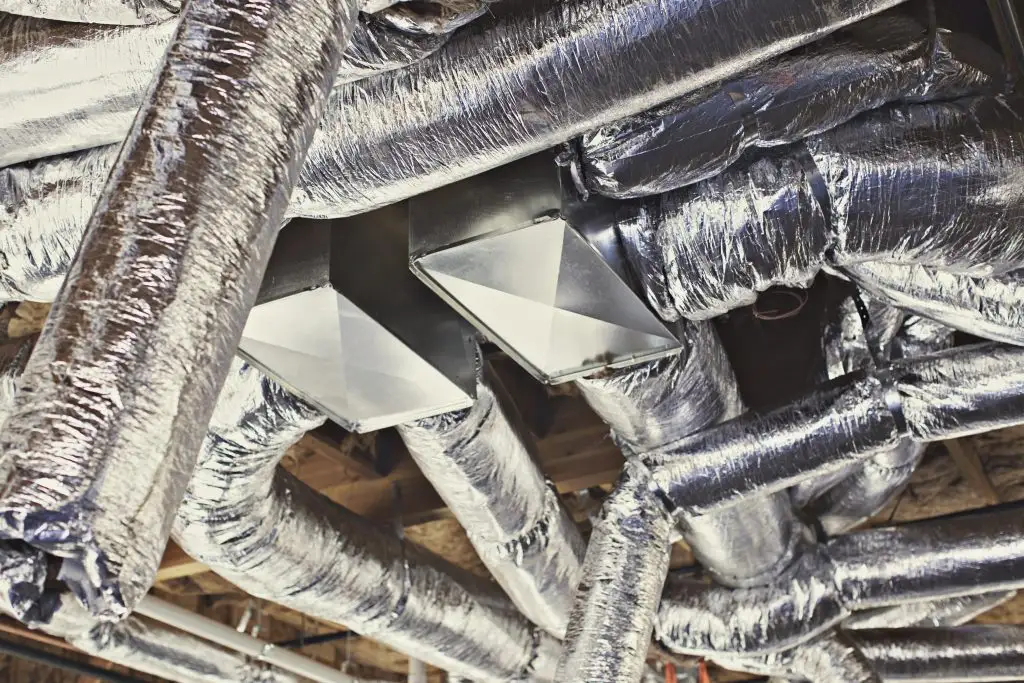
Traditional central air conditioning relies on a single, powerful outdoor condenser unit that works alongside an indoor evaporator coil (usually housed in your attic or a closet). It cools a massive volume of air at once and pushes it through a complex web of metal or flexible ducts running throughout your ceiling or floor.
A ductless mini-split system, on the other hand, consists of a smaller outdoor compressor connected to one or more compact indoor air handlers mounted directly on the walls or ceilings of specific rooms. Instead of bulky ducts, these units are linked by thin copper refrigerant lines and electrical wiring running through a tiny three-inch hole in your exterior wall.
In extreme desert conditions, where summer temperatures frequently hover between 110°F and 115°F, this mechanical difference changes everything. Central AC ducts are typically routed through unconditioned attics. In places like Fresno, Clovis, or Madera, attic temperatures can easily soar to a blistering 140°F to 160°F. When your central air blows cold air through those hot attics, the air absorbs heat before it even exits the vents.
Mini splits completely eliminate this thermal transfer because they do not use ducts. By delivering conditioned air directly from the indoor handler straight into your living space, they provide a level of efficiency that is incredibly hard for ducted systems to match.
How Ductless Mini-Splits and Central AC Work in Arid Climates
To understand why one system might perform better in dry, dusty, and hot conditions, it helps to look at how they manage heat. Both systems rely on a refrigeration cycle. An outdoor compressor pumps refrigerant through a closed loop to absorb indoor heat and release it outside.
However, the way they distribute that cooling is where they diverge:
- Central AC Distribution: A large central blower fan pulls warm air from your home through return vents, filters it, runs it over a cold evaporator coil, and pushes it back out through supply registers.
- Ductless Mini-Split Distribution: Each room or "zone" has its own independent air handler with its own fan and cooling coil. The refrigerant is sent directly to the room where cooling is needed.
This operational difference is especially important when considering year-round climate control. Because desert regions experience extreme summer heat but can also drop into chilly desert nights during the winter, many homeowners look to heat pumps for dual-season comfort.
If you are wondering, Is a Heat Pump Right for Your Desert Home, the answer is a resounding yes. Modern mini-splits and central split systems are both available as heat pumps. To see how these systems pull double duty, you can read more about How Does a Heat Pump Work in a Desert Climate to understand their reverse-cycle capabilities.
Is a Mini Split Better Than Central Air in the Desert for Targeted Cooling?
If your main goal is targeted comfort, mini splits are the undisputed champion. Traditional central AC units operate on an "all-or-nothing" principle. When the thermostat in your hallway calls for cooling, the system turns on and cools every single room in the house, regardless of whether anyone is using them.
Mini-splits utilize advanced inverter technology, which functions like a dimmer switch for your cooling. Instead of blasting on at 100% capacity and then shutting off completely when the target temperature is reached, the variable-speed compressor runs continuously at a lower, ultra-efficient speed. This constant, gentle adjustment maintains a perfectly steady room temperature and prevents the energy spikes associated with frequent on-and-off cycling.
If you are looking to install a Mini Split AC Fresno CA, you will gain incredible zoning flexibility. You can set your home office to a crisp 72°F during the day while leaving unused guest bedrooms at 82°F. This targeted cooling approach prevents you from wasting money cooling empty spaces, which can lead to utility bill reductions of 25% or more compared to running an older central air system.
Is a Mini Split Better Than Central Air in the Desert for Whole-Home Comfort?
While mini-splits excel at targeted zoning, central air conditioning remains a highly practical and popular choice for whole-home comfort, especially in larger, open-concept residences.
Central AC systems are designed to provide highly uniform cooling. Because they utilize a centralized duct network, they pull air from all corners of the home, mix it, and redistribute it evenly. This constant air movement prevents hot or cold spots from forming in hallways or open living areas.
In the peak of summer, central systems are built to run for long stretches. However, if your system is struggling to keep up, it is crucial to know When Constant AC Running Signals a Problem vs Normal Desert Operation. In 115°F heat, running continuously for 12 to 16 hours a day can be normal, but if it is running constantly without actually cooling your home, it could point to leaky ducts, low refrigerant, or an undersized unit.
When the outdoor temperature rises past 110°F, energy efficiency is no longer just an environmental concern — it is a direct hit to your monthly budget.
The primary culprit behind energy waste in central systems is duct leakage. Up to 20% to 30% of conditioned air is lost due to leaky, poorly insulated, or improperly sized ducts in central air systems. When cold air leaks into your hot attic, your air conditioner has to work twice as hard to cool your living spaces.
Mini-splits do not suffer from duct losses. Furthermore, they boast incredibly high Seasonal Energy Efficiency Ratio (SEER and SEER2) ratings. While standard central AC units typically average between 14 and 18 SEER, premium mini-split systems can achieve ratings ranging from 20 to as high as 35+ SEER2.
| Efficiency Metric | Central AC Systems | Ductless Mini-Split Systems |
|---|
| Average SEER/SEER2 Rating | 14 to 18 SEER (Max ~21 SEER2) | 20 to 35+ SEER2 |
| Ductwork Energy Losses | 20% to 30% loss typical | 0% (Ductless) |
| Compressor Technology | Single-stage, two-stage, or variable | Variable-speed inverter (standard) |
| Average Lifespan | 10 to 15 years | 15 to 20+ years |
By avoiding duct losses and utilizing ultra-efficient inverter compressors, mini-splits consume significantly less electricity to deliver the same amount of cooling as a traditional ducted system in extreme heat.
Installation, Maintenance, and Long-Term Reliability
Choosing between these two systems also requires looking at how they are installed, how they are maintained, and how long they will last in our dusty Central Valley environment.
Proper upkeep is vital to protect your investment. Following Proper HVAC Maintenance for Desert Climate guidelines — like keeping outdoor coils clear of blowing sand and washing dust out of your filters — will ensure your system runs smoothly when you need it most.
In terms of lifespan, mini-split systems often have a longer life expectancy in desert climates, typically lasting 15 to 20 years or more. This is because their inverter compressors experience less wear and tear from constant on-off cycling. Traditional central air systems in hot climates typically last between 10 and 15 years before the extreme heat and constant operation take their toll.
If you are building a new home or remodeling an older property in Clovis, Sanger, or Fresno, your choice will heavily impact your installation timeline:
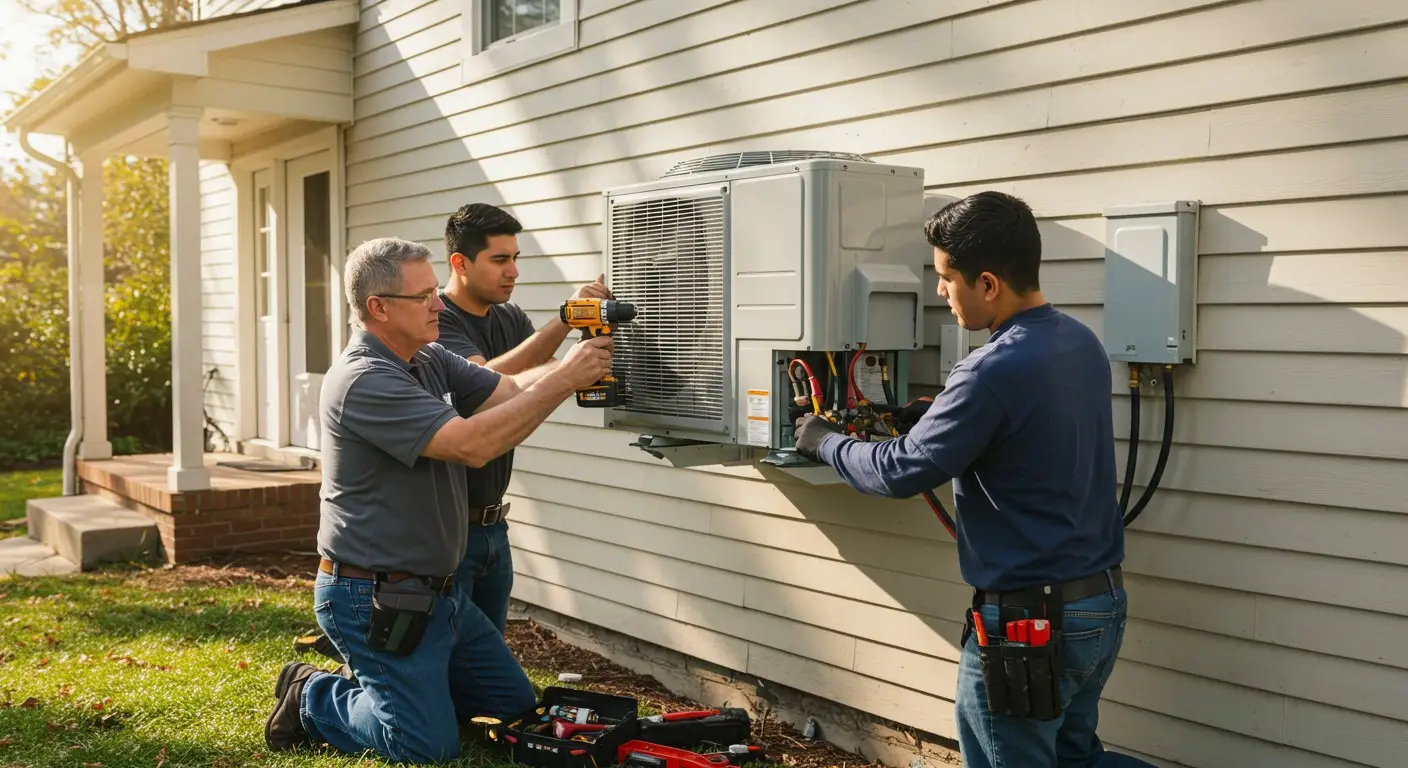
- No Existing Ductwork: If your home does not have ducts (such as historic homes in Fresno High or older adobe-style properties), installing a whole-home ductless system is much less invasive. A professional Mini Split Installation Fresno CA requires only minimal drywall cuts and can often be completed in a couple of days. Adding custom ductwork from scratch, by contrast, can require tearing out ceilings and walls.
- Existing Ductwork: If your home already has a functional, well-insulated duct system in place, scheduling a standard AC Installation Fresno CA to replace your aging central unit is often the most straightforward and sensible path.
Zoned Comfort vs. Whole-House Airflow
Beyond energy bills, you have to live with the physical presence of these systems.
Aesthetics and Noise:
- Central AC: Virtually invisible. All you see inside the home are small, flat supply registers on your ceiling or walls. The noisy compressor sits outside, far away from your bedrooms.
- Mini-Splits: Require an indoor air handler mounted on the wall in every cooled room. While modern units are sleek, low-profile, and whisper-quiet (often operating between 19 and 26 decibels — quieter than a library), they are still visible design elements in your rooms.
Indoor Air Quality (IAQ):
- Central AC: Wins on advanced filtration. Because central systems move a massive volume of air through a single return, they can accommodate thick, high-MERV media filters, whole-home air purifiers, and UV light systems. This is highly beneficial in the Central Valley, where agricultural dust and seasonal pollen can trigger allergies.
- Mini-Splits: Have smaller, washable mesh filters in each individual head. While they do an excellent job of filtering the air within that specific room, they do not offer the same heavy-duty, whole-home air purification capabilities as a centralized ducted system.
If a single room in your home is constantly running too hot, or if an older unit is starting to fail, you don't always have to choose one or the other. Many homeowners opt for a hybrid approach: keeping their central AC for general whole-house cooling, but scheduling a targeted Mini Split Repair Fresno CA or new zone installation to handle a hot master bedroom, a converted garage, or a sunny home office.
If your central unit is completely at the end of its lifespan, investing in a high-efficiency AC Replacement Fresno CA remains an excellent way to restore reliable, uniform comfort to your entire household.
Frequently Asked Questions about Desert Cooling Options
Can a mini-split handle heating during mild desert winters?
Yes! Ductless mini-splits are heat pumps, meaning they can reverse their cooling cycle to provide highly efficient heating during our chilly Central Valley winter nights. Because they move heat rather than creating it through electrical resistance, they can be up to three times more efficient than standard electric furnaces. To keep your system running optimally in all seasons, be sure to review our Heat Pump Maintenance Tips for Desert Homeowners.
Is it worth replacing an old central AC with a mini-split?
It depends on the condition of your home and your ductwork. If your existing ducts are crumbling, poorly designed, or full of leaks, replacing them alongside a central AC upgrade can be highly intensive. In that scenario, switching to a multi-zone mini-split system can be an incredibly smart move.
To help weigh your options, read our detailed analysis on Is it Worth Fixing an Old AC Unit in the Desert. If you decide a transition is right for you, we can assist with a seamless Mini Split Replacement Fresno CA.
Are there energy rebates available for upgrading to high-efficiency systems?
Absolutely. Because high-efficiency mini-splits and central heat pumps drastically reduce grid strain, there are numerous federal tax credits (such as those under the Inflation Reduction Act) and local utility incentives available for homeowners who upgrade to qualifying ENERGY STAR equipment.
While programs vary by county and state, you can explore resources like our guide on Arizona Energy Rebates for HVAC Upgrades to understand the types of electrification incentives and regional programs available to help offset your upgrade.
Conclusion
At the end of the day, there is no single "perfect" cooling system — there is only the system that is perfect for your home, your family, and your budget. Whether you choose the targeted, ultra-efficient zoning of a modern ductless mini-split or the uniform, invisible comfort of a high-efficiency central air system, making an informed choice is key to surviving and thriving in our hot dry climate.
At Valley Air Conditioning & Repair, Inc., we have been serving Central Valley homeowners since 1970. Our business has been built entirely on trust, honorable intentions, and a customer-first philosophy. We don't believe in high-pressure sales pitches; we believe in giving you honest, expert advice so you can make the best decision for your property.
Ready to find the perfect cooling solution for your home? Schedule your mini-split consultation today with our friendly, certified team!


.webp)